Text Neck — Causes, Symptoms, and Posture Correction Explained
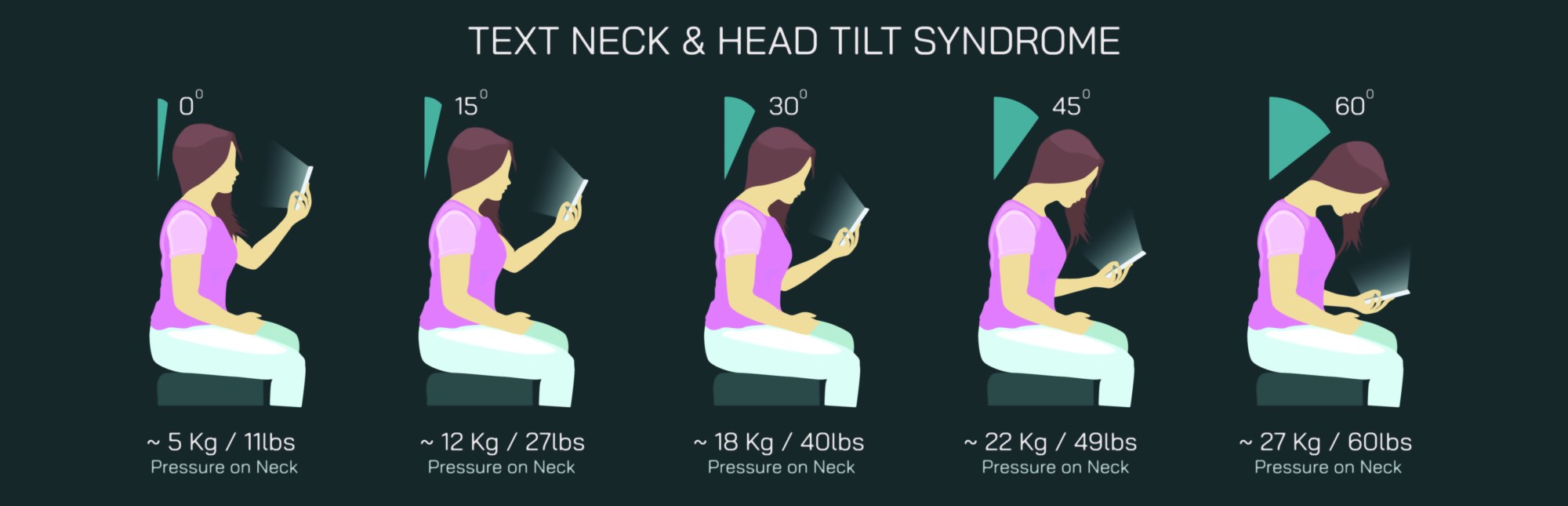
Text neck is a modern musculoskeletal condition caused by prolonged forward head posture while using smartphones, tablets, laptops, or other digital devices. Although neck pain has existed throughout human history, the rise of handheld electronics has introduced a new and chronic pattern of strain that affects millions of people worldwide, especially adolescents and young adults. When the head tilts forward to look down at a screen, the weight the neck must support increases dramatically. The human head weighs roughly 4.5–5.5 kg (10–12 pounds) in neutral position, but every degree of forward tilt multiplies that load on the cervical spine. At 30 degrees of flexion, the neck feels closer to 18 kg (40 pounds) of force; at 60 degrees, nearly 27 kg (60 pounds). This sustained pressure pushes the cervical vertebrae, spinal discs, ligaments, and muscles beyond their natural limits, triggering pain, stiffness, and structural imbalance. Text neck is not just a temporary discomfort — it is a progressive postural disorder that can alter spinal curvature, weaken supportive muscles, and contribute to long-term neck and upper-back problems if not corrected early.
The causes of text neck revolve primarily around repetitive and prolonged digital device use, but the deeper problem is not the device itself — it is the posture adopted while using it. Smartphones are typically held low in the lap or chest area, forcing users to bend their heads sharply downward for extended periods. Laptops placed on low surfaces, gaming devices used while lying in bed, and children completing homework on tablets without ergonomic support reinforce the same pattern. This forward head posture stretches the muscles and ligaments at the back of the neck while compressing the structures in the front, creating an imbalance known as “muscle length-tension mismatch.” Over time, tightness builds in the upper trapezius, levator scapulae, pectoral muscles, and suboccipital muscles, while the deep neck flexors and interscapular stabilizers weaken. The body adapts to this posture and begins to assume it habitually, even while standing or walking. The more frequently the head remains tilted forward, the more the cervical curve straightens — a condition called cervical kyphosis — increasing the risk of disc degeneration, nerve compression, tension headaches, and chronic muscle fatigue.
The symptoms of text neck extend beyond simple neck soreness and can affect multiple areas of physical and cognitive function. The most commonly reported symptom is persistent neck pain and stiffness, especially after long screen use, accompanied by difficulty turning the head fully. Many individuals also experience tightness and aching in the shoulders and upper back, as the surrounding muscles attempt to compensate for the unsupported forward head posture. Headaches, especially tension-type headaches, are often triggered by tight muscles at the base of the skull. Some people suffer from radiating pain, tingling, or numbness in the arms and hands, resulting from pressure on cervical nerves. In more advanced stages, individuals may develop reduced chest expansion and shallow breathing, because forward rounding of the shoulders restricts rib movement. Fatigue, poor concentration, and even jaw discomfort from clenching can accompany text neck when the body remains in protective stress patterns for too long. These symptoms reflect not isolated muscle problems but a biomechanical imbalance that causes the nervous system and musculoskeletal system to work under constant compensatory stress.
If text neck is ignored, the condition can gradually produce long-term structural consequences rather than temporary discomfort. The cervical spine depends on a healthy inward curvature — the lordosis — to distribute weight evenly. Forward head posture reverses this curve, increasing pressure on the cervical discs and accelerating wear. Repeated stress can eventually cause disc bulging or herniation, leading to chronic nerve irritation or arm weakness. Muscles that remain overstretched lose strength and endurance, while chronically shortened muscles develop trigger points that cause pain even at rest. Improper head posture also strains the temporomandibular joint (TMJ) and contributes to clenching, creating a cycle of head and neck tension. These structural adaptations explain why many individuals with untreated text neck experience chronic upper-body pain that worsens with age, reduced flexibility, and a permanently slouched posture. The earlier postural imbalance is addressed, the greater the chance of reversing these changes and restoring functional alignment.
Correcting text neck does not require eliminating digital technology — it requires changing how the body interacts with it. The most important step is improving device ergonomics and viewing height, ensuring that screens are positioned at or slightly below eye level rather than in the lap. Laptops should be raised on a stand when used for long sessions, and external keyboards can prevent hunching. Smartphones should be held higher, closer to eye level, rather than bending the neck toward the device. When reading or studying, using book stands or adjustable tablet holders reduces strain. Frequent screen breaks, such as looking up every 20–30 minutes or following the “20-20-20 rule” (look 20 feet away for 20 seconds every 20 minutes), allow neck muscles to reset. These adjustments train the body to maintain a neutral spine rather than mechanically compensating for gravity.
The second essential element of correction involves postural awareness and strengthening exercises that reverse muscle imbalance. Good posture begins with stacking the ears over the shoulders, keeping the chest open, and lengthening the spine. Strengthening the deep neck flexors and middle back stabilizers provides endurance for upright posture, while stretching the pectorals and upper trapezius reduces tightness. Techniques such as the chin tuck help realign the head over the body's center, while shoulder blade retraction exercises restore balance across the thoracic spine. For individuals who sit for many hours, ergonomic chairs, lumbar support, and maintaining feet flat on the floor reduce compensatory upper-body tension. Posture is not simply a physical action performed once; it becomes an automatic habit through deliberate repetition and neuromuscular retraining.
In more severe or persistent cases, professional intervention may be needed. Physical therapists can correct muscle imbalances and teach individualized strengthening programs. Chiropractors may address joint restrictions that limit neck mobility. Massage therapy can break deeply embedded muscle tension patterns, and posture-focused exercise disciplines such as yoga or Pilates support long-term spinal alignment. Instead of chasing pain relief alone, the most successful treatment approaches emphasize both immediate symptom management and reinforcement of healthy movement patterns so that the pain does not return once device use resumes.
Ultimately, text neck is not just a problem of technology — it reflects how the body responds to modern habits. The human spine evolved for dynamic, upright movement, not prolonged bending over screens. When the neck remains in a forward, unsupported position for hours every day, the body adapts in the direction of stress, and pain becomes the natural outcome. But because posture is shaped by habits, not fate, the effects of text neck can be reversed by awareness, ergonomic correction, muscular balance, and intentional movement. Protecting the cervical spine means protecting comfort, concentration, and long-term mobility. When posture aligns naturally, screens remain a tool rather than a source of chronic pain, and the neck regains its role as a stable, balanced support for the body rather than a strained anchor under constant load.