Neck Alignment in Back Sleeping — Effects of High and Low Pillows on Spinal Health
Proper neck alignment during back sleeping is critical for maintaining spinal health, preventing neck pain, and ensuring restful sleep. The height and firmness of the pillow play a significant role in supporting the cervical spine, which naturally curves inward. When the neck is improperly supported, it can lead to muscle strain, stiffness, headaches, and long-term posture issues.
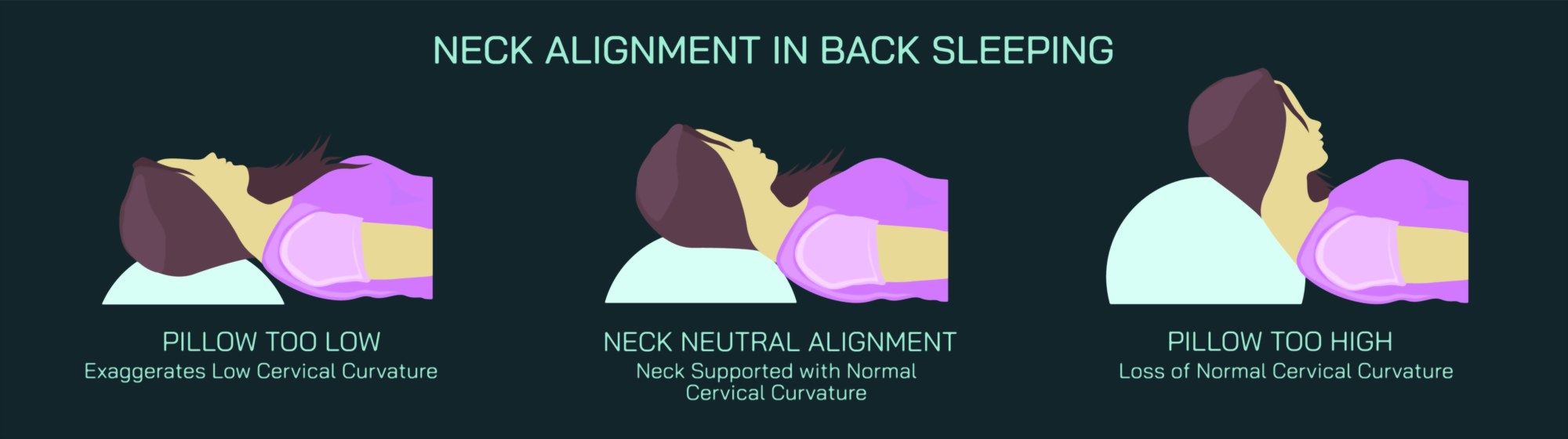
Using a high pillow in back sleeping tends to elevate the head excessively, pushing the neck forward. This can compress the cervical vertebrae, strain neck muscles, and disrupt the natural alignment of the spine. Over time, this forward tilt can contribute to discomfort, poor sleep quality, and even exacerbate conditions such as cervical spondylosis or chronic neck pain. While a high pillow may feel comfortable initially, it often fails to support the head and neck in a neutral position.
Conversely, using a low pillow may fail to provide adequate support for the natural cervical curve. When the head tilts backward due to insufficient pillow height, the neck muscles may overextend to maintain balance, causing tension and discomfort. A low pillow can also lead to snoring or airway obstruction in some individuals due to the backward tilt of the head. Proper support is necessary to maintain the head in line with the thoracic spine and prevent undue strain on muscles and ligaments.
The ideal pillow height for back sleepers generally allows the head to rest in a neutral position, aligning the neck with the spine. This position minimizes muscle tension, reduces pressure on vertebrae, and promotes optimal airflow for breathing during sleep. Ergonomically designed pillows, such as contoured cervical pillows, help maintain this alignment by supporting the natural curvature of the neck while cradling the head. Pillow material, firmness, and thickness should be adjusted according to individual body size and sleeping preferences to achieve comfort and spinal health.
In conclusion, neck alignment in back sleeping is directly influenced by pillow height. High pillows can push the head forward and strain the neck, while low pillows may allow the head to tilt backward, causing overextension. Maintaining a neutral cervical position with proper pillow support ensures spinal alignment, reduces neck pain, improves sleep quality, and prevents long-term musculoskeletal issues. Awareness of pillow ergonomics and spinal posture is essential for healthy and restorative back sleeping.