Radiation Symbols: Understanding Safety Signs for Radioactive, Ionizing, and Non-Ionizing Radiation Explained
Radiation symbols serve as visual warnings that alert people to invisible hazards that cannot be sensed by sight, sound, smell, taste, or touch. Because radiation can penetrate materials, damage biological tissues, and affect the body long before symptoms appear, internationally standardized symbols have been developed to communicate danger instantly in laboratories, hospitals, nuclear facilities, industrial workplaces, and public environments. These symbols are not arbitrary designs; their shapes, colors, and patterns reflect decades of scientific understanding and public-safety communication research. Each radiation warning symbol corresponds to a specific type of hazard—radioactive contamination, ionizing radiation, or non-ionizing radiation—and conveys both the presence of risk and the level of precaution required. To understand why these symbols are so essential, it is important to explore what each represents, the kinds of radiation involved, and how they guide safe behavior around technologies that benefit society but must be handled responsibly.
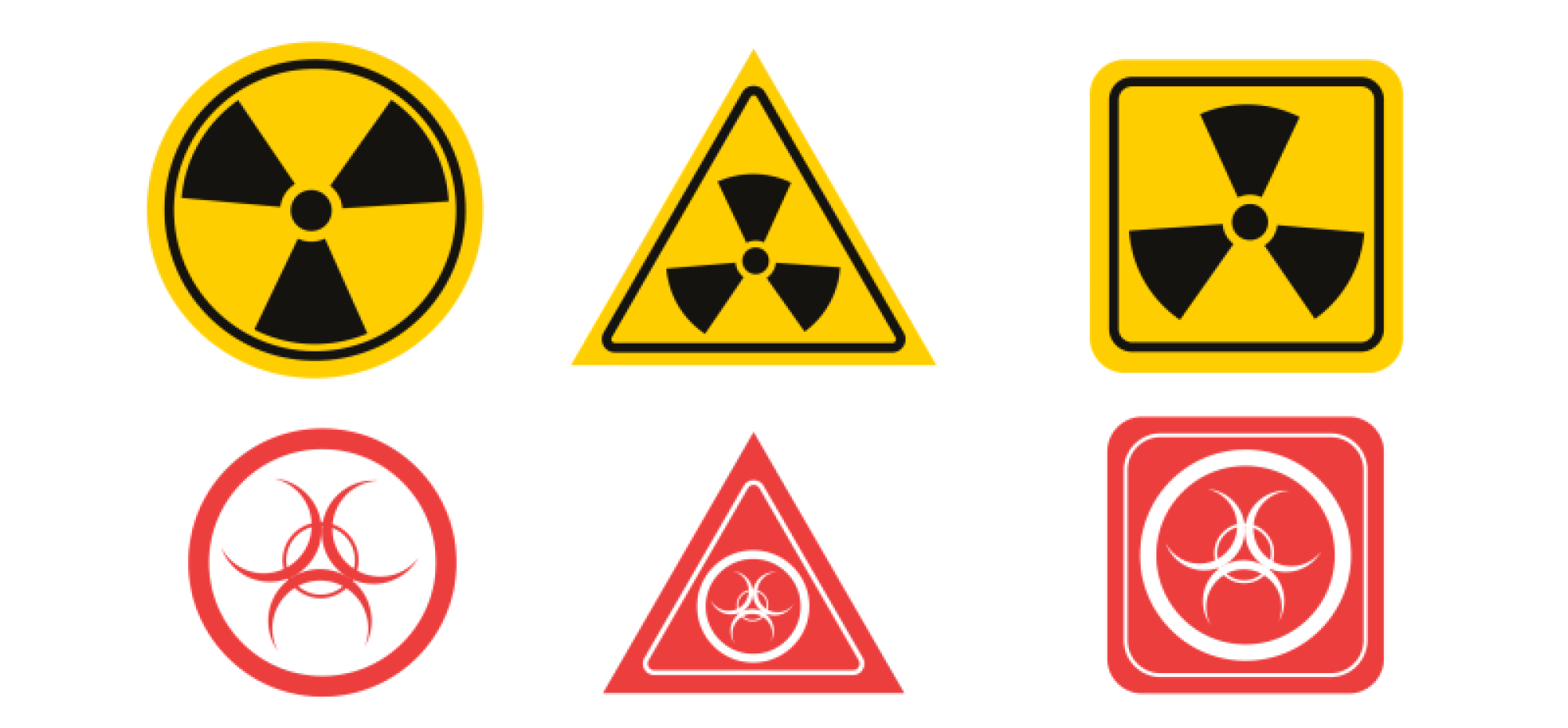
The most widely recognized radiation warning symbol is the trefoil, a three-bladed triangular design originally created in 1946 to indicate the presence of radioactive materials and ionizing radiation sources. The classic design appears in black or magenta against a yellow background, and the three curved blades surrounding a central circle are meant to represent radiation spreading outward from a source. This symbol is used in places where radioactive substances or radiation-emitting devices are stored, handled, transported, or disposed of. It warns of hazards associated with contamination from unstable atomic nuclei that emit alpha, beta, or gamma radiation. Areas displaying this symbol may involve nuclear medicine laboratories, radiopharmaceutical rooms, nuclear research reactors, industrial radiography facilities, or waste repositories. The trefoil does not inform people of an emergency level of danger by itself—rather, it signals that precautions, protective equipment, and specialized procedures are required to prevent exposure. Its universality ensures that individuals, regardless of language or culture, recognize the potential presence of radioactivity.
In the early 2000s, a second radiation symbol was introduced—the supplemental ionizing radiation warning symbol—to provide an unmistakably strong message in extreme danger zones where radiation exposure could be immediately life-threatening. Unlike the classic trefoil used broadly across laboratories or containers, this symbol is placed only in locations where high-energy radiation could injure or kill a person who approaches or tampers with the source. The symbol features a magenta trefoil above a bold red background, accompanied by a skull and crossbones and a running person fleeing from the scene. Its imagery communicates urgency rather than information. It is typically used near powerful industrial radiography source housings, medical treatment machines that deliver high-dose radiation, and spent nuclear fuel areas that contain intense ionizing emissions. The addition of universally recognized danger symbols such as the skull ensures that even someone unfamiliar with radiation science understands the need to stay away and avoid touching the object or equipment. This symbol safeguards workers, maintenance crews, and members of the public from accidental exposure when encountering highly hazardous radiation sources.
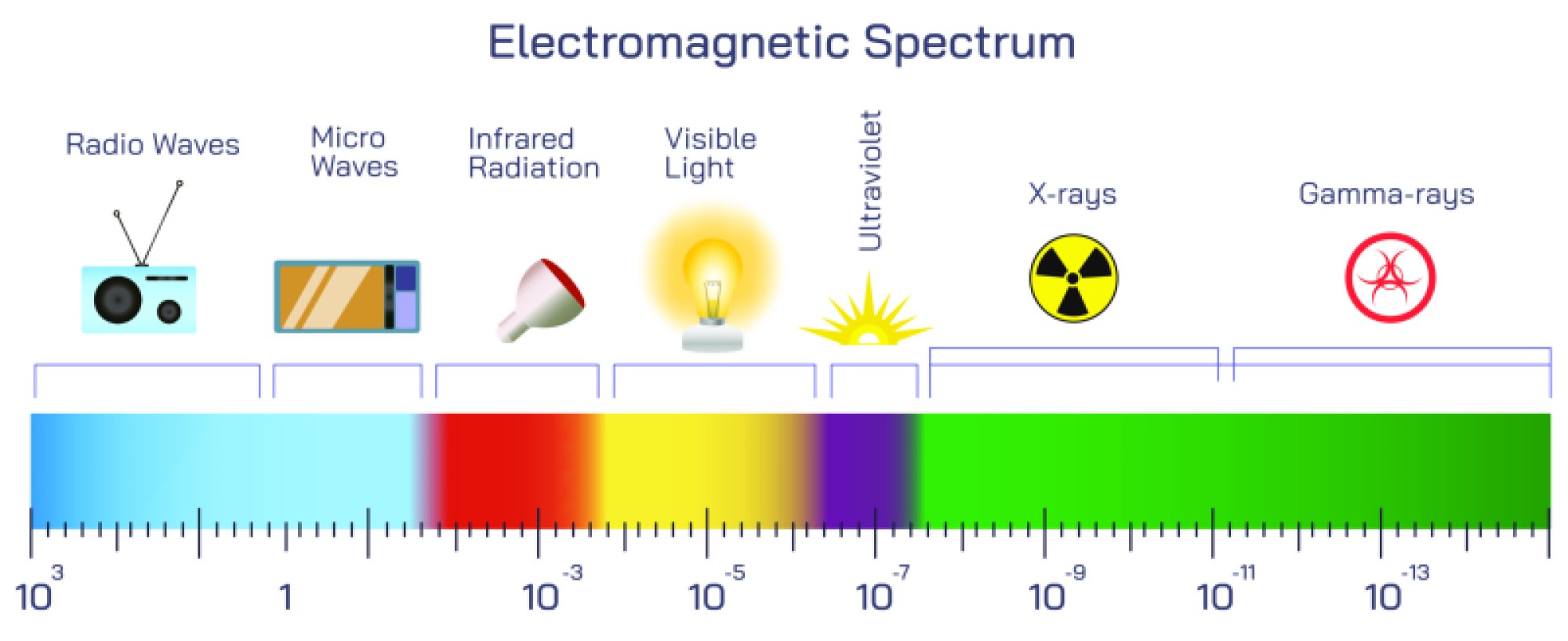
While the trefoil and its supplemental danger symbol communicate risks related to ionizing radiation, another widely used category of safety signs pertains to non-ionizing radiation. This type of radiation includes microwaves, infrared radiation, ultraviolet light, radiofrequency energy, and strong electromagnetic fields. Although non-ionizing radiation lacks the energy to remove tightly bound electrons from atoms, it can still pose substantial hazards depending on intensity, duration, and frequency. Occupational safety requires a distinctive set of symbols to identify environments where thermal damage, eye injury, burns, tissue heating, or interference with electronic medical implants may occur. Non-ionizing radiation warning symbols often feature a central antenna emitting curved waves or a sun-like disc radiating beams. Variation in the design reflects the specific source: ultraviolet warnings show radiating rays from a circular sun symbol; radiofrequency and microwave hazards show an antenna emitting wave arcs; and magnetic-field warnings depict a large horseshoe magnet or electromagnetic waves around a coil. These signs appear in workplaces using industrial lasers, UV sanitation systems, MRI scanners, microwave communication towers, high-frequency welding equipment, and strong magnetic storage systems. Their purpose is not to alarm but to inform workers about the type of radiation produced so they can adhere to appropriate safety controls such as time limits, protective shields, or specialized eyewear.
The differences between ionizing and non-ionizing radiation symbols reflect more than visual variety—they represent distinct physical mechanisms of danger. Ionizing radiation has enough energy to damage DNA directly by ejecting electrons from atoms within living tissue. This makes it capable of causing burns, radiation sickness, genetic mutation, and cancer when exposure is uncontrolled or prolonged. As a result, the trefoil signals the need for strict measures such as shielding, personal dosimeters, secure storage, and controlled access. Non-ionizing radiation, although not atom-stripping, can still produce biological harm by heating tissue, damaging skin or eyes, and interfering with nerve and muscle stimulation. Safety signage for non-ionizing radiation informs people that certain devices or spaces require time-limited access, minimum safe distances, protective glasses, or restrictions for individuals with pacemakers or implanted medical devices. Understanding these differences empowers people to interpret safety signs accurately rather than reacting with unnecessary fear or false reassurance.
Radiation symbols play a vital role because the human body has no sensory ability to detect radiation until damage has already occurred. Unlike heat, loud noise, light, or chemical odors, radiation exposure is silent and painless in the moment of contact. As a result, individuals must rely entirely on signage, education, and regulation to prevent harm. Institutions that use radiation—hospitals, research centers, power plants, manufacturing facilities, and military bases—follow international safety standards that determine where symbols must be displayed, how far they must be visible from, and what training accompanies them. The presence of a symbol does not necessarily indicate danger to the public; in many cases it simply marks environments where highly trained personnel work safely with radiation as part of scientific and medical processes that benefit society. For example, in hospitals the trefoil appears in nuclear medicine departments, radiation therapy rooms, and diagnostic imaging suites—not to warn that patients in public spaces are in danger but to ensure that professionals entering those work areas follow strict protocols.
To interpret radiation signs effectively, context is crucial. A yellow trefoil at the entrance to a laboratory may mean administrative authorization is required to enter; a trefoil on a shipping container may mean that radioactive materials are sealed safely inside; a red supplemental ionizing symbol near equipment means no one should open or disassemble the device without expert clearance; and a non-ionizing radiation symbol near an industrial laser means eye protection and distance controls are mandatory. Safeguards embedded in signage are reinforced by building designs that incorporate shielding walls, interlocking safety doors, alarm systems, and dosimetry monitoring devices. Regulations are not meant to restrict scientific progress; instead, they ensure that radiation can serve society safely in cancer treatment, medical imaging, clean energy, food sterilization, scientific discovery, aerospace navigation, and industrial precision work.
Ultimately, radiation symbols are not merely warnings—they are part of a cultural agreement that invisibility should never equal ignorance. They translate the language of physics into universal human language, reminding anyone who sees them that certain areas require respect, awareness, and specialized protection. By differentiating radioactive hazards, ionizing radiation fields, and non-ionizing electromagnetic exposure, these symbols support safe interaction with technologies that modern life depends on. Behind every symbol lies decades of health research, radiation protection science, engineering controls, and ethical responsibility. When these symbols are recognized and understood, they bridge the gap between powerful scientific tools and safe human environments, ensuring that radiation remains a resource for healing, exploration, and innovation—not a hidden risk.