Positive and Negative Buoyancy — Floating and Sinking Concept
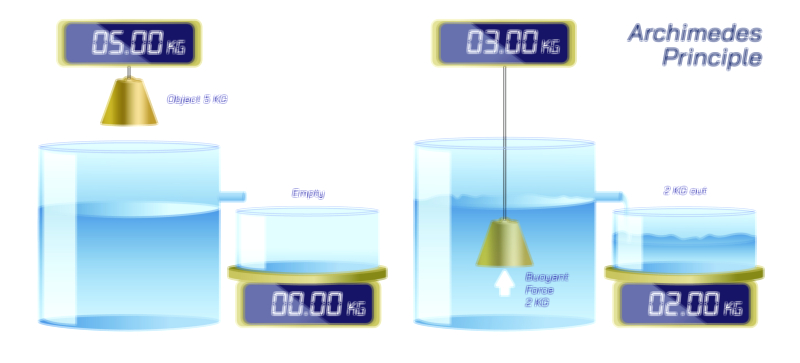
Positive and negative buoyancy lie at the heart of how objects float, sink, or suspend themselves within a fluid, forming one of the most intuitive yet profoundly important concepts in physics. Even without formal formulas, the idea itself is simple: whether something rises, descends, or stays at a certain depth depends on how its overall weight compares to the upward supporting force provided by the fluid. This balance—between the downward pull of gravity and the upward push from the displaced fluid—is what gives rise to the floating of ships, the sinking of stones, the effortless swimming of fish, and the graceful hovering of submarines beneath the waves. Buoyancy, at its essence, governs the interaction between solids, liquids, and gases, shaping the behavior of natural organisms, mechanical vehicles, environmental systems, and countless everyday experiences. Understanding positive and negative buoyancy means understanding the invisible negotiations taking place inside every body of water, every layer of the atmosphere, and every living creature adapted to its surroundings.
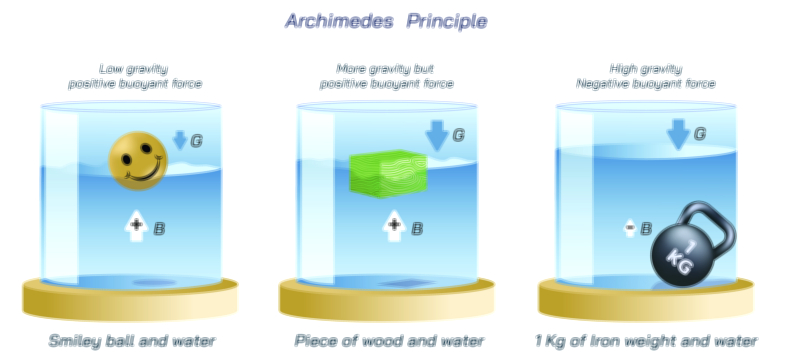
Positive buoyancy occurs when the upward force exerted by the fluid is greater than the weight of the object itself. This condition allows the object to rise toward the surface and remain there, partially or fully above the fluid level. A wooden block floats because the amount of water pushing upward exceeds the block’s weight. A life jacket keeps a swimmer afloat because its internal materials trap air and reduce overall density, enhancing buoyancy. Fish inflate their swim bladders to increase buoyancy and rise through the water. Even human lungs act as buoyancy regulators; when filled with air, they reduce body density, making floating easier. Positive buoyancy is therefore not simply a matter of lightness but a matter of relative density—how the object’s mass compares to the amount of fluid it displaces. By altering this relative relationship, objects and organisms can ascend, stabilize at the surface, or ride ocean currents with minimal effort.
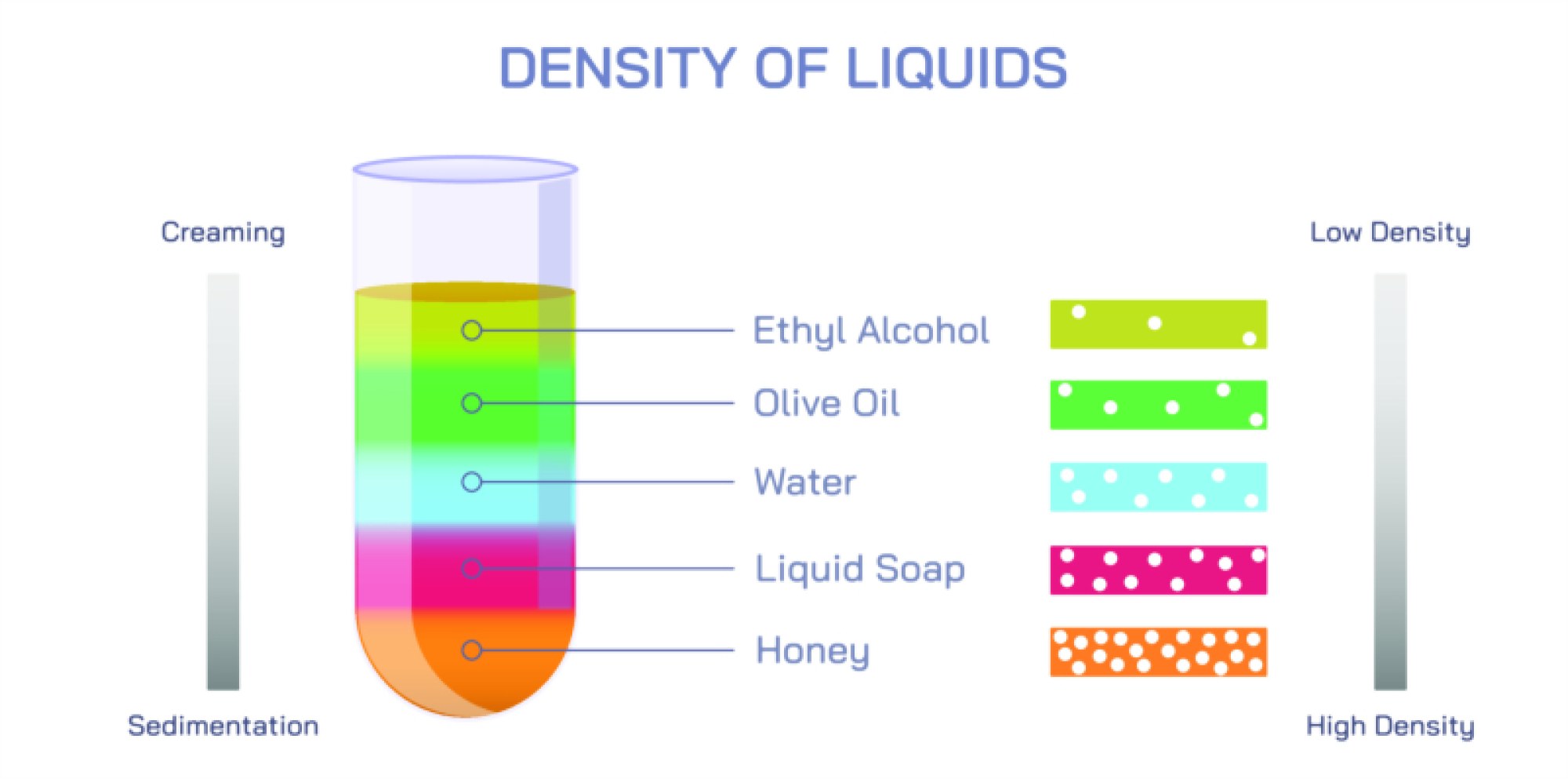
Negative buoyancy is the opposite condition, where the weight of the object exceeds the upward force provided by the displaced fluid. In this case, the object sinks or descends until it reaches a boundary such as the ocean floor or lake bed. A metal coin dropped into water sinks because the material is denser than the water it displaces. Deep-diving marine animals increase internal density to descend, releasing air from their lungs or compressing internal chambers to overcome lift. Submarines pump water into their ballast tanks to increase weight and achieve negative buoyancy for controlled dives. Negative buoyancy is essential for any object or organism that must move downward or maintain a position below the fluid surface. It is also a concept that highlights the importance of density: materials like stone or iron do not sink because they are “heavy,” but because they pack more mass into a given volume than the water surrounding them.
Between these two extremes lies a third condition, neutral buoyancy, where the upward force and downward weight balance perfectly. This balance allows an object to remain suspended at a fixed depth without rising or sinking. Divers adjust their buoyancy through weight belts, buoyancy control devices, and controlled breathing, allowing them to hover effortlessly underwater. Fish use precise adjustments in their swim bladders to maintain depth without constant fin movement. Submarines achieve neutral buoyancy to glide quietly through the ocean without expending significant energy. Neutral buoyancy represents a kind of equilibrium in which gravitational and buoyant forces coexist harmoniously. This balanced state shows how complex and fine-tuned buoyancy control must be, especially for organisms and vehicles that navigate three-dimensional environments where stability depends on subtle internal adjustments.
The concept of buoyancy is not limited to water. It applies equally to gases and the atmosphere. Hot-air balloons rise through positive buoyancy because the heated air inside the balloon becomes less dense than the surrounding air. Weather balloons ascend until they reach layers of the atmosphere where air pressure and density provide neutral buoyancy. Smoke rises initially because warm air is more buoyant than cold air, then spreads when it reaches a layer where its buoyancy is neutral. Even birds, though primarily governed by aerodynamics rather than buoyancy, rely on pockets of rising warm air—called thermals—to gain altitude without flapping their wings. In these atmospheric contexts, buoyancy governs vertical movement, stability, and the structure of clouds, atmospheric layers, and wind patterns.
In aquatic ecosystems, buoyancy shapes the lives of countless organisms. Plankton float through mechanisms of positive buoyancy, using oil droplets, gas inclusions, or low-density structures to remain near sunlight-rich surface waters. Jellyfish adjust their internal tissues and water content to drift at preferred depths. Whales, dolphins, and seals shift buoyancy by regulating lung volume and body posture, enabling efficient diving and surfacing. Seaweed and aquatic plants rely on natural buoyancy to reach sunlight, with air-filled bladders holding their fronds upright in the water column. The entire marine food web depends on how organisms manipulate buoyancy to find food, avoid predators, and maintain ecological balance.
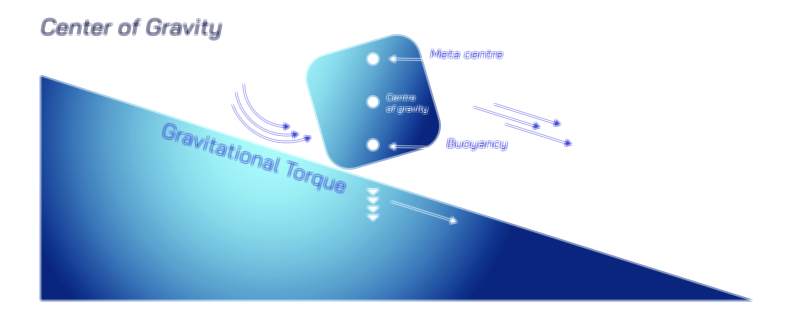
Buoyancy also plays a defining role in engineering. Ships and boats float because their overall density—including the air-filled spaces within their hulls—is lower than the water they displace. Designers distribute mass carefully to maintain stability and prevent capsizing, ensuring the center of buoyancy aligns with the center of gravity for safe motion. Submarines use complex ballast systems to switch between positive, neutral, and negative buoyancy as needed. Offshore structures such as floating platforms, oil rigs, and pontoon bridges rely on buoyant supports engineered to remain stable in dynamic water conditions. Even underwater pipelines, cables, and equipment incorporate buoyancy calculations to prevent unwanted sinking or excessive floating.
In recreational activities, buoyancy is equally important. Swimmers must understand how body position, lung inflation, and movement influence buoyancy to float or dive efficiently. Snorkelers and scuba divers use buoyancy control devices to adjust their vertical position safely. Surfboards and paddleboards remain buoyant through carefully engineered materials and shapes. Those learning to swim often use flotation devices that enhance positive buoyancy until skill and confidence develop.
From a geological and environmental perspective, buoyancy shapes large-scale processes as well. Icebergs float because solid ice is less dense than liquid water, allowing massive frozen blocks to drift across oceans. Lava flows beneath the earth’s crust rise or sink depending on the buoyancy differences in molten rock. Tectonic plates interact through buoyancy-driven forces, with less dense continental crust riding over denser oceanic crust during subduction. Even Earth’s mantle undergoes slow buoyancy-driven convection, moving heat upward and shaping continents over millions of years. Such immense natural processes demonstrate how buoyancy influences not just small-scale objects but planetary-scale dynamics.
In human physiology, buoyancy has therapeutic and rehabilitative applications. Water’s supportive upward force reduces stress on joints, allowing individuals with injuries or limited mobility to exercise with less pain. Aquatic therapy relies on buoyancy to assist movement, develop strength, and restore balance. The reduced gravitational load provided by buoyancy creates a safe environment for rehabilitation, physical conditioning, and low-impact fitness.
Buoyancy also influences artistic expression, play, and culture. Children delight in watching leaves, toys, or paper boats float down streams. Artists create floating installations that rely on carefully balanced buoyant forces. Lighting lanterns or launching floating candles in festivals draws upon the interplay of buoyancy and atmosphere. Even mythological stories and symbolic rituals often incorporate the theme of floating or sinking as metaphors for survival, purity, transition, or rebirth.
Ultimately, the concepts of positive and negative buoyancy reveal the elegant simplicity with which nature balances forces. Whether an object rises, sinks, or remains suspended depends not on mysterious qualities but on the relationship between weight and displaced fluid. This phenomenon, seemingly ordinary yet profoundly universal, helps explain why ships sail, why fish swim, why planets evolve, and why life thrives in water and air. Buoyancy is a celebration of equilibrium, a quiet but powerful reminder that the world operates through subtle balances and that even the forces we cannot see orchestrate the movement and stability of everything around us.