Archimedes’ Principle — Understanding the Concept of Buoyancy
The Fundamental Idea Behind Archimedes’ Principle
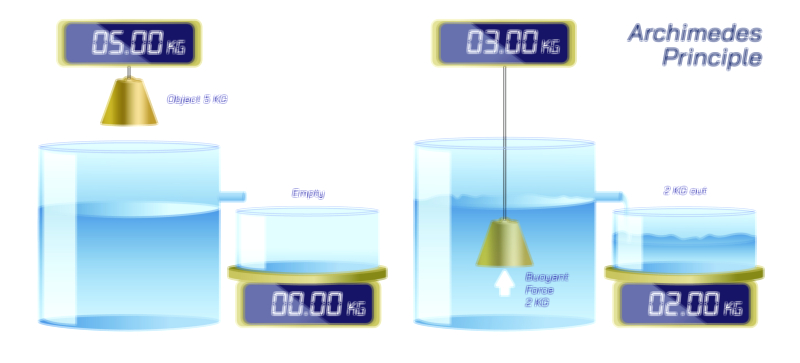
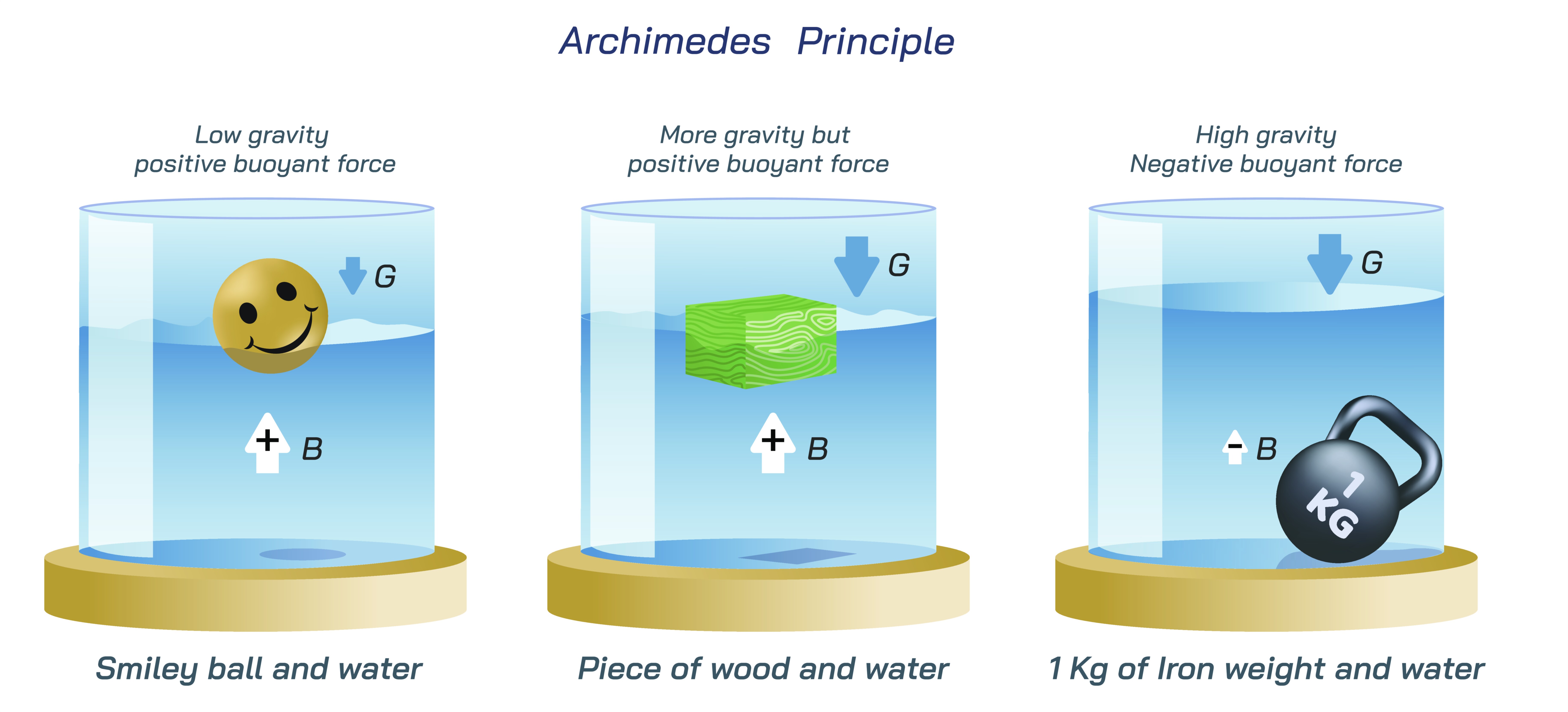
Archimedes’ Principle is one of the most influential concepts in physics, offering a clear explanation of why objects float, sink, or appear lighter when placed in a fluid. At its core, the principle states that any object immersed in a fluid experiences an upward force that makes the object feel lighter and, in some cases, able to rise to the surface. This upward push is known as buoyancy, and it is created because the fluid surrounding the object exerts pressure from all directions. When an object enters a fluid, the fluid that gets displaced pushes upward against it, creating a natural counterforce that supports the object’s weight. This simple but powerful idea explains everyday phenomena like ships floating, balloons rising, swimmers feeling weightless, and even how fish control their depth in water. Although the principle was discovered thousands of years ago, it remains just as central in modern engineering, natural sciences, and practical observation as it was when Archimedes first described it.
How Buoyancy Emerges Through Fluid Interaction
Buoyancy is not a mysterious force that appears from nowhere; it arises directly from how fluids behave under pressure. When something is placed in a liquid or gas, the fluid exerts pressure on all sides of the object. The pressure at the bottom of the object is greater than the pressure at the top because fluid pressure increases with depth. This difference creates a natural upward push, a quiet but persistent lift that works against gravity. What gives the sensation of lightness when someone steps into water or holds an object underwater is the fluid’s support through this upward force. If the upward push is strong enough to counter the object’s weight, the object floats. If the push is weaker, the object sinks but still feels lighter. This interaction between fluid pressure and object displacement makes buoyancy an intuitive yet deeply significant concept in both natural systems and human-made designs.
Floating, Sinking, and the Balance of Forces
The behavior of any object in a fluid—whether it floats, sinks, or remains suspended—depends entirely on how the upward buoyant force compares with the object’s weight. When the upward support from the fluid matches the object’s weight, the object settles gently at a level where it remains stable. If the upward force is greater, the object rises until it displaces just enough fluid to reach balance. When the object’s weight is too great for the buoyant force to support, it sinks, still feeling lighter than in air because the fluid continues to push upward even as it descends. These simple observations form the basis of ships remaining afloat despite their massive size, hot air balloons rising in the sky, and submarines adjusting their depth by controlling how much water they take in or release. The interplay of forces is quiet and invisible, yet it determines so many everyday experiences with water, air, and other fluids.
Applications in Nature and Human Technology
Archimedes’ Principle is not limited to academic curiosity; it governs countless systems in the natural world and technological devices designed by humans. Fish use this principle through their swim bladders, tiny internal chambers they fill or empty to rise or sink. Icebergs float because water expands when frozen, allowing them to remain partially above the sea surface while most of their mass is below. Human technology uses buoyancy in ships, lifeboats, floating docks, and even massive offshore structures that must remain safely above water despite harsh conditions. Hot air balloons use buoyancy in gases instead of liquids, rising because warm air inside the balloon is lighter than the cooler air surrounding it. Weather balloons ascend until the surrounding air becomes too thin to support them, after which they stabilize or burst. All these examples show how the principle stretches beyond water and applies equally well to any fluid, whether it flows on Earth or in planetary atmospheres.
Importance in Engineering, Design, and Safety
Modern engineering depends heavily on the predictability offered by Archimedes’ Principle. Naval architects design ships by carefully shaping hulls so they displace enough fluid to carry tremendous loads while remaining stable in waves. Civil engineers rely on buoyancy calculations when constructing bridges, dams, or floating platforms, ensuring structures stay secure even when water levels change. Divers and underwater robots use buoyancy control devices to rise or descend smoothly. Life jackets work by adding buoyant material that provides strong upward support even for a person who cannot swim. In industrial processes, buoyancy plays a role in separating materials, measuring fluid density, and designing storage tanks. Understanding the principle allows designers to create devices that float reliably, maintain balance, and adapt to fluid environments without unpredictable movements.
Why Archimedes’ Principle Remains So Powerful
The strength of Archimedes’ Principle lies in its elegant simplicity. It connects the behavior of fluids, the displacement of material, and the motion of objects in a way that is both predictable and deeply intuitive. Even without any mathematics, the principle can be felt and observed simply by placing an object in water and noticing the immediate change in weight. This direct connection to experience makes the principle a powerful teaching tool and a foundation for understanding more complex ideas in physics. Its relevance spans from ancient discoveries to modern engineering marvels, showing that the natural rules governing buoyancy remain constant even as technology evolves. The concept continues to shape how we design vessels, explore underwater worlds, and understand the forces acting around us every day.