Archimedes’ Principle of Water Displacement — Understanding the Concept of Buoyancy
How the Principle Originated and What It Represents
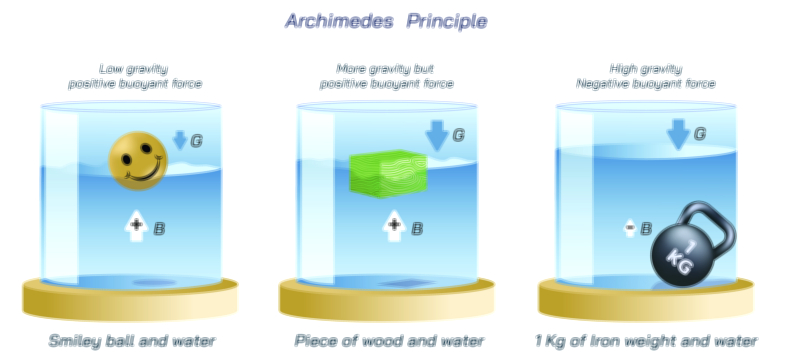
Archimedes’ principle of water displacement is one of the most enduring ideas in physics, offering a clear explanation for why objects float, sink, or remain suspended in fluids. Rooted in the observations of the ancient Greek mathematician Archimedes, the principle reveals a simple yet profound truth about the relationship between objects and the fluid surrounding them. It explains that whenever an object is placed in water or any other fluid, the fluid pushes back against the object with an upward force. This upward push, known as buoyancy, is tied entirely to the fluid that the object displaces. In essence, the object must make space for itself within the water, and the water responds by exerting a balancing force. This concept is fundamental to understanding why ships remain afloat, why some materials rise to the surface while others sink, and how the natural world maintains equilibrium in lakes, oceans, and rivers.
How Water Displacement Creates an Upward Force
The behavior of water around an object provides a visual and intuitive understanding of the principle. When an object is lowered into water, it pushes the surrounding water aside and forces it to move. The water resists this movement because fluids naturally oppose any disturbance of their position. This resistance creates an upward force that acts against the weight of the object. The amount of water that an object displaces depends on its size and the portion of it that sinks below the surface. Larger objects or deeper submersion results in more water being moved, and therefore a stronger upward force. This upward push is the water’s way of supporting the object, trying to restore balance after being disturbed. Even though the water appears calm on the surface, countless tiny interactions beneath it produce a steady force that helps explain the floating behavior of objects.
How Buoyancy Determines Whether an Object Floats or Sinks
Whether an object floats or sinks depends on the relationship between its weight and the upward force produced by its displacement of water. If the water’s upward push is strong enough to counter the object’s weight, the object rises or stays afloat. If the object is too heavy for the amount of water it displaces, it sinks. This interaction is why a heavy steel ship remains afloat while a small stone sinks immediately. The ship, although dense in its materials, is shaped in a way that displaces a large amount of water, generating a powerful upward force. The stone, by contrast, displaces very little water compared to its weight, leaving it unable to receive enough support from the surrounding fluid. This interplay reveals the natural balance between forces in the physical world, demonstrating that buoyancy is not just a property of the object but a relationship between the object and the water it rests in.
Why the Shape and Structure of Objects Affect Buoyancy
The principle of water displacement helps explain why shape is often more important than material when determining whether something floats. A block of metal may sink instantly, but the same amount of metal reshaped into a hollow, wide structure can remain afloat. This happens because the reshaped object spreads its weight over a larger volume, forcing the water to move aside more dramatically. As more water is displaced, the upward push increases, allowing the newly shaped structure to find its balance on the surface. This idea is central to the design of ships, submarines, rafts, and many aquatic structures. Engineers use the principle to create designs that maximize displacement while maintaining strength, ensuring that vessels remain stable even when carrying heavy cargo. The principle shows that buoyancy is not merely about weight but about how that weight is distributed within the fluid.
How the Principle Applies to Everyday Experiences
Archimedes’ principle is at work in countless everyday situations, often unnoticed. When you step into a bathtub, the water level rises around your body because your presence forces the water out of its original position. When a ball is pushed underwater, it resists being submerged because the water around it pushes upward with surprising strength. Even small objects like leaves, insects, and grains of sand exhibit buoyant behavior depending on how they interact with the water’s surface. In nature, fish take advantage of buoyancy by adjusting the amount of air stored in their bodies, allowing them to rise or sink effortlessly. Icebergs float because they displace enough water to support the part of the ice that remains above the surface. These experiences highlight how the principle shapes the world around us, often in ways we do not consciously observe.
Understanding Buoyancy Through Fluid Behavior
Water, like all fluids, responds dynamically to pressure, motion, and disturbance. When an object is placed in water, the fluid beneath it experiences increased pressure while the fluid above experiences less. This imbalance contributes to the upward force that supports the object. The deeper an object is submerged, the more pronounced this difference becomes, increasing the supporting push from the water below. Although we cannot see the movement of individual water particles, their collective response influences the behavior of floating and sinking objects. This invisible push is what allows swimmers to stay afloat, divers to control their depth, and large structures to stand firmly on the sea. The principle reminds us that fluids are not passive; they actively respond to intrusions with forces that shape the behavior of objects.
Why Archimedes’ Principle Matters in Science and Engineering
The significance of Archimedes’ principle extends far beyond explaining simple floating behavior. It provides the basis for designing ships, submarines, floating bridges, and water-based machinery. Engineers rely on it to calculate how much weight a vessel can safely carry, how stable it will remain in water, and how it will respond to waves or shifting loads. The principle is also used in measuring the density of materials, developing scientific instruments, supporting underwater exploration, and studying the movement of fluids in natural environments. Its applications reach into fields such as meteorology, where buoyancy helps explain the rise of warm air and the formation of clouds, and into medicine, where it supports techniques for measuring body composition through water displacement. This wide-ranging relevance underscores the principle’s enduring value in science and technology.
A Concept That Connects Nature, Physics, and Practical Life
Archimedes’ principle represents the harmony between physical forces and natural behavior. It shows how simple laws govern the balance between objects and the fluids they occupy. By understanding this principle, we gain insight into the behavior of oceans, the stability of floating structures, the movement of aquatic life, and the design of countless human inventions. It illustrates how the physical world operates according to consistent patterns, and how even the smallest disturbance in water reveals the presence of underlying forces. Appreciating this concept deepens our awareness of the unseen interactions that allow objects to float, support weight, and coexist with the fluid environment around them.