A backhoe loader is one of the most versatile and widely used machines in the construction and infrastructure sectors. It combines the functionality of multiple pieces of heavy equipment into a single compact unit, making it an essential tool for projects that require flexibility, efficiency, and mobility. Known for its distinctive design featuring a front-mounted loading bucket and a rear-mounted digging arm, the backhoe loader bridges the gap between excavators and loaders, offering a balanced solution for a wide range of tasks.
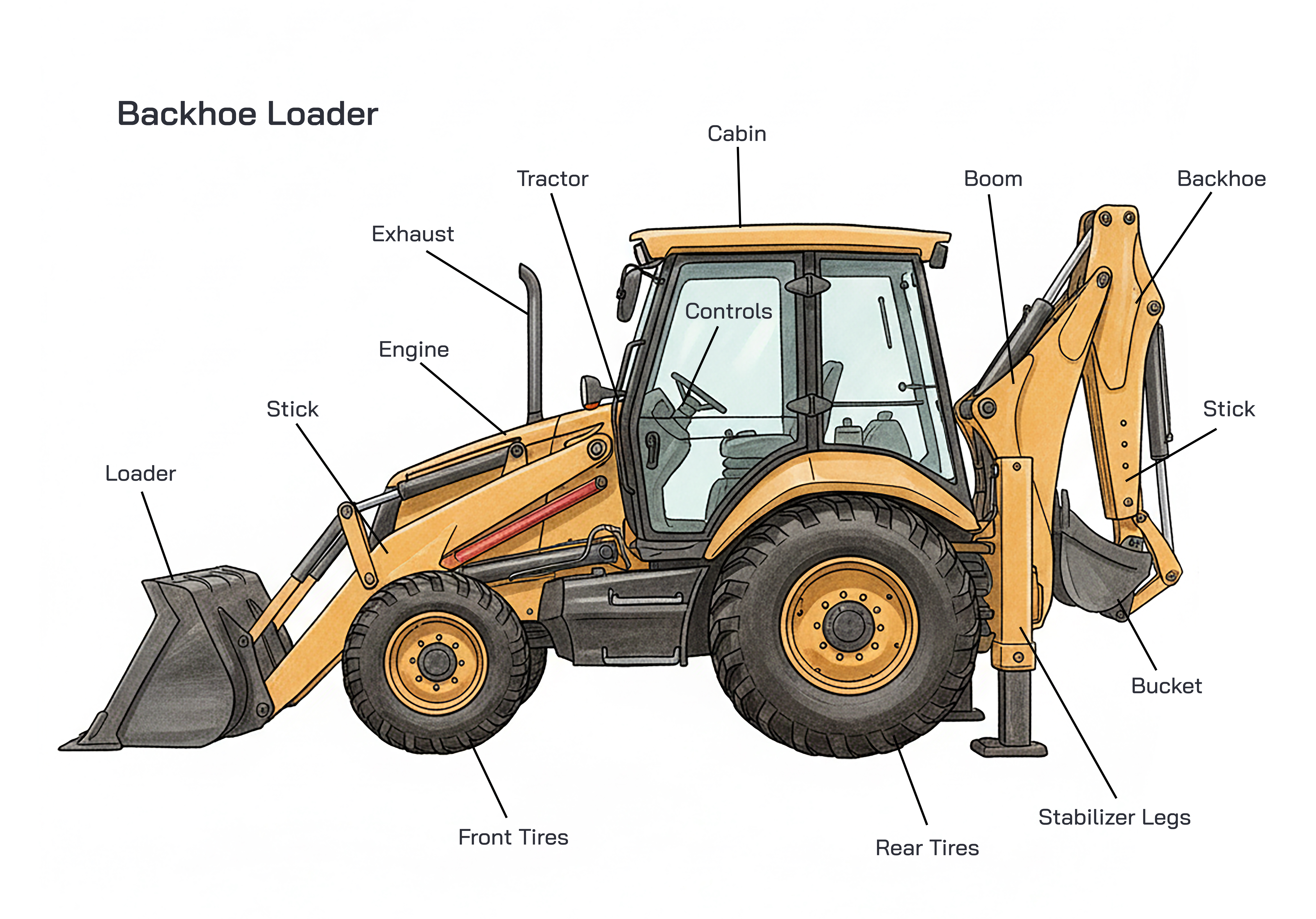
The defining characteristic of a backhoe loader is its dual-purpose structure. At the front, it is equipped with a loader bucket designed for lifting, carrying, and loading loose materials such as soil, sand, gravel, and debris. At the rear, it features a backhoe arm capable of deep digging, trenching, and precision excavation. This combination allows operators to perform excavation and material handling without switching machines, significantly improving workflow efficiency on construction sites.
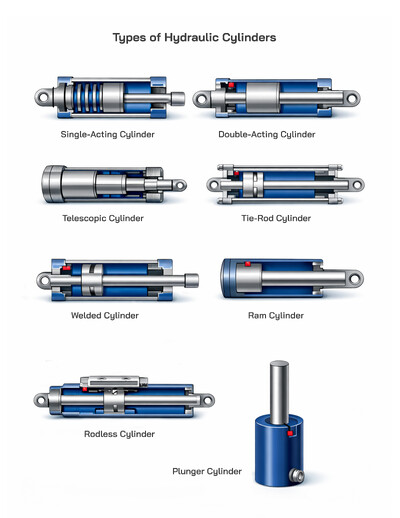
The machine operates using a hydraulic system that powers both the front loader and rear excavator components. Hydraulic pressure provides smooth, controlled movement, enabling precise handling even in confined spaces. The articulated boom and extendable arm on the rear side allow the backhoe loader to reach below ground level and maneuver around obstacles, making it particularly effective for trench digging and foundation preparation. The hydraulic system also supports various attachments, expanding the machine’s functional capabilities.
Structurally, backhoe loaders are typically built on a wheeled platform rather than tracks. This design gives them a major advantage in mobility. They can travel quickly between job sites without the need for transport trailers, especially on paved roads. This mobility makes them ideal for urban environments, municipal projects, and road maintenance work where frequent relocation is required. Their compact design allows them to operate efficiently in narrow streets, residential areas, and crowded construction zones.
The operator cabin is designed to provide visibility, control, and comfort. Large windows offer clear sightlines to both the front bucket and rear digging arm, allowing safe and accurate operation. Modern cabins often include ergonomic seating, climate control, and intuitive control layouts, reducing operator fatigue during long working hours. Enhanced operator comfort directly contributes to productivity and operational precision.
In terms of applications, the backhoe loader is widely used in excavation work. It is particularly effective for digging trenches required for utility installation, such as water supply lines, sewage systems, electrical conduits, and communication cables. The rear digging arm can create narrow and deep trenches with accuracy, minimizing disruption to surrounding areas. This precision is especially valuable in urban infrastructure development where space is limited.
Foundation work is another major application. Backhoe loaders are used to excavate shallow foundations for buildings, boundary walls, and small structures. Their ability to switch quickly between digging and loading allows soil to be excavated and moved away efficiently. This reduces project timelines and lowers overall operational costs, making the backhoe loader a preferred choice for small to medium-scale construction projects.
Road construction and maintenance heavily rely on backhoe loaders. They are used for removing damaged pavement, clearing debris, digging drainage channels, and loading construction materials. In rural areas, these machines play a vital role in maintaining unpaved roads, improving accessibility, and supporting transportation networks. Their adaptability makes them suitable for both temporary repairs and long-term infrastructure projects.
Beyond construction, backhoe loaders are widely used in agriculture and landscaping. Farmers utilize them for land leveling, ditch digging, manure handling, and material transport within farms. Landscapers rely on backhoe loaders for shaping terrain, planting preparation, and removal of unwanted soil or rocks. The ability to attach specialized tools such as augers and forks further increases their usefulness in non-construction environments.
Another important area of use is municipal and public services. Local authorities employ backhoe loaders for tasks such as clearing drainage systems, repairing water pipelines, maintaining public spaces, and managing waste materials. During emergencies, including floods and storms, backhoe loaders are deployed for debris removal, road clearing, and restoration of essential services. Their rapid deployment and multifunctional capability make them valuable assets in disaster response operations.
From an economic perspective, the backhoe loader offers significant cost advantages. Instead of investing in separate machines for excavation and loading, organizations can rely on a single unit to perform multiple functions. This reduces equipment costs, maintenance expenses, and labor requirements. Fuel efficiency and relatively simple maintenance further enhance its cost effectiveness, particularly for contractors working on diverse projects.
The importance of backhoe loaders in infrastructure development cannot be overstated. They support the construction of roads, buildings, utilities, and agricultural systems that form the backbone of modern society. Their contribution extends to rural development by enabling efficient land management and improving access to basic services. In developing regions, backhoe loaders often serve as the primary heavy equipment due to their versatility and affordability.
Technological advancements continue to improve backhoe loader performance. Modern models feature enhanced hydraulics, better fuel efficiency, improved safety systems, and compatibility with advanced attachments. These improvements increase productivity while reducing environmental impact, aligning with global efforts toward sustainable construction practices.
Beyond its basic description as a dual-purpose construction machine, the backhoe loader represents a carefully engineered response to real-world working conditions where space, time, and resources are limited. Its continued global popularity is not accidental; it is the result of decades of refinement aimed at creating a machine that adapts to human workflows rather than forcing projects to adapt to machines. This human-centered practicality is one of the most important but least discussed reasons for the backhoe loader’s dominance across construction, agriculture, and public service sectors.
At an engineering level, the backhoe loader is designed around balance. Unlike single-function machines that are optimized for one task, the backhoe loader distributes weight strategically between the front loader and rear digging unit. This balance is critical for stability during operation. When digging at the rear, the front bucket and chassis act as counterweights, while stabilizer legs anchor the machine to the ground. This configuration allows controlled digging without excessive machine movement, even on uneven terrain. The stabilizers themselves are precision components, absorbing vibration and preventing energy loss, which improves digging accuracy and reduces wear on structural parts.
Another important but often overlooked aspect is the machine’s adaptability to operator skill levels. Backhoe loaders are frequently operated by small contractors, municipal workers, and farmers rather than highly specialized heavy-equipment operators. For this reason, control systems are designed to be intuitive. The learning curve is shorter compared to large excavators or wheel loaders. This accessibility allows organizations to deploy skilled workers more flexibly, reducing dependency on niche expertise and increasing workforce efficiency.
The machine’s role as a “transition tool” in project workflows is also significant. On many sites, the backhoe loader performs preparatory tasks that enable larger equipment to function effectively. It clears access paths, prepares trenches, levels staging areas, and handles finishing work after heavy excavation is complete. This makes it a critical link between manual labor and large-scale mechanized operations. In smaller projects, it may serve as the only heavy machine required, while on larger projects it supports specialized equipment by handling secondary tasks.
From a mechanical durability perspective, backhoe loaders are built for mixed-use stress rather than continuous extreme loads. Their components are engineered to tolerate frequent switching between tasks, forward and reverse motion, and varied terrain. This design philosophy prioritizes longevity in real working conditions over peak performance in a single role. As a result, many backhoe loaders remain operational for decades with proper maintenance, making them long-term assets rather than short-cycle investments.
The versatility of attachments deserves deeper attention. While buckets and augers are commonly mentioned, the real value lies in how quickly a backhoe loader can be reconfigured. A single machine can shift from digging to lifting, breaking, clamping, or drilling within minutes. This rapid transformation reduces downtime and allows crews to respond immediately to changing site requirements. In remote or rural areas where access to additional equipment is limited, this adaptability becomes essential rather than convenient.
Backhoe loaders also play a unique role in infrastructure equity. In regions with limited industrial capacity, they often represent the highest level of mechanization available. Roads, drainage systems, irrigation channels, and small public buildings are frequently constructed using backhoe loaders as the primary machine. Their ability to perform multiple tasks with minimal support equipment enables infrastructure development in areas where large construction fleets are impractical or unaffordable. In this sense, the backhoe loader contributes directly to social and economic development.
Environmental interaction is another dimension worth exploring. Compared to larger machines, backhoe loaders exert lower ground pressure, reducing soil compaction and surface damage. This is particularly important in agricultural land, landscaped areas, and urban settings where minimizing environmental disruption is critical. Modern engines and hydraulic systems further reduce emissions and fuel consumption, allowing the machine to align with increasingly strict environmental regulations while maintaining productivity.
Safety design has evolved significantly as well. Modern backhoe loaders integrate rollover protection, reinforced cabins, visibility enhancements, and responsive braking systems. These features acknowledge the reality that backhoe loaders often operate in close proximity to people, traffic, and existing structures. The machine’s compact size and precise control reduce risk when compared to larger equipment, making it suitable for densely populated environments.
The backhoe loader’s importance is also cultural within the construction industry. It is often the first heavy machine that operators learn to use and the most trusted tool on small job sites. Its presence signals readiness, capability, and independence. Contractors frequently measure their operational capacity by whether they own or have access to a backhoe loader, underscoring its symbolic and practical value.
Looking toward the future, the backhoe loader continues to evolve without losing its core identity. Advances in automation, telematics, and operator assistance systems are being integrated gradually, enhancing efficiency without compromising simplicity. This careful evolution ensures that the backhoe loader remains relevant across generations of technology and labor practices.
In essence, the backhoe loader is not merely a machine that digs and loads. It is a flexible work partner designed to adapt to human needs, economic constraints, and environmental realities. Its success lies in balance rather than specialization, resilience rather than excess, and usability rather than complexity. These qualities explain why, despite rapid technological change, the backhoe loader remains one of the most indispensable machines in modern development and construction worldwide.
A backhoe loader is often described as a machine that does many jobs, but this description only scratches the surface of why it remains indispensable across decades and continents. At its core, the backhoe loader is a product of practical intelligence. It is not built to dominate a single task but to respond effectively to constantly changing work conditions. This makes it especially valuable in real-world environments where projects rarely follow perfect plans and adaptability matters more than raw power.
One of the most unique strengths of a backhoe loader lies in how it fits into the rhythm of daily work. Unlike large excavators or specialized loaders that require careful planning and support equipment, a backhoe loader can arrive at a site and begin working almost immediately. This immediacy saves time in ways that are difficult to measure on paper but highly visible on the ground. When a trench depth changes, soil conditions vary, or an unexpected obstruction appears, the operator can respond instantly without waiting for another machine. This responsiveness turns the backhoe loader into a problem-solver rather than just a tool.
The design philosophy behind the backhoe loader emphasizes reliability over complexity. Its systems are engineered to be strong, understandable, and serviceable, even in areas with limited technical infrastructure. Many backhoe loaders operate in regions where advanced diagnostic tools or specialized mechanics are unavailable. For this reason, components are designed to be accessible, durable, and tolerant of demanding conditions such as dust, heat, moisture, and uneven fuel quality. This mechanical resilience allows the machine to function consistently in environments where more advanced equipment might fail.
Another overlooked aspect is how backhoe loaders influence workforce dynamics. Because one machine can perform multiple tasks, smaller teams can achieve results that would otherwise require larger crews. This changes how projects are staffed and managed. Operators often develop a deep personal connection with their machines, learning every sound, vibration, and response. This familiarity improves safety and efficiency, as experienced operators can sense problems early and adjust their technique accordingly. In many cases, the skill of the operator and the versatility of the backhoe loader become equally important factors in project success.
Backhoe loaders also excel in transitional spaces where manual labor and heavy machinery overlap. They can work close to existing buildings, underground utilities, and pedestrian areas without causing excessive disruption. Their precise controls allow delicate operations such as exposing buried pipes, shaping drainage slopes, or placing materials accurately. This precision reduces rework and prevents damage, which is especially critical in urban renovation and maintenance projects where mistakes are costly.
From a long-term ownership perspective, the backhoe loader offers exceptional value. It is not uncommon to see machines remain in active service for decades, passing from one owner to another. This longevity is supported by strong resale value, widespread availability of spare parts, and a global network of knowledge. Even older machines continue to perform meaningful work, particularly in secondary markets where affordability and versatility are more important than the latest technology. Few machines achieve this level of long-term relevance.
The backhoe loader also plays a quiet but powerful role in emergency response and recovery. When floods, landslides, or infrastructure failures occur, these machines are often among the first to be deployed. Their ability to clear debris, restore access routes, dig temporary drainage, and assist repair crews makes them essential during critical moments. In such situations, the machine’s speed of deployment and multifunction capability can directly affect how quickly communities recover.
There is also an environmental dimension to the backhoe loader that is rarely discussed. By consolidating multiple functions into a single machine, it reduces the need to transport and operate several pieces of equipment. This lowers fuel consumption, emissions, and logistical complexity. In sensitive areas such as farmland, parks, and residential zones, its moderate size and controlled movement help limit environmental disturbance while still delivering meaningful productivity.
Culturally, the backhoe loader has become a symbol of practical development. In many regions, it represents progress that is visible, tangible, and immediately useful. Roads get repaired, water lines are installed, land becomes workable, and communities see results quickly. This visibility builds trust in infrastructure projects and reinforces the machine’s reputation as a reliable workhorse rather than an abstract piece of technology.
As construction methods evolve, the backhoe loader continues to adapt without losing its identity. Incremental improvements in fuel efficiency, operator assistance, and digital monitoring enhance performance while preserving the simplicity that defines the machine. This balance between innovation and familiarity ensures that new generations of operators can benefit from modern features without losing the intuitive control that made the backhoe loader successful in the first place.
Ultimately, the backhoe loader endures because it reflects how work actually happens. Projects change, conditions shift, and unexpected challenges arise. A machine that can dig, lift, move, adjust, and respond without complication becomes more than equipment; it becomes a dependable partner on the job. This human-centered practicality is the true reason the backhoe loader remains one of the most trusted and widely used machines in construction, agriculture, and public service worldwide.
In conclusion, the backhoe loader is a highly adaptable and indispensable machine characterized by its multifunction design, hydraulic efficiency, and operational flexibility. Its ability to dig, load, lift, and transport materials using a single platform makes it a cornerstone of construction, agriculture, municipal services, and emergency response. By combining versatility with mobility and cost efficiency, the backhoe loader remains one of the most important machines supporting infrastructure development and modern engineering projects worldwide.