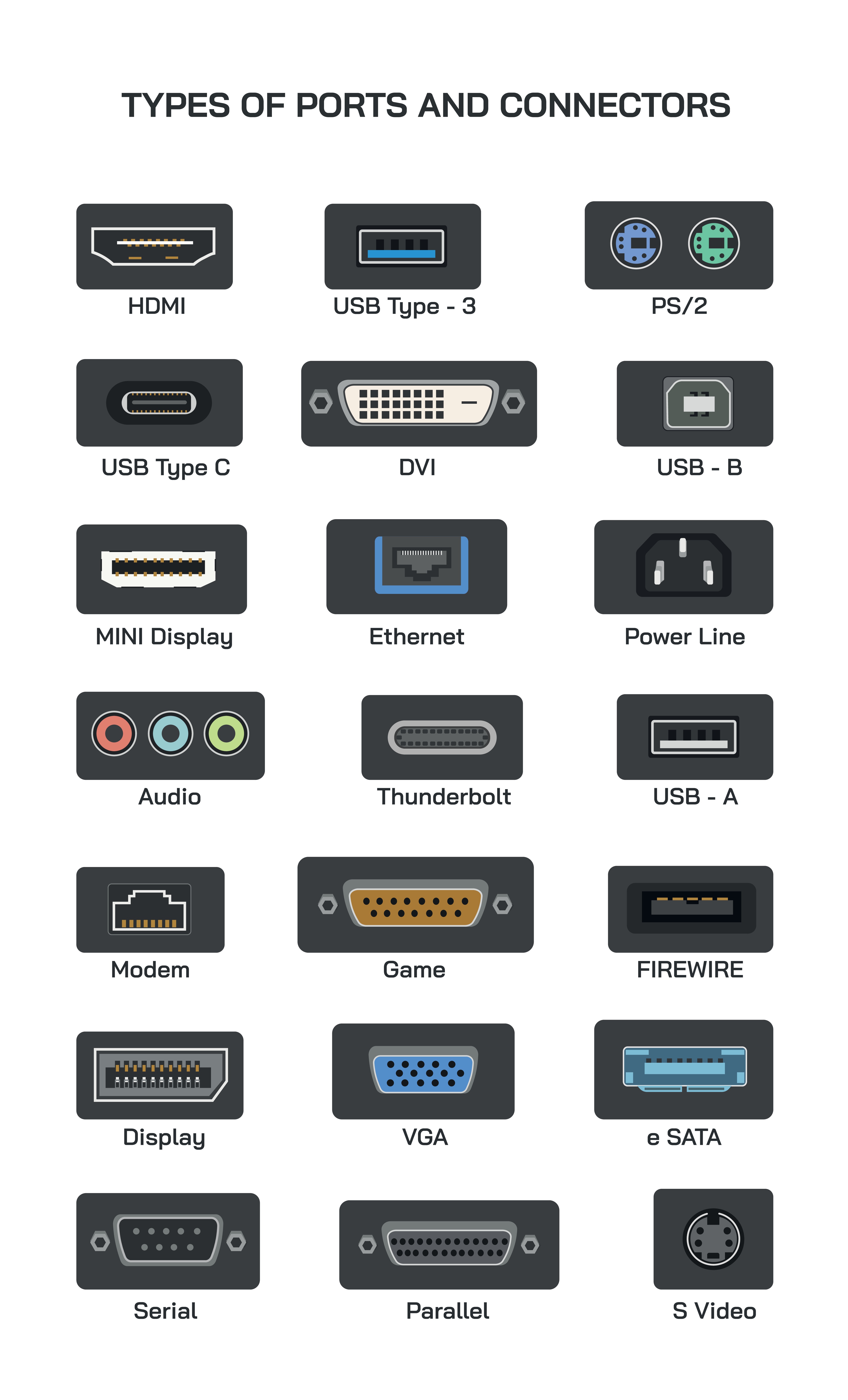
USBs, ports, and connectors form the foundation of modern electronic connectivity. They enable computers, laptops, mobile devices, and industrial systems to communicate, transfer data, display visuals, output sound, and receive electrical power. Without these physical interfaces, interaction between hardware components and external devices would not be possible. Understanding the different types of USBs, ports, and connectors provides clarity on how digital systems function and why certain interfaces are used for specific purposes.
USB, which stands for universal serial bus, is one of the most widely used connection standards in the world. USB was designed to simplify device connectivity by providing a common interface for data transfer and power delivery. Over time, USB technology has evolved into multiple physical types and performance levels, each suited for different applications.
USB Type A is the most recognizable and widely used USB connector. It has a rectangular shape and is commonly found on computers, laptops, televisions, and chargers. USB Type A ports act as host interfaces, allowing devices such as keyboards, mice, flash drives, printers, and external hard drives to connect. Although durable and widely supported, its non-reversible design requires correct orientation during insertion.
USB Type B connectors are typically used on larger peripheral devices such as printers, scanners, and audio equipment. They are square-shaped with beveled edges and are less common in consumer-facing devices. USB Type B connectors help differentiate peripheral connections from host connections and are often found in professional or office equipment.
Mini USB and Micro USB connectors were developed to support smaller devices such as digital cameras, early smartphones, portable media players, and external accessories. These connectors reduced size while maintaining USB functionality. Micro USB became a global standard for mobile charging for many years due to its compact design and durability. However, both Mini USB and Micro USB are gradually being phased out as newer technologies emerge.
USB Type C represents a major advancement in USB design. It features a compact, reversible connector that can be inserted in either orientation. USB Type C supports faster data transfer, higher power delivery, and video output through a single cable. This versatility allows it to replace multiple older ports, making devices thinner and more efficient. Today, USB Type C is commonly used in smartphones, laptops, tablets, monitors, and docking stations.
Thunderbolt ports use a similar physical design to USB Type C but offer significantly higher performance. Thunderbolt supports ultra-fast data transfer, high-resolution video output, and power delivery through a single cable. This makes it ideal for professional applications such as video editing, external graphics, high-speed storage, and advanced display setups.
Beyond USB, computers and electronic systems rely on a wide range of specialized ports and connectors. HDMI is a digital interface used primarily for transmitting high-definition video and audio signals. It is widely used in televisions, monitors, gaming consoles, and multimedia devices. HDMI supports high resolutions and multi-channel audio, making it the standard for home entertainment systems.
VGA is an older analog video connector that was commonly used for monitors and projectors. While largely replaced by digital standards, VGA is still found in legacy systems and educational or industrial environments. Its larger connector and analog signal limit resolution and image clarity compared to modern interfaces.
DVI is a transitional video interface that supports digital and analog signals. It provided improved image quality over VGA and was widely used in early flat-panel displays. Although less common today, DVI ports are still present on some professional monitors and graphics hardware.
Audio ports enable sound input and output between devices. These connectors support headphones, microphones, speakers, and line-level audio equipment. Audio ports remain important even as digital audio transmission increases, especially in professional audio setups and consumer electronics.
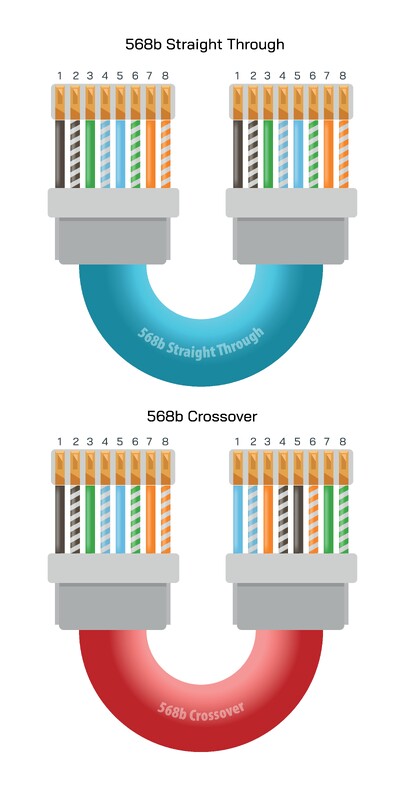
Ethernet ports provide wired network connectivity. They enable computers, routers, switches, and industrial systems to connect to local networks and the internet. Ethernet offers reliable, high-speed data transmission and remains essential in environments where stability and security are critical.
Serial and parallel ports represent older communication standards used in early computing and industrial control systems. Serial communication transmits data one bit at a time and is still used in specialized equipment and embedded systems. Parallel ports transmit multiple bits simultaneously and were commonly used for printers and legacy hardware.
FireWire was developed for high-speed data transfer in multimedia applications such as digital video and audio production. While largely replaced by USB and Thunderbolt, FireWire played an important role in professional media environments.
eSATA connectors were designed specifically for external storage devices, providing faster data transfer than traditional USB at the time of their introduction. Although less common today, they are still used in certain storage and industrial applications.
Power connectors are responsible for supplying electrical energy to devices. These connectors vary widely depending on voltage, current requirements, and safety standards. Reliable power delivery is essential for stable device operation and long-term hardware performance.
The industrial importance of USBs, ports, and connectors lies in standardization and compatibility. Standard interfaces reduce complexity, lower manufacturing costs, and ensure that devices from different manufacturers can work together. This interoperability supports rapid technological adoption and global connectivity.
Modern trends in connectivity focus on consolidation and efficiency. Newer ports aim to combine data, video, audio, and power into a single interface. This reduces cable clutter, simplifies device design, and enhances user experience. USB Type C and Thunderbolt exemplify this trend by supporting multiple functions through one compact connector.
Backward compatibility remains a critical design consideration. Many modern systems include adapters and hybrid ports to ensure older devices can still function. This protects investments in existing hardware while allowing gradual transition to newer standards.
From consumer electronics to industrial automation, ports and connectors play a silent but vital role. They determine how devices communicate, how fast data moves, and how reliably systems operate. Their evolution reflects the growing demand for speed, efficiency, and versatility in a connected world.
Beyond their visible function as physical interfaces, USBs, ports, and connectors are deeply tied to signal integrity and electrical engineering principles. Every connector must preserve data accuracy while minimizing signal loss, electromagnetic interference, and electrical noise. As data rates increase, even minor imperfections in connector design, cable quality, or shielding can cause errors, reduced performance, or unstable connections. This is why modern high-speed interfaces rely on precise pin layouts, advanced materials, and strict manufacturing tolerances to maintain reliable communication.
Signal directionality and role negotiation are additional complexities in modern connectors. Many newer interfaces are no longer fixed as “host” or “device” by design alone. Instead, they dynamically negotiate roles when connected. This allows a single port to act as a power source, power consumer, data transmitter, or data receiver depending on the connected device and cable. This flexibility improves usability but also requires sophisticated internal controllers to manage safe and correct operation in real time.
Cable quality plays an equally important role in overall connectivity performance. Two connectors of the same type may behave very differently depending on the cable between them. Cable length, conductor thickness, shielding layers, and internal wiring configuration all affect maximum data speed and power capacity. As interfaces become more capable, the cable itself becomes an active component rather than a passive accessory, influencing stability, charging speed, and compatibility.
Mechanical durability is another crucial consideration in connector design. Ports and connectors are subject to repeated insertion cycles, vibration, and physical stress. Engineers design connectors to withstand thousands of connection cycles without significant wear or loss of contact pressure. In mobile devices and industrial environments, failure often occurs not from electrical issues but from mechanical fatigue, bent pins, or loosened housings. Improved materials and reinforced designs are therefore essential for long-term reliability.
Environmental resistance is especially important in industrial, automotive, and outdoor applications. Specialized connectors are designed to resist dust, moisture, chemicals, and temperature extremes. Sealed connectors, locking mechanisms, and corrosion-resistant coatings help ensure reliable operation in harsh conditions. These ruggedized interfaces may look similar to consumer connectors but are built to much stricter standards to prevent failure in critical systems.
Power management has become one of the most significant challenges in modern connectivity. As devices demand higher power levels, connectors must safely handle increased current without overheating. Intelligent power negotiation systems monitor voltage, current, and temperature to prevent damage. This is particularly important in compact devices where heat dissipation is limited. Advanced power management allows faster charging while maintaining safety and component longevity.
Latency and synchronization are additional factors that influence connector selection in professional and industrial systems. In applications such as real-time control, audio production, or high-frequency trading systems, even small delays can have significant consequences. Connectors and interfaces used in these environments are chosen not only for speed but for predictable timing behavior and minimal jitter.
Interference management has become more complex as devices incorporate multiple radios, processors, and high-speed buses. Poorly designed connectors can act as antennas, radiating or receiving unwanted signals. To counter this, modern connectors use grounding strategies, differential signaling, and layered shielding to isolate signals and maintain performance even in electrically noisy environments.
The evolution of connectors is also shaped by regulatory and safety standards. Electrical interfaces must comply with international regulations related to fire safety, electromagnetic compatibility, and human exposure. Compliance ensures that devices can be sold globally and used safely in homes, workplaces, and public infrastructure. These standards influence connector size, insulation requirements, and allowable power levels.
Connector ecosystems extend beyond hardware into software and firmware. Many modern ports rely on software-controlled protocols to manage speed, compatibility, and power states. Firmware updates can improve compatibility with new devices, fix negotiation issues, or unlock additional capabilities without changing physical hardware. This tight integration between hardware and software represents a shift from purely mechanical interfaces to intelligent connectivity systems.
The role of adapters and hubs has grown as devices become thinner and more specialized. Instead of including many dedicated ports, manufacturers increasingly rely on multifunction ports paired with external expansion accessories. This modular approach allows users to customize connectivity while reducing device size and complexity. However, it also places greater importance on adapter quality and compatibility to avoid bottlenecks or instability.
In large-scale systems such as data centers and industrial automation networks, connectors influence scalability and maintenance efficiency. Standardized connectors allow quick replacement, modular upgrades, and simplified troubleshooting. Poor connector choices can increase downtime, complicate repairs, and raise operational costs, making connector selection a strategic decision rather than a minor detail.
From a sustainability perspective, connector design affects electronic waste and resource efficiency. Durable connectors extend device lifespan by reducing failure rates. Standardized interfaces reduce the need for proprietary cables and accessories, lowering material consumption. Some modern designs also emphasize recyclability and reduced use of hazardous materials, aligning connectivity hardware with broader environmental goals.
Human factors also shape connector evolution. Ease of use, tactile feedback, and visual clarity influence how reliably users connect devices. Poorly designed connectors increase the risk of incorrect insertion, damage, or frustration. Reversible designs and simplified shapes improve user experience and reduce accidental wear, particularly in frequent-use scenarios.
In advanced research and emerging technologies, connectors continue to evolve to support new demands. High-speed scientific instruments, autonomous systems, and next-generation computing platforms require interfaces that can handle massive data volumes with extreme precision. Experimental connectors developed for these applications often influence future consumer and industrial standards.
As connectivity standards mature, one of the most influential yet less visible factors is backward and forward signaling tolerance. Modern connectors are engineered to handle multiple generations of signaling protocols over the same physical interface. This means a single port may support legacy low-speed signals while also accommodating next-generation high-speed communication. Achieving this requires careful electrical isolation, adaptive equalization, and intelligent controllers that can detect signal capability and adjust transmission parameters accordingly. This design philosophy allows technology to evolve without forcing immediate obsolescence of existing devices.
Another important dimension is impedance matching within connectors and cables. At high data rates, even slight mismatches in impedance can cause signal reflections that degrade performance. Engineers design connector pins, traces, and cable geometry to maintain consistent impedance throughout the signal path. This becomes increasingly critical as interfaces push into multi-gigabit and multi-lane transmission speeds. Precision in connector geometry is therefore not just a mechanical concern but a fundamental requirement for data integrity.
Connector miniaturization has also introduced new engineering challenges. As devices become thinner and more compact, connectors must occupy less space while handling higher power and faster data. This creates a tension between size reduction and thermal management. Smaller connectors have less surface area to dissipate heat, so designers must rely on advanced materials, improved contact resistance control, and smarter power distribution to prevent overheating. The success of modern compact devices depends heavily on solving this balance.
The role of contact materials is another critical yet often overlooked aspect. Connector contacts are typically plated with materials such as gold or nickel to improve conductivity and resist corrosion. The thickness and quality of this plating directly affect connection reliability over time. In high-use environments, inferior contact materials can wear down, leading to intermittent connections or increased resistance. Selecting the right contact materials is therefore essential for long-term performance, especially in mission-critical systems.
Connector locking and retention mechanisms also play a vital role in reliability. In consumer electronics, friction-based connections prioritize ease of use. In contrast, industrial, automotive, and aerospace systems often use locking connectors to prevent accidental disconnection due to vibration or movement. These locking systems may involve clips, screws, or bayonet-style mechanisms, each designed to maintain electrical continuity under demanding conditions. The choice of retention method reflects the operational environment rather than purely electrical requirements.
Another advanced consideration is hot-plugging capability. Many modern connectors allow devices to be connected or disconnected while powered on. Supporting hot-plugging safely requires built-in sequencing of power and ground pins, current limiting, and protection circuits. Without these safeguards, hot-plugging could cause electrical surges, data corruption, or component damage. This capability has become essential in both consumer convenience and enterprise systems where uptime is critical.
Connector density is increasingly important in data-intensive environments. Servers, networking equipment, and high-performance computing systems require many connections in limited space. High-density connectors allow multiple data lanes, power channels, or signal paths to be grouped into a single interface. While this improves space efficiency, it also increases the complexity of thermal management, signal isolation, and maintenance. Designing high-density connectors requires careful planning to avoid interference and ensure serviceability.
In distributed systems, connector standardization simplifies global manufacturing and maintenance. When the same connectors are used across regions and industries, supply chains become more resilient, and repairs become faster and less costly. Technicians can replace components without needing specialized tools or proprietary parts. This universality has played a major role in accelerating technological adoption worldwide and reducing barriers to entry for new manufacturers.
Connectors also influence system modularity. Modular systems rely on standardized interfaces to allow components to be swapped, upgraded, or reconfigured without redesigning the entire system. This is particularly important in industrial automation, telecommunications, and computing infrastructure. Modular connector-based designs extend system lifespan and allow incremental upgrades rather than complete replacements, reducing both cost and environmental impact.
The interaction between connectors and electromagnetic compliance is another key factor. High-speed connectors must meet strict limits on electromagnetic emissions while remaining immune to external interference. Poor connector design can compromise an entire system’s compliance, leading to regulatory failure or unreliable operation. Engineers use shielding, grounding strategies, and controlled pin layouts to ensure that connectors contribute positively to overall electromagnetic performance.
From a usability perspective, visual and tactile cues in connector design matter more than ever. Clear orientation indicators, audible clicks, and firm insertion feedback help users connect devices correctly and confidently. Poor feedback increases the risk of partial insertion, which can cause overheating, data errors, or intermittent power delivery. Human-centered design therefore plays a growing role in connector development.
In long-term system planning, connector lifecycle support is an important consideration. Some connectors remain in use for decades in industrial or infrastructure systems. Ensuring long-term availability of compatible parts and cables is essential for maintenance and upgrades. Abrupt discontinuation of connector standards can create costly challenges, forcing system redesigns or reliance on scarce legacy components.
Emerging technologies continue to push connector requirements into new territory. High-resolution immersive displays, machine learning accelerators, autonomous systems, and edge computing platforms all demand faster, more reliable, and more power-capable interfaces. These demands drive ongoing innovation in connector architecture, materials science, and protocol design.
Ultimately, connectors act as the physical expression of abstract digital standards. They translate electrical signals and power flows into tangible, usable interfaces that humans and machines rely on daily. While often unnoticed, their design choices influence performance, safety, scalability, and user experience at every level. As technology continues to integrate deeper into daily life and critical infrastructure, the importance of robust, intelligent, and well-designed connectors will only grow, reinforcing their role as silent enablers of the connected world. USBs, ports, and connectors are far more than simple physical links. They represent a complex intersection of electrical engineering, mechanical design, software intelligence, safety regulation, and human usability. Their ongoing evolution reflects the increasing interconnectedness of modern technology, where reliability, efficiency, and adaptability are essential. As devices become more powerful and integrated, connectors will continue to serve as critical gateways through which energy and information flow, quietly shaping the performance and possibilities of the digital world.
In conclusion, USBs, ports, and connectors are essential components of modern technology. From traditional USB interfaces to advanced multi-functional ports, each connector serves a specific purpose in data transmission, power delivery, audio output, and visual display. Understanding their types, functions, and uses provides valuable insight into how digital devices interact and why connectivity standards continue to evolve alongside technological progress.