Silicon: Chemical Element Si, Structure, and Role in Technology and Earth’s Crust Explained
Silicon is one of the most influential elements in both the natural world and modern technological society, bridging geology, chemistry, electronics, materials science, and planetary evolution in a way few chemical elements can. Identified by the chemical symbol Si and positioned in Group 14 of the periodic table, silicon is a metalloid, meaning it exhibits properties of both metals and nonmetals. This hybrid nature is crucial to its function in the solid Earth and its dominance in digital technology. While most people associate silicon with computers, smartphones, and solar panels, its story begins in the structure of Earth itself. Silicon is the second most abundant element in the Earth’s crust after oxygen, forming silicate minerals that make up most rocks, soils, sands, and clays. When refined, crystalline silicon becomes the foundation of semiconductors that power nearly every modern electronic device. The element therefore links planetary geology with the information age, demonstrating how an atom originating in Earth’s crust reshaped human civilization through innovation in science and engineering.
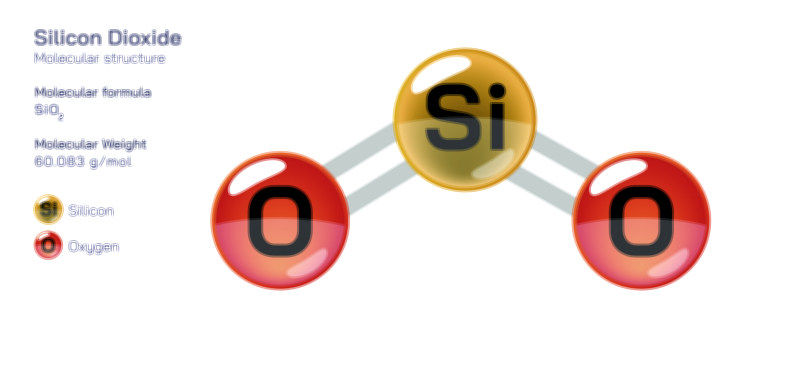
Structurally, silicon sits at the core of a vast network of geological materials because of its ability to bond with oxygen in stable tetrahedral arrangements. Each silicon atom forms four covalent bonds with oxygen, creating a SiO₄ tetrahedron, which can link to other tetrahedra in complex patterns. These connections form the basis of minerals such as quartz, feldspar, mica, amphiboles, and countless other silicates that shape the crust and mantle of the Earth. Depending on how tetrahedra connect — as isolated units, rings, chains, sheets, or three-dimensional frameworks — entirely different mineral families emerge. Sand, granite, basalt, clay, and gems like topaz and emerald all originate from various arrangements of silicon-oxygen structures. The stability of these compounds explains why Earth’s crust is largely resistant to weathering and why silicon is central to plate tectonics, mountain formation, and the long-term cycling of minerals. Without silicon, the planet’s geology, its landscapes, and the composition of its soils would be drastically different, and life as we know it would not have the minerals essential for skeletons, shells, and nutrient cycles.
In its pure elemental state, silicon is not found naturally because it readily bonds with oxygen, but when produced industrially, elemental silicon reveals distinctive physical properties. It presents as a hard, dark gray, crystalline solid with a shiny metallic luster. Electrically, silicon behaves as a semiconductor, meaning its electrical conductivity lies between that of a conductor like copper and an insulator like glass. At low temperatures, silicon acts as an insulator, but when energy is added through heat, light, or doping (intentional introduction of trace impurities), its electrons become mobile, allowing it to conduct electricity in a controlled and programmable way. This controllable conductivity, along with the ability to form precise and stable crystal lattices, makes silicon ideal for integrated circuits, computer chips, and photovoltaic cells. Silicon’s atomic structure permits the formation of p-type and n-type semiconductor regions when doped with elements such as boron or phosphorus. At the boundary between these regions lies a p-n junction — the essential building block of diodes, transistors, microprocessors, memory storage, and logic gates. The capacity to miniaturize these structures while preserving electrical precision triggered the technological revolution that led to modern electronics.
Silicon’s dominance in technology is not accidental; it results from a combination of chemical and physical advantages that make it more practical than other semiconductors like germanium or gallium arsenide. First, silicon is exceptionally abundant, lowering its cost and ensuring its large-scale availability. Second, when exposed to oxygen, silicon naturally forms silicon dioxide (SiO₂), an ideal insulating layer that can be grown directly on the silicon wafer surface. This oxide layer enables reliable transistor operations and protects delicate circuitry from interference. Third, silicon remains stable at high operating temperatures, allowing electronic devices to function steadily in demanding environments. The silicon wafer manufacturing process — slicing refined silicon crystals into thin disks, polishing them to atomic smoothness, and etching microscopic circuits onto their surfaces using photolithography — has become one of the most precise engineering procedures ever developed. Every smartphone, satellite, medical scanner, and supercomputer contains countless transistors printed on silicon, demonstrating how an abundant crustal element evolved into the backbone of a global digital infrastructure.
Beyond electronics, silicon plays an enormous role in materials and industrial chemistry. Silica (SiO₂) serves as the raw material for glass, which is produced by heating silica sand with metal oxides to form a transparent, solid network with unique optical and mechanical properties. Silicon compounds form ceramics capable of resisting extreme heat, stress, and chemical abrasion, making them indispensable in spacecraft, jet engines, and industrial furnaces. Silanes — silicon-hydrogen compounds — serve as intermediates in the production of sealants, adhesives, water-repellent coatings, and silicones. Silicones themselves, created by linking silicon to oxygen and organic groups, are flexible, temperature-resistant polymers used in medical implants, lubricants, cooking tools, contact lenses, and personal-care products. Every one of these materials traces its origin to silicon’s versatile bonding behavior and its intermediate chemical identity between metals and nonmetals.
Silicon also intersects with biology, though it is not a core nutrient for humans in the way elements like iron or calcium are. Plants, algae, and some animals use silicon to strengthen tissues and support structural growth. Grasses incorporate silica into their cell walls for rigidity and resistance to herbivory; diatoms, a major group of microscopic algae, construct ornate silica shells that contribute massively to marine ecosystems and global oxygen production. Sponges reinforce their bodies with silica spicules. Trace amounts of silicon in humans appear to support bone mineralization, connective tissue health, and collagen structure, suggesting that although not formally classified as an essential element, silicon likely contributes to the integrity of the skeletal and vascular system. In soils, silicon availability affects crop resilience, helping plants resist pests, drought, and fungal infections — a role that connects the element once again to the cycles of life and the condition of Earth’s crust.
Environmentally and historically, silicon has shaped human civilization long before the digital age. Early stone tools, prehistoric pottery, and glassmaking all depended on the manipulation of silicon-based materials. The stronger, more temperature-resistant products of the Bronze Age furnace relied on silicate fluxes to control melting behavior. Modern infrastructure — buildings, highways, bridges — is built largely from concrete, cement, and stone, all rich in silicon compounds. In a very real sense, humanity’s first technological revolutions were rooted in the chemistry of silicon minerals, not in software or circuits. Today’s semiconductor revolution is simply the newest stage in a much longer human relationship with the element. Even the location of Silicon Valley reflects silicon’s cultural symbolism as the driver of innovation and digital transformation.
Silicon’s dual existence — anchoring the Earth’s crust yet enabling futuristic technology — makes it one of the most conceptually profound elements. It demonstrates how atomic structure influences planetary geology and how harnessing that structure can change human society. As electronic components continue to shrink toward atomic scales, and as new technologies such as silicon-based quantum computing and advanced photovoltaics continue to develop, the element remains at the center of scientific progress. Meanwhile, the silicate framework of the planet continues cycling through tectonic processes that maintain continents, mountain ranges, and soil fertility. Silicon therefore tells a story that spans billions of years: a mineral element forged in ancient stars, concentrated in a developing planet, incorporated into rocks and landscapes, and ultimately refined by humans into the circuitry that powers global communication and knowledge. Through its crystalline lattices and semiconducting behavior, silicon connects the solid Earth beneath our feet with the digital world that surrounds our daily lives, illustrating how one element can shape both natural history and technological evolution.