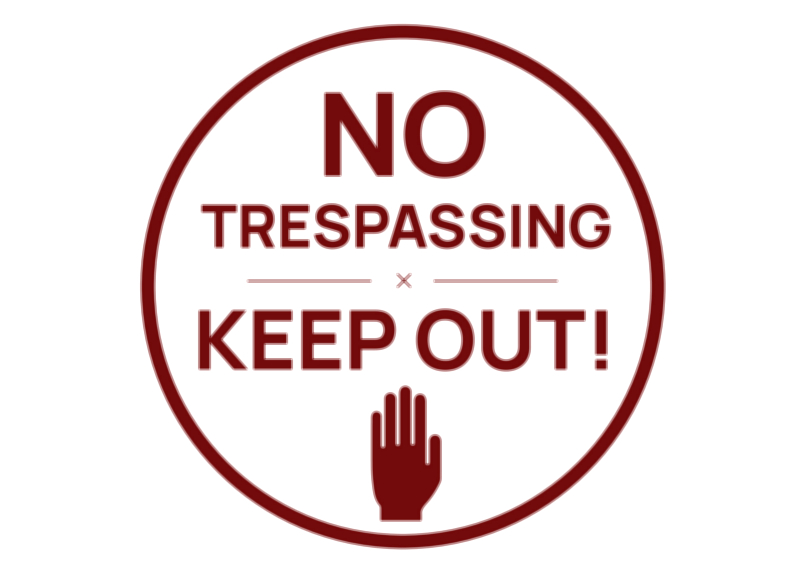
No Loitering Sign Vector Illustration — Public Area Restriction Warning Board
A No Loitering sign, especially when represented as a clean and high-contrast vector illustration with clear prohibition symbols and bold uppercase text, serves as a visual statement of authority designed to protect the orderly functioning, safety, and comfort of public and private spaces. Although the message appears simple, the sign carries a deeper meaning because it addresses a behavioral issue rather than a directional or navigational one. Whereas traffic and access signs control movement, a No Loitering sign controls presence and intent. It communicates that remaining in the area without a purposeful reason, delay, or lingering behavior is not acceptable. The sign does not target responsible occupancy but rather seeks to prevent prolonged idleness that often leads to discomfort for others, disruption of normal use of the environment, or the creation of situations that invite conflict, nuisance, or crime. As a vector illustration, the design emphasizes precision and recognizability across all viewing scales, ensuring its psychological deterrent value remains intact whether displayed at store entrances, parking areas, public plazas, business lobbies, elevators, transit stations, school corridors, residential complexes, and governmental spaces. It marks the boundary not of movement, but of behavioral expectation, instructing individuals that the space must remain open, safe, and accessible for its intended users rather than being unduly occupied or misused.
The necessity of such a sign becomes clearer when considering how loitering shapes public perception and safety. Many locations are designed to serve a specific flow of people — shoppers moving in and out of stores, passengers entering and exiting transit stations, residents accessing building entrances, or students transitioning between rooms. When individuals remain in one place without objective purpose, the environment becomes unpredictable. Loitering may obstruct walkways, create congestion, intimidate passersby, block access for customers or tenants, or give the impression that the space is unsafe even if nothing harmful is happening. In commercial areas, groups standing near entrances discourage potential customers from approaching, which can affect businesses financially, especially in small shops where foot traffic matters. In residential complexes, individuals lingering near gates or corridors can cause stress for families, elderly residents, and children who feel unsure about approaching strangers seated or standing motionless for long durations. Even in parks and public spaces designed for social gathering, loitering near sensitive locations such as restrooms, playgrounds, or entrances often makes visitors feel watched or uncomfortable. The sign therefore becomes a preventive mechanism not against presence, but against behavior that changes the emotional tone of the space.
Safety is a central component of the intention behind the No Loitering message. Public and commercial spaces must feel safe for everyone, and loitering often precedes incidents that threaten safety not because every loiterer poses harm, but because unchecked lingering behavior increases unpredictability. Where crowds form without purpose, arguments can escalate, peer-pressure activities can begin, vandalism becomes more likely, drug use or illicit sales may occur unnoticed, and unwanted solicitation can emerge. A No Loitering sign works by interrupting the possibility of such situations early. It gives property managers, security personnel, or law enforcement a clear foundation for intervention when necessary because it establishes the behavioral boundary visibly and publicly. The sign does not assume that everyone who stands in the area is dangerous; instead, it ensures that people do not have to guess whether their safety is compromised, because the environment itself communicates that loitering will not be allowed to advance into more serious disruption.
Another significant reason for this signage lies in its contribution to operational continuity and business accessibility. For retail storefronts, restaurants, banks, clinics, and gas stations, entrances must remain clear for both customers and staff. People gathering near entry zones can create bottlenecks or discourage patrons from entering. Businesses depend on a fluid and welcoming first impression, and the presence of idle groups undermines the intention behind visual merchandising, lighting, and customer access design. A No Loitering sign empowers staff to maintain an open entry space without needing to personally confront outsiders or risk interpersonal conflict. For transportation hubs, loitering disrupts boarding processes and can lead to missed schedules for buses or passengers who feel hesitant to approach platforms. For schools, the sign protects hallways and gates from crowds that may intimidate younger students or disrupt academic order. For residential properties, it ensures the privacy and comfort of residents, especially families who want to feel secure in common pathways. The sign therefore protects the functional use of a location by reinforcing that shared spaces should remain transit zones rather than prolonged occupancy zones.
The sign also carries a strong legal and regulatory function. Many cities, municipalities, commercial properties, and private organizations include anti-loitering policies not to punish presence, but to discourage behaviors that lead to crime or public nuisance. Legal enforcement requires clarity before action, so a visible No Loitering sign serves as both notice and authority. If individuals refuse to disperse when requested, the presence of the sign makes enforcement legally supported rather than subjective. Without posted signage, a confrontation may be interpreted as discrimination, personal hostility, or arbitrary decision-making. But when the rule is clearly displayed in public view, the enforcement of that rule becomes the upholding of established space policy rather than personal opinion. In legal disputes, surveillance reviews, or police reports, the posted sign becomes proof that the behavioral restriction was publicly communicated and therefore enforceable.
Psychologically, the No Loitering sign reduces discomfort not only by preventing unwanted behavior, but also by protecting those who might otherwise feel unwanted themselves. Loitering can create silent social pressure, especially at places where strangers congregate without clear purpose. People approaching may wonder whether they are being observed or judged. Younger individuals may feel intimidated, elderly individuals may feel threatened, and women or children entering the space may feel unsafe when surrounded by idle groups. By discouraging unnecessary lingering, the environment becomes more predictable and emotionally accessible for all users. The sign does not replace community behavior — it shapes it by encouraging respectful use of space rather than territorial behavior that excludes others through unspoken social dominance.
The vector format enhances the impact of the sign because the visual details remain crisp at any distance or scale. Whether printed on a small hallway board or a large shopping center wall, the lines, proportions, and colors retain clarity without pixelation or distortion. High-contrast colors such as red, white, and black elicit immediate attention because the human brain processes visual warnings faster when framed in this palette. Universal pictograms — especially the circle with a diagonal slash — provide understanding without dependence on language literacy. Someone who does not read the posted language, a tourist unfamiliar with the culture, or a person with reading difficulty still understands that lingering is not permitted. This universality makes the sign not only functional but fair, because the warning is comprehensible to everyone rather than only those fluent in the written text.
Emotionally and socially, the sign helps avoid interpersonal confrontation. Without posted signage, business owners or residents might feel compelled to verbally address loitering, which can lead to arguments, discomfort, accusations of bias, or escalation. The sign transfers the responsibility of communication from individuals to the environment itself. It prevents personal embarrassment, both for those who might be asked to leave and for those who might otherwise have been forced to defend their space. People adjust their behavior because the environment asks them to, not because another human challenges them. This dynamic protects dignity, softens social tension, and preserves harmony.
Ultimately, the No Loitering Sign Vector Illustration — Public Area Restriction Warning Board is not designed to limit freedom arbitrarily — it is designed to preserve comfort, safety, access, dignity, and order. It protects children from intimidation in school entrances, customers from pressure at store doorways, families from unease in residential buildings, and workers from distraction in job sites. It ensures that spaces built for shared use do not slowly become controlled by those who occupy them without purpose. Through a short and visually authoritative message, the sign prevents disruption before it begins, protects individuals without confrontation, maintains operational flow without policing everyone individually, and transforms uncertainty into clarity. It acts at the precise moment when someone is deciding whether to remain or move on, giving them the information necessary to respect the environment and the people who rely on that space to feel safe and welcome.