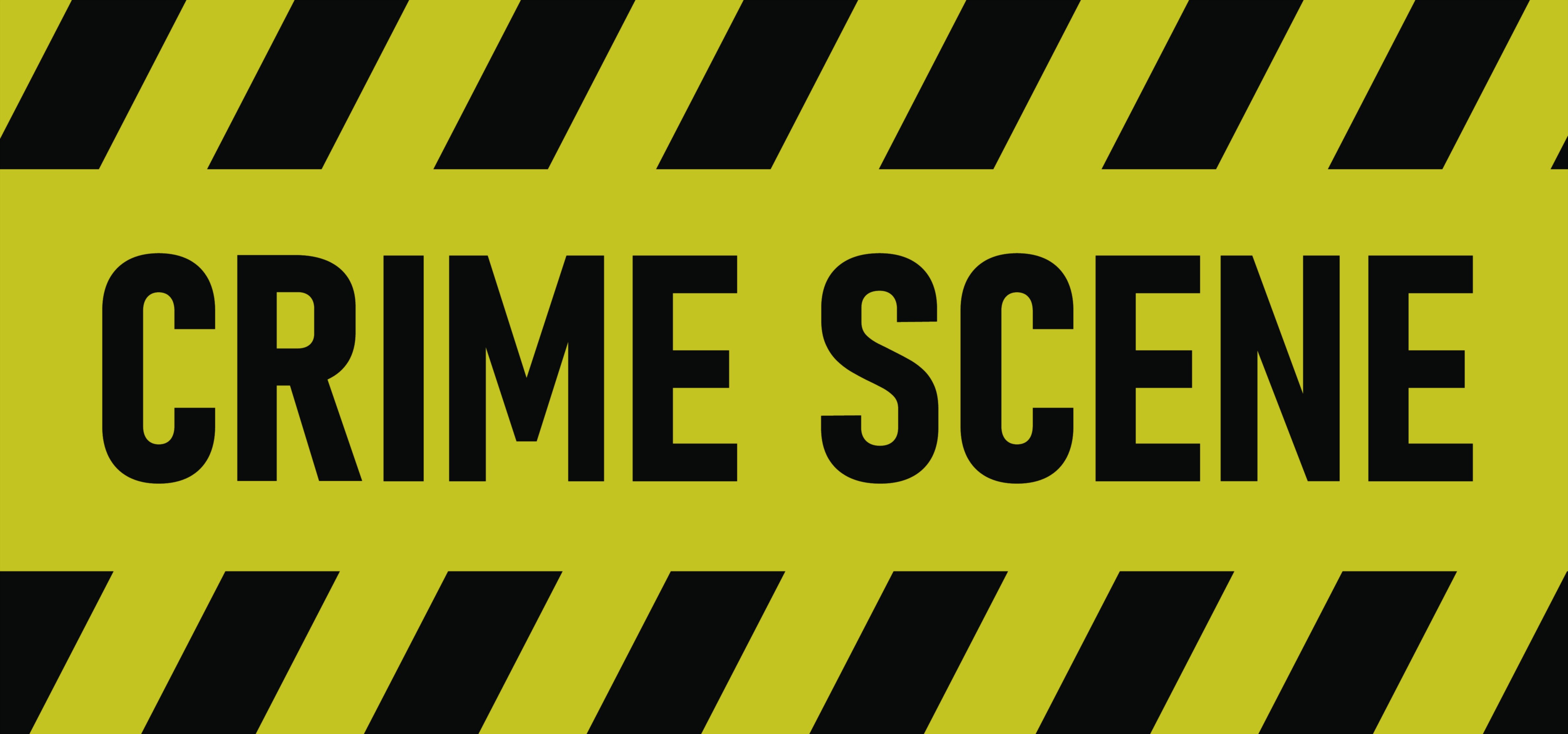
Crime Scene Sign Board Vector Illustration — Police Warning and Restricted Area Symbol
A Crime Scene sign board, especially when illustrated as a crisp, high-contrast vector graphic featuring bold lettering, yellow-and-black hazard striping, and unmistakable police warning symbolism, serves as one of the most powerful visual markers of legal authority and restricted access in modern public safety communication. Although the message on the sign appears brief, its meaning is enormous because it not only announces that an incident has occurred, but also establishes that the area ahead is officially under investigation and must not be entered, altered, or interfered with by unauthorized individuals. The sign communicates that physical space has shifted from everyday public access to a protected legal zone where evidence is being preserved, documentation is in progress, and any intrusion could compromise the chain of custody, obstruct justice, or contaminate vital forensic material. The vector format enhances the authority of this message by maintaining sharp geometry, clean iconography, and legible text at any scale, ensuring that the sign remains visually dominant whether printed on handheld display boards, taped across wide outdoor perimeters, placed on forensic tents, or displayed digitally in crime scene documentation. From the first second a passerby sees the sign, it triggers an instinctive understanding: this is an area that is off-limits for safety, investigation, and law enforcement integrity.
The importance of a Crime Scene sign becomes evident when considering how human curiosity and instinctive behavior respond to unusual events. When police vehicles, emergency lights, or crowds are present, the natural reaction of onlookers is to move closer, observe, and try to understand what has happened. Without clear barriers, people may unintentionally walk into protected zones, pick up objects, step on surfaces containing evidence, or disturb the natural positioning of footprints, debris, or biological material. They may also capture unauthorized photographs or videos that compromise investigations or leak sensitive details about victims and suspects. The Crime Scene sign disrupts this impulse before it becomes action, replacing curiosity with caution and protecting the scene from contamination. It informs people that the area is not simply off-limits out of routine privacy but because every object inside the boundary, regardless of how insignificant it seems, may hold legal or forensic value. It therefore protects the investigation by telling the public that their presence, even if accidental, could alter the truth.
Beyond curiosity prevention, the sign fulfills a crucial function in preserving evidence and maintaining forensic accuracy. Crime scenes are fragile environments where time, weather, movement, and human interference can permanently erase clues. A footprint on wet ground, a strand of hair on a vehicle seat, fingerprints on a railing, blood stains on concrete, small fibers on clothing, or even the position of fallen objects can play a decisive role in reconstructing events, identifying suspects, and proving guilt or innocence in court. If an untrained person crosses the perimeter and shifts a shoeprint, steps on soil, moves a weapon unintentionally, or touches a surface, the damage cannot be undone. The Crime Scene sign acts as a visual perimeter that preserves the integrity of the truth. It protects not only justice but also the rights of victims and suspects by ensuring that conclusions about the event are based on untouched physical facts rather than corrupted evidence.
The sign also holds deep legal significance because the protection of crime scenes is not only procedural but constitutional. In most jurisdictions, law enforcement is required to maintain strict control over the site of a suspected crime to prevent contamination and to document who enters and leaves. If unauthorized individuals cross into the restricted area and evidence becomes compromised, entire cases may become legally vulnerable. Defense attorneys may argue that contamination creates reasonable doubt, leading to dismissed charges or wrongful acquittals. Conversely, mishandled scenes risk wrongful accusations if evidence is misread due to unprotected intrusion. The Crime Scene sign therefore becomes a legal shield that protects the credibility of the investigation by explicitly stating that access is restricted. Its presence shows that law enforcement provided clear notice to the public, and any person crossing the boundary does so knowingly, making legal accountability transparent rather than ambiguous.
Emotionally and psychologically, the Crime Scene sign carries weight for both the community and law enforcement. For the public, it provides a boundary not only of physical space but of emotional respect. A crime scene often involves individuals who have been harmed, traumatized, or killed. Allowing uncontrolled spectators to crowd close to such a site can be distressing for the families involved and disrespectful to victims. The sign creates a respectful distance by signaling that the area is not an attraction, but a space where serious human events have occurred and where dignity must be preserved. For investigators, the sign provides a mental perimeter that reinforces focus. When officers and forensic specialists work inside a protected area, they rely on knowing that outside interference will not threaten their concentration or compromise their delicate work. The sign therefore reduces stress on both sides — the public understands where not to stand, and professionals inside know that boundaries are honored.
The sign also plays a crucial role in public safety during active or unstable situations. Not all crime scenes are static or immediately safe. Some involve hazardous materials, open flames, electrical dangers, collapsing structures, chemical spills, loaded firearms, or even ongoing threats. The sign warns civilians that crossing the boundary could expose them to unknown and unpredictable danger. It ensures that emergency responders can carry out neutralization or containment without worrying that a bystander will enter a hazardous zone and need rescue. In scenes involving violent incidents, the sign protects emotional safety as well — shielding the public from traumatic exposure while ensuring that the dignity of those affected is respected.
Socially, the Crime Scene sign communicates the presence of authority and order. It prevents rumors from becoming chaos, prevents panic by visually demonstrating that law enforcement is taking control of the situation, and creates a clear spatial boundary that calms crowds and organizes response activities. Without the sign, crowds would swell uncontrollably around emergency personnel, slowing rescue, delaying documentation, and obstructing ambulance access. The sign transforms a chaotic public environment into a managed one by guiding physical space and psychological response through visibility rather than confrontation.
The vector illustration format further supports its purpose with precision and universal recognition. A pixelated or unclear sign could go unnoticed in dim light, crowded streets, industrial areas, or nighttime environments. A vector design remains sharp and instantly readable across banners, adhesive tape, rigid safety boards, command-post signs, and digital overlays used during televised reports or training simulations. The symbolic pairing of yellow and black diagonal stripes triggers the brain’s hazard recognition instinct even before text is processed. The bold uppercase typography reinforces urgency and prevents misreading at long distances, during crowd noise, or under distraction. Because crime scene management often involves multicultural and multilingual communities, the graphic component communicates even when language comprehension varies. The sign therefore protects understanding as much as it protects the perimeter.
Viewed in a broader sense, the Crime Scene sign represents more than a physical barrier — it symbolizes the boundary between truth and interference. It marks a place where facts are fragile and where order must be prioritized over curiosity. It ensures that justice is not left to chance and that what happened will be understood through evidence rather than rumor. It tells the world that this space is no longer ordinary ground but a location where answers are being found and where respect, caution, and patience are necessary.
Ultimately, the Crime Scene Sign Board Vector Illustration — Police Warning and Restricted Area Symbol serves as one of the most significant tools for protecting safety, justice, privacy, emotional dignity, and legal integrity in the aftermath of a crime. It stops contamination of evidence before harm is done, stops crowds before panic or disrespect develops, stops curiosity before interference occurs, and stops danger before it reaches those unprepared to face it. It transforms a vulnerable environment into a structured investigative space where truth can be uncovered without disruption. Through a simple but commanding visual message supported by clear vector-based design, the sign ensures that investigators have the time, space, and clarity needed to understand what happened — and that the community remains aware, respectful, and safe while justice unfolds.