Peanut oil, often called groundnut oil in many parts of the world, represents one of the most important vegetable oils in human diets and in food manufacturing. Its pleasant aroma, balanced fatty acid composition, and ability to tolerate heat have secured it a lasting place in households, restaurants, and industrial kitchens. Yet the clarity seen in a retail bottle is the outcome of an intricate chain of operations that begins long before the oil reaches a refinery. Farmers cultivate peanuts under carefully managed conditions, harvest them at maturity, and dry them to safe moisture levels so that processors can preserve quality. From there, a coordinated sequence of mechanical, thermal, and chemical treatments transforms hard seeds into a stable, appealing liquid suitable for cooking and long storage. Each stage is designed to maximize yield while protecting flavor and nutritional attributes, and success depends on how well these stages are integrated.
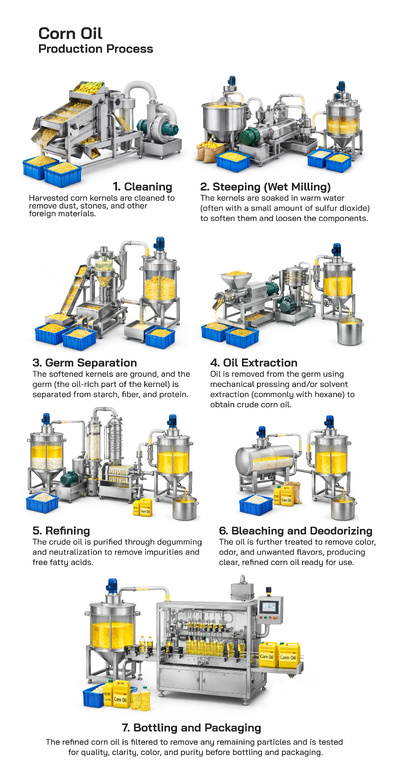
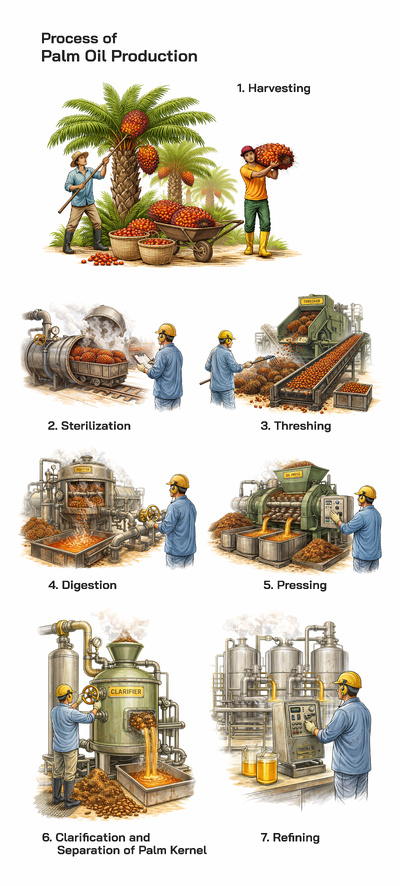
The journey typically starts with procurement and initial inspection. Processing facilities receive raw peanuts in bulk, sometimes still in shells, sometimes already decorticated. Quality teams evaluate moisture, cleanliness, and absence of mold or damage. Because peanuts grow underground, they often carry soil, stones, stems, and other foreign materials. Removing these impurities is essential not only for hygiene but also for safeguarding equipment from wear. Modern plants employ vibrating screens, air classifiers, destoners, and magnetic separators to ensure that only sound kernels continue forward. Uniform input at this early moment sets the stage for efficient downstream performance.
Shelling follows when peanuts arrive in pods. Specialized machines crack the shells while attempting to minimize breakage of the kernels inside. The hulls become valuable by-products, frequently diverted into animal feed or energy generation. After separation, kernels may pass through additional graders to remove undersized or damaged pieces. At this point, processors are already thinking about oil quality, because defects can influence taste and shelf life later. Careful selection protects reputation and ensures compliance with food safety expectations.
Conditioning prepares kernels for extraction. Depending on plant design, peanuts might be cleaned further, lightly heated, or subjected to moisture adjustment. Heating softens tissues and helps rupture oil-bearing cells, improving efficiency when pressure or solvent is applied. Temperature control is crucial; too little heat leaves oil trapped, while too much may darken color or alter flavor. Operators therefore monitor time and thermal exposure with precision, often using automated systems that maintain consistent parameters.
Size reduction usually comes next. Kernels are broken into smaller fragments or rolled into flakes. Increasing surface area allows oil to escape more readily and helps create uniform flow through presses or extractors. The material must remain porous enough for liquids to move while still retaining structural integrity. Engineers have refined this balance over decades, optimizing throughput without sacrificing recovery.
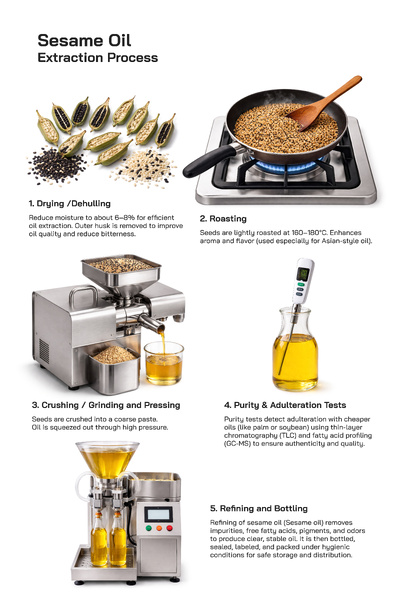
Mechanical pressing represents one of the oldest techniques in oil manufacture and still plays an important role today. Screw presses apply continuous force, squeezing liquid from prepared peanuts. The emerging oil may contain fine particles and natural compounds, giving it a cloudy appearance. Meanwhile, the solid residue, often called cake or meal, retains nutritional value and is commonly used in livestock feed. Some facilities rely primarily on pressing, particularly where traditional flavor profiles are desired, while others combine it with solvent extraction to capture additional oil.
Solvent extraction increases yield by dissolving lipids that remain after pressing. A food-grade solvent flows through the prepared material, creating a mixture from which oil can later be recovered. Distillation systems separate solvent from oil, allowing reuse in a closed cycle that improves efficiency and reduces environmental impact. The output at this stage is crude peanut oil, rich in natural components but not yet ready for consumption. It may contain gums, pigments, trace metals, and free fatty acids that could impair stability.
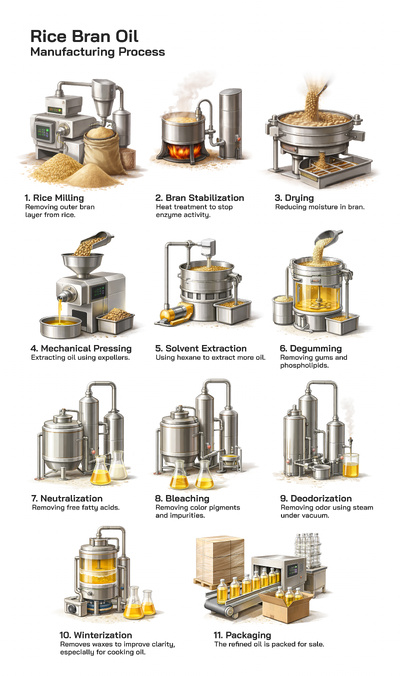
Refining converts crude oil into a product that meets market expectations. Degumming typically comes first, targeting phospholipids and mucilaginous substances that might cause haze. Water or mild acids help separate these materials so they can be removed. Neutralization follows, reducing free fatty acids and improving flavor. Alkali solutions react with unwanted elements, forming soaps that are then separated from the oil. Each treatment must be carefully controlled to avoid unnecessary losses of desirable constituents.
Washing and drying steps remove residual moisture and reaction products. Even small amounts of water can influence shelf life, so vacuum systems or gentle heating may be used to achieve appropriate dryness. At this point the oil is already significantly clearer, yet color and aroma refinement usually remain.
Bleaching addresses pigments and trace impurities. Adsorbent clays or carbons are mixed with the oil, binding substances that affect appearance or promote oxidation. Filtration then removes the spent materials, leaving a brighter liquid. Although bleaching sounds intense, it is primarily a physical purification step, designed to enhance visual appeal without harming the underlying structure of the fat.
Deodorization is often the final major refining phase. Under high vacuum and carefully managed heat, steam carries away volatile compounds responsible for strong or undesirable odors. The result is a neutral profile appreciated in many culinary applications. As with earlier operations, balance is critical; excessive treatment could diminish natural character, whereas insufficient treatment might shorten usability.
After deodorization, the oil may undergo polishing filtration to guarantee brilliance. Quality laboratories analyze samples for parameters such as clarity, moisture, and oxidative stability. Only when results align with specifications does the batch proceed to packaging. Documentation generated here supports traceability, enabling companies to follow each lot through distribution networks.
Packaging technology has advanced dramatically. Automated filling machines dispense precise volumes into bottles, pouches, or tins that have been cleaned and sanitized. Oxygen exposure is minimized because air can gradually degrade flavor. Containers are sealed, coded with production data, and labeled with nutritional information required by regulation. Cartoning systems group units for efficient transport, while warehouses maintain cool, dry conditions until shipment.
Distribution connects processors with wholesalers, retailers, and food service operators. Reliable logistics ensure that oil reaches users while still fresh, protecting brand integrity. Marketing teams may emphasize purity, consistent performance, or heritage methods depending on target audiences, but behind every message lies the same disciplined production pathway.
Throughout this chain, sustainability considerations continue to gain importance. Utilizing shells and meal, recycling solvents, conserving water, and improving energy efficiency all contribute to responsible manufacturing. Research seeks further gains, exploring enzyme technologies, improved filtration media, and smarter automation. These innovations promise not only higher yields but also reduced environmental footprint.
The peanut oil production process therefore represents far more than extraction. It is a choreography of preparation, separation, purification, and protection carried out by skilled professionals and guided by scientific understanding. When consumers cook with the final product, they benefit from countless decisions made along the way, from selecting sound kernels to fine-tuning deodorization. The transformation from earthy harvest to clear liquid encapsulates agriculture, engineering, chemistry, and logistics working together.
Looking beyond the sequence of industrial operations, peanut oil production can also be understood as a meeting point between agriculture, trade, regulation, and consumer expectation. The path from field to frying pan is shaped not only by machinery but by agreements about safety, nutrition, and economic value. Every shipment of kernels enters a framework of standards that determine how it will be handled, documented, and ultimately perceived. These frameworks evolve continuously, responding to new research, emerging technologies, and shifting cultural attitudes toward food. As a result, the oil industry becomes a dynamic environment where tradition and innovation negotiate daily.
Traceability has become one of the defining principles of contemporary manufacturing. Processors increasingly maintain digital records that link finished batches back to specific suppliers, harvest dates, and storage histories. This level of documentation allows rapid response if concerns arise and builds confidence among buyers who want assurance about origin. The peanut, once anonymous after leaving the farm, now carries a detailed biography through databases that accompany it at every stage. Transparency transforms the relationship between producer and consumer, encouraging accountability and strengthening trust.
Food safety management systems add further structure. Facilities adopt internationally recognized protocols that define hygiene practices, hazard monitoring, and corrective actions. Employees receive specialized training, and internal audits verify that procedures are followed consistently. Rather than relying on occasional inspection, the industry emphasizes prevention, aiming to eliminate risks before they manifest. In this environment, quality is not a final test but an ongoing commitment woven into routine activity.
Research institutions contribute by studying how subtle variations in handling influence long-term stability. Scientists examine oxidation pathways, packaging interactions, and the effects of light exposure. Their findings inform recommendations about container materials and storage conditions, helping manufacturers extend shelf life without compromising flavor. Collaboration between academia and industry ensures that knowledge advances translate into practical improvements.
Market differentiation has also expanded. Some consumers prefer oils that retain more of the natural aroma associated with roasted peanuts, while others seek neutral profiles suitable for delicate recipes. To meet these diverse preferences, processors may adjust refining intensity or develop specialty lines. Artisanal producers sometimes highlight minimal intervention, whereas large-scale refineries emphasize uniformity and reliability. The coexistence of these approaches illustrates how a single raw material can support varied philosophies of food.
Economic geography plays a significant role in shaping supply chains. Major producing regions develop infrastructure that includes storage silos, transport corridors, and export terminals. These investments influence where refineries are built and how trade flows. Countries that cultivate large volumes of peanuts often see growth in related industries such as packaging manufacture and by-product utilization. Employment opportunities ripple outward, linking rural cultivation with urban processing hubs.
International commerce introduces additional complexity. Exporters must satisfy regulatory requirements of importing nations, which may specify residue limits, labeling formats, or compositional standards. Meeting these criteria demands careful coordination and sometimes adaptation of processes. Yet compliance also opens access to lucrative markets, encouraging continuous improvement. Through trade, peanut oil becomes part of a global conversation about harmonizing expectations.
Culinary professionals observe these developments with interest because oil characteristics influence cooking performance. Smoke point, clarity, and flavor stability determine suitability for frying, sautéing, or dressing preparation. Chefs rely on consistency, trusting that each delivery will behave predictably. Their confidence rests on the disciplined operations carried out upstream, even though those steps remain invisible during service.
Consumer education efforts attempt to bridge that invisibility. Articles, documentaries, and public outreach programs explain how oils are produced and why refining matters. When people understand the rationale behind processes, they may appreciate the product more fully. Knowledge encourages informed choices and fosters respect for the expertise required to maintain quality at scale.
Environmental accountability continues to gain prominence as well. Life cycle assessments evaluate energy use, emissions, and waste generation, guiding strategies for reduction. Renewable power sources, heat recovery systems, and improved transport efficiency contribute to lower footprints. Companies increasingly publish sustainability reports, recognizing that environmental stewardship is intertwined with brand reputation.
The by-products of oil extraction are receiving renewed attention in this context. Protein-rich meals can support livestock industries, while shells may serve as biomass fuel or raw material for innovative applications. Finding value in every fraction reduces pressure on resources and aligns with circular economy principles. What once might have been discarded now becomes opportunity.
Automation and digital monitoring are reshaping plant environments. Sensors track temperature, flow rates, and purity indicators in real time, enabling rapid adjustment. Predictive maintenance tools anticipate equipment wear, minimizing downtime and protecting worker safety. These technologies enhance precision, yet they also require skilled operators who can interpret data and make informed decisions. Human expertise remains central even as systems become more sophisticated.
Cultural identity weaves through these technical landscapes. In many regions, peanut oil carries culinary memories tied to family recipes and festive meals. Manufacturers aware of this emotional connection may emphasize heritage in communication, reinforcing continuity despite industrial scale. The product becomes both modern commodity and bearer of tradition.
Public health discussions further influence development. Nutrition research examining fat composition informs labeling and marketing, guiding consumers toward balanced diets. Producers respond by clarifying information and supporting initiatives that encourage responsible use. Dialogue between science and industry thus shapes how peanut oil is integrated into everyday life.
Future directions may include exploration of novel filtration materials, gentler purification methods, or energy-efficient heating technologies. Innovations often arise from partnerships among engineers, chemists, and entrepreneurs who recognize that incremental improvements can yield significant cumulative benefits. Progress is rarely dramatic but steadily advances reliability and sustainability.
Through all these dimensions, peanut oil production exemplifies interconnectedness. Fields, laboratories, offices, ports, kitchens, and homes participate in a shared system that delivers a familiar ingredient with remarkable dependability. The clarity of the liquid belies the complexity of collaboration required to create it.
Reflecting on this broader picture deepens appreciation for the invisible architecture supporting modern diets. Every bottle represents coordination among countless individuals committed to maintaining standards, adapting to change, and honoring expectations built over generations. Peanut oil endures because it successfully navigates these relationships, evolving without losing the qualities that made it valued in the first place.
The longer one observes the world of peanut oil, the more it becomes clear that production is not merely a technical sequence but a living system influenced by people, institutions, and imagination. Facilities that refine and package oil operate within communities, drawing labor, services, and knowledge from surrounding regions. Transportation workers, laboratory technicians, maintenance crews, packaging designers, and market analysts all contribute to the final appearance of a bottle on a store shelf. The industry therefore represents a web of livelihoods, each connected indirectly to the simple act of cooking.
Workplace culture inside processing plants has evolved alongside technology. Emphasis on hygiene, safety, and efficiency encourages structured routines, but it also promotes teamwork. Operators coordinate with quality managers, warehouse staff, and logistics planners to maintain smooth flow. Communication is constant, especially when seasonal surges in raw material arrival require rapid adaptation. The success of a facility often depends as much on cooperation and morale as on machinery performance.
Training plays a decisive role in maintaining this balance. New employees learn not only how equipment functions but also why procedures exist. Understanding purpose strengthens commitment, reducing errors and encouraging initiative. Veteran workers pass on practical insights about how peanuts behave under varying conditions, knowledge that complements formal instruction. Through mentorship, experience becomes institutional memory.
Digital transformation has added new layers of skill. Data collected from sensors must be interpreted, stored, and translated into decisions. Analysts identify patterns that might predict shifts in quality or efficiency, allowing preventive action. Such capabilities turn factories into learning environments where each batch contributes information for future improvement. The peanut oil industry thus participates in broader movements toward smart manufacturing.
At the same time, consumer perception remains a powerful driver. Buyers may never visit a refinery, yet their expectations influence nearly every step. Preferences regarding flavor neutrality, packaging convenience, or environmental responsibility travel backward through supply chains, shaping procurement strategies and investment priorities. Producers attentive to these signals can align operations with demand, strengthening competitiveness.
Retail environments communicate these values visually. Transparent bottles highlight clarity; sturdy containers suggest durability; minimalist designs imply purity. Even without words, presentation conveys messages about reliability and care. Marketing professionals collaborate with engineers to ensure that aesthetic goals are achievable without compromising protection from light or oxygen. Design and function merge.
Culinary globalization adds further momentum. Restaurants introducing dishes from diverse traditions rely on oils that perform consistently across techniques. Peanut oil’s reputation for stability under heat makes it attractive in professional kitchens where predictability is essential. As menus travel, demand follows, reinforcing international trade connections that support producers worldwide.
Public dialogue about sustainability increasingly extends beyond environmental metrics to include social responsibility. Questions about fair compensation for farmers, working conditions in factories, and community investment gain prominence. Companies respond with certification programs and partnerships aimed at equitable development. Transparency in these matters strengthens legitimacy and builds loyalty among ethically minded consumers.
Innovation in packaging recovery and recycling is another emerging theme. Manufacturers explore materials that protect oil while reducing waste. Refillable systems, lighter containers, and improved logistics can lessen environmental impact without sacrificing convenience. These initiatives demonstrate how even established products remain open to reinvention.
Academic research continues to broaden understanding of peanut oil’s behavior in culinary contexts. Studies of heat transfer, flavor retention, and interaction with ingredients inform both chefs and processors. Insights gained in laboratories may influence refining targets or recommendations for use, creating feedback loops between science and practice.
Cultural heritage retains influence amid modernization. In many households, the aroma of peanut oil evokes memory of family gatherings, seasonal celebrations, or regional specialties. Producers aware of this emotional dimension often balance technological efficiency with respect for tradition, ensuring that modernization does not erase identity. Maintaining continuity while embracing progress is a delicate but essential task.
Educational outreach can help bridge knowledge gaps. Factory tours, virtual demonstrations, and collaborations with culinary schools reveal the complexity behind everyday staples. When people witness filtration systems or control rooms, they often gain renewed respect for industrial craftsmanship. Appreciation encourages responsible consumption and reduces the tendency to take abundance for granted.
Economic resilience in the sector depends on diversification. Companies may invest in research, explore new markets, or develop related products to buffer against volatility. Such strategies illustrate adaptability, a trait that has allowed peanut oil to remain relevant across changing dietary fashions.
Technological reliability must always be paired with vigilance. Continuous monitoring ensures that standards are upheld even as volumes increase. Routine calibration, maintenance schedules, and emergency preparedness protect both product and personnel. Discipline in these areas reinforces confidence throughout the supply chain.
The story also includes small-scale producers who operate with different philosophies. Some emphasize traditional pressing methods or local distribution, offering alternatives to industrial uniformity. Their presence enriches the marketplace, demonstrating that diversity of approach can coexist with large-scale systems. Consumers benefit from choice, and dialogue between scales fosters innovation.
Looking toward the future, the integration of renewable energy, advanced analytics, and collaborative networks promises further evolution. Yet the essential aim remains unchanged: transforming agricultural harvests into safe, appealing oil that supports everyday cooking. The tools may grow more sophisticated, but the purpose continues to center on nourishment and reliability.
By considering these extended dimensions, we recognize peanut oil as part of a vast ecosystem of relationships. It links farmers with engineers, scientists with chefs, and local customs with global trade. Each participant contributes perspective, ensuring that the product adapts while preserving trust. The liquid poured from a bottle is therefore both material substance and symbol of cooperation.
Understanding this complexity invites gratitude. Behind routine culinary actions stand countless hours of planning, experimentation, and dedication. Peanut oil endures because people across disciplines commit themselves to refinement not only of the product but of the systems that create it. In that commitment lies the promise that future generations will continue to enjoy an ingredient shaped by knowledge, care, and shared endeavor.
In the end, what seems simple is in fact highly sophisticated. A transparent stream poured into a pan carries with it the labor of farmers, the vigilance of inspectors, the precision of machinery, and the knowledge accumulated through generations of improvement. Appreciating this journey deepens respect for everyday ingredients and highlights the remarkable systems required to supply them reliably to the world.