Palm oil production is one of the most significant agro-industrial systems in the modern food economy, connecting tropical agriculture with global supply chains that deliver cooking oil, ingredients, and industrial materials. The transformation begins on plantations where oil palm trees bear dense clusters known as fresh fruit bunches. These bunches contain hundreds to thousands of small fruits, each holding valuable oil in its fleshy mesocarp and additional fat within the kernel. The path from tree to table is not a simple extraction but a carefully orchestrated progression of timing, heat, mechanical force, separation, purification, and quality management. Every stage is designed to preserve oil yield while preventing deterioration that could reduce nutritional value, flavor, or stability.
Harvesting and Field Collection
The journey starts with harvesting at peak ripeness. Plantation workers monitor color change and fruit looseness to determine the correct moment. If bunches are cut too early, oil content remains underdeveloped; if too late, free fatty acid levels rise, leading to quality loss. Harvesting is therefore a balance between maturity and speed. Once cut, bunches are transported rapidly to the mill because enzymes begin breaking down lipids almost immediately after detachment. Efficient logistics are crucial, especially in major producing nations such as Indonesia and Malaysia, where vast plantation networks feed centralized processing facilities. Delays can mean measurable reductions in grade, so trucks, tractors, or rail systems operate continuously during peak periods.
At the mill reception area, incoming loads are weighed and inspected. Quality controllers evaluate ripeness, contamination, and damage. This information helps determine processing adjustments and also supports traceability, which has become increasingly important for sustainability certification and export compliance.
Sterilization of Fresh Fruit Bunches
Sterilization represents the first major industrial operation. Bunches are placed into large pressure vessels and exposed to high-temperature steam. This stage halts enzymatic activity, preventing further formation of free fatty acids. Heat also loosens fruits from the bunch stalk and softens the pulp, preparing it for mechanical treatment. Proper sterilization improves downstream efficiency, enhances oil recovery, and reduces microbial load. Operators must control pressure, residence time, and condensate removal with precision; insufficient heating leads to poor separation, while excessive exposure wastes energy and may darken the oil.
Beyond preservation, sterilization contributes to worker safety and equipment longevity by reducing the presence of living organisms that might otherwise accelerate spoilage or corrosion.
Threshing and Fruit Separation
After steaming, bunches move into rotating drums or mechanical strippers. Here, individual fruits detach from the central spikelets. The empty bunch material is typically diverted for by-product use, often returned to plantations as mulch or processed into biomass fuel. Efficient threshing ensures that minimal fruit remains attached, maximizing yield and preventing loss. The separated fruits then advance for further breakdown.
Digestion and Pulp Preparation
Inside heated digesters, rotating arms mash the fruit mass. This action ruptures oil-bearing cells, releases trapped lipids, and creates a homogenous mixture of fiber, nuts, and liquid. Temperature maintenance is critical because warm conditions keep viscosity low and make oil easier to separate later. Digestion is not merely crushing; it is a controlled preparation step that directly influences extraction efficiency. Skilled mill managers pay close attention to residence time, mechanical intensity, and moisture balance.
Pressing and Crude Oil Extraction
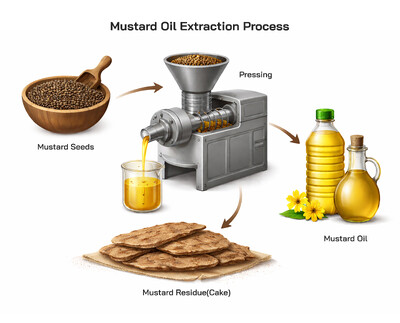
The digested mash is fed into screw presses. Under increasing pressure, liquid components are forced out while solids are expelled as press cake. The resulting fluid is a mixture of oil, water, and fine debris. At this moment the product is known as crude palm oil, recognizable by its deep orange-red color derived from natural carotenoids. Meanwhile, the press cake still contains kernels that will later be cracked and processed separately for palm kernel oil, forming another important branch of the industry.
Mechanical extraction must strike a balance between maximizing recovery and avoiding excessive breakdown of solids that would complicate purification. Modern systems are designed for continuous throughput, allowing large volumes to be handled each hour.
Clarification and Purification
Freshly pressed liquid requires cleaning before it can be stored or refined. It passes through screens, settling tanks, or centrifuges that remove suspended matter. Gravity and rotational force help divide heavier water and solids from lighter oil. Clarification significantly improves appearance and stability. Without it, impurities would accelerate oxidation, create off-flavors, and interfere with later refining reactions.
The separated sludge is not wasted. Many mills recover residual oil or convert the material into fuel for boilers, demonstrating how integrated energy management has become central to economic viability.
Drying and Storage
Before refining, moisture must be reduced to prevent hydrolytic damage during transport or holding. Vacuum dryers or similar equipment remove remaining water, producing a stable crude product. Storage tanks are carefully designed to limit exposure to air and maintain moderate temperatures. Even at this stage, laboratories test acidity, contamination, and color, ensuring the material meets specifications for buyers.
Refining and Upgrading
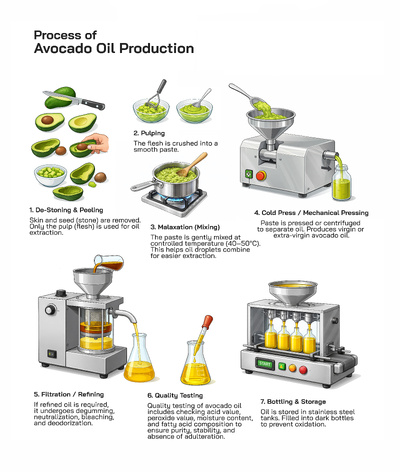
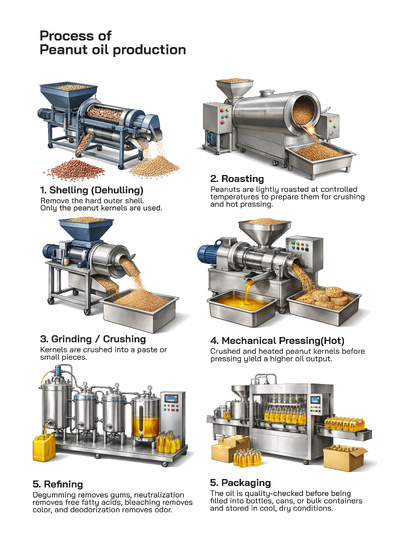
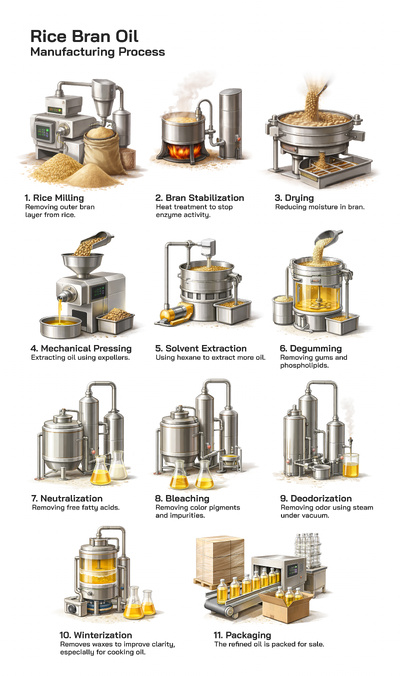
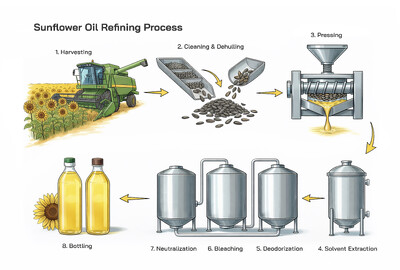
Refining transforms crude palm oil into the bright, neutral product familiar to consumers and manufacturers. The sequence generally includes degumming, neutralization, bleaching, and deodorization. Each phase has a distinct role. Degumming eliminates phospholipids and trace metals. Neutralization reduces free fatty acids. Bleaching earths adsorb pigments and residual impurities, while deodorization uses high temperature under vacuum to strip unwanted odors and flavors.
Refining is where chemistry and engineering intersect most clearly. Operators must remove undesirable components without damaging beneficial nutrients such as tocopherols and tocotrienols. Successful refinement results in an oil that is clear, mild in taste, and highly stable during cooking or industrial application.
Fractionation and Product Diversity
Many facilities continue beyond basic refining into fractionation, a cooling and separation technique that divides liquid olein from solid stearin. These fractions allow palm oil to meet diverse needs, from frying media to bakery fats and specialty formulations. By adjusting crystallization conditions, producers tailor melting behavior and texture. This flexibility explains why palm oil has become a dominant ingredient in packaged foods, cosmetics, and even bio-based materials.
Quality Assurance and Global Trade
Throughout the chain, quality assurance systems operate continuously. Samples are drawn, analyzed, and recorded to maintain compliance with international standards. Export markets demand traceability, sustainability documentation, and consistent chemical profiles. Governments and organizations such as the Roundtable on Sustainable Palm Oil influence best practices by promoting environmental responsibility, labor safeguards, and transparent sourcing.
Environmental and Efficiency Considerations
Modern mills increasingly integrate waste recovery and emission reduction strategies. Fiber and shells fuel steam generation, wastewater undergoes treatment before release, and methane capture technologies convert effluent into energy. These measures reduce the environmental footprint while also lowering operational costs. Innovation in this area continues to evolve as producers respond to consumer expectations and regulatory pressures.
From Plantation to Consumer
When the refining process is complete, palm oil enters distribution networks. It may be packaged for retail cooking use, blended into margarine, or shipped in bulk to food manufacturers. Though the final product appears simple, it embodies a long sequence of carefully monitored steps, each dependent on the previous one. Precision in harvesting influences sterilization outcomes; digestion affects pressing efficiency; clarification determines refining performance. The chain is continuous, and success depends on harmony between agriculture, machinery, chemistry, and logistics.
Understanding the process from harvesting to refining reveals why palm oil remains both economically powerful and technically sophisticated. It is not merely squeezed from fruit but engineered through a progression that protects quality, enhances usability, and ensures global availability.
Palm oil production continues to evolve far beyond the mechanical outline of harvesting and extraction. What makes the system particularly fascinating is the way agriculture, biochemistry, engineering, and global economics overlap in real time. A single decision taken in the plantation—such as fertilizer strategy, irrigation planning, or pruning intensity—can echo months later in the refinery through altered oil composition, yield, or processing behavior. This interdependence encourages tight coordination between growers and mill operators, who increasingly share data to forecast output and maintain uniform quality across seasons.
Plant breeding has become one of the most influential forces shaping the industry’s future. Researchers develop varieties that mature earlier, resist disease, and generate higher oil content per hectare. Improvements in genetics can dramatically reduce the land area required for equivalent production, which in turn influences debates about conservation and sustainable expansion. Enhanced seedlings also bring greater uniformity, enabling mills to fine tune temperature profiles and mechanical settings with confidence. The crop may appear traditional, yet it is supported by continuous scientific refinement.
Nutritional chemistry inside the fruit has attracted rising interest. Palm oil is naturally rich in carotenoids and vitamin E–related compounds, giving crude material its vivid color. While some of these components are moderated during refining to meet consumer expectations for neutrality, specialists investigate methods to retain beneficial fractions where possible. This has led to niche markets for minimally processed or red palm oil products, which highlight natural phytonutrients. Such diversification demonstrates how different consumer priorities can reshape industrial pathways.
Automation and digital monitoring now define many modern facilities. Sensors track flow rates, temperatures, vibration, and energy consumption, feeding information into centralized control systems. Operators analyze these signals to prevent downtime and optimize efficiency. Predictive maintenance, supported by data analytics, can identify wear before failure occurs, saving both cost and material. As a result, palm oil plants increasingly resemble high-technology environments rather than simple agricultural extensions.
Human expertise nevertheless remains indispensable. Skilled technicians interpret laboratory results, adjust purification parameters, and ensure that subtle variations do not compromise output. Training programs have expanded to include safety management, environmental stewardship, and quality certification. By investing in workforce development, companies strengthen reliability while also supporting local employment opportunities.
Transportation infrastructure adds another layer of complexity. Bulk tankers, pipelines, and port terminals must protect the oil from contamination while allowing rapid movement across continents. Heating systems maintain fluidity in cooler climates, preventing solidification that could disrupt unloading. Efficient logistics reduce delays and help maintain freshness, reinforcing competitiveness in international trade.
Consumer awareness increasingly influences upstream decisions. Buyers want reassurance regarding origin, biodiversity protection, and fair labor practices. Certification frameworks respond by tracing material back to plantation level and auditing management standards. Compliance can open access to premium markets, encouraging further improvements in transparency. In this sense, social expectations travel backward through the chain, shaping how fruit is grown long before oil reaches a supermarket shelf.
Energy integration within mills is another area of innovation. By converting residues into fuel, operations can become partially self-sufficient, reducing reliance on external power sources. Engineers continue exploring ways to capture waste heat and improve boiler performance. Efficiency gains here not only lower emissions but also protect profitability in a sector where margins may fluctuate with global commodity prices.
Research institutions are also examining advanced applications derived from palm fractions. Specialized lipids can serve in pharmaceuticals, nutritional supplements, or biodegradable materials. These high-value outlets diversify revenue streams and reduce dependence on bulk markets alone. As technology advances, the humble fruit may contribute to increasingly sophisticated products.
Communication between stakeholders has grown more dynamic in the digital age. Satellite monitoring, blockchain-based traceability experiments, and remote sensing tools provide unprecedented visibility. Governments, environmental groups, and corporations all participate in discussions about responsible growth. While challenges remain, dialogue itself signals a shift toward collaborative problem solving.
Culturally, palm oil occupies varied roles. In some regions it is a daily cooking medium deeply embedded in heritage dishes, while elsewhere it is an invisible component within processed foods. This contrast influences public perception and policy debates. Understanding these differences is essential for navigating international conversations about trade and sustainability.
As palm oil systems mature, attention increasingly turns toward resilience in the face of climate variability. Changing rainfall patterns, temperature shifts, and emerging pests challenge long-standing cultivation models. Agronomists work closely with growers to design adaptive strategies, from improved drainage layouts to canopy management that moderates heat stress. Early warning networks and remote sensing allow plantations to respond faster than in previous decades, minimizing losses and protecting consistent supply to mills that depend on predictable throughput.
Financial structures surrounding the crop also reveal its complexity. Futures markets, long-term contracts, and cooperative models link smallholders with multinational buyers. Price movements ripple outward, influencing fertilizer purchases, labor demand, and investment in equipment upgrades. Because the commodity is globally traded, local decisions can be shaped by distant economic signals. This interconnectedness makes risk management a central skill for everyone involved, from farmers to exporters.
Smallholder participation deserves particular emphasis. A significant portion of global production originates from family-managed plots rather than large estates. Support programs often provide seedlings, agronomic advice, and access to credit, enabling these farmers to meet international standards. When successful, inclusion strengthens rural economies and distributes benefits more widely. It also adds diversity to supply sources, which can enhance overall stability.
Waste valorization continues to expand into new territories. Beyond using fiber for fuel, innovators explore composting, nutrient recycling, and the generation of biogas from effluents. Such initiatives transform former disposal challenges into revenue opportunities while reducing environmental pressure. Circular thinking of this kind increasingly defines modern agro-industry, aligning productivity with responsibility.
Academic partnerships contribute fresh perspectives. Universities collaborate with companies to refine extraction efficiency, develop greener catalysts, or improve water treatment technologies. Students trained in these projects carry knowledge back into the workforce, accelerating diffusion of best practices. Continuous education ensures that expertise evolves alongside emerging demands.
Public perception remains dynamic and often influenced by media narratives. Advocacy campaigns, scientific reports, and policy discussions shape how consumers interpret labels and sourcing claims. Companies therefore invest heavily in communication, seeking to explain complex realities in accessible ways. Transparency initiatives, when credible, can build trust and encourage constructive engagement rather than confrontation.
Innovation is not limited to hardware. Management systems increasingly emphasize benchmarking and performance metrics, enabling comparisons across facilities. Sharing anonymized data helps identify leaders and laggards, motivating improvement. In competitive markets, efficiency and reputation become mutually reinforcing advantages.
Urbanization trends may further redefine demand. As populations concentrate in cities, reliance on packaged foods and food service outlets grows. Palm oil’s functional properties, including texture stability and long shelf life, make it well suited to these channels. Understanding demographic change therefore becomes part of strategic planning for producers and refiners alike.
The future may also witness greater diversification of oil characteristics through selective breeding or processing customization. Tailored fatty acid profiles could open specialized nutritional or industrial niches, broadening application possibilities. Such developments illustrate the capacity of a mature commodity to reinvent itself through science.
Despite technological sophistication, the heart of the system still lies in biological growth. Months of sunlight, soil interaction, and patient cultivation precede any mechanical step. Recognizing this foundation encourages respect for ecological balance and long-term stewardship. Sustainable productivity ultimately depends on maintaining the health of landscapes that support the crop.
In the grand scheme, palm oil production exemplifies how agriculture can intertwine with advanced engineering, global finance, and societal expectation. The network never truly stands still. It absorbs new knowledge, adapts to criticism, and searches for efficiencies while attempting to meet rising demand. Observing this ongoing transformation provides insight into broader questions about how humanity organizes resources, technology, and cooperation in pursuit of everyday necessities.
Ultimately, the broader picture of palm oil production reveals a network in constant adaptation. Scientific discovery, consumer preference, regulatory change, and technological progress interact continuously. The industry’s scale ensures that even incremental improvements can have global consequences, whether in nutrition, employment, or environmental management. Appreciating these interconnected dimensions helps explain why palm oil remains central to discussions about how the world will feed and supply itself in the decades ahead.