Corn oil production is a sophisticated agro-industrial journey that converts the dense energy stored inside maize kernels into a light, versatile cooking medium used worldwide. Although the finished liquid appears simple and uniform, its path from field to bottle involves carefully synchronized stages of mechanical preparation, biochemical conditioning, extraction, purification, and food-grade packaging. The system has evolved over decades of engineering refinement, enabling manufacturers to recover oil efficiently while maintaining strict standards for safety, flavor, and shelf stability. Every phase is designed to separate valuable components without damaging their quality, turning a hard grain into a highly refined edible product demanded by households, restaurants, and large food processors.
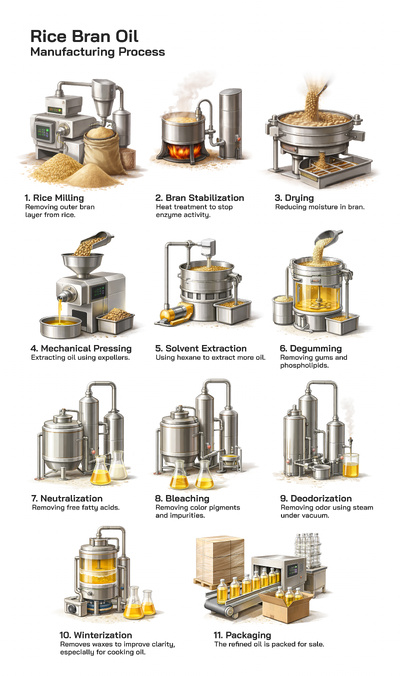
The process begins immediately after harvested corn arrives at the facility. Grain lots contain natural debris gathered during cultivation and transport, including fragments of stalk, dust, soil particles, and occasional stones or metal traces. Cleaning equipment such as vibrating screens, aspirators, and magnetic separators removes these unwanted materials. This step is fundamental because impurities can damage machinery, interfere with separation efficiency, or contaminate the final oil. Proper cleaning also improves consistency in later operations, ensuring that hydration and grinding behave predictably from batch to batch.
Once purified, the kernels move into steeping, a defining feature of wet milling technology. They are soaked in warm water for extended periods, often with a small controlled addition of sulfur dioxide to limit microbial growth and assist in breaking bonds between internal structures. During steeping, moisture penetrates the grain, softening its matrix and preparing it for fractionation. The transformation is dramatic: what was once hard and glassy becomes pliable, allowing processors to gently tease apart germ, starch, protein, and fiber. Temperature and time are managed with precision because under-steeping leaves tissues resistant, while over-steeping may reduce yield or affect downstream quality.
After conditioning, the softened corn is coarsely ground. The objective is not to pulverize everything but to free the germ intact. The germ is the embryo of the seed and contains the majority of the oil, making its recovery the economic heart of the operation. Hydrocyclones, density separators, and washing systems isolate this fraction from heavier starch and lighter fiber. Maintaining germ integrity is critical; broken particles complicate extraction and may trap oil that would otherwise be recovered. By the end of this stage, the plant has effectively concentrated lipid-rich material into a stream ready for pressing or solvent treatment.
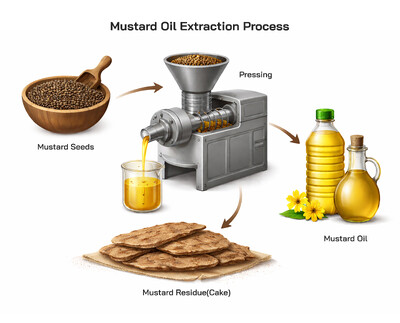
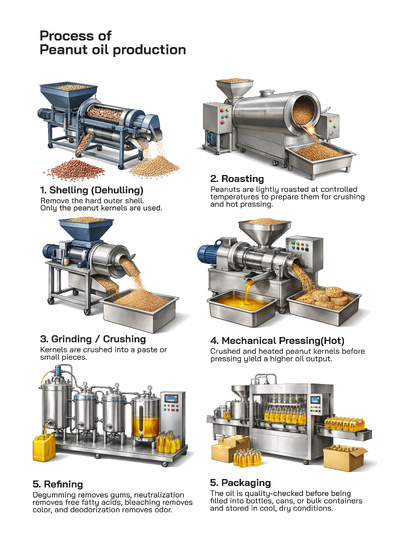
Oil extraction converts potential into product. Mechanical presses may be used to squeeze part of the oil from prepared germ, but to achieve higher recovery most facilities rely on solvent extraction, frequently employing hexane. The solvent dissolves lipids, forming a mixture from which oil can later be separated by evaporation and distillation. Advanced systems recycle the solvent repeatedly, minimizing losses and environmental impact. The immediate output is crude corn oil, darker in color and containing natural gums, pigments, and free fatty acids. Though edible in principle, it requires refining to meet consumer expectations for clarity, neutrality, and stability.
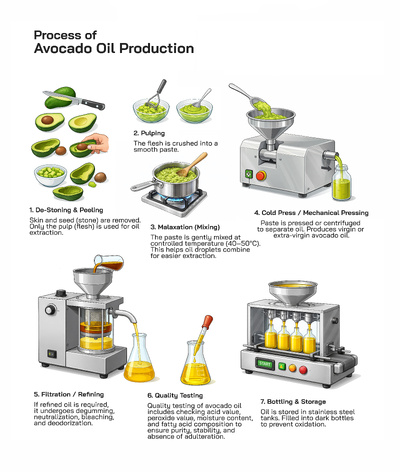
Refining represents a sequence of purification steps rather than a single action. Degumming removes phospholipids that could cause cloudiness or sediment. Neutralization then targets free fatty acids, improving taste and resistance to oxidation. These treatments are performed under controlled agitation and temperature so that desirable triglycerides remain intact. By the conclusion, the oil is significantly lighter and more stable, yet further work remains before it can be marketed.
Bleaching follows, using adsorbent materials such as specialized clays to capture color bodies and trace contaminants. The oil passes through filtration units that trap spent earth along with impurities, resulting in a brighter appearance. Deodorization comes next, typically conducted under vacuum with carefully managed heat and steam. Volatile compounds responsible for odor or off-flavors are stripped away, leaving a neutral sensory profile that makes corn oil suitable for frying, baking, and blending. These operations demand expertise; excessive treatment could degrade nutrients, while insufficient treatment would leave unwanted notes.
Quality assurance laboratories monitor each transformation. Technicians evaluate parameters like moisture, residual impurities, and sensory characteristics. Only when results match specification does the batch proceed. This vigilance protects brand reputation and consumer trust, particularly in international markets where regulatory compliance is stringent.
With refining complete, the oil is nearly ready for kitchens, but packaging introduces another realm of precision. Filtration prior to filling ensures brilliance and removes any minute particles that might have entered during handling. Automated lines dispense accurate volumes into containers ranging from small household bottles to large tins intended for catering. Hygiene is paramount; equipment is sanitized to prevent contamination, and environments are controlled to limit exposure to air.
Sealing mechanisms apply airtight caps that guard against oxidation, one of the primary threats to shelf life. Labels are then attached, carrying essential information such as nutritional values, manufacturing dates, expiry guidance, and traceability codes. These markings allow distributors and retailers to manage inventory while giving consumers confidence in authenticity. Finally, units are packed into cartons designed to cushion them through transportation networks that may span thousands of kilometers.
Storage conditions after packaging continue the commitment to quality. Warehouses are kept cool and dry, away from direct sunlight that could accelerate degradation. Logistics teams coordinate shipments so that retailers receive fresh stock aligned with demand forecasts. From there, the oil enters supermarkets, restaurants, and food factories, completing a journey that began with a single kernel in the field.
Throughout this chain, technology and biology remain intertwined. The inherent structure of maize determines how steeping loosens components, how germ can be floated or spun away, and how lipids respond to solvents and heat. Engineers design machinery around these properties, seeking ever greater efficiency while preserving nutritional value. The result is a product that appears simple yet embodies layers of scientific understanding.
Corn oil’s popularity arises from its balanced fatty acid profile, high smoke point, and relatively neutral flavor. These qualities make it adaptable across culinary traditions, from deep frying to salad dressings. At the same time, by-products generated during milling contribute to animal feed and other industries, ensuring that little of the original grain is wasted. Economic sustainability thus accompanies technical achievement.
Expanding beyond the operational outline, the modern corn oil sector is deeply influenced by agricultural planning long before kernels reach a processing line. Hybrid selection, soil nutrition strategies, irrigation management, and harvest timing all affect the composition of the germ and the eventual efficiency of lipid recovery. Farmers and processors often coordinate through supply contracts that specify moisture ranges and handling practices. When grain enters storage silos, aeration systems maintain condition and prevent biochemical changes that might later complicate milling. This invisible preparation phase shapes everything that follows, demonstrating that manufacturing quality is rooted in field decisions made months earlier.
Another dimension rarely discussed is the importance of logistics choreography inside large facilities. Conveyors, elevators, and buffer bins regulate the rhythm between departments so that no unit is starved of material or forced into overload. Digital control rooms visualize the movement of thousands of tons per day, translating sensor readings into actionable data. Operators can reroute streams, balance inventories, and predict maintenance windows with impressive accuracy. This orchestration minimizes downtime and supports energy efficiency, two factors that heavily influence the economic footprint of edible oil production.
Water stewardship has also become central to contemporary wet milling complexes. Steeping and washing require substantial volumes, yet environmental regulations and corporate sustainability commitments demand careful reuse. Multi-stage treatment plants clarify process water, remove dissolved solids, and return it to circulation. Some facilities recover nutrients from effluents to create secondary products, turning what might once have been waste into revenue. By closing loops wherever possible, producers reduce freshwater demand while demonstrating responsible resource management to surrounding communities.
Energy integration offers another layer of sophistication. Heat generated in one department can be captured and redirected to another through networks of exchangers. Vapors released during evaporation may prewarm incoming streams, lowering fuel consumption. These arrangements are rarely visible to visitors, but they significantly shape operational costs and carbon intensity. As fuel prices fluctuate and climate considerations gain urgency, such efficiency measures have become strategic priorities rather than optional upgrades.
Advances in analytical science further refine how corn oil quality is maintained. Rapid testing technologies now provide near-instant feedback about composition, allowing technicians to adjust conditions in real time. Instead of waiting hours for laboratory confirmation, teams can intervene immediately, protecting yield and preventing deviations from specification. Data collected over months feeds predictive models that anticipate variability linked to crop origin or seasonal change. Through this approach, consistency becomes a managed outcome rather than a fortunate coincidence.
The human element remains indispensable despite automation. Skilled workers interpret alarms, supervise sanitation, and ensure that safety procedures are respected. Training programs often blend classroom theory with practical mentorship, cultivating familiarity with both machinery and material behavior. In many regions, processing plants are major employers whose presence stimulates local economies. Transport providers, maintenance contractors, and packaging suppliers all depend on the steady flow of activity generated by the oil mill.
Innovation in product customization is another expanding frontier. While a neutral cooking oil remains the backbone of demand, manufacturers increasingly tailor characteristics to suit specialized applications. Adjustments in refining intensity or blending strategies can create variants optimized for snack production, commercial frying cycles, or formulated foods. Research teams collaborate with chefs and food technologists to understand how oil performance influences texture, aroma retention, and consumer perception. These partnerships transform a commodity into a platform for culinary creativity.
Traceability systems have grown more sophisticated as global trade networks widen. Digital records accompany shipments from intake to dispatch, enabling rapid response if questions arise about origin or quality. Barcodes and electronic documentation help authorities verify compliance with import standards, protecting both public health and brand credibility. For consumers, this transparency reinforces confidence that the bottle on the shelf has passed through multiple checkpoints before arrival.
Marketing narratives increasingly highlight the relationship between corn oil and balanced diets. Communication strategies may emphasize its compatibility with vegetable-rich meals, its role in high-temperature techniques, or its contribution to enjoyable texture. Educational campaigns often partner with nutrition professionals to clarify how moderation and variety underpin healthy eating. By translating technical attributes into everyday language, companies bridge the gap between factory processes and household decisions.
The global dimension of trade also shapes production philosophy. Exchange rates, freight capacity, and regional preferences influence packaging sizes and labeling languages. Some markets favor large tins for restaurants, while others prefer smaller consumer formats. Plants capable of rapid changeovers can respond quickly to shifting demand, enhancing competitiveness. Flexibility therefore becomes as valuable as sheer output.
Attention to occupational safety has advanced alongside productivity. Modern installations incorporate enclosed systems, vapor recovery, and rigorous hazard analysis. Continuous monitoring reduces exposure risks, while emergency protocols are rehearsed regularly. These practices protect employees and reassure neighboring communities that industrial activity can coexist responsibly with daily life.
Research continues into improving the nutritional resilience of refined oils. Scientists examine how natural antioxidants behave during storage and how packaging materials interact with light and oxygen. Even subtle enhancements can extend freshness, reducing food waste across distribution chains. Such progress illustrates that development does not cease once a product reaches maturity; incremental gains accumulate into meaningful benefits.
At a societal level, corn oil production exemplifies how agricultural abundance can be translated into diverse economic opportunities. Farmers, engineers, chemists, marketers, and retailers participate in a shared ecosystem linked by the kernel. The synergy between primary production and advanced processing sustains livelihoods while delivering a staple ingredient to millions of kitchens.
Building further on this panorama, financial structures play a surprisingly influential role in how corn oil operations evolve. Investment in storage capacity, extraction technology, and environmental controls often spans decades, so companies must anticipate future dietary trends, regulatory frameworks, and trade flows. Strategic forecasting teams analyze consumption data, demographic change, and emerging culinary habits to determine where growth is likely to occur. These projections guide capital allocation, shaping which upgrades are prioritized and which innovations move from pilot scale into mainstream practice. In this sense, every modernization effort reflects a conversation between present performance and imagined demand.
Insurance and risk management add another layer of planning. Facilities handle combustible materials, high temperatures, and complex mechanical systems, making preventive design essential. Redundant power supplies, fire suppression networks, and structural safeguards protect both employees and assets. Regular audits test preparedness and reinforce a culture in which vigilance becomes routine rather than exceptional. This disciplined approach contributes to uninterrupted supply, something retailers and food manufacturers rely upon when building their own schedules.
The relationship between processors and scientific institutions has grown closer in recent years. Universities collaborate on studies examining lipid stability, refining efficiency, and opportunities for by-product utilization. Pilot plants may experiment with alternative adsorbents or novel purification sequences that promise reduced energy consumption. Students trained in these partnerships often enter the workforce already familiar with industrial realities, accelerating the adoption of fresh ideas. Knowledge thus circulates between academia and factory floors, ensuring that theoretical insight translates into tangible benefit.
Consumer awareness has likewise reshaped communication. Many buyers now want to understand how ingredients fit within sustainable food systems. Producers respond by documenting greenhouse gas reduction initiatives, renewable energy integration, and responsible sourcing programs. Reports outline measurable goals, reinforcing accountability. This transparency builds trust, helping brands maintain loyalty in competitive markets where reputation can influence purchasing as strongly as price.
Packaging technology continues to evolve in response to both marketing and environmental considerations. Lightweight materials reduce transportation costs, while barrier improvements guard against flavor deterioration. Designers experiment with ergonomic shapes that improve pouring control and reduce spillage. Meanwhile, recycling compatibility becomes increasingly important as municipalities expand waste management programs. What may appear as a simple container is actually the result of engineering, consumer research, and ecological strategy working together.
Digitalization reaches even into maintenance philosophy. Sensors track vibration, temperature, and throughput, feeding algorithms that predict when components require service. Instead of reacting to breakdowns, teams intervene before failure occurs. This predictive approach reduces downtime, saves money, and enhances safety. Over time, accumulated data reveal patterns that guide redesign, pushing equipment toward greater durability.
International standards organizations influence daily practice as well. Certification schemes covering food safety, environmental stewardship, and worker welfare require documented procedures and continuous improvement. Achieving and retaining these credentials demands commitment from every department, from procurement to shipping. Yet the reward is access to global markets where such assurances are increasingly mandatory.
Community engagement forms another essential thread. Large plants often support educational programs, infrastructure projects, and local employment initiatives. By maintaining positive relationships with neighbors, companies create stable environments for long-term operation. Public tours and outreach events demystify industrial activity, illustrating how raw crops become familiar household staples.
The culinary world, meanwhile, keeps discovering new uses for corn oil. Chefs appreciate its ability to withstand intense heat while allowing spices and ingredients to shine. Food technologists explore how it behaves in emulsions, coatings, and novel convenience foods. Each experiment generates feedback that may influence refining targets or packaging formats. The dialogue between kitchen creativity and manufacturing precision is ongoing and mutually beneficial.
Global supply resilience has gained prominence as climate variability affects harvest outcomes. Diversified sourcing, flexible logistics, and robust inventories help cushion fluctuations. Scenario planning prepares companies for disruptions ranging from extreme weather to geopolitical shifts. By anticipating challenges, the industry works to maintain continuity for consumers who expect availability regardless of circumstance.
Education inside the workforce evolves too. As automation increases, employees develop new competencies in data interpretation, process optimization, and cross-functional collaboration. Lifelong learning becomes a practical necessity, ensuring that human expertise grows alongside technological capability. Training investments pay dividends in innovation and operational reliability.
Looking ahead, research into renewable materials may open further opportunities for corn-derived lipids. Bioplastics, advanced lubricants, and specialty chemicals hint at futures where agricultural outputs displace fossil resources in unexpected arenas. While edible applications remain central, diversification strengthens economic resilience and broadens the impact of each harvest.
All these currents converge in the everyday act of cooking. When oil sizzles in a pan or blends into a dressing, it carries with it the weight of agronomy, engineering, finance, and culture. The infrastructure supporting that moment stretches from rural landscapes to research laboratories, from digital dashboards to supermarket shelves. Understanding this complexity fosters appreciation for the coordination required to deliver reliability at scale.
The story continues to unfold as expectations shift and technologies mature. Continuous refinement, environmental mindfulness, and responsiveness to consumers guide the path forward. What began as a method for separating fat from grain has become an intricate network of relationships that bind producers, innovators, and families together. Through adaptation and shared knowledge, the industry ensures that a familiar ingredient remains relevant in a rapidly changing world, embodying both tradition and progress in every drop.
Seen from this broader perspective, the clear liquid poured from a bottle represents far more than cooking medium. It embodies planning in the countryside, coordination in industrial corridors, vigilance in laboratories, and dialogue with consumers. Continuous improvement, guided by both tradition and innovation, ensures that the system adapts to changing expectations without losing sight of reliability. In this way, corn oil remains a quiet yet powerful example of how modern food networks transform natural potential into everyday nourishment.
Viewed as a whole, the transformation from cleaned kernel to sealed bottle illustrates modern food manufacturing at its most coordinated. Each stage prepares the way for the next, reducing variability and elevating purity. When consumers pour clear golden oil into a pan, they encounter the culmination of steeping tanks, separators, extractors, refining columns, laboratories, and packaging halls working in harmony. The humble seed has been translated into a globally traded ingredient through knowledge, control, and continual innovation.