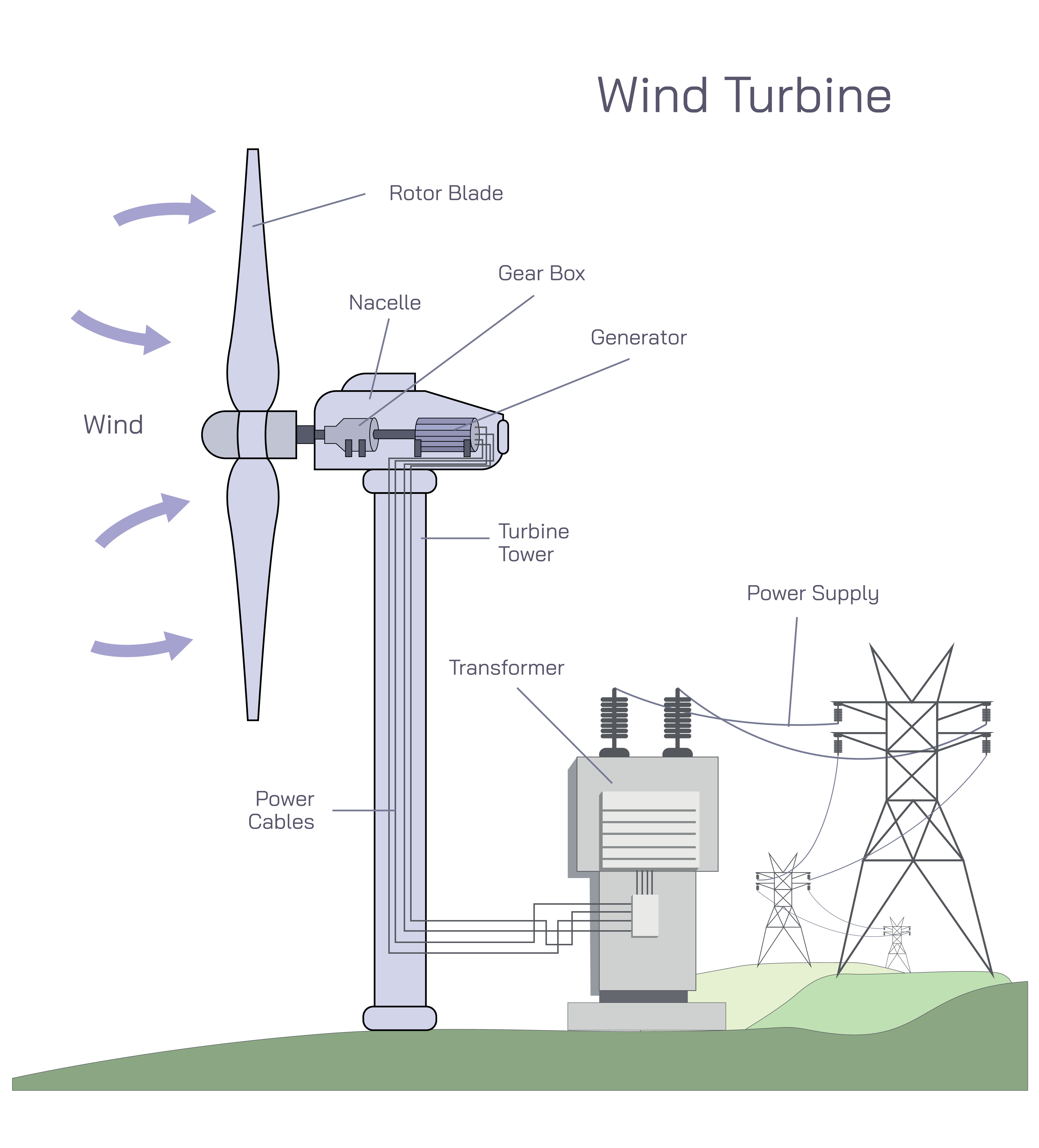
A wind turbine is a modern renewable energy device designed to convert the kinetic energy of moving air into usable electrical energy. As global demand for clean and sustainable power continues to rise, wind turbines have become one of the most important technologies in the transition away from fossil fuels. They harness a naturally occurring resource—wind—and transform it into electricity without producing air pollution or greenhouse gas emissions during operation. The diagram of a wind turbine clearly illustrates how different mechanical and electrical components work together as a coordinated system to generate and transmit power to consumers.
The basic principle behind a wind turbine is straightforward yet highly efficient. When wind flows across the landscape, it carries kinetic energy due to its motion. The turbine blades are specially designed with aerodynamic shapes that allow them to capture this energy effectively. As wind strikes the blades, it creates a pressure difference between the two sides of each blade, causing them to rotate. This rotational motion is the first step in the energy conversion process, where kinetic energy from wind is converted into mechanical energy within the turbine system.
The rotor blades are among the most visible and crucial parts of a wind turbine. Typically made from lightweight yet strong composite materials, these blades are engineered to withstand varying wind speeds and harsh environmental conditions. Their length and curvature are optimized to maximize energy capture even at moderate wind speeds. The blades are connected to a central hub, and together they form the rotor. As the wind turns the rotor, the rotational energy is transferred inward toward the nacelle, which houses many of the turbine’s key internal components.
Inside the nacelle, the rotating shaft connected to the rotor blades transfers mechanical energy to the gearbox. The gearbox plays a vital role by increasing the rotational speed of the shaft. Wind turbine blades rotate relatively slowly, but electrical generators require much higher rotational speeds to produce electricity efficiently. The gearbox bridges this gap by stepping up the speed from the slow rotation of the blades to the fast rotation needed by the generator. Some modern turbines use direct-drive systems that eliminate the gearbox, but in many conventional designs, the gearbox remains a central component.
The generator is the heart of the wind turbine’s electrical system. Once the mechanical energy reaches the generator, it is converted into electrical energy through electromagnetic induction. As the generator’s internal components rotate, they create a changing magnetic field that induces an electric current in the coils of wire inside the generator. This process transforms mechanical rotation into electrical power, marking the most critical stage of energy conversion within the turbine.
The nacelle also contains control systems that ensure the turbine operates safely and efficiently. Sensors continuously monitor wind speed, wind direction, temperature, and mechanical performance. Based on this data, control mechanisms adjust the orientation of the nacelle so that the rotor faces directly into the wind, a process known as yaw control. Blade pitch control systems adjust the angle of the blades to regulate rotational speed, preventing damage during strong winds and optimizing energy capture during normal conditions.
The tower of the wind turbine supports the entire structure and elevates the rotor and nacelle to heights where wind speeds are stronger and more consistent. Wind speed generally increases with altitude due to reduced surface friction, making taller towers more effective for energy generation. Towers are typically constructed from steel or concrete and are designed to withstand significant mechanical stresses caused by wind forces and the weight of the turbine components. Inside the tower, power cables run downward, carrying the generated electricity toward ground-level equipment.
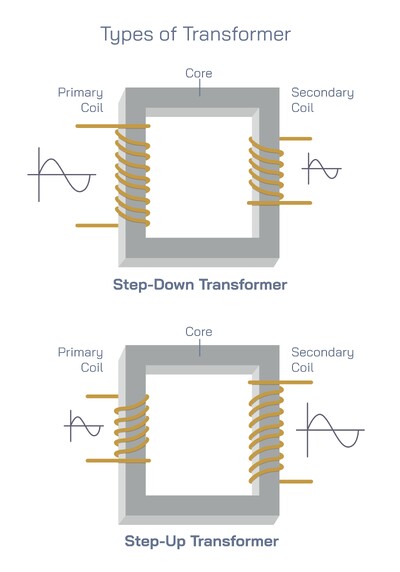
At the base of the tower, the electrical output from the generator is directed to a transformer. The transformer increases the voltage of the electricity produced by the turbine. Higher voltage levels are essential for efficient transmission over long distances, as they reduce energy losses in power lines. Once the voltage is stepped up, the electricity is fed into transmission lines that connect the wind turbine to the broader power grid.
From the transmission network, the electricity generated by wind turbines travels to substations and distribution systems, eventually reaching homes, industries, and commercial facilities. In wind farms, which consist of multiple turbines installed in a single location, the output from individual turbines is combined before being transmitted to the grid. This collective generation approach allows wind farms to produce large amounts of electricity, contributing significantly to regional and national energy supplies.
The environmental benefits of wind turbines are substantial. Wind energy is a renewable resource that does not deplete over time, unlike fossil fuels. Wind turbines generate electricity without emitting carbon dioxide, sulfur dioxide, or nitrogen oxides during operation, helping to reduce air pollution and combat climate change. Although the manufacturing and installation of turbines involve energy use and materials, the overall lifecycle emissions of wind energy are significantly lower than those of conventional power plants.
In addition to environmental advantages, wind turbines offer economic and social benefits. They create jobs in manufacturing, installation, operation, and maintenance. Wind energy projects can provide income to landowners who lease their land for turbine installation and contribute to local economies through infrastructure development. In many regions, wind power also enhances energy security by reducing dependence on imported fuels.
The working of a wind turbine, as shown in the diagram, represents a seamless integration of aerodynamic design, mechanical engineering, electrical systems, and control technology. Each component—from the rotor blades capturing wind energy to the generator producing electricity and the transformer enabling efficient transmission—plays a specific and essential role. The success of wind turbines lies in this coordinated operation, which allows a simple natural phenomenon like wind to be transformed into a reliable and scalable source of electricity.
In conclusion, a wind turbine is a sophisticated yet environmentally friendly machine that converts wind energy into electrical power through a well-defined sequence of processes. By capturing kinetic energy with rotor blades, converting it into mechanical rotation, generating electricity, and transmitting it to consumers, wind turbines form a cornerstone of modern renewable energy systems. As technology continues to advance and the global focus on sustainability grows, wind turbines will remain a vital solution for meeting energy needs while protecting the environment.