Importance of Fingerprints: Uniqueness, Function, and Their Role in Identification and Security
Fingerprints are one of the most fascinating biological features of the human body because they combine individuality, biological function, and scientific value in a way no other characteristic does. From birth until death, every person carries a set of fingerprints that remain unchanged throughout life, making them a powerful tool for identification. Their intricate ridge patterns are not just random biological formations; they serve essential purposes for grip, touch sensitivity, and environmental interaction. Over time, fingerprints have become deeply embedded in forensic science, law enforcement, security systems, and digital authentication technologies, shaping how society identifies individuals and protects sensitive information. The importance of fingerprints extends far beyond the simple ridges on fingertips—they represent a perfect convergence of biology, technology, and human behavior.
The Biological Uniqueness of Fingerprints
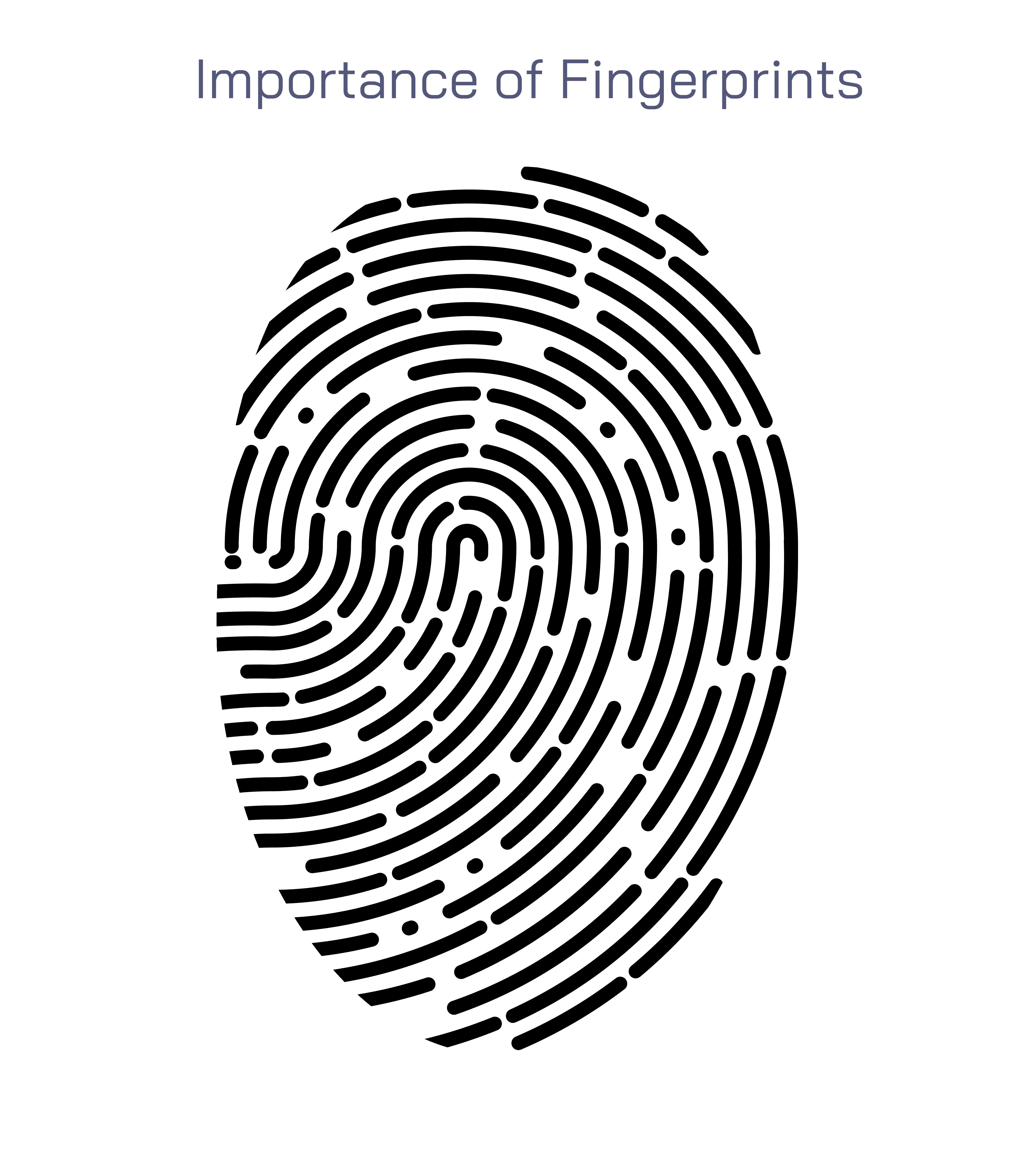
One of the most remarkable aspects of fingerprints is their absolute uniqueness. Even identical twins, who share the same genetic makeup, do not have identical fingerprint patterns. This individuality develops in the womb as the fetus presses its fingertips against the amniotic sac, causing unique physical forces to shape the ridge patterns. These small variations in pressure, movement, and growth rate create permanent configurations of loops, whorls, and arches that no two individuals share. This unrepeatable formation makes fingerprints one of the most reliable biological identifiers known to science.
The permanence of fingerprints also contributes to their importance. Once formed during fetal development, they remain unchanged throughout a person’s life. While injuries, burns, or scars may alter small patches of skin, the overall pattern is preserved because ridge structures regenerate according to the original blueprint stored in deeper skin layers. This combination of uniqueness and permanence places fingerprints at the center of identification systems used worldwide for both civil and criminal purposes.
Role of Fingerprints in Enhancing Grip and Tactile Sensitivity
Fingerprints are not merely identification markers; they serve essential functional roles in everyday life. The ridge patterns on fingertips help create friction between the skin and contact surfaces, improving grip when holding objects such as pens, tools, or smartphones. Without fingerprints, the skin would be smooth, reducing traction and making it harder to grasp items, especially in conditions involving moisture or slippery surfaces. The ridges channel away water and adjust pressure distribution across surfaces, allowing hands to maintain a secure grip even in challenging situations.
Beyond grip, fingerprints also enhance tactile sensitivity. The raised ridges amplify vibrations when the fingers touch or move across surfaces, sending detailed sensory information to the nervous system. This increased sensitivity allows humans to detect textures, shapes, and fine details far more accurately than they would with flat skin. Fingerprints therefore contribute to both practical movement and sophisticated sensory processing, reinforcing how deeply integrated they are into everyday human interaction with the physical world.
Importance in Personal Identification and Civil Documentation
Fingerprints play a critical role in identity verification because they provide a reliable, easy-to-collect, and universally unique marker for each individual. Governments and institutions around the world use fingerprint records for national identification systems, passports, voter registration, immigration processes, and background verification. In many countries, fingerprints are essential components of biometric identification programs designed to streamline administrative processes while enhancing security.
The convenience of fingerprint-based identification also reduces the dependency on physical documents that can be lost, forged, or stolen. A fingerprint is always present, quick to scan, and impossible to replicate with absolute accuracy. This makes it a preferred authentication method for banks, workplaces, airports, and educational institutions. The widespread adoption of fingerprint ID underscores its reliability as a modern form of personal identity protection.
Forensic Importance in Crime Detection and Law Enforcement
Fingerprints revolutionized forensic science by providing investigators with a dependable method to connect individuals to crime scenes. Because humans constantly shed skin cells and leave residues when touching surfaces, fingerprints often remain on objects, door handles, weapons, and other evidence. These latent prints can be enhanced, collected, and analyzed using specialized forensic techniques, allowing investigators to reconstruct movements, establish presence, and link suspects to criminal activity.
Fingerprint databases maintained by law enforcement agencies store millions of prints that can be compared rapidly using automated systems. Even partial or smudged fingerprints can be matched to individuals due to the distinctiveness of ridge patterns. The importance of fingerprints in solving crimes lies not only in their uniqueness but also in their persistence—they can remain on surfaces for long periods if conditions are favorable. This makes fingerprints a cornerstone of modern forensic investigations, where even a single print can transform a case by providing irrefutable evidence.
Impact on Digital Security and Authentication Technologies
With advancements in technology, fingerprints have transitioned from forensic tools to everyday security features integrated into devices such as smartphones, laptops, smart locks, and banking systems. Biometric authentication has rapidly replaced traditional passwords and PINs because fingerprints offer a secure, simple, and efficient method of verification. Unlike passwords, fingerprints cannot be forgotten or guessed, making unauthorized access significantly more difficult.
Fingerprint sensors operate using optical, capacitive, or ultrasonic technologies that map the ridge patterns and convert them into encrypted digital templates. These templates are stored securely on the device and compared instantly during authentication. The use of fingerprints in digital security enhances both convenience and protection, ensuring that personal devices and sensitive information remain safeguarded from unauthorized access.
Genetic and Developmental Significance of Fingerprints
Although fingerprints are shaped by environmental factors during fetal development, genetics play a crucial role in determining the general pattern types such as loops, whorls, or arches. The combination of inherited traits and environmental influences results in highly individualized ridge patterns. Studying fingerprints provides insights into developmental processes, genetic conditions, and variations in human populations.
Certain medical conditions may affect fingerprint patterns, making them useful in clinical research as well. Dermatoglyphics, the scientific study of fingerprints, is used in genetic counseling and developmental studies to identify correlations between ridge configurations and chromosomal abnormalities. Fingerprints thus serve not only as markers of identity but also as valuable biological indicators.
Use in Access Control, Safety Systems, and Workplace Verification
Fingerprints are widely used in access control systems across offices, laboratories, factories, research facilities, and secure government buildings. These systems ensure that only authorized individuals can enter restricted areas. Compared to conventional keys or cards, fingerprint-based systems reduce the risk of unauthorized access caused by lost or duplicated credentials.
Workplaces also use fingerprint attendance systems to maintain reliable records of employee entry and exit. This eliminates the possibility of proxy attendance or manipulation of time logs. The use of fingerprints in such systems highlights their importance in maintaining accuracy, security, and accountability in professional environments.
Cultural and Historical Importance
Fingerprints have been recognized as unique for thousands of years. Ancient civilizations, including those in China and Babylon, used fingerprints on clay documents to certify identity and authenticate transactions. Over time, scientific research validated these early observations, establishing fingerprints as dependable security markers. Their historical use demonstrates how deeply embedded fingerprints are in human society as symbols of individuality and authenticity.
In many cultures, fingerprints are also associated with personal identity and privacy. Their integration into technological systems raises important discussions about digital ethics, data protection, and biometric security. This cultural significance adds another dimension to the importance of fingerprints in the modern world.
Conclusion
Fingerprints are far more than simple patterns on the skin—they represent a unique combination of biological design, functional necessity, and technological utility. Their role in enhancing grip, improving tactile sensitivity, enabling secure identification, aiding forensic investigations, and powering digital authentication systems makes them one of the most important biometric features of the human body. Their permanence and individuality ensure that fingerprints will continue to play essential roles in science, security, and daily life for generations to come.