Learning Spatial Prepositions for Kids: Between, Behind, In Front of, Near, To the Right of, To the Left of
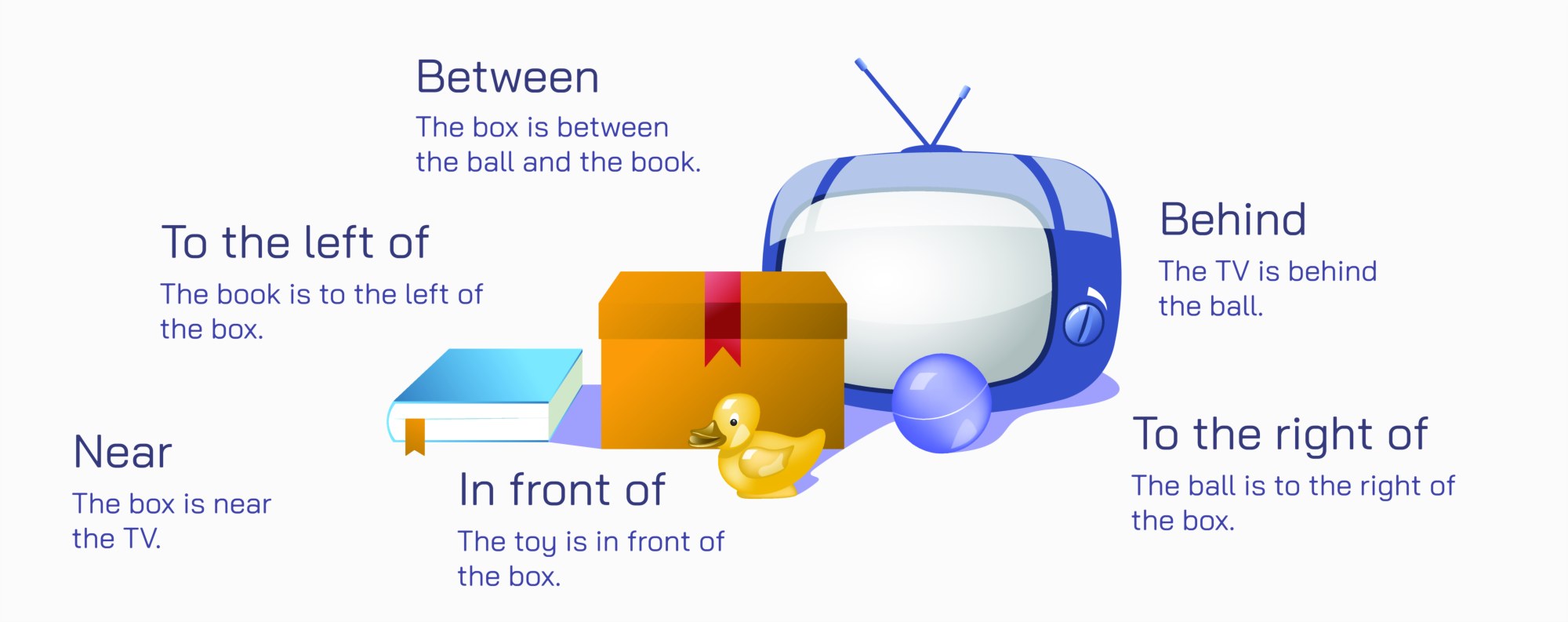
Understanding spatial prepositions is an essential step in early childhood education, helping children describe positions, directions, and relationships between objects. Prepositions such as between, behind, in front of, near, to the right of, and to the left of are foundational vocabulary for building language skills, cognitive understanding, and spatial awareness. Teaching these concepts in a visual and interactive way enhances learning, making it fun, memorable, and effective for preschoolers and early learners.
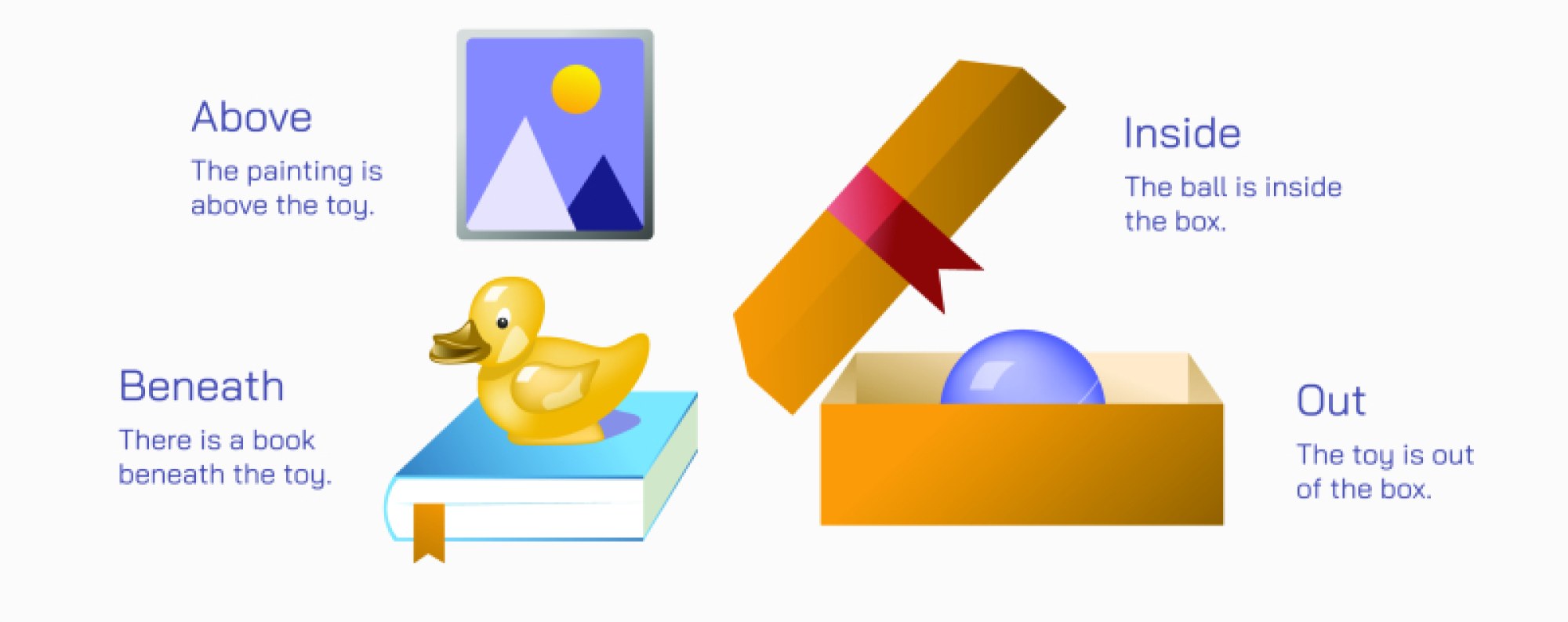
The preposition “between” teaches children how to identify an object located in the middle of two other objects. For example, a toy placed between two chairs helps kids visually and verbally understand the concept of central positioning. “Behind” introduces the concept of hiding or the back side of an object. Children can learn this by identifying objects hidden behind furniture or other toys, improving their perception of spatial relationships. “In front of” works conversely, helping children locate objects at the forefront, which is critical in understanding perspective and orientation.
The term “near” helps children grasp relative proximity, teaching them how to identify objects that are close but not necessarily touching. This concept builds the foundation for describing relationships in space and distance. “To the right of” and “to the left of” are fundamental directional prepositions that allow children to navigate and articulate the position of objects relative to themselves or other objects. These concepts are crucial for reading, writing, mathematics, and everyday life activities that require spatial understanding.
In teaching kids, combining visual aids, toys, and interactive exercises makes learning prepositions more engaging. Children can participate in activities such as placing objects according to verbal instructions, arranging items on a mat, or using illustrations and diagrams that clearly show positions. Games that ask children to identify where an object is located help reinforce the concept of spatial prepositions through hands-on practice and repetition. This interactive approach improves memory retention and verbal articulation.
Spatial prepositions are not only important for language development but also for cognitive growth, including problem-solving, logical reasoning, and understanding directions. Recognizing positions and orientations in space enhances the ability to follow instructions, navigate environments safely, and communicate effectively. Early mastery of these prepositions prepares children for more complex linguistic structures, mathematics concepts like geometry and measurement, and even early programming logic in later years.
Educators and parents can enhance learning by integrating storytelling, drawing, and real-life scenarios where children identify positions of objects or characters. Worksheets, coloring activities, and digital learning tools can also reinforce these concepts in an interactive and enjoyable way. By consistently practicing prepositions like between, behind, in front of, near, to the right of, and to the left of, children develop strong foundational skills in language, observation, and spatial intelligence.
In conclusion, teaching spatial prepositions is a vital component of early childhood learning. Using objects, illustrations, and interactive exercises, children can grasp positional concepts such as between, behind, in front of, near, to the right of, and to the left of. This approach not only builds language proficiency but also enhances cognitive development, spatial awareness, and problem-solving skills. Engaging children with these prepositions through fun and practical activities ensures that learning is effective, memorable, and enjoyable, laying a strong foundation for lifelong understanding of spatial relationships and communication.