Hair Ad Template Vector Illustration — Beauty, Care, and Styling Design for Marketing Explained
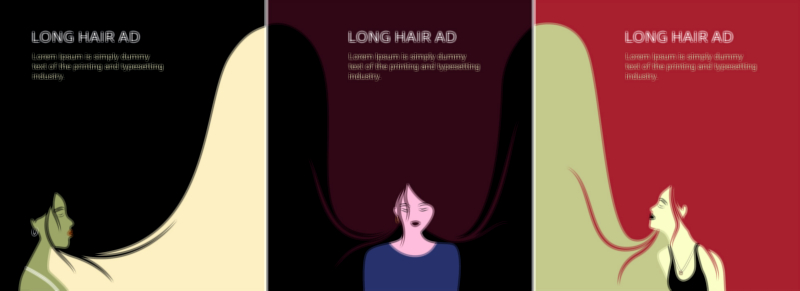
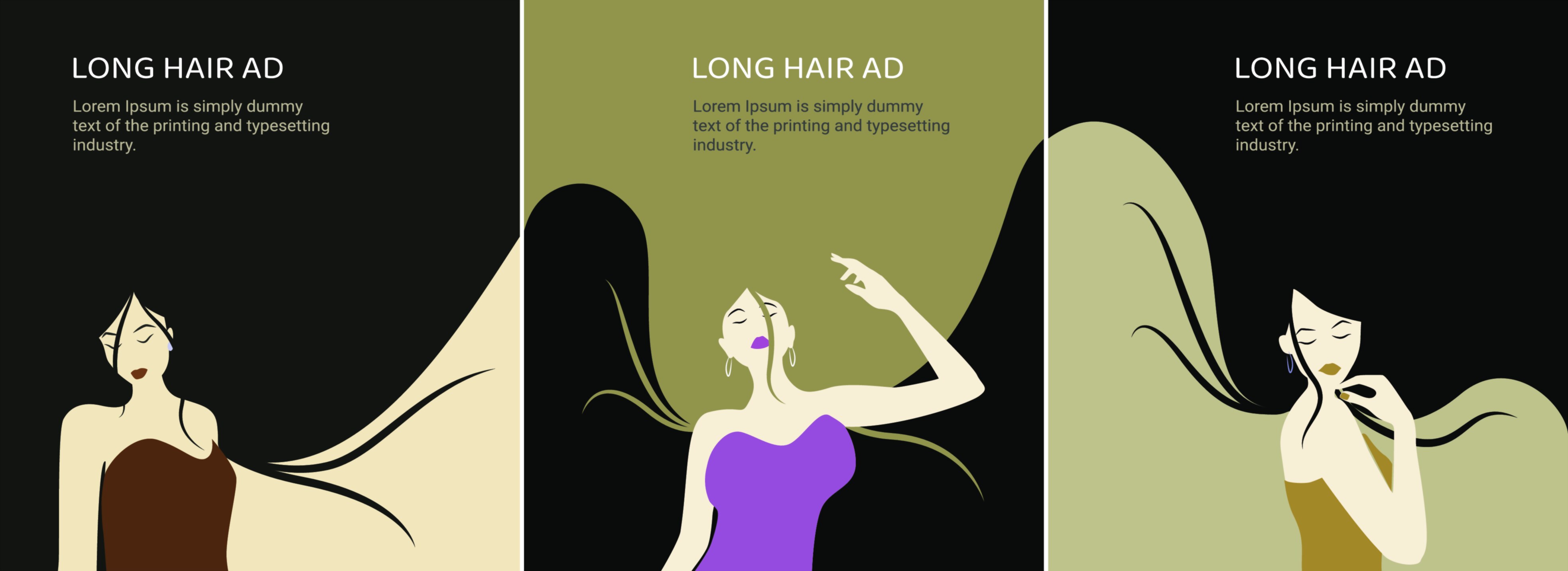
A vector illustration designed for a hair advertisement is far more than a decorative graphic; it is a strategic visual communication tool built to evoke emotion, demonstrate transformation, and create an instant connection between the viewer and the idea of beautiful, healthy, and styled hair. A successful hair ad illustration recognizes that consumers are not simply looking for shampoo, oil, serum, conditioner, or styling sprays; they are seeking the feeling and identity associated with flawless hair. Whether the message focuses on smoothness, shine, curl definition, volume, scalp nourishment, or fashion styling, the vector illustration becomes the visual anchor that makes the audience imagine themselves experiencing that result. Every line, color choice, highlight, and pose in the artwork works together to communicate aspiration, self-expression, confidence, and empowerment. The ad does not simply promote a product; it promotes the transformation that the product promises.
Vector illustrations are uniquely effective in hair marketing because they allow idealized yet relatable visual storytelling. Unlike photographs, which capture natural imperfections and lighting limitations, vectors create a polished artistic world where hair moves flawlessly, reflects light with precision, and expresses emotion through shape, curves, texture, and volume. A smooth hair illustration can feature dramatic shine gradients that instantly signal softness and frizz-free control. A curly hair illustration can highlight perfectly moisturized coils with luminous definition and bounce. A volumizing concept can show hair rising upward and outward in a bold, powerful silhouette. A scalp-care product ad can emphasize close-up vector elements of hydration, nourishment, root strengthening, and soothing comfort without needing real biological photography. In every case, the illustration’s role is to represent hair in its most desirable condition so that the viewer instinctively connects the visual transformation with the product being marketed.
Within a well-designed vector illustration, the focal point of the composition is always the hair. The face, clothing, setting, and product are secondary supporting elements used only to amplify the story told by the hair. The lighting patterns and color transitions are crafted to draw the eye toward the locks, flowing strands, spirals, waves, or curls. Smooth gradients reinforce softness, highlights reflect health and gloss, and bold shapes communicate density and strength. Even the direction in which the hair moves has psychological meaning: flowing downward communicates elegance and smoothness, sweeping backward suggests freedom and lightness, a high volumized silhouette signals empowerment and body, and tight curls with bounce radiate vitality, moisture, and youthfulness. The illustration becomes a visual language where hair itself tells the story without relying on excessive text.
Color theory is a critical component of hair ad vectors. Warm golden tones are often used to communicate nourishment, shine, luxury, and oil-based care. Cool silver and white tones signal purity, scalp cleansing, science-backed formulas, and damage repair. Deep browns and blacks express strength, restoration, moisture retention, and keratin-rich enrichment. Bright trendy colors are used in fashion-focused ads to communicate individuality, boldness, and creativity. The background palette is frequently softened to make the hair color stand out dramatically. The product placement within the illustration tends to echo the palette of the hair — for example, golden oil bottles placed near shiny golden highlights or hydrating serums illustrated with glowing blue accents representing moisture. Nothing is accidental; every color reinforces an emotional message of transformation.
Typography in a hair ad template complements the illustration rather than competing with it. The phrases chosen are minimal but powerful, because viewers absorb advertising messages emotionally and instantly rather than intellectually. Words like “smooth,” “strong,” “voluminous,” “hydrated,” “defined,” “silky,” “anti-frizz,” and “hair fall control” are used as emotional anchors linked to common consumer desires. The accompanying tagline deepens that connection by suggesting the emotional effect rather than the mechanism. For example, “More shine, more confidence,” “Own your curls,” “Stronger hair starts here,” or “Volume that doesn’t quit.” These short phrases work because they imply that achieving beautiful hair also means reaching a personal emotional state associated with beauty and identity. The typography is strategically placed to frame the illustration without obscuring the hair, maintaining visual hierarchy that directs the viewer to admire the hair first, notice the benefit second, and recognize the product last.
The structural layout of a vector-based hair ad follows an intuitive psychological sequence. The viewer sees the hair first, experiences the emotional message next, and only then processes the product image and logo. This creates a narrative inside the viewer’s mind: “This is the hair I want — this is how I will feel if I have that hair — this product will give me that result.” When this sequence is achieved, the advertisement becomes not just visual aesthetics but a fully functioning persuasion engine built upon emotional promise rather than technical explanation. The consumer is not told what the product does; they are shown what they will become.
A strong hair advertisement vector layout also reflects the target audience. For those seeking nourishment and repair, the models and colors evoke softness, comfort, and renewal. For audiences interested in styling power and bold fashion, the illustration features dynamic angles, dramatic poses, and energetic colors. For curly or coily hair–focused campaigns, the artwork celebrates texture rather than suppressing it, highlighting natural patterns as beautiful and expressive rather than problems to be solved. For men’s hair ads, the vector style emphasizes strength, scalp structure, grooming confidence, and modern styling rather than glamorized shine. Every demographic difference translates into a different emotional atmosphere built around the hair as the hero of the image.
In successful marketing, a vector illustration does more than depict a hairstyle — it depicts possibility. It gives the viewer a mirror of who they want to become and pairs that identity with a product that appears capable of delivering the desired transformation. Whether the promise involves restoration, hydration, volume, shine, styling control, protection, or length retention, the template becomes a symbolic story of self-expression and empowerment conveyed through hair. Because beauty marketing is fueled not by need but by aspiration, the vector illustration acts as an emotional bridge between imagination and action. It transforms curiosity into desire and desire into purchase.
Through visual storytelling focused on hair as the protagonist, a hair ad template vector illustration connects branding, beauty, and emotion into one irresistible message: your ideal hair is possible, and this product is the key to unlocking it.