Road rollers are heavy construction machines designed specifically for compacting soil, gravel, asphalt, and other surface materials during road and infrastructure development. Their primary function is to increase material density by reducing air voids, improving load-bearing capacity, and creating a smooth, durable surface. Road rollers are indispensable in modern civil engineering projects, where structural stability, long service life, and surface uniformity are critical.
The importance of road rollers lies in the compaction process. Proper compaction ensures that the underlying layers of a road or structure can withstand traffic loads, resist settlement, and maintain shape over time. Without adequate compaction, pavements may crack, deform, or fail prematurely. Road rollers apply controlled pressure and, in many cases, vibration to rearrange particles tightly, producing a stable and uniform layer.
Road rollers operate using one or more heavy cylindrical drums or multiple pneumatic tyres. The weight of the machine, combined with static pressure or vibratory force, compresses the material beneath. Modern rollers often incorporate vibration systems that generate rapid oscillations in the drum. These vibrations increase particle movement, allowing deeper and more efficient compaction compared to static weight alone.
There are several types of road rollers, each designed for specific materials and construction stages. Smooth drum rollers are among the most commonly used types. They feature a large steel drum that applies uniform pressure across the surface. Smooth drum rollers are widely used for compacting asphalt layers and granular materials. When equipped with vibration systems, they are highly effective for base and sub-base compaction in road construction.
Tandem rollers are a variation of smooth drum rollers that feature two steel drums, one at the front and one at the rear. This design allows even compaction across the entire machine length. Tandem rollers are primarily used for asphalt compaction, where smoothness and uniform finish are essential. Their balanced weight distribution ensures consistent pressure, making them ideal for final surface layers of roads and highways.
Single drum rollers, also known as vibratory rollers, consist of one large drum at the front and wheels at the rear. These rollers are commonly used for soil, gravel, and aggregate compaction. The vibratory mechanism in the drum enables deeper compaction, making single drum rollers suitable for large-scale earthwork, embankments, and foundation preparation.
Pneumatic tyre rollers use multiple rubber tyres instead of steel drums. The tyres provide a kneading action that is particularly effective for compacting asphalt and cohesive soils. Pneumatic rollers distribute pressure evenly and help seal the surface by closing small voids. They are often used in intermediate and finishing stages of asphalt paving to improve durability and surface texture.
Sheepsfoot rollers, also known as padfoot rollers, are designed specifically for compacting cohesive soils such as clay and silty materials. The drum surface is covered with protruding lugs or pads that penetrate the soil. This penetration breaks down clumps and forces air out of the material, resulting in thorough compaction. Sheepsfoot rollers are commonly used in embankment construction, dam projects, and subgrade preparation.
Padfoot rollers are similar in concept to sheepsfoot rollers but often include removable pads that allow the machine to be adapted for different soil conditions. This versatility makes them useful for mixed-material sites where soil composition varies across the project area.
The specifications of road rollers vary depending on application and size. Key specifications include operating weight, drum width, vibration frequency, amplitude, engine power, and travel speed. Heavier rollers provide greater static force and are suitable for large-scale projects, while lighter rollers are used for smaller jobs or finishing work. Drum width influences coverage area and productivity, while vibration settings determine compaction depth and efficiency.
Modern road rollers are equipped with advanced hydraulic systems that control drum vibration, steering, and propulsion. Articulated steering improves maneuverability, especially on curved road sections and confined construction sites. Operator cabins are designed for visibility, comfort, and safety, allowing precise control during compaction operations.
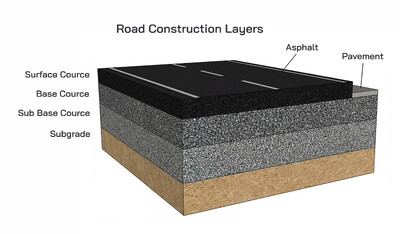
Road rollers are used across a wide range of construction and industrial applications. In road construction, they compact subgrade, base, and asphalt layers to ensure pavement stability. In highway and expressway projects, rollers play a critical role in achieving uniform density across long stretches of roadway. In airport construction, they are used to compact runways and taxiways that must withstand heavy aircraft loads.
Beyond transportation infrastructure, road rollers are also used in industrial yards, warehouses, and parking areas to prepare stable ground surfaces. They are essential in embankment construction, dam building, and land development projects where soil stability is critical. Rollers also contribute to soil stabilization processes by improving density and load resistance.
The use of appropriate road roller types at each construction stage directly affects project quality and longevity. Selecting the correct roller based on material type, layer thickness, and required compaction level ensures optimal performance. Improper selection or insufficient compaction can lead to costly repairs and reduced service life.
Quality control is closely linked to roller operation. Modern rollers may include compaction monitoring systems that provide real-time feedback on material density and coverage. These systems help operators achieve consistent results and meet engineering specifications. Such advancements improve efficiency and reduce the risk of under-compaction or over-compaction.
From an industrial perspective, road rollers significantly contribute to productivity and cost efficiency. By achieving required compaction levels quickly and uniformly, they reduce construction time and material waste. Their reliability and durability make them long-term assets in construction fleets.
Beyond their visible role in surface compaction, road rollers are deeply connected to the science of soil mechanics and material behavior. Different construction materials respond uniquely to applied pressure and vibration, and understanding these responses is essential for effective compaction. Granular materials rearrange their particles primarily through vibration, while cohesive soils rely more on pressure and kneading action. Road rollers are therefore engineered to deliver specific force patterns that align with how particles move, interlock, and stabilize at the microscopic level.
Compaction effectiveness is also influenced by moisture content in the material being rolled. Soil and aggregate have an optimal moisture range at which particles can move and pack together most efficiently. If the material is too dry, particles resist rearrangement; if too wet, water occupies void spaces and prevents proper densification. Road roller operators often coordinate closely with site engineers to ensure materials are conditioned correctly before compaction begins, highlighting the interdependence between machinery and material preparation.
The interaction between roller speed and compaction quality is another critical but less obvious factor. Moving too quickly reduces the time pressure is applied to the surface, resulting in uneven density. Moving too slowly can cause overworking of the material, leading to surface damage or segregation. Operators must maintain consistent speed to achieve uniform compaction, especially on long road stretches where density variation can compromise structural integrity.
Temperature sensitivity plays a significant role in asphalt compaction. Asphalt mixtures must be compacted within a specific temperature window to achieve proper bonding and density. If rolling begins too early, the material may shift excessively; if too late, the asphalt stiffens and resists compaction. Road rollers used in asphalt work are therefore integrated into tightly coordinated paving operations, where timing and sequencing are just as important as machine capability.
The design of roller drums themselves has evolved to improve performance. Drum surface texture, edge shape, and internal vibration mechanisms are carefully engineered to prevent surface tearing, edge cracking, or uneven compaction. Some drums include beveled edges to minimize marks on asphalt layers, while others are designed to reduce material pickup and sticking. These refinements improve surface finish and reduce rework.
Fuel efficiency and emissions have become increasingly important in modern road roller design. Construction projects often involve extended operating hours, making fuel consumption a significant cost factor. Newer rollers incorporate more efficient engines, optimized hydraulic systems, and intelligent vibration control to reduce unnecessary energy use. Lower emissions also help projects comply with environmental regulations, particularly in urban or environmentally sensitive areas.
Operator skill remains a decisive factor in roller performance despite technological advances. Experienced operators can sense subtle changes in material behavior through vibration feedback, machine response, and surface appearance. This intuition allows them to adjust rolling patterns, overlap passes correctly, and identify areas requiring additional attention. Training and experience therefore directly influence compaction quality and project success.
Rolling patterns themselves are carefully planned rather than random. Overlapping passes, edge treatment, and direction of travel are chosen to ensure uniform density across the entire surface. Inconsistent rolling patterns can create weak zones that may not be immediately visible but can lead to long-term pavement distress. Proper planning ensures that compaction energy is distributed evenly and efficiently.
Road rollers also contribute to safety on construction sites by stabilizing surfaces for subsequent equipment and workers. Properly compacted ground reduces the risk of equipment sinking, tilting, or losing traction. This stability is especially important in large infrastructure projects where multiple machines operate simultaneously in confined areas.
Maintenance practices have a direct impact on roller reliability and compaction consistency. Worn drum components, malfunctioning vibration systems, or uneven tyre pressure in pneumatic rollers can lead to inconsistent results. Regular inspection, calibration, and servicing ensure that rollers deliver predictable performance and meet engineering specifications throughout a project’s duration.
In large-scale infrastructure development, road rollers play a strategic role in project scheduling. Compaction is often a prerequisite for subsequent construction stages, meaning delays or inefficiencies in rolling operations can affect the entire project timeline. Reliable rollers with high productivity help maintain workflow continuity and reduce downtime across multiple construction phases.
Technological integration has expanded the role of road rollers beyond simple compaction tools. Data collected during rolling operations can be analyzed to optimize material usage, rolling patterns, and machine deployment. This data-driven approach allows construction managers to make informed decisions, improve quality control, and document compliance with design requirements.
In challenging terrain, such as slopes or confined urban spaces, roller stability and maneuverability become critical. Specialized designs and traction systems help rollers operate safely without compromising compaction quality. These adaptations allow road rollers to be used in complex environments where conventional equipment might struggle.
From a lifecycle perspective, the impact of proper compaction extends far beyond construction. Well-compacted roads and foundations experience less maintenance, lower repair costs, and longer service life. Road rollers therefore contribute indirectly to sustainability by reducing the need for frequent reconstruction and conserving materials over time.
In developing regions, road rollers play a transformative role in infrastructure expansion. By enabling durable road construction, they support economic growth, improve access to services, and enhance connectivity. Their presence often marks the transition from temporary pathways to permanent transportation networks.
An often underexplored aspect of road roller operation is the relationship between compaction strategy and long-term pavement performance. Compaction does not merely affect immediate surface appearance; it determines how stresses are distributed through pavement layers over decades of use. Uniform density ensures that loads from vehicles are transferred evenly into the subgrade, reducing stress concentration points that can initiate cracks or rutting. Inadequate or uneven compaction may remain hidden during initial inspections but gradually manifests as structural failure under repeated traffic loading.
The sequencing of rolling passes is another critical factor influencing compaction outcomes. In layered construction, each layer must be compacted to specification before the next is applied. Failure to achieve adequate density in lower layers compromises the effectiveness of compaction in upper layers, regardless of roller type or weight. Road rollers therefore function as part of a cumulative system, where the quality of earlier compaction stages directly affects the performance of later ones.
Edge compaction presents unique challenges in road construction. Edges are often less confined than central areas, making it harder to achieve the same density. Specialized rolling techniques, such as offset passes or edge-support methods, are used to address this issue. Some projects employ additional equipment or temporary supports to ensure edges receive sufficient compactive effort. Poor edge compaction is a common source of pavement deterioration, underscoring the importance of precision in roller operation.
The interaction between rollers and underlying geotechnical conditions also deserves attention. Subgrade composition, bearing capacity, and drainage characteristics influence how compaction energy is absorbed and transmitted. In weak or saturated subgrades, excessive rolling can cause pumping or material displacement rather than densification. In such cases, rollers must be used carefully, often in combination with stabilization techniques, to avoid compromising ground integrity.
Human factors engineering has increasingly shaped modern roller design. Control layout, vibration feedback, visibility lines, and cabin ergonomics all influence operator effectiveness. Fatigue, limited visibility, or poor feedback can lead to inconsistent rolling patterns or missed areas. By improving operator comfort and situational awareness, manufacturers indirectly enhance compaction quality and jobsite safety.
Weather conditions play a subtle but important role in rolling operations. Temperature, humidity, and wind can affect material behavior and surface conditions. Sudden weather changes may alter moisture content or asphalt cooling rates, requiring immediate adjustments to rolling strategy. Experienced operators and site managers monitor environmental conditions closely and adapt compaction plans accordingly to maintain quality standards.
The economics of road rollers extend beyond purchase and fuel costs. Downtime caused by mechanical failure, poor compaction requiring rework, or inefficient rolling patterns can significantly increase project expenses. Preventive maintenance, proper operator training, and appropriate machine selection contribute to lower total cost of ownership and higher project profitability.
In large infrastructure projects, multiple rollers often operate simultaneously. Coordinating their movements is essential to avoid overlap inefficiencies or missed coverage. Communication between operators and supervisors ensures that rolling progresses systematically and that compaction targets are met uniformly across the site. This coordination transforms individual machines into a cohesive compaction system.
Road rollers also influence the sustainability profile of construction projects. Effective compaction reduces the need for additional material layers, conserves aggregates, and lowers lifecycle emissions associated with repairs and reconstruction. By extending pavement life, rollers indirectly reduce the environmental footprint of infrastructure development.
In specialized applications such as dam cores or landfill liners, compaction requirements are extremely stringent. Rollers used in these contexts must achieve precise density and permeability targets to ensure structural safety and environmental protection. Here, roller performance is directly linked to risk management and regulatory compliance, elevating the importance of accurate and controlled compaction.
Technological innovation continues to refine how rollers interact with materials. Adaptive vibration systems can adjust frequency and amplitude based on real-time feedback from the ground, optimizing compaction while minimizing unnecessary energy input. These intelligent systems reduce operator guesswork and improve consistency, particularly on complex or variable sites.
Cultural and regional construction practices also influence roller usage. Different regions develop preferred rolling techniques based on climate, material availability, and historical experience. Understanding these practices allows engineers to adapt roller deployment strategies to local conditions rather than applying generic solutions.
The training pipeline for roller operators has evolved to include simulation and digital learning tools. Virtual environments allow operators to practice techniques, understand machine response, and learn error correction without risking material damage. This training improves skill levels and reduces learning curves on active job sites.
From a systems perspective, road rollers act as a bridge between design intent and physical reality. Engineering specifications define target densities and layer properties, but it is the roller that translates these requirements into tangible results. Any mismatch between design assumptions and compaction execution can undermine project objectives.
In rapidly urbanizing areas, road rollers support not only transportation but also utility corridors, housing developments, and industrial zones. Their role extends into shaping the physical framework upon which cities expand. Reliable compaction underpins safe buildings, stable roads, and resilient infrastructure networks.
Ultimately, road rollers are instruments of transformation. They convert loose, unstable material into a solid foundation capable of supporting modern life. Their effectiveness depends on an interplay of machine capability, human skill, environmental awareness, and engineering insight. By appreciating these deeper dimensions, one can understand that road rollers are not merely heavy machines, but critical agents in the creation of durable, safe, and sustainable infrastructure. Road rollers represent the convergence of mechanical force, material science, and operational precision. Their effectiveness depends not only on size or weight, but on how intelligently they are applied within the construction process. By understanding these deeper dimensions, engineers and operators can maximize the value of road rollers, ensuring that infrastructure is built on a foundation of strength, consistency, and long-term reliability.
In conclusion, road rollers are essential machines for compaction in construction and civil engineering. Their types include smooth drum rollers, tandem rollers, vibratory rollers, pneumatic tyre rollers, and sheepsfoot rollers, each serving specific purposes. Through controlled weight, vibration, and pressure, road rollers improve material density, strength, and durability. Their specifications and proper application ensure stable foundations, long-lasting roads, and high-quality infrastructure that supports modern development and economic growth.