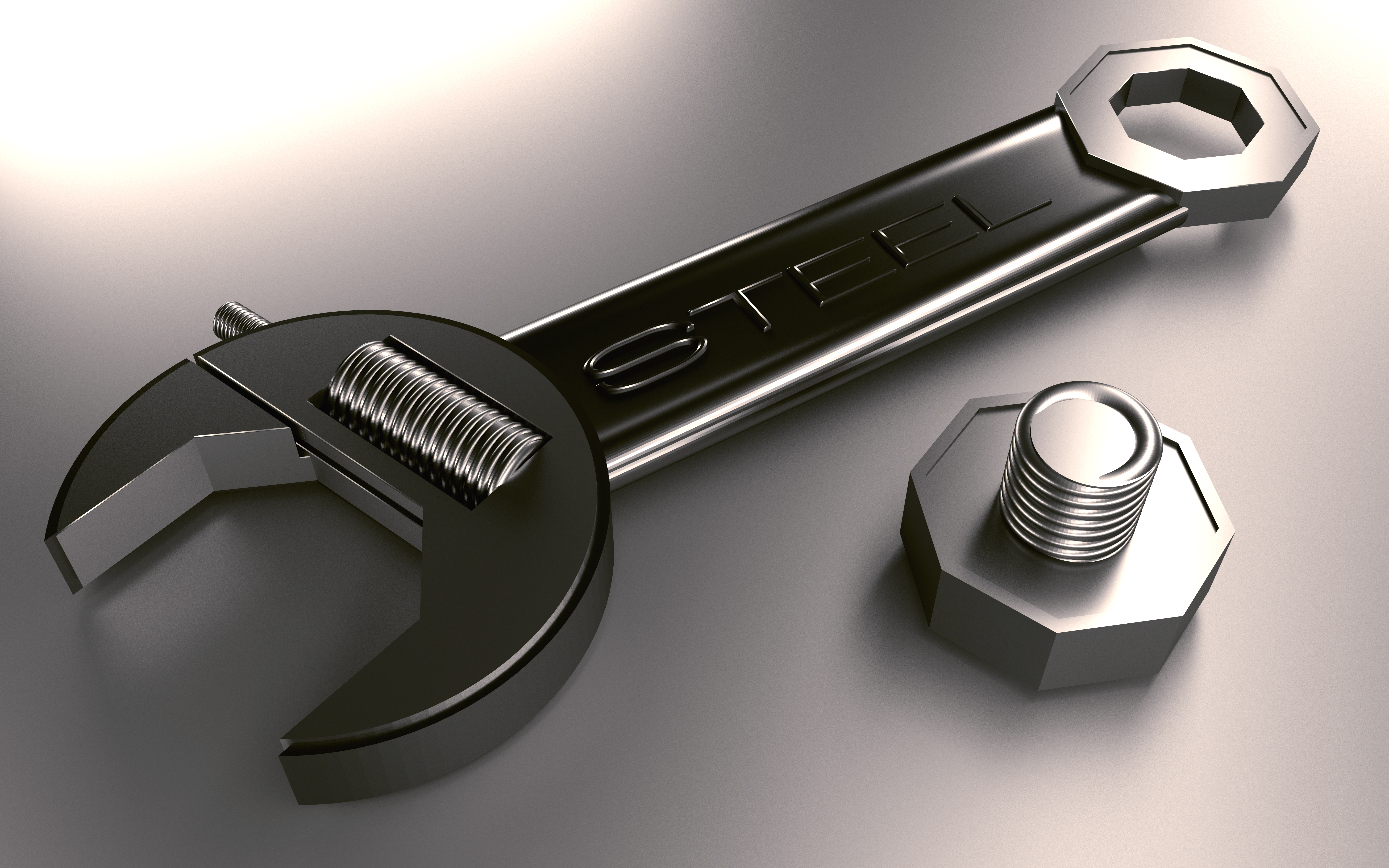
3D Rendered Adjustable Steel Wrenches and Bolt — Detailed Mechanical Illustration Overview
A 3D rendered illustration of adjustable steel wrenches with a metal bolt offers a realistic and visually precise look into common mechanical tools that are used across engineering, construction and repair work. Presenting these tools in a fully modeled digital environment provides viewers with an accurate representation of their structure, texture and practical use. The rendering often highlights polished steel surfaces, smooth edges and a clear mechanical mechanism, making the image valuable for educational, industrial and technical design purposes.
In the center of the visual, the adjustable wrench typically appears with a fully detailed body, including the handle, jaw and the screw mechanism that changes the opening width. The rendered steel surface displays soft reflections, light gradients and micro-textures that mimic hardened metal. This realistic surface portrayal helps users understand the durability and function of the tool. The wrench’s movable jaw is shown in different positions, demonstrating how it expands or tightens around bolts of varying sizes. This clear representation helps explain the advantage of the adjustable design, especially compared to fixed-size wrenches.
Beside the wrench, the bolt is often shown with clean threading, metallic shine and accurate dimensional alignment. The illustration may present the bolt in multiple perspectives, including a close-up view that reveals the pattern of the thread spiraling around its shaft. This threaded detail visually explains how rotational force from a wrench interacts with the bolt during tightening or loosening. Sometimes, the bolt is paired with a nut to give a more complete mechanical context.
The 3D environment enhances understanding by placing the wrench and bolt in positions that demonstrate mechanical action. The wrench jaw may be shown gripping the bolt head, while slight motion blur or directional indicators suggest the applied turning force. The lighting setup often includes reflections along the steel edges, shadow contours under the tools and subtle highlights on key surfaces, all contributing to the realistic visual style.
Exploded or semi-transparent views are sometimes included in such illustrations. These specific renderings allow viewers to examine the internal screw mechanism that adjusts the wrench jaw. They show how the worm gear inside the wrench handle rotates to move the jaw smoothly along the guide rail. This makes the mechanical concept accessible even to beginners who may not be familiar with tool engineering.
The bolt’s placement in different angles also allows users to compare dimensions and see how the wrench adapts to diverse shapes. Some renderings place the bolt on a textured industrial surface such as iron, concrete or a workshop table. This context connects the digital model with real-life tool usage scenarios, making the scene relatable and instructive.
The 3D rendering additionally highlights ergonomic design elements of the wrench handle, such as curvature for grip comfort, surface ridges for improved handling and balanced weight distribution suggested by the geometry. This level of detail contributes to a better appreciation of how simple tools are engineered for both function and user comfort.
Overall, a 3D rendered visual of adjustable steel wrenches and a bolt serves as a clear, informative and visually engaging representation of essential mechanical tools. It combines accurate geometry, realistic materials and functional context to illustrate how these tools operate, making it perfect for technical guides, repair manuals, engineering tutorials and educational materials.