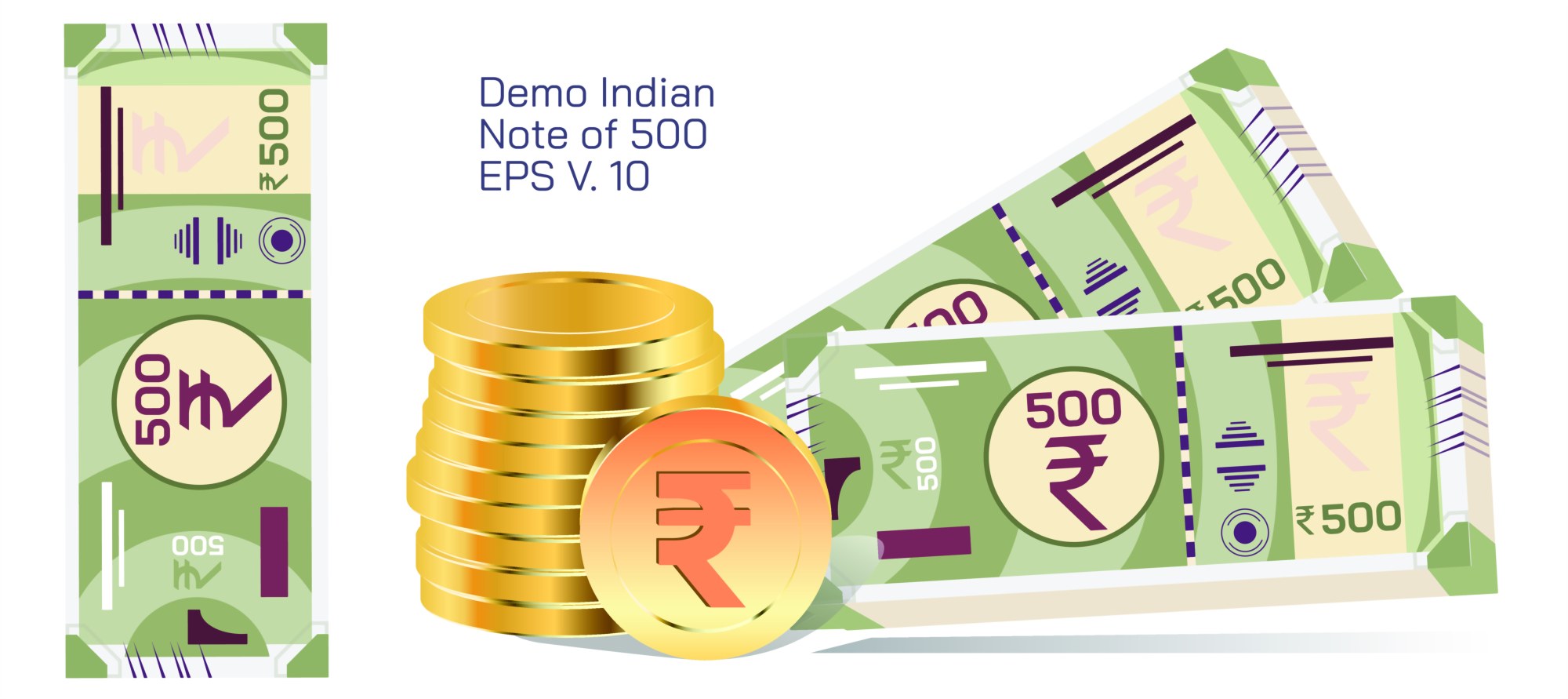
₹500 Indian Currency Note Vector Demo — Structure, Layout, and Visual Guide
A vector demo illustration of the ₹500 Indian currency note provides a simplified but clear representation of its visual layout, making it ideal for training, design studies, presentations, and educational resources. Instead of reproducing authentic security features or sensitive details, the vector form highlights essential structural components in a clean and stylized way. This makes it safe for learning and design reference, while still giving viewers a proper sense of the note’s proportion and general arrangement.
The illustration typically displays the overall rectangular format of the note, broken into visually balanced zones. A vector version emphasizes readability by keeping lines sharp, edges smooth, and shapes geometrically precise. This simplified approach helps learners observe how text, value markings, emblem placements, and decorative shapes are composed without visual distraction. Because vectors scale without losing clarity, they are perfect for large classroom screens, design breakdowns, and chart-style explanations.
One of the key advantages of vector demos is that they focus on composition rather than reproduction. The denomination marking—₹500—is usually placed prominently in the design sample to teach how central alignment or side-based placement enhances value recognition. Other general shapes help illustrate the concept of visual weight distribution. These do not mimic real security features but instead represent the concept of structured layout, making them usable in practice assignments, student portfolios, and design exercises.
The vector demo often highlights the symmetry of the note. Depending on how the designer frames it, the illustration may show the approximate spacing between key regions, margin zones, and central shapes. This clarity allows learners to analyze how elements are distributed across the note to maintain balance and readability in real currency design. For educators, this simplified visualization is extremely useful when explaining proportional logic and flat-design principles.
From a design perspective, vector-based templates allow flexibility in modifying colors, labels, and patterns for explanations. Students studying typography placement, margin decisions, or graphical alignment can use these demo illustrations to understand fundamental principles without interacting with sensitive or restricted design elements. The flat vector shape also supports infographic production, where various callouts can explain functional parts of a note’s layout.
For creative learners, a ₹500 currency vector demo serves as a safe blueprint for practicing digital illustration techniques. It allows them to experiment with line art, shading (if desired), color blocking, or custom symbolic themes. Because it excludes official security patterns, watermarks, micro-text, and government-protected graphics, it stays within safe educational use.
In summary, a vector demo of the ₹500 Indian currency note is a well-structured learning tool that offers clarity, safety, and design-focused insight. Its simplified geometry helps students, teachers, and designers understand how banknote layouts are constructed while providing a flexible foundation for education and creativity.