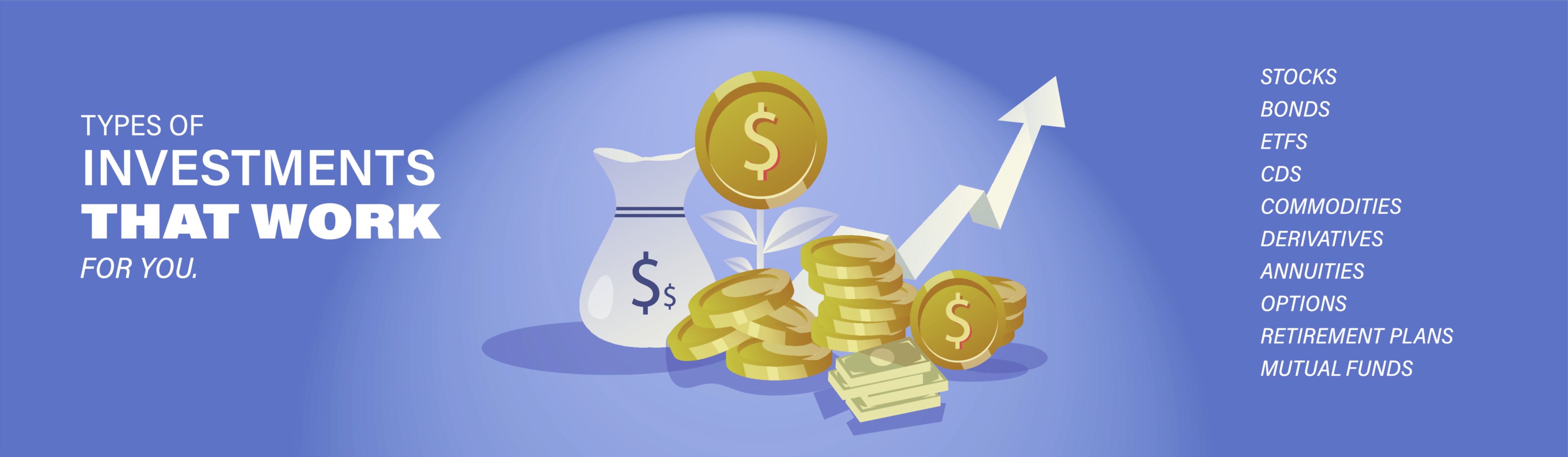
Investment Types Template – A Detailed Financial Education Summary on Asset Categories, Growth Potential, Risk Levels, Income Opportunities, Diversification Strategy, and Smart Portfolio Building
Understanding the different types of investments is one of the most important steps toward building a strong and sustainable financial future. An investment types template serves as an educational framework that categorizes the major avenues where people and businesses can place their money to generate returns over time. Rather than allowing investment choices to be driven by hype, trends, or guesswork, this structured approach teaches how various financial instruments behave, what goals they serve best, and how they interact with each other during different economic conditions. Investment types are not meant to compete with one another for superiority; instead, they complement each other when arranged thoughtfully. The function of a complete investment template is to empower individuals to understand the purpose of each investment category, evaluate risk and return logically, and build a balanced portfolio that increases wealth while reducing vulnerability to market uncertainty. This structured understanding replaces confusion with clarity and transforms investing from instinctive reaction into informed decision-making.
At the highest level, the investment universe can be grouped into broad asset categories, each with its own characteristics. Equity investments—including shares, exchange-traded funds, and equity mutual funds—represent ownership in companies. When someone buys stocks, they participate in corporate growth, profits, and sometimes dividend distributions. Equity has historically offered the highest long-term returns of all investment types, making it a strong wealth-building engine. However, because markets fluctuate based on business cycles, investor sentiment, and global events, stocks carry higher short-term volatility. Educating investors about equities means helping them understand that volatility does not equal loss unless panic leads to selling. For long-term goals such as retirement or wealth accumulation over decades, equity is often a core component of a portfolio because time smooths out market ups and downs and magnifies compounding.
In contrast, fixed-income investments provide lower but more predictable returns. These include government and corporate bonds, treasury instruments, fixed deposits, savings certificates, and debt mutual funds. Instead of owning a share of a business, fixed-income investors act as lenders, receiving interest payments in exchange for financing governments or companies. Because the payout is structured and predictable, fixed-income investments are valued for capital preservation and stability. They play a crucial role in any investment template because they keep portfolios balanced and dependable even when stock markets become unstable. For short-term goals or for people close to retirement, this category becomes especially important in protecting wealth while maintaining income flow.
Real estate investments form another major asset category. They include residential, commercial, industrial properties, and real estate investment trusts (REITs). Real estate is often associated with long-term appreciation and can generate rental income, making it both a growth and income asset. Many individuals and families view real estate as emotional security alongside financial gain because of its physical tangibility. However, real estate requires higher capital, may involve property management responsibilities, and has lower liquidity compared with assets that can be sold instantly in markets. Educating investors about real estate means understanding its dual nature: it can be a powerful component of wealth creation when managed correctly, but it should not absorb disproportionate capital in a way that restricts financial flexibility.
Gold and commodities form another purposeful category within the investment template. Gold, in particular, holds a special status because it historically protects purchasing power during inflation, currency decline, and global economic uncertainty. While gold does not generate regular income like stocks or bonds, it plays a valuable hedging role in a diversified portfolio. Commodities such as silver, oil, and agricultural products are also influenced by global supply and demand and can act as risk diversifiers during specific economic cycles. The purpose of this category is not aggressive growth but protection. Having some allocation to commodities ensures that a portfolio remains resilient even when financial markets face unexpected disruptions.
This brings us to digital and alternative investments, one of the fastest-evolving areas in modern finance. These include cryptocurrency, tokenized assets, digital startups, peer-to-peer lending, venture capital, hedge funds, collectibles, and even intellectual property vaults. These assets often involve very high risk but may provide very high returns for investors who understand the technology, market dynamics, and behavior of speculative assets. Because of unpredictability, this category should be approached with caution and should generally form only a small percentage of a portfolio. The educational purpose of this section within the investment template is not to encourage or discourage participation but to ensure that investors recognize the volatility, research requirements, and long-term uncertainty associated with alternative investments. Knowledge, not hype, must lead decisions in this space.
Another essential investment type, often overlooked, is cash and liquid reserves. Liquid investments include savings accounts, money market funds, liquid mutual funds, and high-interest digital savings plans. Their purpose is safety and accessibility rather than growth. Liquidity protects investors from having to sell long-term assets during emergencies. In proper financial planning, cash reserves do not indicate a lack of investment strategy; they are the backbone that keeps the entire strategy stable.
Once these categories are understood individually, the investment template shifts attention to their integration. No two investors need to distribute their money across these categories in the same proportions because allocation depends on age, income, responsibilities, goals, market knowledge, and risk tolerance. A 25-year-old investor planning for retirement might prioritize equities heavily, while a 60-year-old investor prioritizing capital preservation would place more weight on fixed income and low-volatility assets. A real estate investor with multiple properties might reduce exposure to property and increase exposure to equity or bonds for better balance. This level of customization is what makes an investment types template powerful—it adapts to the investor rather than forcing the investor to adapt to it.
An important part of teaching investment types is recognizing that no category is perfect in every economic climate. When equity markets face downturns, bonds or gold often strengthen. When interest rates rise, bond prices fall but fixed deposits become attractive. When inflation climbs, real assets like commodities and real estate gain strength. This is precisely why diversification is not an optional feature but a defining principle of financial success. The template allows investors to create a portfolio where each asset class plays a role, balancing growth, income, security, and liquidity across time.
In a complete educational view, investment types must also be evaluated from the point of income generation vs. capital appreciation. Some assets, such as dividends, bonds, rental properties, and certain business investments, provide regular income. Others, like equities and growth-oriented real estate, aim primarily for future price appreciation. A mature investment plan blends both income and growth assets so that returns continue even during retirement or reduced earning years. This blend prevents financial dependence on salary alone and gradually builds multiple streams of income.
Risk understanding is also a core topic in the investment types template. Risk does not always mean potential financial loss; it means variability in outcomes. High-risk assets fluctuate widely and may produce higher returns but require emotional tolerance and time. Low-risk assets create steadier results but produce lower returns and may not beat inflation alone. Risk education helps investors understand that losses come not from risk itself but from mismatches between asset choice and time horizon. When long-term assets are treated as short-term investments, or when emergency funds are exposed to volatility, risk becomes harmful. When assets are aligned correctly with their purpose, risk becomes a calculated ally rather than an enemy.
Ultimately, the investment types template teaches a larger educational message: wealth is not built by choosing only the best-performing investment category but by choosing the right combination of multiple categories that work well together through changing economic landscapes. The purpose of financial education is not to predict markets but to build an adaptive portfolio that thrives despite unpredictability. When individuals and businesses understand the purpose of each investment type, link assets to personal goals, allocate based on risk comfort, and maintain diversification across time horizons, investing becomes stable, strategic, and growth-oriented.
The greatest power of this framework is that it provides a sense of control. Financial anxiety comes from uncertainty, and uncertainty shrinks when the investment landscape becomes clear and logical. The investment types template transforms investing from a confusing world into a structured learning journey, giving people the tools to take charge of their financial future, build wealth with patience, and create lifelong financial security supported by knowledge rather than luck.