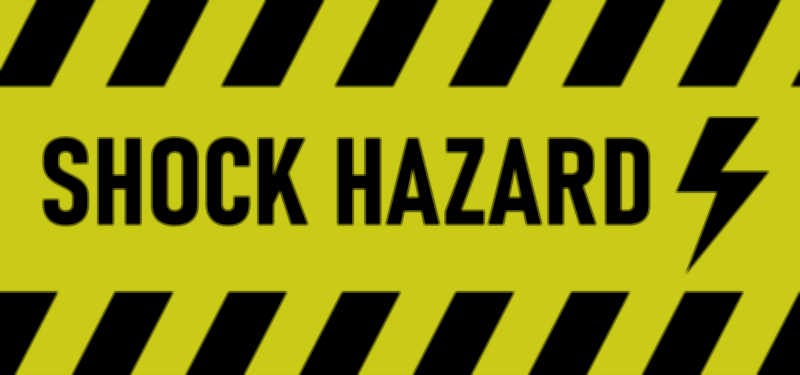
High Voltage Danger Warning Sign Yellow Black Vector Illustration
A High Voltage Danger warning sign, when depicted as a sharply rendered yellow and black vector illustration featuring bold typography, a striking lightning bolt icon, and aggressively contrasted hazard geometry, stands as one of the most critical tools in global electrical safety communication. Although visually simple, its meaning carries life-saving urgency because it signals the presence of electrical energy at a voltage high enough to cause severe injury, permanent disability, or death within seconds upon contact. The yellow-and-black color scheme is chosen deliberately, not for aesthetics but for psychological impact: yellow triggers instant alertness in the brain, while black creates authoritative contrast that makes the symbol unmistakable even from a distance or in peripheral vision. As a vector graphic, the sign remains razor-sharp regardless of scaling, ensuring that every line, lightning symbol, and caution message remains clear whether printed small on a machine panel, large on an outdoor transformer enclosure, mounted on fences surrounding substations, displayed in industrial facilities, placed on electrical cabinets, or inserted into digital safety training modules. It is a visual command delivered through design — one that communicates danger before a person has time to get close enough to face consequences.
The purpose of a High Voltage Danger sign becomes clearer when considering how electricity behaves and why untrained individuals are particularly vulnerable around high-power electrical equipment. Unlike mechanical hazards, which are visible, noisy, and physically obvious, high voltage risks are completely silent and often invisible. A person may not see exposed wiring, active bus bars, charged capacitors, high-power terminals, distribution switchgear, or live rails, yet the risk remains fully present whether components appear protected or not. The danger does not depend on whether the equipment looks threatening — it depends on stored and conducted electrical energy. Someone unfamiliar with electrical systems may believe they are safe unless they touch a bare cable directly, not realizing that high voltage can arc across air gaps, travel through moisture or metal tools, energize fences or surfaces unintentionally, or pass through a person even without visible contact if proximity is too close. The sign reverses this dangerous misconception by warning individuals that proximity itself can be fatal, and therefore remaining outside the marked boundary is not optional but essential.
The sign plays a massive role in preventing accidental contact, which is one of the most common causes of electrical injuries in public, industrial, and construction environments. Without signage, someone might attempt to retrieve a tool from behind an electrical cabinet, step through a transformer yard fence, rest materials against a switchboard door, lean a ladder near power lines, or handle wiring that appears deactivated. Workers unfamiliar with electrical protocols or visiting technicians may assume that equipment is safe simply because it looks inactive or makes no noise. Attempting to touch electrical infrastructure when power is live — or assuming a system is off when it has not been verified — can result in electrocution in milliseconds. The High Voltage Danger sign protects people by announcing clearly that they are entering a zone where even a small mistake may be irreversible. It transforms the space from a neutral environment into one of conscious caution, reminding individuals not to rely on assumptions or guesswork in the presence of electrical systems.
Beyond personal safety, the sign has an equally vital function in protecting qualified workers from complacency, which is often more dangerous than ignorance. Electricians, technicians, and engineers who work daily around electrical systems must maintain a heightened awareness at all times, but familiarity can sometimes dull instinctive caution. The sign reinforces that even professionals must treat the equipment with full respect and follow lockout/tag-out procedures, isolation protocols, grounding checks, PPE standards, and verification routines before approaching live systems. It serves not only as a barrier to the uninformed but as a psychological reset for the trained — ensuring that experience never becomes overconfidence.
The sign also provides crucial protection in public and residential environments, not only in high-security substations or industrial plants. Outdoor power poles, underground cable junctions, solar inverter fences, EV charging infrastructure, building emergency generator rooms, and domestic electrical meters sometimes appear harmless to children, pets, and curious individuals. A child chasing a ball near a transformer box may treat it like a structure to climb; a hobbyist drone operator might fly too close to overhead power lines; a passer-by could lean a bicycle against a high-voltage panel without understanding the danger. The sign acts as a shield, preventing innocent mistakes that could otherwise turn deadly. It communicates across languages, ages, and literacy levels — even someone who cannot read the text understands instantly that electricity and danger exist behind the symbol.
The yellow-black warning combination amplifies the impact of the message by activating the brain’s hazard recognition instinct. Yellow conveys caution, alertness, and preparedness; black defines boundaries, finality, and non-negotiable instruction. The lightning bolt symbol intensifies the sign’s meaning by translating danger into a graphic that the mind registers instantly. Unlike written messages, which must be consciously processed, the lightning icon enters recognition circuits automatically — enabling rapid understanding in fractions of a second. In fast-moving work environments, where an individual might glance briefly while operating machinery, carrying tools, or navigating narrow spaces, this split-second recognition may be what prevents them from stepping too close.
There is also a profound legal and regulatory dimension embodied in the High Voltage Danger sign. Electrical safety codes worldwide mandate that hazardous voltage zones be clearly marked to protect both workers and the public. If an injury occurs in an unmarked electrical area, even when caused by unauthorized access, the property owner or employer may be held legally responsible for failing to provide adequate warning. The sign therefore stands not only as a safety barrier but as proof of compliance, demonstrating that clear hazard communication has been provided. It protects organizations, supervisors, and homeowners from liability while also protecting individuals from harm — a dual responsibility that signage fulfills more reliably than verbal instruction or assumption.
From an operational perspective, the sign supports continuity of electrical infrastructure. Tampering or accidental interference with high-voltage equipment can disrupt power supply not only to the immediate area but to entire circuits, neighborhoods, or industrial facilities. A single accidental switch activation, cable pull, or unauthorized opening of a panel could trigger power outages, equipment failure, fires, or cascading faults. The sign reduces these risks by discouraging contact from anyone who does not have the necessary authorization and lockout clearance. It preserves the integrity of critical power systems, protecting workplaces, homes, hospitals, emergency services, manufacturing lines, and data centers from sudden electrical interruption.
Emotionally and socially, the sign also protects dignity and comfort, removing the possibility of awkward confrontation. Without signage, a technician or property owner might be forced to verbally stop individuals from approaching equipment — a stressful and sometimes confrontational responsibility. The sign prevents this tension by setting expectations ahead of time. It ensures that the people enforcing safety do not appear unwelcoming or accusatory and that those being corrected do not feel embarrassed or reprimanded. The boundary becomes environmental rather than personal, enabling cooperation through clarity rather than conflict.
The vector-based structure of the sign is critical because it guarantees legibility and consistent message strength across real-world conditions. Electrical danger signs are often exposed to dusty industrial air, harsh sunlight, moisture, vibration, and long-distance visibility demands. A blurry, pixelated, or low-resolution image could weaken recognition at the very moment someone needs to notice the warning. The vector format ensures that the triangular hazard border, the lightning symbol, and the high-bold text remain sharp whether printed on reflective metal, vinyl stickers, plastic boards, or digital displays. Even a partial glance — catching only the triangular shape or the yellow field — is enough for the human brain to interpret the meaning correctly.
In a broader sense, the High Voltage Danger sign symbolizes a philosophy of protection rooted in knowledge and respect rather than fear. Electricity powers the world, enabling technology, healthcare, industry, communication, and daily comfort — but its power must be treated with caution because the human body is not built to withstand electrical current. The sign does not exist to restrict progress or deny access; it exists to keep people safe while allowing electricity to support life. It reflects a contract between engineering and humanity: high voltage enables incredible capability, but safety demands awareness.
Ultimately, the High Voltage Danger Warning Sign Yellow Black Vector Illustration serves as a silent but uncompromising guardian of life, infrastructure, and responsibility. It stops accidents before they happen, stops complacency before it turns fatal, stops curiosity before it becomes injury, stops interference before it becomes destruction, and stops confusion before it becomes liability. Through its powerful combination of hazard psychology, universal iconography, and precise vector clarity, the sign communicates not with fear but with unmistakable truth: the energy present here is dangerous, and respect for the boundary protects everyone.