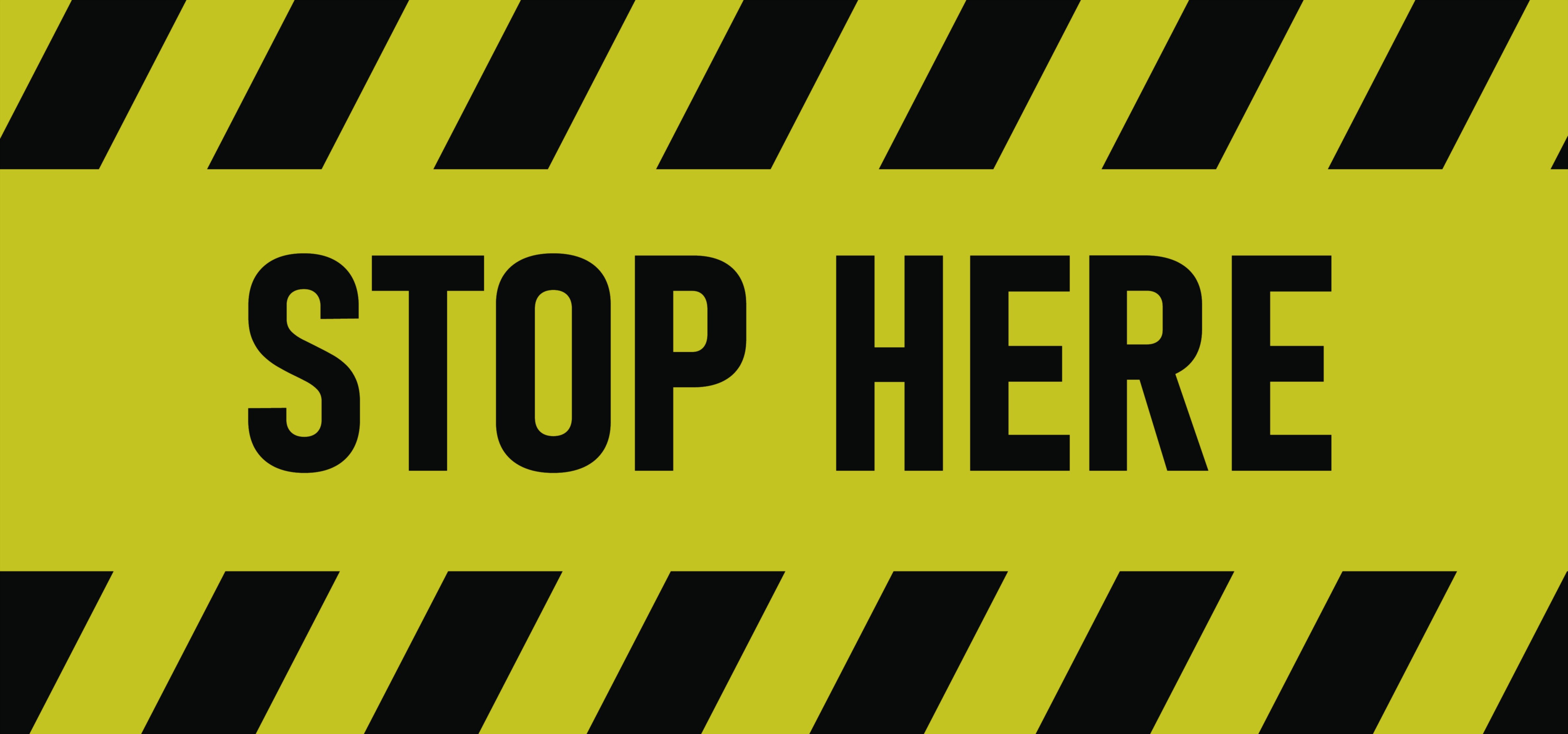
Yellow and Black Zebra Cross Stop Here Sign Vector Illustration
A Yellow and Black Zebra Cross Stop Here sign, when illustrated as a crisp and scalable vector graphic combining the high-contrast yellow caution palette with bold black striping and an unmistakable stop-point instruction, stands as one of the most strategic forms of safety and traffic communication used in modern pedestrian-vehicle interaction. At first glance, the sign appears to simply tell drivers where to halt their vehicles near a pedestrian crossing, but its true purpose reaches much deeper than that. It functions as a visual agreement between pedestrians and drivers, a shared recognition of when movement must pause and when crossing rights must be respected, creating safety not through force but through collective understanding. The vector format enhances this communication significantly because the zebra striping, caution color field, guiding arrows, and bold typography remain perfectly sharp whether displayed on large roadside boards, digital maps, pavement decals, parking area posts, school zone signage, or transportation control panels. The message becomes unmistakable through form as much as through text: vehicles must stop at this exact point to allow pedestrians safe passage across the road.
The purpose of this sign becomes even clearer when examining how human beings behave at crosswalks and intersections. Without clear visual instruction, drivers often rely on estimated judgment to decide where to halt, especially in areas without traffic signals or where pedestrian flow is unpredictable. Some may stop too close to the zebra crossing, blocking part of the walkway and forcing pedestrians to squeeze dangerously between vehicle fronts. Others may overshoot the crossing completely before braking, startling pedestrians and disrupting safe movement. The Yellow and Black Zebra Cross Stop Here sign prevents these misunderstandings by replacing spontaneous decision-making with environmental clarity, telling drivers exactly where to brake before entering the pedestrian zone. Instead of waiting for an officer, a traffic light, or verbal confrontation, the roadway itself becomes the communication channel that governs safety.
The sign plays a crucial role in shielding pedestrians from direct proximity to moving vehicles. Pedestrians often include vulnerable individuals—children on the way to school, elderly citizens with limited mobility, parents with strollers, travelers carrying heavy luggage, and people with visual or hearing impairments. These individuals rely on driver cooperation to cross safely. When a vehicle stops too far into a crossing, pedestrians may hesitate, feel unsafe, lose confidence in the right of way, or become forced into unsafe maneuvering. The Notice to Stop Here before the zebra crossing props up pedestrian dignity and security by establishing that they should not have to negotiate with a moving vehicle or verbally ask for the right of safe passage. It ensures that drivers halt at a respectful distance, protecting both psychological comfort and physical safety for those crossing on foot.
Beyond individual safety, this sign also supports traffic rhythm and predictable road behavior, which are central to reducing accidents. Roads—whether urban, suburban, commercial, industrial, or residential—operate smoothly only when both pedestrians and vehicles anticipate each other’s actions. The Stop Here instruction creates an organized flow where drivers know where their movement should cease, and pedestrians know exactly where vehicles will wait. This reduces hesitation, confusion, and guesswork, transforming a chaotic shared space into an orderly one. School zones, hospital areas, shopping district pavements, gated housing communities, parking lot exits, transit terminals, and factory campuses all benefit enormously from such clarity, because vehicle-pedestrian interaction is unavoidable in these environments. The sign is therefore not only instructive but preventive, guiding behaviors long before conflict forms.
The yellow-and-black palette contributes psychologically to the effectiveness of the sign. Yellow triggers alertness in the visual cortex, signaling that awareness must be heightened. Black forms stark contrast, grounding the instruction in seriousness and demanding attention without the emotional urgency of red prohibition. This combination is understood instinctively across cultures, literacy levels, and regions—it carries the visual tone of caution while still permitting controlled movement. The zebra-striping pattern adds an intuitive association with pedestrian crossing before the viewer even interprets the text or arrow. The brain, trained through years of road symbol exposure, interprets stripes as a walkway pattern and the stop instruction as protective spacing, enabling comprehension in a fraction of a second. This matters especially in fast-moving traffic or busy urban conditions where signs are often processed subconsciously rather than deliberately studied.
At a deeper safety level, the sign also prevents chain-reaction accidents that occur when one vehicle brakes abruptly because it overshoots the crossing. If the Stop Here sign is positioned correctly, drivers slow down gradually and early, reducing the risk of rear-end collisions caused by sudden braking. This protection extends beyond the pedestrian to other drivers and surrounding traffic lanes. Road safety is not only about one individual—it is about eliminating the starting point of dangerous sequences.
The sign plays a valuable role in legal clarity and responsibility as well. Many road regulations state that drivers must not block pedestrian crossings and must halt at a designated point when signage indicates. When a Stop Here sign is present, it clearly communicates that the crossing is protected and that vehicles failing to comply are breaking an explicit rule rather than responding to ambiguous road layout. In accident reports, insurance investigations, and law enforcement operations, the presence of the sign eliminates uncertainty by proving the crossing zone was clearly indicated. It ensures fairness by establishing responsibility based on visible and officially marked instruction rather than interpretation.
Emotionally, the sign creates comfort and cooperation instead of tension. Pedestrians feel confident to walk, knowing vehicles are expected to halt at a visible and respectful boundary. Drivers feel less stressed because they do not have to guess whether they are stopping at the correct distance or argue mentally about whether they should move forward or backward to adjust position. In shared spaces such as parking lots, corporate campuses, amusement parks, and shopping areas, this psychological calm prevents unnecessary frustration and reduces the likelihood of aggressive driving that emerges when uncertainty and impatience collide.
The vector quality of the illustration amplifies all of these benefits in practical use. Because vector signs do not pixelate or blur when enlarged, the stop line marker, zebra stripes, and instructional arrow maintain total clarity on print boards, floor decals, pole-mounted signs, digital traffic screens, mobile safety training apps, or industrial layouts. Even in low light, dusty environments, high-glare conditions, or fast-moving vehicle contexts, the bold geometry and wide contrast difference remain highly readable. The design speaks visually even when text cannot be processed—making the sign fully functional for non-English speakers, children, tourists, and individuals with limited reading ability.
Viewed in a societal context, the Yellow and Black Zebra Cross Stop Here sign represents a deeper philosophy of mutual respect in shared space. Roads are not only defined by vehicles but by walking humans who have equal right to safety and access. The sign bridges that coexistence by telling drivers: stop not because you are being punished, but because someone else needs the space to be safe. It asks pedestrians to walk not in fear, but in confidence that the environment supports their safety. In this sense, the sign is not merely instructional but humanitarian—it makes modern mobility compatible with human dignity.
Ultimately, the Yellow and Black Zebra Cross Stop Here Sign Vector Illustration becomes a silent guardian of pedestrian safety, vehicle discipline, and shared spatial harmony. It prevents collisions before they happen, prevents uncertainty before hesitation turns into danger, prevents aggressive driving before conflict escalates, and prevents fear before it alters human behavior. It is a symbol of order in the middle of movement, a visual contract that protects life through awareness rather than enforcement. By combining psychological design, color theory, intuitive symbolism, and universal graphical communication, the sign ensures that movement—whether in cars or on foot—remains structured, respectful, and safe wherever roads and people intersect.