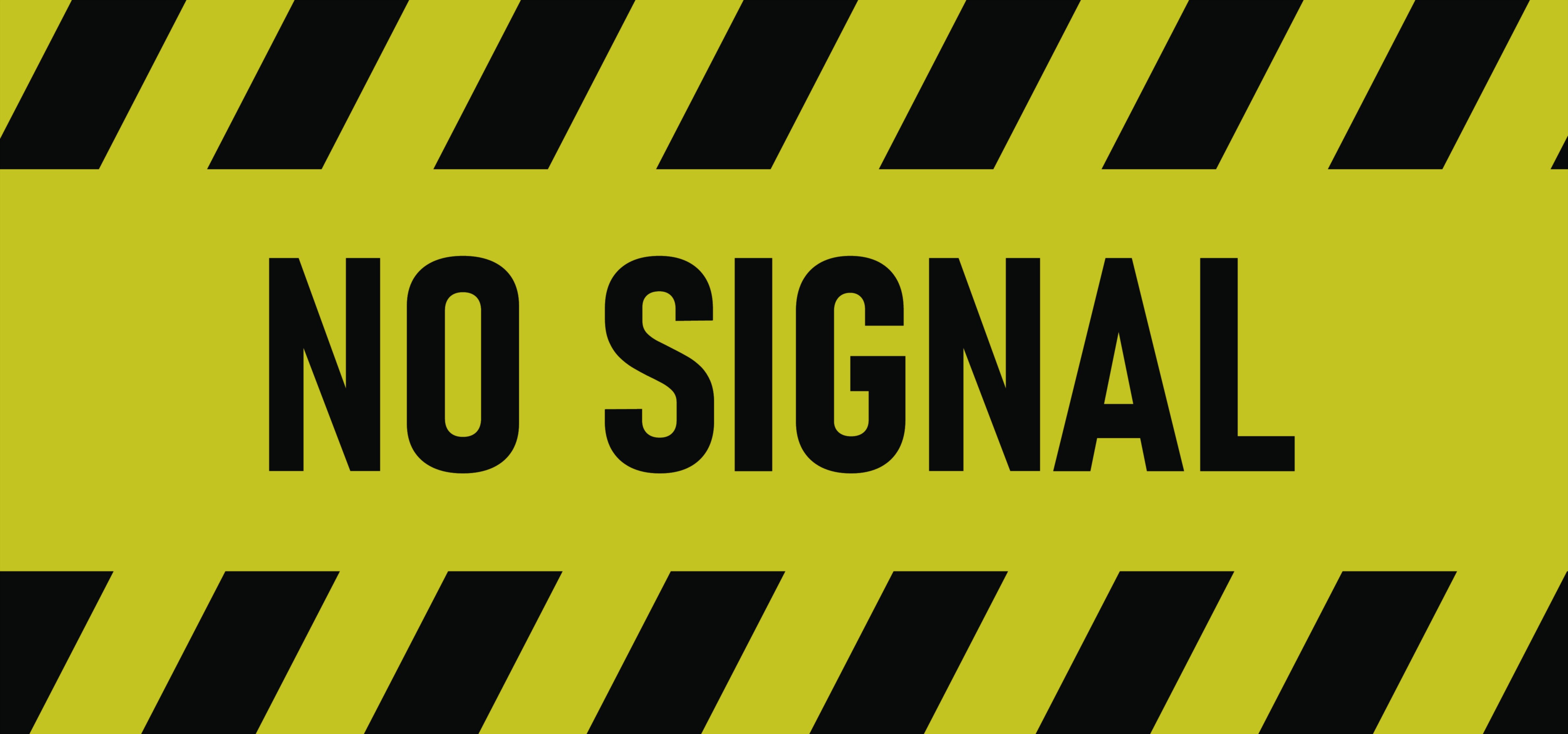
No Signal Sign Board Vector Illustration — Communication Failure Warning Symbol
A No Signal sign board, particularly when illustrated in a clean, scalable vector format using sharp iconography, contrasting caution colors, and bold lettering, stands as a powerful communication tool in environments where awareness of communication failure or system interruption is crucial. Although the message is short, it carries deep meaning because it alerts individuals that a communication channel, transmission network, monitoring device, or operational system has lost connection and cannot send or receive signals. In many contexts — including telecommunications, broadcast networks, security surveillance, industrial automation, transportation control systems, classroom technology, medical equipment, and consumer electronics — the phrase No Signal is not a minor inconvenience; it is a direct indicator that visibility, coordination, communication, or data transfer has stopped. The sign therefore functions as a warning rather than simply a status update. Through its visual authority, it immediately prompts people to shift from routine expectation to problem-awareness, drawing attention to the fact that the system is currently unavailable and that actions relying on connectivity should pause until the failure is resolved.
The meaning behind a No Signal sign becomes even clearer when considering the role communication plays in modern environments. Individuals and systems rely on invisible networks every moment — radio communication between emergency responders, wireless alarm signals in security monitoring, broadcast feeds in control rooms, sensor feedback in industrial assembly lines, data transmission in hospitals, and navigation exchange in transportation hubs. When these connections break unexpectedly, the immediate consequences can range from mild inconvenience to serious operational failure. For example, a CCTV system losing signal means the space is not being monitored. A fire alarm panel with no signal cannot communicate sensor status to a control room. A drone or robotic machine receiving no signal from its controller can become unpredictable, posing safety risks. A transportation sign board showing No Signal means that the automated information feed has stopped and passengers should not assume displayed schedules are reliable. Even in simpler environments such as offices or homes, a No Signal warning on a classroom projector, meeting screen, or television indicates that information flow is interrupted, preventing users from continuing tasks that depend on visual data. The No Signal sign becomes a quick alert that expectations must be paused and awareness must be raised because the system that normally supports communication is temporarily offline.
One of the major purposes of the sign is safety, especially in spaces where monitoring and communication systems are essential for protecting people. A No Signal notice on a video surveillance board means that the live feed cannot be trusted at this moment, and individuals should understand that the environment is not being fully observed. In industrial settings, a machinery panel showing a No Signal warning might indicate that sensors are not feeding accurate data to the operator, meaning the equipment should not be used until the issue is resolved. In aviation, maritime navigation, mining, and emergency response communication, the loss of a signal can be life-threatening if not detected immediately. The sign prevents individuals from assuming that systems are actively receiving commands or providing information when in fact they are not. It is a preventive safety tool, ensuring that users do not continue typical operations under false confidence.
The sign also plays a major role in operational efficiency and workflow clarity. In many environments, time-sensitive work is coordinated through digital interfaces, wireless communication, telemetric systems, and automated network signals. A No Signal warning prevents employees from unknowingly waiting for updates, instructions, or displays that will not arrive. It prompts them to switch focus from execution to troubleshooting. In broadcast and media environments, the sign indicates that transmission has stopped and on-air output is not functioning as expected. In educational spaces, it becomes a signal that the teaching workflow must adapt until the connection is restored. In office environments, it prevents confusion during presentations or virtual meetings. In each of these cases, the sign ensures that people do not waste time relying on systems that are temporarily unavailable and instead redirect their effort toward diagnosis, backup plans, or manual procedures until communication is restored.
Another important dimension of the sign relates to security and situational readiness. Modern monitoring systems, alarm panels, access control scanners, remote sensors, and IoT networks rely on continuous connectivity to function. When these systems lose signal, the failure can act as a loophole for unauthorized activity if unnoticed. A No Signal sign is therefore not merely informational — it warns that a surveillance zone, automated lock system, scanner, access checkpoint, or remote recorder may be nonfunctional. While the user may not be able to fix the issue personally, the awareness alone ensures that additional caution and oversight are applied until the system is back online. Without such a warning, personnel may behave under the assumption that security coverage is active when it is not. The sign restores awareness so that individuals know they must rely on visual vigilance rather than digital tracking for the time being.
The emotional impact of the sign also matters because uncertainty can disrupt confidence. When people expect digital or broadcast technology to function seamlessly, signal failure generates stress, confusion, and frustration, especially during time-sensitive tasks like conferences, exams, medical procedures, events, and public announcements. The No Signal sign reduces confusion by replacing ambiguity with clear acknowledgment of the problem. It reassures users that the disruption they are experiencing is not due to operator error, misconfiguration, or misunderstanding, but due to a verifiable system fault. This transparency allows individuals to focus calmly on the next steps — such as waiting, switching tools, adjusting workflow, or seeking technical support — rather than continuously attempting to force a nonfunctional system to respond.
The vector illustration format enhances the effectiveness of this sign by ensuring that its warning remains sharp and recognizable across all contexts. Because vector graphics do not lose clarity when enlarged or reduced, the sign can be displayed on large industrial control panels, small digital interfaces, printed safety boards, or mobile devices without losing legibility. The crisp icons and clear shapes can be understood instantly, even from a distance or under low-light conditions. Color contrast — often red and white or yellow and black — ensures immediate attention and cognitive priority, guiding the viewer’s mind toward awareness rather than routine assumption. Universal iconography means that the sign communicates meaning even without reliance on language; someone unfamiliar with the text will still understand that the device or system is not functioning properly.
From a broader perspective, the No Signal warning symbol represents a fundamental principle of modern life: when communication stops, awareness must increase. It acts as a bridge between expectation and reality, preventing people from moving forward blindly when the system meant to inform them is not operating. It supports transparency instead of silent failure. It invites precaution instead of assumption. It protects both people and operations by ensuring that the moment digital communication is interrupted, human decision-making becomes alert and responsible rather than passive.
Ultimately, the No Signal Sign Board Vector Illustration — Communication Failure Warning Symbol is not merely a notification of disconnection, but a proactive form of protection. It prevents accidents by stopping actions that depend on system feedback. It protects workflow by allowing teams to adapt quickly rather than continue waiting for information that will not arrive. It safeguards security by making people aware that automated monitoring is temporarily offline. It protects emotional comfort by replacing uncertainty with clear acknowledgement of the system state. By appearing exactly at the moment when a failure occurs, it transforms risk into awareness and confusion into clarity. Through a short, visually authoritative message, the sign ensures that individuals remain informed, cautious, and prepared whenever communication technology — the backbone of modern environments — experiences interruption.