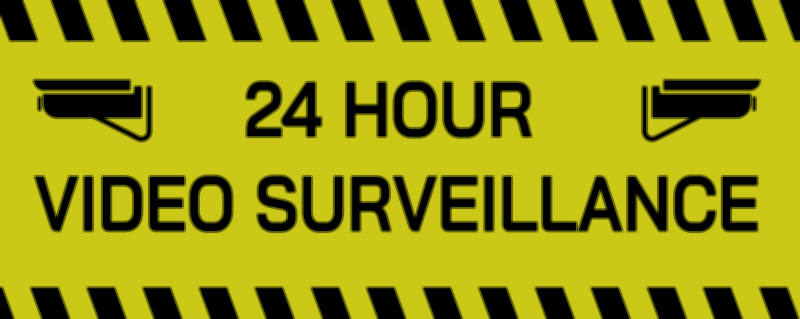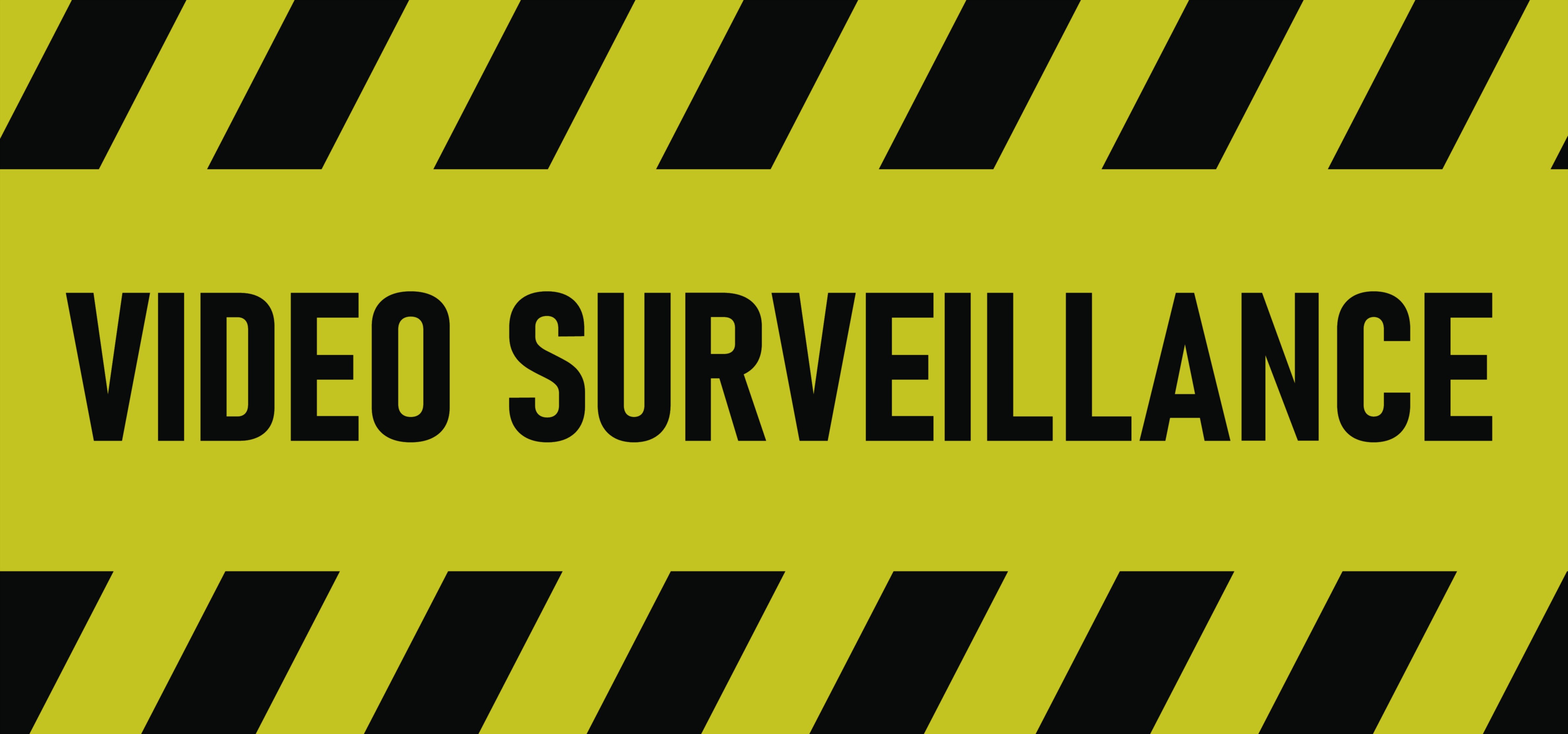
Video Surveillance Area Sign Vector Illustration — Security Camera Monitoring Warning Board
A Video Surveillance Area sign, especially when presented as a crisp and carefully balanced vector illustration using bold typography, a recognizable CCTV camera icon, and a high-contrast warning color palette, has become one of the most influential visual tools in modern safety, security, and property protection. At first glance, it appears simple because it contains only a few words and a universally understood image of a camera pointed toward the viewer. Yet behind that simplicity exists an entire system of psychological, legal, operational, and social communication. Wherever it is displayed, the sign informs people that the space around them is under continuous monitoring and that their actions are visible and recorded. It does not rely on enforcement through confrontation or physical barriers, but instead uses visibility and awareness as a preventive method to protect the environment and the individuals inside it. A vector illustration enhances this function by keeping every line, symbol, and element of the sign flawlessly clear, whether printed on a storefront door, mounted near a gated entrance, hung inside a corporate facility, applied across a warehouse wall, or shown digitally in security instructions. The message triggers recognition instantly and transforms the atmosphere of the space from uncertain to controlled.
The psychological impact of the sign is its most immediate and powerful effect. Human behavior naturally changes when individuals understand they are being observed. The presence of a camera alone may not always be noticed, but a clear visual warning ensures that the concept of monitoring enters consciousness before behavior unfolds. The sentence Video Surveillance Area is not a threat; it is an informational signal that accountability is active. People instinctively become more aware of their conduct when they know a record is being created, and this shift discourages vandalism, trespassing, theft, harassment, and disorderly conduct before they ever begin. Just like the way a Stop sign prevents an accident by making the driver pause before making a choice, a security camera warning sign prevents wrongdoing by making the person pause and reconsider their actions before crossing a boundary of respect or legality. In this sense, the sign does not police behavior — it protects the environment by activating self-regulation instead of confrontation.
The importance of this warning sign grows even stronger when considering how diverse the monitored spaces can be. Businesses rely on surveillance to discourage burglary and internal theft. Residential complexes use cameras to protect families and maintain peace among neighbors. Schools place surveillance signage to prevent bullying, vandalism, and unauthorized entry. Parking lots and fuel stations install them to protect vehicles and property from damage, fraudulent behavior, or violence. Hospitals use them to secure sensitive patient areas and medication access points. Industrial facilities deploy surveillance for both security and operational safety to track unauthorized movement near hazardous machinery. Government buildings and transportation hubs depend on monitoring to prevent serious security incidents. Even in public parks, playgrounds, and recreational zones, a video surveillance notice serves to make families feel safer while discouraging individuals with harmful intentions. In all these environments, the sign works as a silent but ever-present security officer reminding individuals that actions are visible, recorded, and traceable.
The sign also exists not only for security but for safety. When people know that an area is monitored, they are less likely to engage in risky behavior that could harm themselves or others. It reduces aggressive altercations in public, deters reckless vehicle movement in parking structures, prevents crowd misbehavior in event areas, and discourages dangerous activities in industrial zones. The awareness of recording often makes individuals slow down, think consciously, and cooperate with environmental rules. For vulnerable people — children, seniors, women walking alone, or visitors in unfamiliar buildings — the sign provides reassurance that the space is watched and that help can be summoned if an incident occurs. The camera warning is therefore not an element of fear but an element of predictability, creating an emotional environment where safety is proactive rather than reactive.
Legal responsibility represents another significant layer of meaning behind the sign. Most countries require property owners to inform people when video surveillance is taking place. Privacy laws, workplace regulations, and public-space monitoring rules state that individuals must know that their images are being recorded so they can make informed decisions about their presence in the area. A clear sign fulfills this legal obligation. Without it, recording may be considered intrusive or unlawful, and evidence captured by hidden or undisclosed cameras may not be permissible in court. When the sign is visible, however, the recorded footage becomes valid documentation during incident investigation, dispute resolution, insurance claims, and criminal prosecution. The sign therefore protects both the rights of the public — by making recording transparent — and the rights of the property owner — by making surveillance legally enforceable. It transforms the environment into a mutual agreement of awareness rather than a concealed act.
From an operational perspective, the sign plays a crucial role in maintaining order in spaces where security personnel cannot physically supervise every corner. Warehouses cannot post guards next to every supply rack. Shopping malls cannot assign staff to watch every seating area, restroom, and walkway. Apartment managers cannot sit outside every floor or parking gate. Schools cannot have teachers patrolling every corridor at the same time. Airports cannot place officers behind every ticket counter, baggage lane, lounge, and entry gate. The Video Surveillance Area sign solves this by making the awareness of monitoring just as productive as a human presence. The sign expands the psychological reach of security far beyond the line of sight of any guard. Every time someone passes the notice, they become aware that accountability travels with them across the monitored space. It protects equipment, facilities, and merchandise without requiring physical intervention. It preserves workflow and reduces the chance that security issues will interfere with normal operations.
The vector illustration formatting of the sign enhances the reliability of its effect. The precision of vector artwork ensures that the camera icon retains its angular definition, circular lens structure, and directional framing without blurring or distortion across sizes. Sharpness is critical because recognition at a distance must happen instantly. Likewise, the clean, uniform typography allows the mind to read the warning in a fraction of a second. High-contrast color palettes — often white on black, black on yellow, or red supporting icons — command attention even in dim lighting, security-gate shadows, rain, dust, or nighttime illumination. Universal icons allow effortless understanding even for people who do not speak the language printed on the board. A child who cannot read, a foreign tourist unfamiliar with the alphabet, or an elderly person with limited literacy can still understand that they are being monitored because the image alone carries meaning. Consistency across thousands of installations also reinforces recognition — when the look of the camera symbol or the style of the wording is uniform, the public learns the sign’s meaning as a reflex, rather than needing to think about it.
The emotional and social dimension of the sign is equally important. People want to feel safe in shared spaces, and individuals behave best when they understand expectations clearly. A posted video surveillance notice protects respectful citizens from being judged unfairly because it separates innocent presence from suspicious intent. When wrongdoing is discouraged, responsible individuals regain freedom to enjoy the environment without stress. At the same time, the sign reduces the potential for conflict between property managers and visitors; instead of a security guard approaching someone to warn them verbally, the environment itself communicates the boundary. This reduces embarrassment, defensiveness, and confrontation. People who choose to behave respectfully do so not because they fear someone watching from a doorway, but because the posted message activated self-awareness, not intimidation. The sign therefore protects harmony — not only property.
On a deeper level, the Video Surveillance Area warning is a symbol of a larger social agreement: shared spaces function best when people understand that accountability exists. It does not force obedience; it guides it. It does not command trust through physical restriction but through certainty. When people see the sign, they recognize that actions matter and that the environment protects both property and individuals. It gives clarity in unfamiliar locations, reassurance in vulnerable ones, deterrence in high-risk ones, and oversight where direct supervision is not possible.
Ultimately, the Video Surveillance Area Sign Vector Illustration — Security Camera Monitoring Warning Board works because it prevents problems instead of responding to them. It stops theft before it occurs, stops vandalism before surfaces are damaged, stops harassment before victims feel unsafe, stops unauthorized access before a breach unfolds, stops disputes before evidence becomes impossible to confirm, and stops emotional discomfort before tension forms. Through a short message amplified by authoritative visual design, it ensures that every person entering the space understands that the environment values safety, accountability, transparency, and protection. It does not replace security — it strengthens it by placing awareness in the exact moment where people make choices. It is not a symbol of watching eyes; it is a symbol of shared respect, shared safety, and shared responsibility in modern public and private environments.