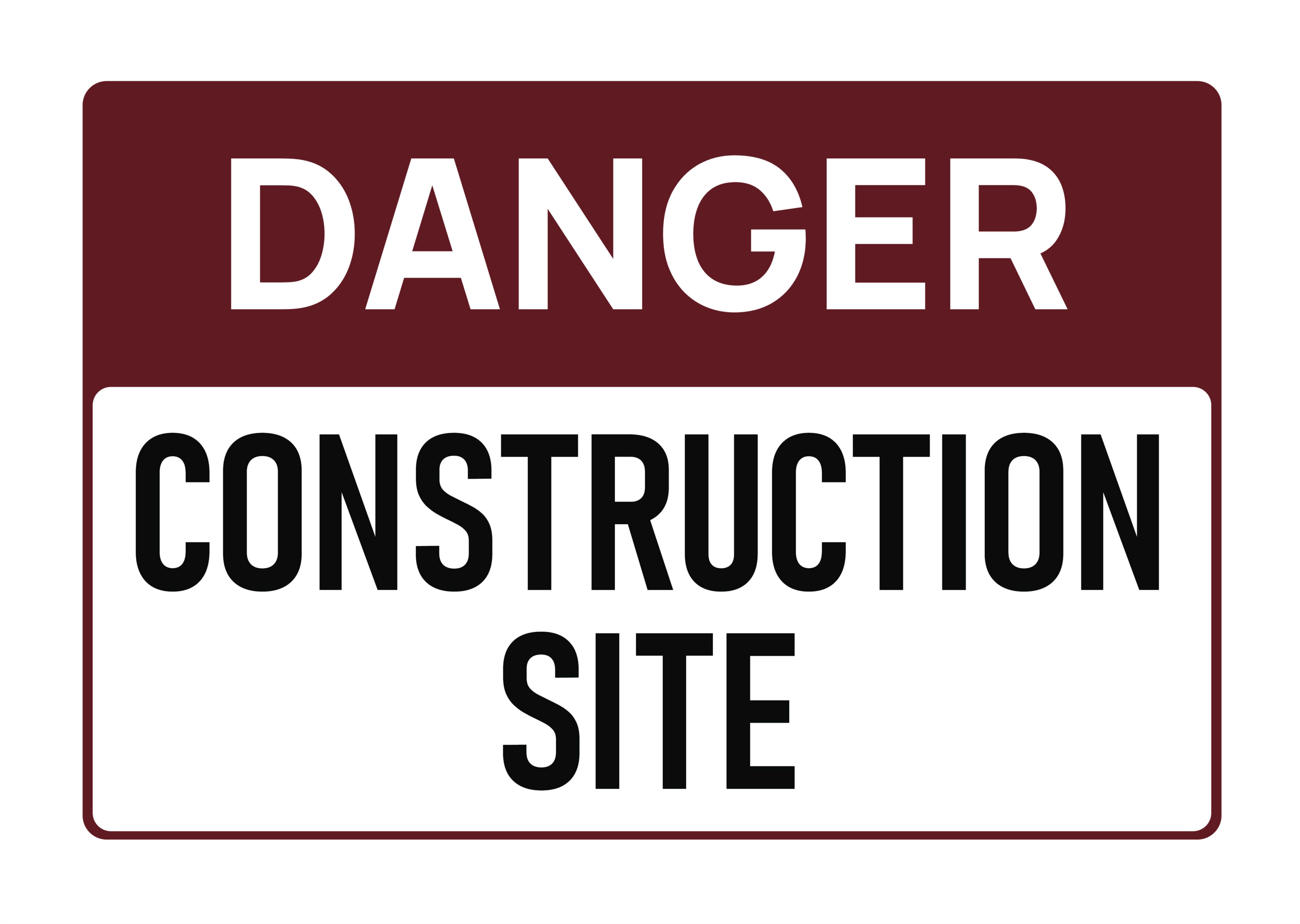
Danger — Construction Site Vector Illustration: Safety Warning Sign Design
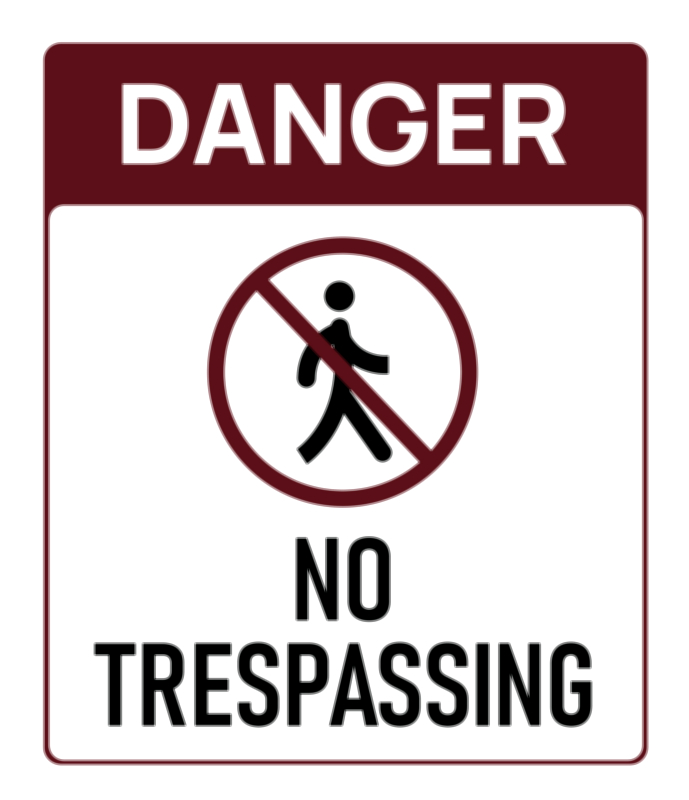
A Danger — Construction Site safety warning sign, especially when illustrated in a bold and impactful vector format with strong visual cues such as a warning triangle, an exclamation icon, a raised stop hand, a construction helmet symbol, or a high-contrast red and yellow palette, represents far more than a simple marker placed at the edge of a work zone. It is the primary language of protection in an environment where risk is not speculative but constant, evolving, and often invisible before the moment of consequence. Construction areas, whether small-scale residential build sites or large industrial development projects, contain a dynamic network of hazards—moving machinery, unstable ground, suspended loads, demolition operations, exposed wiring, excavation pits, temporary structures, and heavy equipment interactions—each one capable of causing severe injury or death if approached without expertise and precaution. The Danger headline of the sign immediately elevates the urgency of the message beyond a standard access notice, informing the viewer that their physical safety is in immediate jeopardy if they proceed. The Construction Site declaration communicates the nature of the environment, and the sign overall becomes a pre-incident intervention tool, stopping accidents before they unfold through clarity rather than confrontation. It exists to ensure that only trained and authorized workers who understand the hazards, the rules, the workflow, and the safety protocols enter the space, and that unprepared individuals—passersby, children, delivery personnel, pedestrians, visitors, neighbors, and curious onlookers—are shielded from risks they cannot evaluate for themselves.
What makes the sign essential is that a construction zone rarely presents obvious danger to someone who is not trained to identify it. Many threats are disguised behind stillness or silence, occurring not because someone acted recklessly but because the environment offers no intuitive warning to the untrained eye. A stack of materials may appear harmless yet be positioned for forklift lifting and topple if disturbed. A temporary board covering a pit may look like solid ground even though it is not load-bearing. A trench could fill with toxic gas without warning. A partly demolished wall might remain upright only through fragile balance that collapses if someone leans on it. Electrical conduits may be powered during specific operational windows even though the wires appear sealed. Excavators, cranes, and loaders can pivot suddenly, striking anyone in their swing radius. Noise echoing across the site can hide the sound of an approaching vehicle or reversing machinery. In these unpredictable, layered conditions, injury can happen not from intentional disregard but from a single innocent misstep. The Danger — Construction Site sign communicates that intuition is not enough to survive the environment; it explains that specialized safety measures, protective equipment, training, and situational awareness are required to navigate the area without harm. It is not a sign meant to exclude people unfairly; it is a sign meant to protect them from dangers they cannot anticipate.
The sign also reinforces the operational integrity of construction workflows. Construction projects rely on strict coordination of movement, timing, and sequencing. Workers depend on predictability in their environment so they can complete tasks without unnecessary interruption or unexpected presence. When unauthorized individuals enter a site, even for benign reasons like curiosity or shortcutting, they disrupt the safety chain. Heavy machinery must halt, operators must pause their work to ensure safety, and ongoing tasks must be delayed to prevent collisions or accidents. This disrupts not only efficiency but also emotional focus, increasing the likelihood of mistakes among workers performing complex and demanding physical tasks. The sign ensures that the only people entering the space are those who contribute to the workflow rather than disturb it, allowing contractors, laborers, supervisors, electricians, welders, masons, engineers, and crane operators to focus on their jobs without worrying about protecting untrained outsiders from the hazards around them. It preserves the working rhythm and protects lives simultaneously.
The legal and regulatory importance of the sign is equally profound. Construction zones are among the most tightly regulated safety environments because of their high injury potential. Local authorities, occupational safety organizations, municipal governing bodies, and insurance corporations mandate that visible warning signage be placed wherever access must be restricted. Without a posted Danger — Construction Site warning, an injury suffered by an unauthorized individual—even a trespasser—may expose the builder or property owner to legal responsibility. Whether the injured party misunderstood access boundaries or intentionally crossed them, the absence of visible signage becomes an argument of negligence. The sign becomes documentation of lawful safety conduct: it demonstrates that the property owner or construction company communicated the risk and the boundary. If someone proceeds despite the warning, the liability shifts from the site operator to the violator. It also supports safety audits, investigation reports, insurance claims, and workplace compliance inspections by showing that preventive measures existed ahead of time.
Emotionally and socially, the sign maintains stability among communities and workers. Construction sites commonly exist near residential neighborhoods, school zones, busy city streets, or commercial venues where constant movement of people is expected. Children, in particular, are drawn to construction machinery out of fascination, and without visible signage, they may treat the space as a playground rather than a danger zone. Neighbors may step across barriers to inquire about progress, influencers or photographers may enter hoping for interesting footage, and pedestrians may choose construction areas as shortcuts. Each of these behaviors puts lives at risk and provokes anxiety among construction personnel, who know the dangers intimately. The Danger — Construction Site sign sets a boundary that protects both the public and the workers. It creates social order through information rather than human confrontation. Outsiders understand where not to go, and workers are spared the emotional stress of becoming unintentional guardians of the perimeter.
The vector illustration format gives the sign its precision and functional power. A vector design maintains sharpness whether printed on small entry-point markers, medium fencing panels, or large roadside hoardings. High-contrast hues are selected because the human brain instinctively associates them with threat, urgency, and attention. The geometric clarity of symbols—triangles for danger, circles for prohibition, silhouettes of safety helmets—reaches across language and literacy barriers, communicating instantly to domestic workers, international laborers, tourists, or delivery personnel who may not read the local language. The graphic composition is engineered for speed of recognition. Even from a passing vehicle or at nighttime under dim floodlights, the sign’s layout ensures that the brain receives a fast and unavoidable message: entering the zone is not safe.
Ultimately, the Danger — Construction Site Vector Illustration: Safety Warning Sign Design is not just a visual fixture; it is a structure of responsibility, professionalism, and human care woven into one compact message. It prevents tragedy rather than responding to it, prevents legal disputes rather than navigating them afterward, prevents workflow disruption rather than repairing it, and prevents emotional distress rather than calming it down. It creates an invisible shield around the site, protecting workers who are trained to be there and outsiders who are not prepared to enter. Without the sign, the boundary between everyday life and high-risk work becomes fragile and vulnerable; with the sign, that boundary becomes visible, strong, and respected. It transforms hazards into informed awareness and transforms confusion into safety simply by appearing at the exact moment when knowledge matters most—right before a person takes the next step.