Offshore Oil Rig Industrial Platform – Engineering Power, Energy Production, and the Visual Representation of Deep-Sea Petroleum Infrastructure
An offshore oil rig industrial platform vector illustration template represents far more than a graphic silhouette of a tall metal structure anchored in the ocean; it visually communicates one of the most complex triumphs of human engineering, a floating industrial city built to extract hydrocarbons from beneath the seabed in some of the most extreme environments on Earth. When rendered in vector form, the crisp lines, geometric precision, and layered structural components reveal the complexity and organization of a platform that supports everything from drilling equipment and processing modules to crew accommodations and helicopter landing decks. The illustration’s clarity helps viewers understand how these massive installations operate like miniature industrial ecosystems, complete with power generation, safety systems, storage tanks, pipelines, cranes, and transportation links. Although the image may appear static, the reality it represents is dynamic: every moment on an offshore oil rig involves constant monitoring of pressure systems, pumping cycles, drilling depth, fluid flow, and structural stability, all while enduring harsh waves, strong winds, corrosive saltwater, and isolation far beyond the coastline.
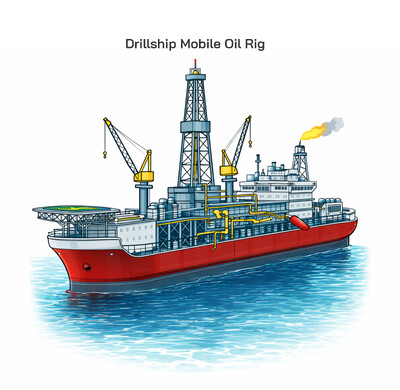
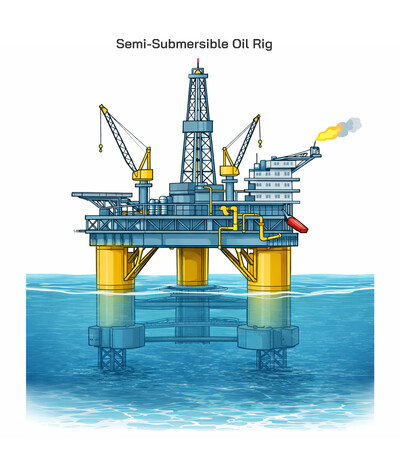
A detailed vector template often emphasizes the foundational components of the rig, starting with the support system that anchors it to the ocean floor or allows it to float. Jack-up rigs feature latticework legs that extend downward to secure the platform on the seabed in shallower waters, while semi-submersible rigs use buoyant lower hulls to float in deep water with mooring systems for stabilization. Drillships, another form of offshore platform, appear as enormous vessels with a towering derrick positioned at the center of the deck. When these structures are illustrated, the template uses clean geometric shapes and bold vertical strokes to emphasize height, mass, and stability. The image communicates that the visible upper platform is only the tip of a much larger network of hardware and engineering extending downward into the ocean, where thick risers, wellheads, and drill strings penetrate layers of seabed to reach reservoirs of oil and natural gas trapped deep underground.
The vector artwork also draws attention to the drilling tower or derrick, which rises from the center of the platform like an industrial spire. This is the heart of the drilling operation, where drill pipes are lowered, rotated, and pulled back section by section as the well deepens. The derrick visually dominates by design, representing the technological advancement and mechanical power that enable humans to reach depths measured in thousands of meters. Around it, the illustration often includes cranes used to lift heavy equipment and supplies from supply vessels below, pipe racks that store drilling tubes horizontally, and flare stacks used to burn off excess gas during certain operational phases. The clean precision of vector design helps viewers perceive how every part of the rig has a defined role and how the facility is arranged systematically to optimize workflow on a platform with limited space.
Equally important is the representation of the living quarters and crew support systems. Offshore oil rigs are remote workplaces where personnel live and work for weeks at a time, requiring accommodations that function like a self-contained town. Vector illustrations typically highlight a separate block of buildings or modular units containing sleeping quarters, dining halls, fitness rooms, medical areas, and administrative offices. These details communicate that an offshore platform does not only house machines but also people whose safety and well-being must be protected in one of the most demanding work environments in the world. The presence of a helipad, prominently positioned in most vector templates, reinforces the reliance on air transport for crew rotation, supply delivery, and emergency evacuation. The helipad is a visual symbol of accessibility and life support, emphasizing that helicopters are the lifeline connecting workers to the mainland.
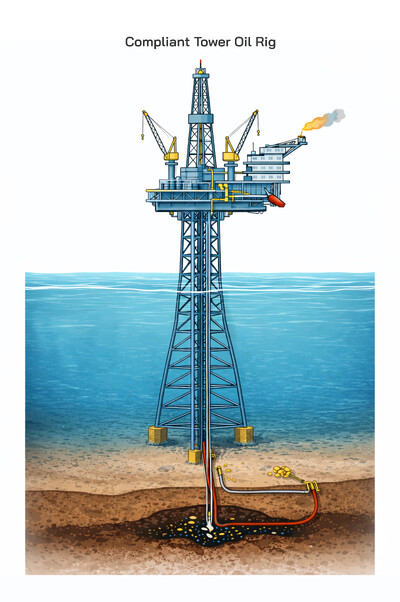
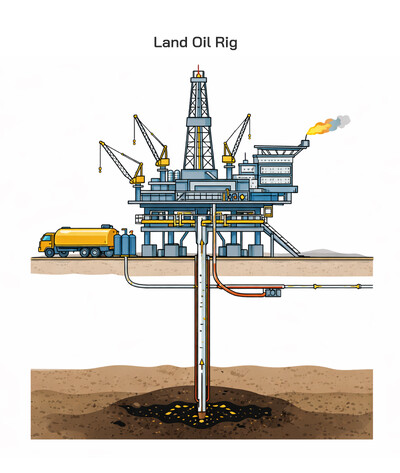
A strong offshore oil rig illustration also conveys the energy production process through the depiction of pipelines, risers, and subsea infrastructure. Although much of this system lies beneath the surface and cannot be seen in reality, the vector template often suggests it through downward arrows, segmented columns, or cutaway representations showing the flow of hydrocarbons from the well to the platform. Above deck, separators, pumps, and storage tanks help prepare extracted fluids before transport. Undersea pipelines or shuttle tankers then carry the processed oil and gas toward refineries onshore. Through carefully positioned shapes and connection lines, the illustration turns an invisible energy chain into a visually comprehensible network, showing how the resource travels from deep beneath the ocean floor to global markets where oil powers industries, fuels transportation, and supports modern economies.
The industrial symbolism of an offshore platform also extends to safety and risk management, even when subtly implied in the design. Offshore oil rigs are heavily regulated environments with redundant safeguards, emergency shutdown systems, monitoring sensors, fire suppression equipment, safety rails, lifeboats, and alarms designed to protect personnel and the environment. A vector template might incorporate life raft canisters, lifeboat launch stations suspended over the platform edge, or clearly marked flare stacks and control rooms. These elements remind the viewer that working on a rig requires precision, teamwork, and adherence to safety protocols. The visual presence of bright colors or isolated emergency features in the design conveys that the industry’s achievements coexist with constant vigilance.
The aesthetic of the vector style enhances the educational and professional usefulness of the illustration. Vector graphics scale flawlessly without pixelation, meaning they retain clarity whether used on large billboards in trade exhibitions, on technical instruction manuals, in digital training courses, or on corporate safety posters. The crisp edges, consistent angles, and smooth gradients make it easy to isolate individual components of the platform for labeling and annotation in presentations, engineering diagrams, maintenance manuals, or academic materials. Companies can customize color palettes to match corporate branding, while designers can highlight specific subsystems depending on the context — drilling, processing, living quarters, logistics, or safety components. This adaptability transforms the artwork from a static image into a communication tool that supports learning, planning, and collaboration.
Beyond technical detail, the illustration also carries symbolic emotional weight. Offshore rigs represent the intersection of human ambition and nature — structures built in the middle of vast oceans, surrounded by powerful waves and unpredictable weather, yet operating with precision and discipline. The imagery communicates resilience, innovation, and the will to solve difficult engineering challenges on a global scale. Workers on these rigs contribute to an energy supply chain that supports transportation networks, electricity generation, manufacturing, agriculture, pharmaceuticals, plastics, aviation, and countless aspects of everyday life. Whether one focuses on the oil industry’s achievements or on society’s ongoing transition toward renewable energy, the offshore oil rig remains a powerful symbol of industrial capability and energy demand.
A Vector Illustration Template of an Offshore Oil Rig Industrial Platform therefore becomes much more than a picture of ocean infrastructure. It becomes a visual summary of engineering strength, human adaptability, global energy dynamics, industrial safety, and maritime logistics. It tells the story of how remote equipment, advanced materials, and trained personnel combine to extract resources hidden miles below the sea surface. It turns a complex structure that few people will ever physically visit into a piece of knowledge that can be understood instantly at a glance. It allows educators, designers, engineers, safety trainers, students, and corporations to communicate at scale with clarity. Through sharp, precise lines and purposeful composition, the illustration transforms deep-sea energy production into a visual language that speaks as easily to technical experts as it does to the general public.