Pineapple is one of the most distinctive and widely consumed tropical fruits in the world, valued for its sweet-tangy flavor, vibrant color, refreshing aroma, and impressive nutritional profile. Botanically known as Ananas comosus, pineapple belongs to the bromeliad family and is unique among fruits because it grows as a cluster of berries fused around a central core. Over centuries, pineapple has evolved from a regional tropical plant into a globally traded fruit with major importance in agriculture, food industries, nutrition, and traditional medicine.
The origin of pineapple can be traced back to South America, particularly the region extending from southern Brazil to Paraguay. Indigenous communities cultivated and consumed pineapple long before European contact, using it not only as food but also for medicinal and ceremonial purposes. When European explorers encountered pineapple in the late fifteenth century, it quickly gained popularity due to its exotic taste and symbolic association with hospitality and luxury. From South America, pineapple spread to Central America, the Caribbean, Africa, Asia, and the Pacific through trade routes and colonial expansion, eventually becoming a staple tropical fruit across the globe.
Pineapple cultivation requires specific climatic and soil conditions to thrive. It is a tropical and subtropical plant that grows best in warm regions with abundant sunlight and moderate rainfall. Pineapple plants prefer well-drained sandy or loamy soils with slightly acidic conditions. Unlike many fruit crops, pineapple is drought tolerant and does not require excessive irrigation, making it suitable for regions with seasonal rainfall patterns. Cultivation typically begins using vegetative planting material such as crowns, slips, or suckers rather than seeds, ensuring uniform growth and fruit quality.
The cultivation process of pineapple is carefully managed to achieve optimal fruit size, sweetness, and appearance. After planting, the plant undergoes a long vegetative growth period, during which strong leaves develop in a rosette pattern. Flowering is often induced artificially to synchronize fruiting and ensure uniform harvests. Once flowering occurs, the fruit takes several months to mature. Harvesting is done when the fruit reaches the desired size and color, balancing sweetness and acidity for market preferences.
Global pineapple production is concentrated in tropical regions, with countries such as Costa Rica, the Philippines, Thailand, Indonesia, India, and Brazil being major producers. Costa Rica has emerged as one of the largest exporters of fresh pineapple, supplying markets in North America and Europe. Pineapple production supports millions of farmers and workers worldwide and contributes significantly to rural economies. In addition to fresh fruit markets, pineapples are processed into canned products, juices, dried snacks, and food ingredients, expanding their economic value.
The taste of pineapple is one of its most defining characteristics. It offers a harmonious balance between sweetness and acidity, creating a refreshing flavor profile that appeals across cultures. The sweetness comes from natural sugars that increase as the fruit ripens, while organic acids provide a tangy contrast. The intensity of flavor varies depending on variety, maturity, and growing conditions. Fully ripe pineapple delivers a juicy, aromatic, and mildly acidic taste, whereas unripe fruit tends to be sharper and less sweet.
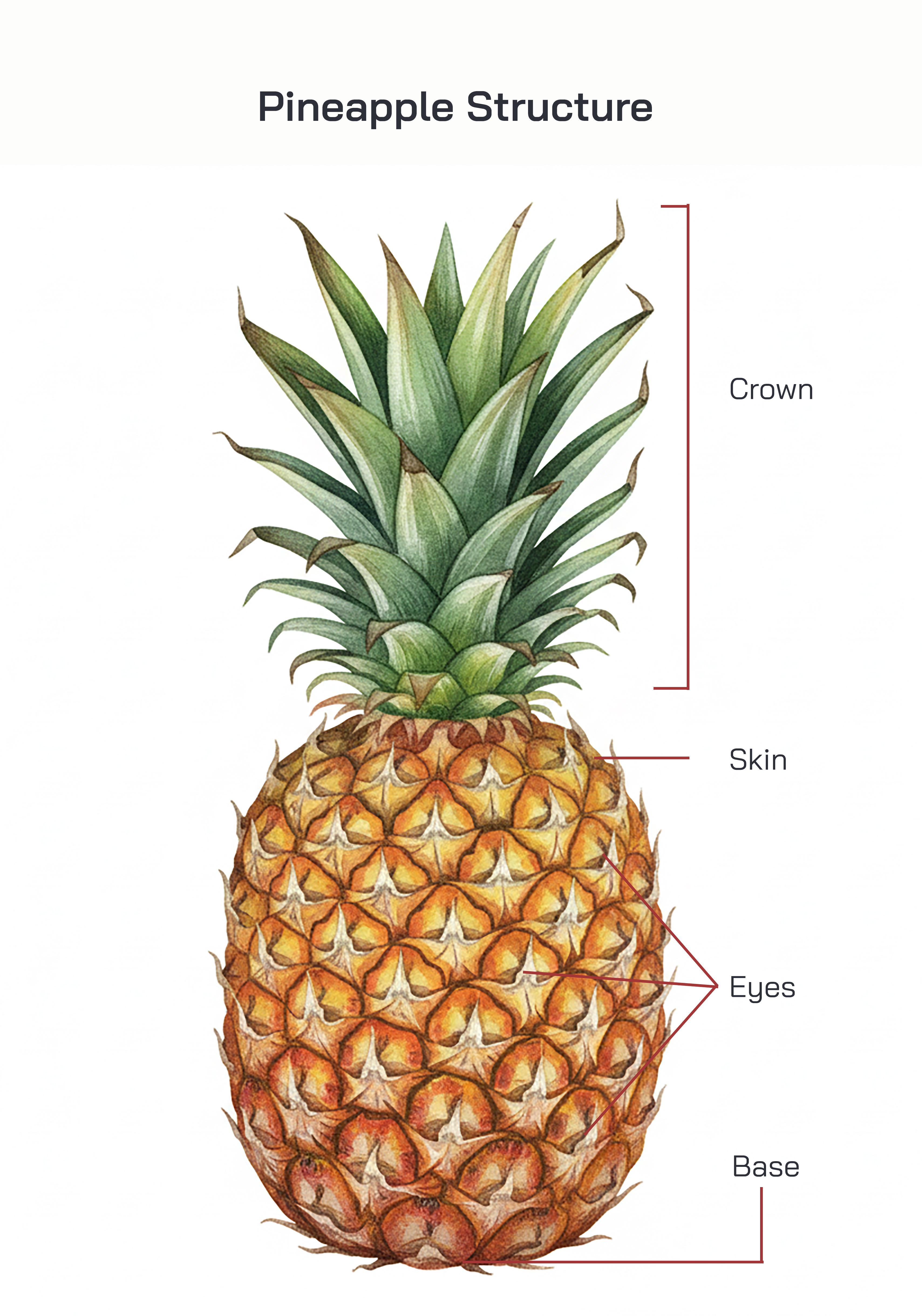
Color is another important quality attribute of pineapple. Externally, the fruit transitions from green to yellow as it ripens, particularly at the base. Internally, ripe pineapple flesh displays a bright golden-yellow color, indicating high sugar content and optimal maturity. The color not only affects consumer appeal but also serves as a visual indicator of ripeness and nutritional quality. A vibrant yellow flesh usually corresponds to better flavor and higher vitamin content.
From a nutritional perspective, pineapple is a nutrient-dense fruit that provides essential vitamins, minerals, and bioactive compounds. It is particularly rich in vitamin C, which plays a crucial role in immune function, collagen synthesis, and antioxidant defense. Pineapple also contains significant amounts of manganese, a mineral important for bone health, metabolism, and enzyme function. Dietary fiber present in pineapple supports digestive health by promoting regular bowel movements and maintaining gut balance.
One of the most remarkable components of pineapple is bromelain, a group of natural enzymes unique to this fruit. Bromelain aids in protein digestion by breaking down complex proteins into simpler amino acids. This enzymatic activity not only supports digestion but also contributes to pineapple’s traditional use in tenderizing meat. Beyond digestion, bromelain has been studied for its anti-inflammatory properties and potential role in reducing swelling, supporting joint health, and promoting recovery from injuries.
Pineapple offers numerous health benefits when consumed as part of a balanced diet. Its high vitamin C content strengthens the immune system and helps protect cells from oxidative stress. Antioxidants present in pineapple contribute to reducing inflammation and supporting overall cellular health. The fruit’s natural enzymes enhance digestion and may help alleviate digestive discomfort when consumed in moderation.
The potassium content in pineapple supports heart health by helping regulate blood pressure and maintain proper fluid balance in the body. Additionally, pineapple’s low fat content and moderate calorie level make it a suitable fruit for weight management and healthy snacking. Its high water content contributes to hydration, especially in warm climates or during physical activity.
Pineapple also supports skin health due to its vitamin C and antioxidant profile, which aid in collagen production and protect against premature aging. Regular consumption may contribute to healthier skin texture and improved wound healing. Furthermore, pineapple’s natural sugars provide a quick source of energy, making it a refreshing and energizing fruit.
Culinarily, pineapple is highly versatile. It is consumed fresh, grilled, juiced, or incorporated into desserts, salads, savory dishes, and beverages. Its sweet-tart flavor pairs well with both sweet and savory ingredients, enhancing a wide range of cuisines. Pineapple is also widely used in food processing industries, contributing to jams, syrups, candies, and fermented products.
The Ananas comosus also exhibits a highly specialized biological structure that sets it apart from most other fruit-bearing plants. Unlike tree fruits, pineapple grows as a low, ground-level perennial herb with long, stiff, sword-shaped leaves that are often edged with spines. These leaves are not only structural but also functional, playing a role in water conservation and photosynthesis efficiency. The rosette arrangement allows rainwater and dew to be funneled toward the central stem, helping the plant survive in environments where rainfall may be irregular. This adaptation reflects pineapple’s evolutionary success in tropical climates with fluctuating moisture availability.
The fruit itself is botanically classified as a multiple fruit, formed when individual flowers fuse together around a central axis. Each visible “eye” on the pineapple’s surface represents a former flower, making the fruit a composite structure rather than a single ovary-derived fruit. This unique formation contributes to pineapple’s firm texture and fibrous core. The central core, though often removed during consumption, plays a critical role during development by transporting nutrients and providing structural stability as the fruit enlarges and matures.
Varietal diversity within pineapple cultivation further expands its agricultural and commercial importance. Different cultivars are grown worldwide, each selected for specific traits such as sweetness, acidity, fiber content, shelf life, and resistance to disease. Some varieties are preferred for fresh consumption due to their juiciness and low fiber, while others are better suited for processing because of their firmness and uniform size. This diversity allows pineapple to meet the demands of both local markets and global supply chains, ensuring year-round availability.
Pineapple’s post-harvest physiology is another significant factor influencing its global distribution. Unlike climacteric fruits, pineapple does not continue to ripen after harvesting. This means it must be harvested at near-optimal maturity to ensure good flavor and sweetness. Harvest timing is therefore critical, as fruit picked too early may lack sweetness, while overripe fruit can deteriorate quickly. Advances in post-harvest handling, including temperature control and packaging technologies, have improved shelf life and reduced losses during transportation.
From an industrial perspective, pineapple processing generates a wide range of byproducts that are increasingly valued for sustainable applications. Peels, cores, and crowns, once considered waste, are now used in producing animal feed, organic fertilizers, bioactive extracts, and even textile fibers. Pineapple leaf fiber, in particular, has gained attention as an eco-friendly alternative in fashion and industrial materials due to its strength and biodegradability. This shift toward full utilization reflects growing efforts to reduce agricultural waste and improve sustainability.
In traditional medicine systems, pineapple has long been used beyond its role as a food source. Various cultures have employed pineapple juice and extracts to support digestion, reduce inflammation, and promote wound healing. While modern science continues to evaluate these traditional uses, the presence of bromelain and antioxidants provides a biochemical basis for many of these applications. Ongoing research explores bromelain’s potential roles in immune modulation, cardiovascular health, and recovery from physical stress, highlighting pineapple’s relevance beyond nutrition alone.
Pineapple also holds cultural and symbolic significance in many societies. Historically, it became a symbol of hospitality, warmth, and prosperity, particularly in colonial-era architecture and art. This symbolism persists today, where pineapple motifs are commonly used in home décor, hospitality branding, and festive designs. Its distinctive appearance and association with welcome and abundance have helped embed pineapple deeply into cultural expressions worldwide.
Environmental considerations are increasingly shaping pineapple production practices. Sustainable farming techniques such as integrated pest management, organic cultivation, and soil conservation are being adopted to reduce environmental impact. Because pineapple is often grown as a monocrop, careful management is required to prevent soil degradation and biodiversity loss. Responsible farming practices not only protect ecosystems but also enhance long-term productivity and fruit quality.
Climate change presents both challenges and opportunities for pineapple cultivation. Changes in temperature patterns, rainfall distribution, and extreme weather events can affect flowering cycles, fruit development, and pest pressures. At the same time, pineapple’s relative drought tolerance and adaptability make it a potentially resilient crop when managed properly. Research into climate-resilient varieties and improved agricultural techniques is becoming increasingly important to secure future production.
In the context of human health and lifestyle, pineapple continues to gain popularity as part of modern dietary trends. Its natural sweetness offers an alternative to processed desserts, while its nutrient profile aligns with growing interest in functional foods. Pineapple is frequently incorporated into smoothies, wellness diets, and plant-based recipes, reflecting its compatibility with diverse nutritional preferences. Its refreshing taste and versatility make it appealing across age groups and cultures.
Ultimately, pineapple represents far more than a tropical fruit. It is a product of intricate plant biology, centuries of cultivation, global trade networks, and evolving nutritional science. Its influence extends from rural farming communities to international markets, from traditional medicine to modern wellness, and from ecological systems to cultural symbolism. This combination of biological uniqueness, economic importance, and nutritional value ensures that pineapple remains a vital and fascinating component of the global food landscape.
The Ananas comosus demonstrates an exceptional level of physiological efficiency that explains its success in tropical and subtropical regions. One of its most important biological adaptations is its ability to perform a specialized form of photosynthesis that minimizes water loss. This allows the pineapple plant to conserve moisture during hot conditions and continue metabolic activity even when water availability is limited. Thick, waxy leaves reduce transpiration, while internal water storage tissues help the plant survive prolonged dry periods. These features make pineapple particularly well suited to climates where rainfall is seasonal rather than constant.
The structural anatomy of the pineapple plant is equally remarkable. Its leaves grow in a spiral rosette pattern around a short stem, creating a compact yet highly efficient growth form. This arrangement not only maximizes sunlight capture but also channels rainwater and nutrients toward the central growing point. The stiff, fibrous nature of the leaves provides protection against herbivores and environmental stress. Over time, older leaves contribute organic matter to the soil as they decay, subtly enriching the growing environment and supporting microbial activity around the plant’s base.
The flowering and fruit development process of pineapple is biologically complex and agriculturally significant. Each pineapple fruit originates from dozens of individual flowers that fuse together during development. Pollination is generally avoided in commercial cultivation because it can lead to seed formation, which negatively affects fruit texture and market quality. Instead, controlled flowering ensures uniform fruit shape and size. Once flowering begins, the plant channels much of its stored energy into fruit formation, resulting in the dense, juicy structure characteristic of pineapple. The crown that forms at the top of the fruit is itself a vegetative extension, capable of growing into a new plant when replanted.
Pineapple’s growth cycle is relatively long compared to many fruits, often taking well over a year from planting to harvest. This extended cycle requires careful nutrient management to maintain plant health and fruit quality. Farmers monitor soil conditions closely, ensuring adequate levels of essential nutrients while avoiding excess inputs that could harm the plant or surrounding environment. Because pineapple roots are relatively shallow, soil structure and drainage play a crucial role in successful cultivation. Proper land preparation significantly influences yield consistency and fruit uniformity.
Beyond fresh consumption, pineapple has substantial industrial and technological relevance. The enzymes extracted from pineapple are used in pharmaceutical formulations, dietary supplements, and food processing. Bromelain extraction from pineapple stems and cores represents a high-value application that transforms agricultural byproducts into commercially important materials. This has encouraged more sustainable processing systems where waste is minimized and economic value is maximized across the entire production chain.
Pineapple leaf fiber has emerged as an important sustainable resource. Extracted from the long, fibrous leaves, this material is strong, lightweight, and biodegradable. It has been traditionally used in textiles in certain cultures and is now gaining international attention as an environmentally friendly alternative to synthetic fibers. The development of pineapple-based textiles highlights the fruit’s potential beyond food, linking agriculture with sustainable fashion and material science.
The role of pineapple in human digestion extends beyond basic nutrition. Its enzymatic profile influences how the body processes protein-rich meals, which explains its frequent inclusion in traditional diets after heavy or meat-based foods. While fresh pineapple offers these benefits, excessive consumption can cause mild irritation due to its acidity and enzyme activity, underscoring the importance of moderation. This balance between benefit and intensity illustrates how pineapple interacts dynamically with human physiology.
Pineapple also contributes to metabolic health through its micronutrient composition. Manganese plays a role in enzymatic reactions related to energy production and bone development, while antioxidants help mitigate oxidative stress caused by environmental and dietary factors. The combination of vitamins, minerals, water content, and natural sugars makes pineapple particularly effective at replenishing energy while supporting cellular repair processes.
From a socio-economic standpoint, pineapple farming has transformed livelihoods in many tropical regions. Small-scale farmers often rely on pineapple as a cash crop due to its relatively stable market demand. Cooperative farming models and export-oriented production have allowed rural communities to access global markets, improving income stability and infrastructure development. However, these benefits must be balanced with responsible land use to prevent soil exhaustion and ecosystem degradation.
The environmental footprint of pineapple cultivation has become an area of growing focus. Large-scale plantations can place pressure on land and water resources if not managed responsibly. In response, sustainable practices such as crop rotation, organic fertilization, and reduced chemical inputs are being increasingly adopted. These approaches not only protect surrounding ecosystems but also improve long-term soil fertility and crop resilience.
In cultural contexts, pineapple continues to symbolize abundance, warmth, and welcome. Its presence in art, architecture, and culinary traditions reflects centuries of human fascination with its form and flavor. In many societies, pineapple dishes are associated with celebration and hospitality, reinforcing its role as both a nutritional and cultural asset.
In essence, pineapple is a convergence point of plant science, nutrition, economy, and culture. Its complex biology supports efficient growth in challenging climates, while its nutritional and enzymatic properties benefit human health. Its agricultural value sustains economies, and its cultural symbolism connects it to human traditions across continents. This depth of influence ensures that pineapple remains not merely a fruit, but a globally significant biological and cultural resource.
In summary, pineapple is far more than a tropical delicacy. It is a fruit with deep historical roots, complex cultivation practices, global economic importance, and impressive nutritional value. From its South American origin to its widespread cultivation and consumption today, pineapple continues to play a vital role in agriculture, health, and culinary traditions. Its unique taste, vibrant color, rich nutrient profile, and diverse health benefits make pineapple a valuable addition to diets worldwide, symbolizing both nourishment and natural abundance.