Microbial and biological fertilizers represent a living approach to soil enrichment, relying on organisms and natural processes rather than purely chemical inputs. These systems emphasize cooperation between plants and the microscopic life that surrounds their roots. By encouraging beneficial organisms, farmers create environments in which nutrients circulate more efficiently, organic matter breaks down effectively, and crops develop stronger resilience. Among the most influential examples are vermicompost and a wide range of biofertilizers composed of selected microbial partners.
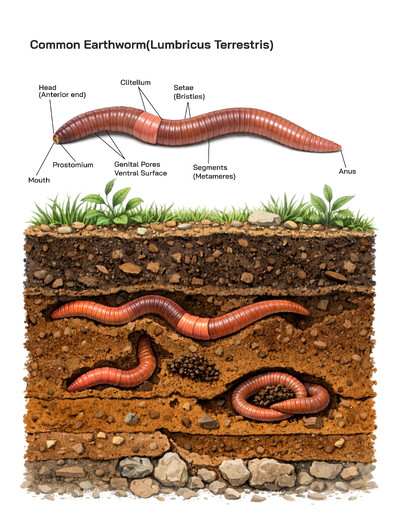
Vermicompost is produced through the activity of earthworms that consume organic residues and transform them into fine, stable material. As the worms digest plant waste, it passes through their bodies and emerges enriched with nutrients, enzymes, and beneficial microbes. The resulting product is dark, crumbly, and easy to incorporate into soil. Farmers and gardeners often praise it for its balanced fertility and capacity to improve both structure and biological vitality.
The strength of vermicompost lies not only in nutrient content but also in the life it introduces. Microorganisms flourish within it, continuing the process of decomposition after application. This living component enhances root interaction and supports steady nutrient release. Because the transformation is natural and gradual, plants receive nourishment over time, reducing losses and promoting healthy development. The presence of humus also improves moisture retention and aeration, creating favorable conditions for growth.
Biofertilizers operate through a different yet complementary principle. Instead of adding large quantities of nutrients directly, they supply beneficial microbes that assist plants in accessing what already exists in the soil. Certain bacteria form close associations with roots, helping convert elements into usable forms. Others expand the effective reach of the root system, improving uptake of water and minerals. Through these partnerships, crops become more efficient and less dependent on external inputs.
Some microorganisms are particularly well known for their ability to interact with plants in specialized ways. Bacteria associated with legumes, for instance, form nodules that support nitrogen enrichment. Free-living species contribute by enhancing soil activity and promoting general fertility. Fungi that establish symbiotic relationships with roots extend fine networks into the surrounding soil, increasing the plant’s ability to draw nutrients. Together, these diverse organisms create a dynamic underground community that sustains productivity.
The efficiency of microbial fertilizers becomes evident in long-term soil health. Rather than focusing on immediate supply alone, they nurture systems that remain fertile across seasons. Enhanced biological activity improves aggregation, water infiltration, and resistance to erosion. Crops grown in such environments often demonstrate improved vigor and tolerance to stress.
Globally, interest in biological approaches has risen sharply as agriculture seeks methods that reduce environmental impact while maintaining yields. Governments, researchers, and farmers collaborate to develop formulations that are reliable and easy to apply. These innovations allow traditional ecological wisdom to merge with modern scientific understanding.
Culturally, the emphasis on living soil reflects a shift in perspective. Instead of viewing land merely as a medium to hold plants, it is recognized as an ecosystem filled with interacting organisms. This awareness encourages stewardship and careful management, reinforcing respect for natural cycles.
The expanding interest in biological nutrient management has led to a transformation in how farmers interpret productivity, risk, and long-term land value. Instead of viewing fertility as something that can be purchased and applied in isolation, many producers now consider it an emergent property of relationships among organisms, minerals, water, and plant genetics. Within this framework, microbial technologies and worm-processed amendments are appreciated for their ability to activate processes that would otherwise remain dormant. The emphasis shifts from short-term correction toward cultivating environments in which positive interactions multiply season after season.
A crucial aspect of these systems is scalability. Early adopters often associated biological inputs with small gardens or specialty farms, yet recent decades have seen development of industrial production methods capable of serving large acreages. Controlled breeding of composting worms, standardized feedstock preparation, and hygienic processing environments make it possible to generate consistent products. Quality assurance protocols test moisture, stability, and microbial composition, giving commercial growers confidence that each batch will behave predictably in the field. This reliability bridges the gap between ecological ideals and operational practicality.
Formulation science has also advanced rapidly. Microbial inoculants may be delivered in powders, granules, or liquids designed to protect living cells during storage and transport. Carriers such as peat substitutes, polymers, or mineral substrates provide shelter and nutrition, helping organisms survive until they encounter the rhizosphere. Researchers study shelf life carefully, recognizing that viability determines success. Improved packaging, temperature management, and expiration labeling have all become standard features in professional supply chains.
Compatibility with mechanization has been another milestone. Application equipment once limited to chemical fertilizers is now adapted for biological materials, enabling seamless integration into existing routines. Seed treatments, drip irrigation injection, and coating technologies distribute microbes precisely where they can establish quickly. This efficiency reduces labor while enhancing colonization potential. Farmers appreciate that sustainability need not require abandoning modern infrastructure.
The economic narrative surrounding biological fertility is becoming increasingly sophisticated. Analysts examine reductions in input dependency, improvements in soil workability, and potential premiums linked to environmentally responsible branding. When benefits accumulate across multiple seasons, profitability often improves even if immediate yield increases are modest. Investors and lenders take note, recognizing that healthy soils can stabilize production in uncertain climates.
Another emerging dimension involves resilience against market volatility. Farms relying heavily on imported chemical inputs may face sudden price spikes or supply disruptions. By contrast, operations that cultivate internal biological cycles possess greater autonomy. Locally produced vermicompost and regionally manufactured inoculants buffer external shocks, reinforcing food security.
Scientific inquiry into microbial communication reveals fascinating complexity. Chemical signals exchanged among roots and microorganisms can influence gene expression, growth patterns, and stress responses. Understanding these dialogues opens possibilities for more targeted formulations. Rather than adding broad categories of organisms, future products may be designed for specific crops or environmental conditions, enhancing precision without sacrificing ecological harmony.
Training and extension services play pivotal roles in this transition. Successful use requires awareness of storage, handling, and environmental factors that affect survival. Workshops often emphasize observation skills, teaching farmers to recognize subtle indicators of biological activity such as soil aroma, crumb structure, or root architecture. This experiential knowledge complements laboratory data and fosters deeper engagement with land.
Policy frameworks increasingly encourage living approaches to fertility. Incentive programs may reward reduction of synthetic dependence or adoption of regenerative techniques. Participation can open access to grants, carbon initiatives, or certification schemes that strengthen farm identity in competitive markets. Thus, microbial amendments become part of broader development strategies.
Cultural implications are equally profound. The idea that invisible partners contribute to crop success resonates with philosophies emphasizing cooperation and humility. Many growers describe renewed satisfaction in knowing that productivity arises from nurturing life rather than overpowering it. This emotional dimension can inspire dedication that transcends economic calculation.
International collaboration accelerates progress. Researchers exchange strains, evaluate performance across climates, and publish findings that refine global understanding. Digital platforms allow farmers from distant regions to compare experiences, building communities of practice that evolve rapidly. Shared learning shortens experimentation cycles and spreads innovation.
Environmental advocates highlight additional advantages. Enhanced biological function may reduce nutrient runoff, protect waterways, and support biodiversity both above and below ground. Such outcomes strengthen the case for integrating microbial solutions into mainstream agriculture. Public appreciation grows when tangible benefits extend beyond farm boundaries.
Entrepreneurs continue to explore new combinations, integrating organic residues, mineral carriers, and selected organisms into multifunctional products. These hybrids aim to deliver immediate improvement while supporting gradual ecological development. As technology progresses, distinctions between amendment categories blur, giving rise to integrated fertility platforms.
The trajectory of living fertility systems continues to unfold as agriculture becomes more attentive to complexity and interdependence. Biological amendments are increasingly viewed as infrastructure rather than optional supplements, forming the foundation upon which crop management decisions are built. When soil communities function effectively, many secondary challenges diminish in severity. Nutrient imbalances, compaction symptoms, and stress reactions often become easier to manage because the ecosystem itself contributes buffering capacity. This recognition motivates farmers to protect microbial continuity across seasons, avoiding practices that might interrupt beneficial networks.
Advancements in environmental monitoring are revealing patterns that were once invisible. Sensors capable of tracking moisture dynamics, temperature gradients, and respiration provide real-time windows into subterranean life. By correlating these measurements with crop performance, growers gain insights into how biological amendments influence daily functioning. The result is a feedback culture in which observation drives refinement. Decisions about irrigation timing or residue management may be adjusted to favor microbial persistence, reinforcing the living engine of fertility.
Urban and peri-urban farming initiatives bring additional momentum. In densely populated areas, the conversion of food waste into vermicompost creates tangible examples of circular economy principles. Residents witness organic matter traveling from kitchens to gardens, strengthening awareness of nutrient cycles. Educational programs often involve students in worm husbandry and microbial experimentation, inspiring new generations to view soil as a vibrant habitat rather than inert dirt. This cultural transformation broadens public support for ecological agriculture.
Industrial research laboratories are contributing at unprecedented levels. Genomic sequencing allows scientists to identify functional traits within microbial communities, linking presence with performance. Discoveries about stress tolerance, nutrient solubilization, or disease suppression guide the selection of strains for commercial use. Although practical implementation remains complex, the direction is clear: future fertility systems will rely on deeper biological literacy.
Climate conversations amplify interest in approaches that build organic stability. Living amendments frequently enhance the capacity of soils to store carbon, which in turn influences global mitigation strategies. Governments and environmental organizations explore mechanisms for rewarding practices that contribute to sequestration. Farmers adopting microbial solutions may therefore find themselves participating in broader environmental markets, connecting local action with planetary outcomes.
Risk management also evolves under biological frameworks. Crops rooted in active soils often display greater uniformity, reducing uncertainty at harvest. Insurance providers sometimes recognize this stability, considering soil health metrics when evaluating exposure. While such models are still developing, they hint at integration between agronomy and finance that was previously unimaginable.
The sensory experience of farming gains renewed importance. Producers attentive to biological vitality frequently describe noticing differences in color, smell, and texture that signal improvement. These perceptions, though subjective, complement analytical data and reinforce commitment. The land becomes a partner whose responses guide decision making.
Technology companies respond by designing platforms that translate complex biological information into accessible recommendations. Mobile applications may integrate weather forecasts with soil indicators to suggest optimal moments for introducing microbial products. This convergence of tradition and innovation empowers farmers to act with confidence.
Supply chains adapt as demand grows. Specialized facilities culture organisms under controlled conditions, ensuring purity and effectiveness. Distribution networks maintain temperature stability and rapid delivery, recognizing that living products require careful handling. Employment opportunities expand in microbiology, logistics, and advisory services, stimulating rural economies.
The philosophical resonance of living fertilizers remains powerful. Many practitioners feel that encouraging beneficial organisms aligns with broader ethical commitments to coexistence with nature. Instead of attempting domination, agriculture becomes collaboration. This mindset influences not only fertility decisions but also approaches to pest management, water use, and biodiversity conservation.
International development agencies often promote microbial strategies in regions where chemical access is limited. By leveraging local materials and knowledge, communities can enhance productivity while preserving autonomy. Success stories inspire replication, demonstrating that innovation need not depend exclusively on imported technologies.
As awareness spreads, consumers grow curious about how soil life shapes the food they eat. Marketing narratives increasingly reference microbial partnerships, linking invisible processes with visible quality. Transparency strengthens trust and may open new market niches.
Ultimately, the continued expansion of biological fertility illustrates agriculture’s remarkable adaptability. Through research, cooperation, and cultural change, farmers integrate microscopic allies into mainstream practice. The result is a vision of production rooted in vitality, where sustaining life beneath the surface becomes inseparable from feeding populations above it. The rise of microbial and worm-mediated inputs illustrates agriculture’s capacity for reinvention. By merging scientific rigor with respect for natural processes, farmers cultivate systems that are both productive and adaptive. Living fertilizers remind us that soil is not an inert foundation but a vibrant partner whose potential expands when carefully supported. Through patience, innovation, and collaboration, these approaches promise landscapes capable of sustaining nourishment and environmental integrity for generations to come.
In summary, vermicompost and biofertilizers highlight the power of biological partnerships. Earthworms transform waste into nutrient-rich material, while selected microbes enhance availability and uptake. Together they create fertile, resilient soils capable of sustaining crops with reduced reliance on synthetic inputs. As agriculture continues to evolve toward sustainability, microbial and biological fertilizers stand at the forefront of innovation grounded in nature’s own strategies.