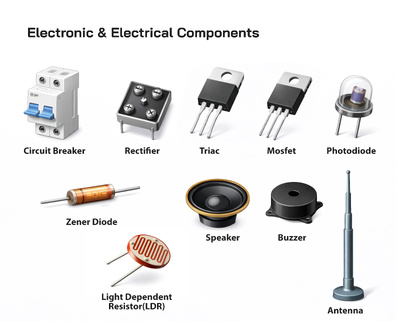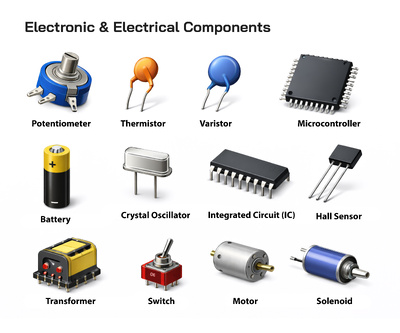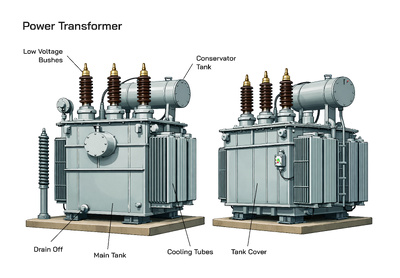
Electronic and electrical components form the foundation of all modern electrical systems, from simple household appliances to advanced industrial machinery and digital devices. These components control the flow of electric current, store or transfer energy, protect circuits, and enable switching and amplification functions. Understanding their characteristics and uses is essential for grasping how electrical and electronic systems operate reliably and safely. Each component performs a specific role, and when combined, they create functional circuits capable of complex tasks.
A resistor is one of the most basic and widely used electronic components. Its primary characteristic is resistance, which limits or controls the flow of electric current within a circuit. By opposing current flow, resistors help regulate voltage levels, protect sensitive components from excessive current, and divide voltage in electronic circuits. They are used extensively in power supplies, signal conditioning circuits, and consumer electronics where controlled current flow is essential for stable operation.
A capacitor is a component designed to store electrical energy temporarily in the form of an electric field. It consists of two conductive plates separated by an insulating material. Capacitors are commonly used to smooth voltage fluctuations, filter signals, and store energy for short durations. In power supply circuits, capacitors help reduce ripple and maintain steady voltage output. They are also used in timing circuits, signal coupling, and electronic tuning applications where controlled energy storage and release are required.
An inductor is a component that stores energy in the form of a magnetic field when current flows through it. Inductors resist sudden changes in current, making them useful in filtering and energy management applications. They are widely used in power supplies, transformers, and radio-frequency circuits to block high-frequency signals while allowing low-frequency signals to pass. Inductors play an important role in energy-efficient power conversion systems and electromagnetic control.
A diode is a semiconductor device that allows current to flow in only one direction. This unidirectional behavior makes diodes essential for rectification, where alternating current is converted into direct current. Diodes are used in power adapters, charging circuits, and protection systems to prevent reverse current flow. Their ability to control current direction helps safeguard electronic circuits from damage caused by incorrect polarity or voltage spikes.
A light-emitting diode, commonly known as an LED, is a specialized diode that emits light when current passes through it. LEDs are highly energy-efficient, long-lasting, and available in a wide range of colors. They are widely used in display panels, indicator lights, lighting systems, and optical communication devices. Compared to traditional lighting sources, LEDs consume less power and generate less heat, making them a preferred choice in modern lighting and electronic applications.
A transistor is a key semiconductor component used for switching and amplification. It can control a large current using a small input signal, which makes it fundamental to modern electronics. Transistors are used in amplifiers, digital logic circuits, microprocessors, and communication devices. Their ability to act as electronic switches enables the functioning of computers, mobile devices, and automated control systems.
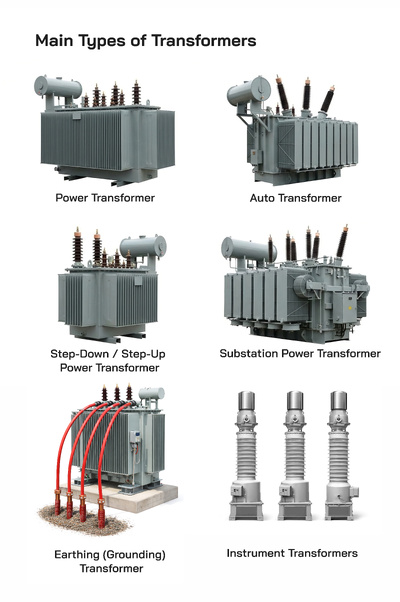
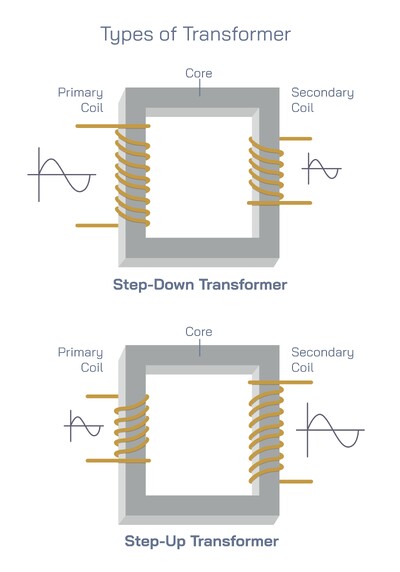
A transformer is an electrical component designed to transfer electrical energy between circuits through electromagnetic induction. Its main function is to increase or decrease voltage levels while maintaining power efficiency. Transformers are essential in power transmission and distribution systems, allowing electricity to be transmitted over long distances at high voltage and then safely reduced for domestic and industrial use. They are also used in electronic devices to match voltage levels and provide electrical isolation.
A switch is a mechanical or electronic device used to open or close an electrical circuit. It allows users or systems to control the flow of electricity manually or automatically. Switches are found in almost every electrical installation, from simple light switches to complex industrial control panels. Their primary use is to start, stop, or change the path of current flow within a circuit.
A relay is an electrically operated switch that uses an electromagnetic mechanism to control one circuit using another. Relays allow low-power control signals to operate high-power circuits safely. They are commonly used in automation systems, motor control circuits, protection systems, and industrial machinery. By providing electrical isolation between control and load circuits, relays enhance safety and system reliability.
A fuse is a protective device designed to safeguard electrical circuits from excessive current. It contains a thin conductor that melts when current exceeds a safe limit, thereby breaking the circuit. Fuses are widely used in household wiring, electronic devices, and industrial systems to prevent overheating, equipment damage, and fire hazards. Their simple yet effective operation makes them a critical safety component in electrical installations.
Beyond their basic definitions and primary functions, electronic and electrical components exhibit deeper performance characteristics that determine how efficiently and reliably a system operates. One important aspect is tolerance, which defines how much a component’s actual value can vary from its nominal rating. Resistors, capacitors, and inductors are manufactured with specific tolerance ranges, and tighter tolerances are essential in precision circuits such as medical equipment, instrumentation, and communication systems. Selecting the correct tolerance ensures predictable circuit behavior and reduces cumulative error in complex designs.
Another critical factor is power handling capability. Components are rated for the maximum power, current, or voltage they can safely handle without degradation or failure. Resistors dissipate energy as heat, capacitors must withstand electric field stress, and inductors handle magnetic saturation limits. Proper power rating selection prevents overheating, improves efficiency, and extends component lifespan. In high-power applications, thermal management techniques such as heat sinks, airflow design, and material selection become closely linked with component performance.
Frequency response is an additional dimension that influences how components behave under alternating or rapidly changing signals. Capacitors and inductors respond differently at various frequencies, making them fundamental to signal filtering, noise suppression, and impedance matching. At higher frequencies, parasitic effects such as stray capacitance and inductance become significant, requiring careful layout and component choice. This is especially important in radio-frequency circuits, power electronics, and digital systems operating at high switching speeds.
Reliability and longevity also play a major role in component selection. Environmental factors such as temperature, humidity, vibration, and electrical stress can affect performance over time. Components like capacitors and relays have finite operational lifespans due to material aging or mechanical wear. Designers often account for these limitations by derating components, meaning they are operated below their maximum ratings to enhance reliability. This practice is common in aerospace, automotive, and industrial systems where long-term stability is critical.
Integration and miniaturization have transformed how traditional components are used in modern electronics. While discrete resistors, capacitors, and transistors remain important, many of their functions are now integrated into compact modules and integrated circuits. This integration reduces size, improves performance consistency, and lowers manufacturing cost. However, discrete components still play a vital role in power handling, protection, and customization where integrated solutions may not be suitable.
Control and protection functions extend beyond simple operation. Components such as relays, fuses, and switches are increasingly combined with sensing and monitoring features. Advanced relays may include electronic control logic, while modern protection devices can provide status feedback and fault diagnostics. These enhancements improve system intelligence and allow for faster response to abnormal conditions, reducing downtime and maintenance effort.
Electromagnetic compatibility is another important consideration. Inductors, transformers, and switching devices can generate electromagnetic interference if not properly designed or shielded. Careful component placement, grounding strategies, and filtering help minimize interference and ensure compliance with regulatory standards. This aspect is particularly important in communication equipment, medical devices, and consumer electronics where signal integrity is essential.
Manufacturing consistency and standardization also influence component usage. International standards define ratings, symbols, and testing methods to ensure compatibility and safety across different systems and manufacturers. Standardization allows components to be sourced globally and replaced easily, supporting large-scale production and long-term maintenance. This consistency underpins the global electronics and electrical industry.
In educational and practical learning contexts, these components form the foundation for understanding circuit behavior and system design. Experimenting with how components interact under different conditions helps develop insight into voltage regulation, energy storage, signal control, and system protection. This foundational knowledge is essential for engineers, technicians, and hobbyists alike.
continue
Another important layer of understanding comes from how electronic and electrical components behave under real-world operating conditions rather than ideal theoretical scenarios. In practical circuits, components interact with each other and with their environment, leading to effects such as heat buildup, electrical noise, and gradual performance drift. For example, resistors may change resistance slightly with temperature, capacitors may lose capacitance over time due to dielectric aging, and inductors can experience magnetic core losses. Designers account for these realities by selecting appropriate materials, safety margins, and circuit configurations that maintain stable operation over long periods.
Material composition is a significant factor that differentiates component performance and application suitability. Resistors may be made from carbon, metal film, or wire-wound materials, each offering different stability and noise characteristics. Capacitors use dielectrics such as ceramic, electrolytic, or polymer, influencing their size, voltage rating, and frequency behavior. Inductors and transformers rely on core materials like ferrite or laminated steel, which determine efficiency and magnetic response. Understanding these material differences allows engineers to tailor component selection to specific functional requirements.
Thermal behavior and heat dissipation are closely linked to component reliability. As current flows through components, heat is generated, and excessive temperature can degrade performance or cause failure. Transistors, transformers, and power resistors are especially sensitive to thermal stress. Effective thermal design, including ventilation, heat sinks, and spacing, ensures that components operate within safe temperature limits. Managing heat is essential not only for preventing damage but also for maintaining consistent electrical characteristics.
Another advanced consideration is switching speed and response time. Transistors, diodes, relays, and switches differ greatly in how quickly they can respond to changes in electrical signals. Semiconductor devices operate at extremely high speeds, enabling digital processing and high-frequency communication. Mechanical components such as relays and switches respond more slowly but provide robust isolation and high-current handling. Choosing the appropriate type depends on whether speed, durability, or power capacity is the primary requirement.
Energy efficiency is an increasingly important factor in modern systems. Components are selected not only for functionality but also for minimizing power loss. Efficient transformers reduce energy waste in power distribution, while low-loss inductors and capacitors improve power supply performance. Semiconductor devices are continually optimized to reduce conduction and switching losses. These improvements contribute to lower energy consumption, reduced heat generation, and compliance with global energy-efficiency standards.
Maintenance and serviceability also influence component choice in large-scale or long-term installations. Components like fuses and relays are often designed to be easily replaceable, allowing quick restoration of functionality after a fault. In contrast, solid-state alternatives may offer longer life but require complete module replacement when failure occurs. Balancing ease of maintenance with durability is an important consideration in industrial and infrastructure systems.
From a system-level perspective, components contribute to redundancy and fault tolerance. Protective elements such as fuses and relays are integrated to isolate faults and prevent cascading failures. Redundant components or parallel configurations may be used in critical applications to ensure continued operation even if one element fails. This approach is common in power systems, transportation infrastructure, and safety-critical electronics.
As technology evolves, traditional components are increasingly complemented by smart and adaptive counterparts. Solid-state relays replace mechanical ones in many applications, offering faster response and longer life. Intelligent switches and protection devices can monitor current, voltage, and temperature, providing real-time feedback to control systems. These advancements enhance system awareness and allow predictive maintenance rather than reactive repair.
In the broader context of innovation, electronic and electrical components serve as building blocks for emerging technologies. Renewable energy systems rely heavily on efficient transformers, power electronics, and protection devices. Electric vehicles depend on advanced transistors, capacitors, and inductors for motor control and energy management. Communication networks, automation, and digital infrastructure all trace their functionality back to these fundamental components.
Ultimately, the importance of electronic and electrical components extends beyond their individual characteristics. Their interaction, integration, and behavior under varying conditions define the performance, safety, and longevity of entire systems. A deeper understanding of these aspects enables better design decisions, improved reliability, and more sustainable technological development. As electrical and electronic systems continue to grow in complexity, the foundational role of these components remains unchanged, underscoring their lasting significance in modern engineering and everyday life.
In summary, electronic and electrical components are not just individual parts performing isolated functions. Their deeper characteristics—such as tolerance, power handling, frequency response, reliability, integration, and electromagnetic behavior—define how entire systems perform. Thoughtful selection and application of these components enable the creation of efficient, safe, and durable technologies. As systems become more complex and compact, understanding these advanced aspects becomes increasingly important, reinforcing the central role of fundamental components in shaping modern electrical and electronic innovation.
In conclusion, electronic and electrical components such as resistors, capacitors, inductors, diodes, LEDs, transistors, transformers, switches, relays, and fuses work together to form reliable and functional electrical systems. Each component has a distinct characteristic and purpose, from controlling current and voltage to protecting circuits and enabling automation. Their combined use allows modern technology to operate efficiently, safely, and consistently across a wide range of applications, making them indispensable in today’s electrically driven world.