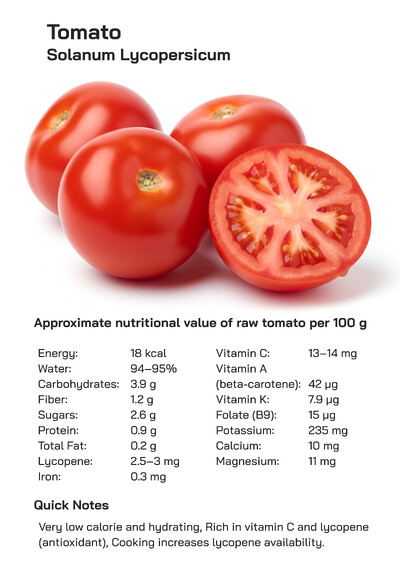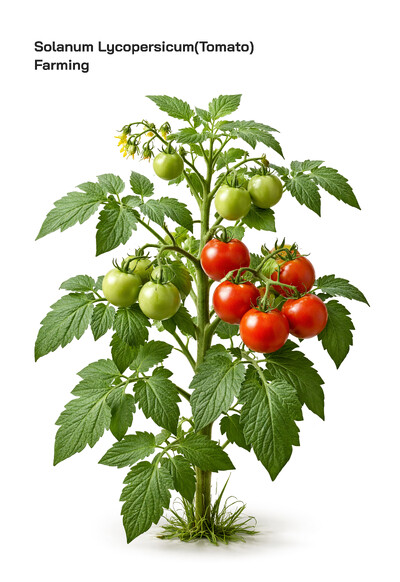
Tomatoes are among the most diverse and widely cultivated crops in the world, and the image illustrates several of the most commonly used tomato types. Each variety shown differs in shape, size, texture, and culinary purpose, and these physical characteristics are closely linked to the environments and climates in which they are grown. Understanding these relationships helps explain why certain tomato types dominate specific regions and agricultural systems.
Cherry tomatoes are small, round, and known for their sweetness and juiciness. Their compact size allows them to grow well in warm environments with abundant sunlight. These tomatoes thrive in both open-field cultivation and protected environments such as greenhouses. They are widely grown in regions with long growing seasons, where consistent warmth supports steady fruit production. Their thin skin and high sugar content are influenced by strong sunlight and balanced irrigation.
Grape tomatoes are slightly elongated with firmer flesh and lower moisture content. This structure makes them well suited to warmer climates where reduced water retention helps prevent cracking. They are commonly cultivated in regions with controlled irrigation systems and moderate humidity. Their firmness also supports transportation, making them popular in large-scale commercial farming zones.
Roma or plum tomatoes are elongated with thick flesh and minimal juice, a trait that makes them ideal for processing. These tomatoes are strongly associated with Mediterranean regions, where warm days and cooler nights support slow, even ripening. The climate in these areas enhances flavor concentration while maintaining structural integrity, which is essential for sauce and paste production.
Beefsteak tomatoes are large, heavy, and juicy, requiring fertile soil and stable moisture availability. They perform best in temperate climates where excessive heat does not stress the plant. These tomatoes need longer growing periods and are often cultivated in regions with rich soil and well-managed irrigation. Their size reflects favorable growing conditions with minimal environmental stress.
Globe or round tomatoes are among the most adaptable types. Their balanced structure allows them to grow across a wide range of climates, from temperate zones to warm subtropical regions. These tomatoes are commonly produced in large volumes due to their uniform appearance and versatility. Stable temperatures and good drainage support consistent yields.
Cocktail tomatoes fall between cherry and globe types in size. They benefit from controlled environments where temperature and humidity can be carefully managed. These tomatoes are often grown in greenhouses or regions with predictable weather patterns, allowing growers to maintain quality and appearance for fresh markets.
Heirloom tomatoes display significant variation in shape, color, and texture. They are often cultivated in regions that support traditional farming methods and biodiversity. These tomatoes are sensitive to environmental stress and perform best in climates with moderate temperatures and well-balanced soil conditions. Their unique flavors are closely linked to specific regional growing environments.
Campari tomatoes are known for their uniform size and balanced sweetness. They are commonly grown in greenhouse systems, where light exposure, temperature, and water supply can be precisely controlled. This environment allows consistent flavor development regardless of external climate variation.
San Marzano tomatoes are strongly associated with specific geographic regions that offer volcanic soil, moderate rainfall, and warm temperatures. These environmental conditions contribute to their dense flesh and low acidity. The regional climate plays a crucial role in shaping their culinary reputation.
Across all tomato types, climate plays a decisive role in determining fruit quality. Tomatoes generally prefer warm temperatures, abundant sunlight, and well-drained soil. Excess moisture or cold conditions can affect flowering and fruit formation, while excessive heat can reduce yield. Successful tomato farming relies on aligning variety selection with local environmental conditions.
Environmental adaptability has contributed to the global spread of tomatoes. From tropical zones to temperate regions, tomatoes are cultivated using open fields, protected structures, and advanced greenhouse systems. This adaptability supports year-round production and widespread availability.
Tomato diversity extends far beyond the visible differences in size and shape, reaching into how varieties respond to subtle climatic factors such as altitude, wind exposure, and day–night temperature variation. In higher-altitude regions, certain tomato varieties develop thicker skins and slower ripening patterns, which help protect the fruit from cooler nights and stronger ultraviolet exposure. These conditions often result in more complex flavor profiles, as slower maturation allows sugars and organic acids to balance gradually. This is one reason why tomatoes grown in upland areas are often prized for their depth of taste, even when yields are lower than in lowland farms.
Regional specialization in tomato cultivation has also emerged due to long-term adaptation between varieties and local ecosystems. Over generations, farmers have selected seeds from plants that performed best under specific regional conditions, leading to locally adapted tomato populations. These varieties may not always perform optimally outside their native regions, but within their adapted environment they show superior resilience, flavor stability, and productivity. This localized adaptation explains why some tomato varieties are deeply tied to specific regions and culinary traditions.
Soil composition plays a decisive role in determining which tomato varieties thrive in a given area. Sandy soils favor fast-draining conditions that benefit varieties prone to root sensitivity, while loamy soils support balanced growth and fruit development for a wide range of tomatoes. In mineral-rich soils, tomatoes often develop stronger structural integrity and deeper coloration. Soil pH also influences nutrient availability, subtly affecting fruit firmness, flavor intensity, and shelf life. Farmers often adjust soil conditions to match the needs of specific tomato types rather than forcing a single variety across unsuitable land.
Climate suitability is also shaped by seasonal rainfall patterns. In regions with predictable dry seasons, tomatoes can be cultivated with controlled irrigation, allowing precise management of water stress that enhances fruit quality. In contrast, areas with high rainfall require varieties that resist cracking and fungal pressure. This has led to the development and regional preference for tomatoes with thicker skins or more compact growth habits in humid climates, reducing losses and improving reliability.
Temperature consistency is another key factor influencing tomato variety selection. Some tomatoes tolerate wide temperature swings, while others require narrow optimal ranges for flowering and fruit set. Varieties grown in continental climates often possess greater tolerance to temperature fluctuations, whereas those grown in coastal or greenhouse environments are selected for uniformity under stable conditions. This distinction affects not only yield but also the predictability of harvest timing, which is critical for commercial supply chains.
Wind exposure also influences tomato cultivation practices and variety choice. In open plains or coastal regions, strong winds can damage delicate plants and reduce pollination efficiency. In such environments, growers favor compact or bush-type varieties that resist mechanical stress. In calmer inland regions, taller and more vigorous tomato plants can be cultivated successfully with minimal structural support. These environmental pressures shape regional tomato landscapes in ways that are not immediately visible in the final fruit.
Light quality and duration significantly affect tomato performance. Regions with long daylight hours during the growing season often produce tomatoes with higher sugar accumulation, while areas with intense but shorter daylight exposure may emphasize acidity. This interaction between light and plant physiology influences not only taste but also color development and nutritional composition. Growers increasingly consider light conditions when selecting varieties for both open-field and protected cultivation.
Global tomato production is also influenced by infrastructure and access to technology. Regions with advanced greenhouse systems can grow varieties that would otherwise be unsuitable for local climates. This has expanded the geographic range of certain tomatoes, allowing year-round production in areas with harsh winters or extreme heat. However, open-field tomatoes still dominate in regions where climate naturally aligns with plant needs, as they require fewer inputs and lower production costs.
Environmental needs also extend to pollination dynamics. While tomatoes are largely self-pollinating, environmental factors such as humidity and air movement influence pollen viability and transfer. Some regions rely on natural airflow, while others use managed pollination systems in protected environments. Varieties differ in how efficiently they set fruit under varying pollination conditions, making this another factor in regional suitability.
Climate change has begun to influence tomato variety distribution worldwide. Shifting temperature patterns and altered rainfall cycles are prompting farmers to reassess traditional growing regions. Varieties once limited to warmer zones are now being tested in cooler regions, while heat-tolerant tomatoes are becoming more important in areas experiencing rising temperatures. This ongoing transition highlights the importance of genetic diversity in maintaining global tomato production.
Beyond agriculture, tomato varieties reflect consumer preferences shaped by regional culture. In some regions, firmness and shelf life are prioritized due to long transport distances, while in others, flavor and aroma take precedence for local markets. These preferences influence which varieties dominate certain regions, reinforcing the link between environment, economy, and food culture.
Ultimately, the global success of Solanum lycopersicum lies in its extraordinary ability to adapt across environments, climates, and human needs. Tomato varieties are not merely agricultural products but living responses to soil, climate, and regional knowledge. Their diversity reflects centuries of interaction between nature and cultivation, resulting in a crop that can thrive from small backyard gardens to large agricultural landscapes. This deep adaptability ensures that tomatoes will continue to evolve alongside changing climates and growing regions, maintaining their central role in global food systems.
Tomato cultivation also varies according to latitude, which influences seasonal length and solar intensity. In lower latitudes, where temperatures remain warm for extended periods, tomatoes are often grown continuously with staggered planting schedules to ensure uninterrupted harvests. In higher latitudes, shorter summers require varieties that mature quickly and set fruit efficiently within limited time frames. This has led to the popularity of early-maturing and cold-tolerant tomato types in northern regions, allowing farmers to achieve reliable yields despite shorter growing windows.
Water quality is another environmental factor that subtly affects tomato variety performance. Regions with mineral-rich irrigation water may produce tomatoes with firmer texture and thicker skins, while areas with softer water often see higher juiciness. Salinity levels also influence variety selection, as some tomatoes tolerate mild salinity better than others. In coastal and arid regions, salt-tolerant tomato varieties are increasingly favored to maintain productivity where freshwater resources are limited.
Tomato root behavior differs across varieties and influences their suitability for specific soils. Deep-rooting varieties perform better in regions with lower rainfall, as they can access moisture from deeper soil layers. Shallow-rooted types are more suited to fertile soils with regular irrigation. This root architecture affects not only water uptake but also nutrient absorption, making root traits a key consideration in regional variety selection.
The role of humidity in tomato cultivation is often underestimated. In dry climates, tomatoes benefit from reduced disease pressure and improved fruit quality, while in humid regions, growers prioritize varieties with natural resistance to moisture-related stress. High humidity can affect pollen viability and fruit set, prompting the use of varieties adapted to stable reproductive performance under such conditions. This adaptation helps explain why certain tomato types dominate tropical and subtropical regions.
Seasonal temperature transitions also shape tomato farming systems. In regions with sharp seasonal changes, tomatoes are often grown as part of tightly scheduled cropping cycles that align flowering and fruiting with optimal temperature ranges. In contrast, regions with gradual seasonal shifts allow longer harvest periods and more flexible planting schedules. This difference influences not only variety choice but also labor planning and market supply timing.
Regional growing traditions further influence tomato diversity. In some parts of the world, tomatoes are cultivated primarily for fresh consumption, leading to the dominance of visually appealing and flavorful varieties. In other regions, processing industries drive variety selection toward tomatoes with uniform ripening, thick flesh, and high solids content. These regional priorities shape breeding efforts and reinforce geographic specialization in tomato production.
The adaptability of tomatoes to different elevations also plays a role in their global distribution. Lowland regions typically focus on high-yield varieties optimized for warmth and rapid growth, while highland areas favor tomatoes that tolerate cooler nights and slower metabolic rates. Elevation-related temperature differences influence sugar accumulation and acidity, resulting in distinct taste profiles associated with specific growing regions.
Environmental stress tolerance has become increasingly important in modern tomato farming. Varieties capable of maintaining productivity under heat stress, irregular rainfall, or nutrient limitations are gaining prominence. This shift reflects changing climate patterns and the need for resilient crops that can withstand unpredictable conditions. As a result, tomato cultivation is expanding into regions previously considered marginal for production.
The interaction between tomatoes and surrounding vegetation also affects growing success. In mixed farming systems, tomatoes benefit from companion planting that improves microclimate conditions and soil health. Certain regions favor integrated cropping systems where tomatoes coexist with other plants that provide shade, wind protection, or soil enrichment. These systems influence variety choice, favoring tomatoes that adapt well to shared growing environments.
Urban expansion has created new tomato-growing regions within city landscapes. Rooftop farms, balconies, and vertical systems favor compact and determinate varieties that thrive in limited space. These urban environments often provide warmer microclimates than surrounding rural areas, extending the growing season and allowing tomatoes to be cultivated in locations previously unsuitable for traditional farming.
Transportation infrastructure also shapes regional tomato production. Areas with strong logistics networks can focus on varieties bred for durability and transport resilience, while regions serving local markets prioritize flavor and freshness. This logistical dimension influences climate suitability indirectly, as tomatoes grown for distant markets must withstand longer transit regardless of growing conditions.
The long-term sustainability of tomato cultivation depends on aligning varieties with local environmental limits. Regions that respect natural climate patterns and soil capabilities achieve more stable production with fewer external inputs. This approach supports ecological balance while maintaining economic viability for farmers. Tomatoes grown in harmony with their environment tend to exhibit consistent quality and reduced vulnerability to stress.
In a global context, the continued diversification of tomato varieties reflects humanity’s response to environmental diversity. Solanum lycopersicum adapts not by uniformity but through variation, allowing it to occupy a vast range of climates and growing systems. This adaptability ensures that tomatoes remain a reliable crop even as environmental conditions shift. By matching variety traits with regional climate, soil, and cultural needs, tomato cultivation continues to expand while maintaining resilience, productivity, and relevance across the world’s agricultural landscapes.
In summary, the tomato types shown in the image reflect a balance between genetic traits and environmental adaptation. Shape, size, and texture are not random features but responses to climate, soil, and cultivation practices. By matching tomato varieties to suitable regions and climates, farmers achieve consistent yields and high-quality produce, reinforcing tomatoes as one of the most globally important crops in agriculture and food systems.