General Characteristics of the Honey Badger
The honey badger, also known as the ratel, is one of the most fearless and resilient mammals in the animal kingdom. It is widely recognized for its aggressive defense behavior, remarkable toughness, and ability to survive in some of the harshest environments on Earth. Despite its relatively small size compared to large predators, the honey badger displays extraordinary confidence and strength, often standing its ground against animals much larger than itself. This fearless nature is supported by a combination of physical adaptations, intelligence, and behavioral flexibility.
Honey badgers have a compact yet muscular body designed for strength rather than speed. Their posture is low to the ground, which provides stability during fights and digging. They are solitary animals for most of their lives, preferring independence except during mating and cub rearing periods. Their bold behavior and adaptability have earned them a reputation as one of nature’s toughest survivors.
Body Structure and Physical Adaptations
The body structure of a honey badger is perfectly adapted for defense, digging, and feeding. One of its most remarkable features is its thick, loose skin. This skin is tough, rubbery, and not tightly attached to the muscles beneath. This allows the honey badger to twist and turn inside its own skin when grabbed by predators, enabling it to bite back even when restrained. The skin also provides resistance to bites, stings, and scratches.
The fur of the honey badger is coarse and short, with a distinctive color pattern. Most individuals have a dark lower body and a lighter stripe running from the head to the tail. This coloration may act as a warning signal to potential predators. Beneath the fur, the skin offers protection against bee stings, snake bites, and rough terrain.
Honey badgers possess a broad head with powerful jaws and strong teeth. Their teeth are adapted for crushing and tearing, allowing them to consume a wide variety of foods, including insects, small mammals, reptiles, and tough-skinned prey. Their jaw strength enables them to break into hard materials such as turtle shells, termite mounds, and beehives.
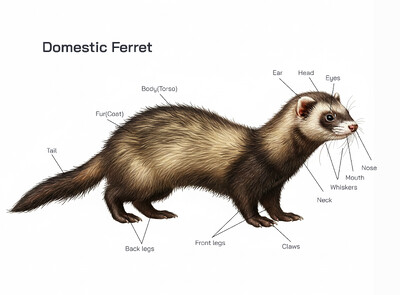
The limbs of the honey badger are short but extremely strong. The forelimbs are equipped with long, curved claws that are ideal for digging. These claws allow the animal to excavate burrows, break into nests, and uncover hidden prey. The hind limbs provide stability and pushing power, supporting both digging and defensive movements. The tail is relatively short and thick, aiding balance but not used for grasping.
Habitat and Distribution
Honey badgers inhabit a wide range of environments, demonstrating exceptional adaptability. They are found in grasslands, savannas, forests, deserts, and rocky regions. Their ability to survive in both dry and moderately humid climates highlights their flexibility. Honey badgers do not depend on a single habitat type, as long as food sources and shelter opportunities are available.
Burrows play a crucial role in their habitat use. Honey badgers either dig their own burrows or occupy abandoned ones. These underground shelters protect them from extreme temperatures and predators. Burrows are also used for resting and raising young.
Food Habits and Diet
The honey badger is an omnivorous feeder with an exceptionally broad diet. It feeds on insects such as termites, ants, and larvae, which form a significant part of its food intake. It is also known to consume honey and bee larvae by raiding beehives, a behavior that gave the animal its name. Its thick skin protects it from bee stings during such raids.
In addition to insects and honey, honey badgers hunt small mammals, birds, eggs, reptiles, and amphibians. They are especially known for their ability to kill and consume venomous snakes. Honey badgers show a degree of resistance to snake venom, allowing them to survive bites that would be fatal to many other animals. They also scavenge when opportunities arise, making use of carcasses left by larger predators.
Behavior and Lifestyle
Honey badgers are mostly nocturnal or crepuscular, being active during night or early morning hours to avoid extreme heat. They rely heavily on their sense of smell to locate food, as their eyesight is relatively weak. Their hearing is moderate but sufficient to detect nearby movement.
They are known for their aggressive and bold behavior when threatened. Instead of fleeing, honey badgers often stand their ground, hiss, growl, and attack if necessary. This behavior deters many predators and contributes to their survival.
Reproduction and Development
Reproduction in honey badgers occurs seasonally, depending on environmental conditions. After mating, the female gives birth to one or two cubs. The cubs are born blind and helpless and remain in the burrow for protection during early development. The mother provides care, nourishment, and protection until the cubs are strong enough to explore independently.
As the cubs grow, they learn survival skills such as digging, hunting, and recognizing threats. Once mature, they leave the mother and establish independent territories.
Survival Strategies and Defense Mechanisms
The survival success of the honey badger is based on a combination of physical toughness, fearlessness, and adaptability. Its thick skin and loose body covering reduce injury during fights. Its claws and teeth provide effective offensive tools, while its intelligence allows problem-solving and opportunistic feeding.
Honey badgers also possess scent glands that release strong-smelling secretions, which may help deter predators. Their willingness to confront threats rather than flee often surprises attackers and increases survival chances.
Ecological Importance
Honey badgers contribute to ecosystem balance by controlling insect and small animal populations. Their digging behavior helps aerate soil and influences habitat structure. By scavenging and predation, they play an important role in nutrient cycling within ecosystems.
The honey badger possesses a physiological resilience that sets it apart from most mammals of similar size. One of its lesser-known strengths is its unusually high pain tolerance. This does not mean the animal does not feel pain, but rather that it is able to continue functioning effectively even after sustaining injuries that would incapacitate many other animals. This resilience allows honey badgers to continue fighting, escaping, or feeding even after bites, stings, or wounds, greatly increasing their survival probability in hostile environments.
Another remarkable aspect of honey badger biology is its partial resistance to venom. Studies and field observations have shown that honey badgers can survive bites from highly venomous snakes. While venom still affects them, often causing temporary paralysis or disorientation, their bodies can recover after a short period. This resistance is not absolute immunity, but it provides a critical survival advantage that allows honey badgers to exploit food sources unavailable to most predators. After recovery, they frequently return to consume the snake that bit them, demonstrating both biological tolerance and opportunistic intelligence.
The honey badger’s intelligence is one of its most underestimated traits. It displays advanced problem-solving abilities, memory, and adaptability. In both wild and controlled environments, honey badgers have been observed manipulating objects, opening containers, escaping enclosures, and learning from repeated experiences. This cognitive flexibility allows them to exploit new food sources, avoid repeated dangers, and adapt quickly to changing environments. Their intelligence works hand in hand with curiosity, making them persistent and inventive foragers.
Socially, honey badgers are largely solitary, but this does not imply poor communication. They rely on scent marking extensively to define territory and convey information to other honey badgers. Anal scent glands produce strong secretions that serve both communication and defense purposes. These scent signals reduce unnecessary physical conflict by clearly indicating territory ownership and reproductive status. During mating periods, scent communication becomes especially important for locating partners in vast landscapes.
The locomotion style of the honey badger is another survival-enhancing feature. Although they are not built for speed, their movement is purposeful and powerful. They can run short distances quickly when necessary, climb trees with surprising efficiency, and swim across water bodies if required. This versatility allows them to access diverse food sources, including tree nests, underground burrows, and aquatic prey. Their physical adaptability ensures that few environments are completely inaccessible to them.
Thermoregulation is a challenge for honey badgers due to their limited ability to store body fat and their relatively low insulation compared to cold-adapted mammals. To compensate, honey badgers adjust their activity patterns carefully. In hot climates, they are more nocturnal to avoid heat stress. In cooler regions, they may become more active during daylight hours. Burrows play a crucial role in temperature regulation, providing stable microclimates that protect against both heat and cold.
From an evolutionary perspective, the honey badger represents a lineage that prioritized versatility over specialization. Rather than evolving extreme speed, large size, or narrow dietary preferences, honey badgers evolved moderate strength, broad diet tolerance, and behavioral boldness. This evolutionary strategy allows them to persist even when ecosystems change, prey populations fluctuate, or competition increases. Their adaptability explains their wide geographic distribution and long-term survival success.
Human–wildlife interaction with honey badgers is complex. In some regions, honey badgers are considered pests due to their tendency to raid poultry farms or beehives. Their strength and intelligence make them difficult to deter using conventional barriers. However, they also provide ecological benefits by controlling pest populations such as rodents and termites. Understanding their behavior is essential for developing coexistence strategies that protect both human livelihoods and wildlife.
Culturally, honey badgers have become symbols of fearlessness and determination. Their reputation is rooted in real biological traits rather than exaggeration. This perception has led to their presence in folklore, media, and popular culture, often representing resilience and defiance. While these portrayals sometimes dramatize behavior, they reflect genuine characteristics observed in the wild.
In conservation terms, honey badgers are not currently among the most endangered mammals, largely due to their adaptability. However, habitat fragmentation, road mortality, and human conflict pose localized threats. Their survival depends on access to suitable habitats, prey availability, and tolerance from human communities. Protecting ecosystems that support honey badgers indirectly supports many other species due to their role in maintaining ecological balance.
The sensory world of the honey badger is finely tuned for survival in complex environments. While its eyesight is relatively limited, its sense of smell is exceptionally developed and serves as its primary guide for locating food. Honey badgers can detect underground prey, hidden nests, and buried carcasses through scent alone. This ability allows them to exploit food sources that remain invisible to many predators. Their olfactory memory is also strong, enabling them to remember productive foraging sites and return to them over time.
Another important survival trait is the honey badger’s jaw and skull structure. The skull is compact yet extremely robust, supporting powerful jaw muscles. This structure allows honey badgers to bite with tremendous force relative to their size. Their teeth are designed to crush bones, shells, and hard insect exoskeletons, giving them access to high-protein food sources that are inaccessible to less powerful carnivores. This mechanical advantage plays a crucial role during scavenging, where breaking into tough carcasses can mean the difference between starvation and survival.
Honey badgers also demonstrate remarkable persistence, a behavioral trait that greatly enhances foraging success. When encountering obstacles such as thick soil, termite mounds, or human-made barriers, they do not abandon efforts easily. Instead, they dig, chew, climb, or manipulate objects repeatedly until they succeed. This persistence is closely linked to their intelligence and contributes to their reputation as unstoppable animals. In ecological terms, this persistence allows them to exploit stable food sources over long periods.
The immune response of the honey badger is another underappreciated adaptation. Beyond venom tolerance, their immune system shows resilience against infections resulting from frequent injuries. Because honey badgers often engage in aggressive encounters and consume carrion, exposure to bacteria is high. Their bodies are adapted to handle such exposure without severe illness, allowing rapid recovery and continued activity in environments that would pose high disease risk to other mammals.
Honey badgers also influence animal behavior within their ecosystems. Smaller predators often avoid areas frequented by honey badgers due to their aggressive nature. This creates localized shifts in animal movement patterns and feeding behavior. In this way, honey badgers exert indirect control over ecosystem dynamics beyond direct predation, shaping how other species use shared habitats.
Seasonal flexibility is another key component of honey badger survival. Unlike animals that rely on specific prey species, honey badgers adjust their feeding habits throughout the year. During seasons when insects are abundant, they rely heavily on them. When insects decline, they shift toward vertebrate prey, scavenging, or plant-based foods. This seasonal adaptability prevents dependence on a single food chain and reduces vulnerability to environmental fluctuations.
Honey badgers also show advanced spatial awareness. They maintain mental maps of their territories, including burrow locations, food sites, and escape routes. This spatial memory allows rapid movement through familiar terrain, especially during confrontations or predator encounters. The ability to retreat instantly into a known burrow or dense cover greatly increases survival chances during dangerous situations.
In terms of reproductive strategy, honey badgers invest heavily in offspring survival rather than producing large numbers of young. This investment strategy aligns with their solitary nature and demanding environment. Cubs are taught survival skills gradually, learning how to dig, hunt, and recognize threats. This extended learning period produces highly capable individuals that are better prepared for independent life.
Human expansion has unintentionally tested the adaptability of honey badgers. Roads, farms, and settlements fragment habitats, yet honey badgers continue to persist by modifying behavior. They adjust activity timing, exploit new food sources, and learn to avoid certain dangers. However, this adaptability can also lead to conflict, particularly when honey badgers raid poultry or beehives. Understanding their behavioral flexibility is essential for developing non-lethal conflict mitigation strategies.
From a scientific perspective, honey badgers are increasingly studied as models of resilience and adaptability. Their combination of physical toughness, cognitive ability, and ecological flexibility makes them valuable for understanding survival strategies in changing environments. Insights gained from studying honey badgers may inform conservation biology, behavioral ecology, and even biomedical research related to pain tolerance and immune resilience.
Ultimately, the honey badger exemplifies a survival strategy based not on size or dominance, but on versatility, intelligence, and determination. Its ability to endure injury, adapt behavior, exploit diverse food sources, and confront danger directly sets it apart from most mammals. The continued success of the honey badger across continents demonstrates that adaptability and resilience are among the most powerful forces in evolution.
In conclusion, the honey badger is far more than a tough or aggressive animal. It is a biologically sophisticated mammal equipped with exceptional physical resilience, cognitive flexibility, and ecological adaptability. Its venom tolerance, problem-solving ability, and fearless defense strategies represent a unique evolutionary solution to survival in unpredictable environments. Studying the honey badger offers valuable insight into how adaptability, intelligence, and resilience can outweigh size and strength in the natural world.