The Nankeen kestrel is a small and agile bird of prey widely recognized for its hovering flight and adaptability across a broad range of landscapes. It is one of the most familiar falcons in Australia, admired for its graceful aerial control and effective hunting behavior. Its characteristics reflect efficiency, precision, and resilience, allowing it to thrive in both natural and human-influenced environments.
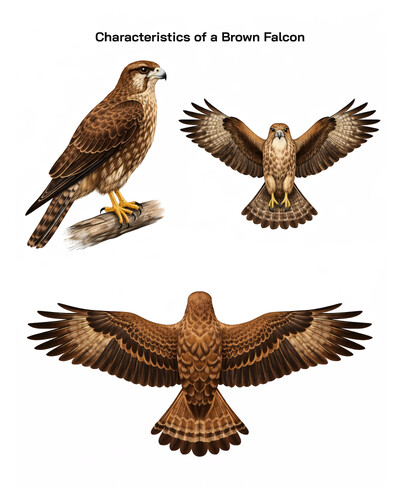
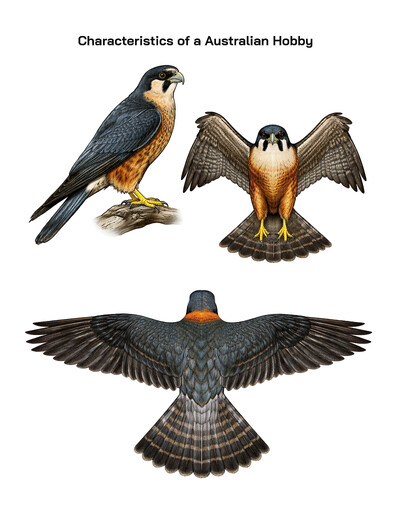
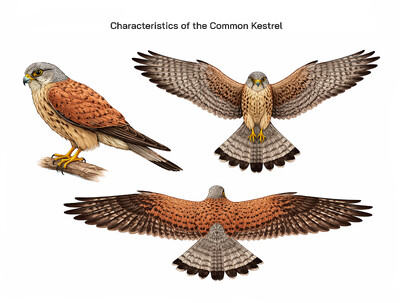
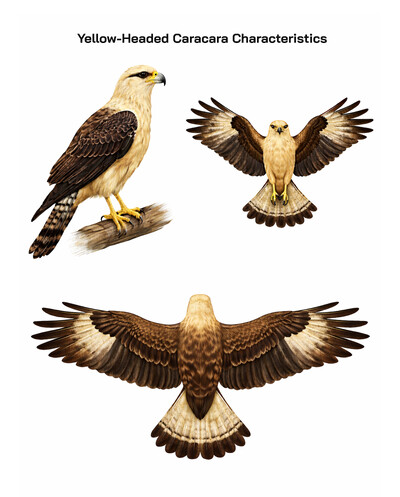
Physically, the Nankeen kestrel is distinguished by its light, sandy brown plumage that provides excellent camouflage in dry and open habitats. The upper body displays warm brown tones with subtle markings, while the underparts are paler, often cream or light buff. This coloration blends seamlessly with grasslands and arid terrain. The wings are long and narrow, designed for sustained hovering and controlled gliding, while the long tail aids balance and maneuverability during flight.
The head of the Nankeen kestrel is relatively small with a sharply hooked beak suited for tearing prey. Its eyes are large and forward-facing, offering exceptional vision that allows it to detect small movements from considerable heights. Strong yet delicate talons enable the bird to grasp insects, reptiles, and small mammals with accuracy. Despite its modest size, the kestrel’s physical build supports remarkable hunting efficiency.
One of the most defining characteristics of the Nankeen kestrel is its hunting behavior. It is famous for its ability to hover almost motionless in the air while facing into the wind. During this hovering, the bird scans the ground below for prey before making a swift vertical descent. This method allows precise targeting and reduces energy loss, making it highly effective in open environments where cover is limited.
Habitat preference further highlights the adaptability of the Nankeen kestrel. It is commonly found in open grasslands, agricultural fields, savannas, coastal plains, and semi-arid regions. The species readily adapts to modified landscapes such as farmlands and roadside areas, where prey availability is often high. Its tolerance of varied conditions has contributed to its widespread distribution and stable population.
The diet of the Nankeen kestrel mainly consists of insects, small reptiles, and rodents. This flexible feeding strategy allows it to respond quickly to seasonal changes in prey abundance. By feeding heavily on insects and small vertebrates, the kestrel provides valuable natural pest control, especially in agricultural settings.
Behaviorally, the Nankeen kestrel is generally solitary outside the breeding season. It is territorial and actively defends hunting grounds and nesting areas. Rather than building complex nests, it often reuses abandoned nests of other birds or selects simple sites on tree hollows, cliffs, or man-made structures. Both parents participate in raising the young, demonstrating strong cooperative behavior.
Ecologically, the Nankeen kestrel plays an important role as a mid-level predator. Its presence helps regulate populations of insects and small animals, contributing to ecological balance. Because it responds sensitively to environmental changes, the kestrel is also considered an indicator of healthy open ecosystems.
Beyond its visible hunting skills and adaptability, the Nankeen kestrel shows a number of subtle biological and behavioral traits that make it especially successful in Australia’s often unpredictable environments. One important aspect is its energy management strategy. Unlike larger raptors that rely on bursts of power or long soaring flights, this kestrel carefully balances hovering, gliding, and perching to conserve energy. It frequently alternates active flight with periods of stillness on fence posts, power lines, or isolated trees, allowing it to hunt efficiently without exhausting itself in hot or windy conditions.
The species also displays a high degree of visual specialization. Its eyesight is not only sharp in terms of distance but is finely tuned to detect movement patterns against complex backgrounds such as grass, soil, and scrub. This sensitivity allows it to spot camouflaged insects or reptiles that would remain invisible to less specialized predators. The kestrel’s ability to judge depth and speed with precision is crucial during vertical dives, where timing errors of a fraction of a second could result in missed prey or injury.
Another unique characteristic lies in its relationship with fire-prone landscapes. In many parts of Australia, natural and controlled fires are common. The Nankeen kestrel is known to take advantage of recently burned areas, where vegetation cover is reduced and prey becomes more exposed. These open patches provide ideal hunting grounds, and kestrels are often among the first birds to return after a fire event. This behavior demonstrates a strong capacity to exploit short-term environmental changes rather than avoiding disturbed habitats.
Seasonal flexibility is another key factor in the kestrel’s success. While some birds rely on long-distance migration, the Nankeen kestrel generally remains within broad home regions, adjusting its local movements according to food availability and weather conditions. During periods of insect abundance, it may focus heavily on invertebrates, while in leaner seasons it shifts attention to small vertebrates. This dietary responsiveness reduces dependence on any single food source and increases survival during droughts or cold spells.
Social communication in the Nankeen kestrel is relatively understated but highly effective. Vocalizations are usually short, sharp calls used for territory defense, mate communication, or alerting rivals. During breeding periods, pairs coordinate movements and food delivery with minimal noise, which reduces attention from predators and competitors. This quiet efficiency reflects an evolutionary balance between communication and concealment.
The species also shows resilience to moderate human activity. Roadsides, fence networks, and agricultural fields often create artificial perches and hunting corridors that the kestrel readily uses. Rather than being displaced by land use, it integrates these features into its daily behavior. This does not mean the bird is immune to human impact, but it does highlight an ability to coexist where many raptors decline. Its presence in such areas often signals a functioning prey base and relatively intact local ecosystems.
Reproductive timing in the Nankeen kestrel is closely linked to environmental cues rather than fixed calendar periods. Breeding often aligns with peaks in prey availability, ensuring that chicks hatch when food is most abundant. This adaptive timing increases chick survival rates and reduces stress on parent birds. Young kestrels develop flight and hunting skills gradually, spending extended periods practicing short flights and ground-focused prey capture before becoming fully independent.
From an ecological perspective, the kestrel’s role extends beyond simple predation. By selectively removing weaker or more exposed individuals from prey populations, it contributes to maintaining healthy insect and small vertebrate communities. This selective pressure can influence behavior and distribution of prey species over time, subtly shaping local ecosystem dynamics.
The Nankeen kestrel also holds cultural and observational value. Its frequent visibility makes it one of the first birds of prey noticed by people in rural and suburban Australia. This familiarity helps foster awareness of raptors and their importance, indirectly supporting conservation attitudes. Unlike rare or elusive species, the kestrel serves as an everyday example of how predators fit into ordinary landscapes.
In a broader evolutionary sense, the Nankeen kestrel represents a refined balance between specialization and flexibility. It is highly skilled at hovering and precision hunting, yet not restricted to a narrow habitat or prey type. This combination allows it to persist across climatic extremes, from coastal plains to inland arid zones. Its continued success illustrates how moderate size, efficient energy use, and behavioral adaptability can be just as effective for survival as raw strength or speed.
When looking deeper into the life of the Nankeen kestrel, one of the most fascinating aspects is how finely its body systems are tuned for balance rather than extremes. Its muscles, bones, and metabolism are optimized for frequent short flights instead of long-distance endurance or explosive speed. This allows the bird to remain active throughout the day without excessive fatigue, even in Australia’s harsh sunlight and fluctuating temperatures. Its relatively light skeletal structure reduces energy demand, while strong flight muscles provide the control needed for precise positioning in midair.
Another lesser-known strength of the Nankeen kestrel lies in its learning ability. Young birds do not instinctively master hovering and prey capture; instead, they refine these skills through repeated practice. Juveniles often make unsuccessful hunting attempts, gradually improving timing, height judgment, and descent accuracy. This learning-based development means individuals can adapt their hunting style to local prey types, whether they are fast-moving insects, ground-dwelling lizards, or cautious rodents. Over time, this creates subtle regional differences in hunting behavior across populations.
Sensory perception in the Nankeen kestrel extends beyond sharp vision. Like many falcons, it is believed to perceive ultraviolet light, which helps it detect urine trails and markings left by small mammals. These invisible signals reveal recent prey activity, allowing the kestrel to focus its attention on the most promising hunting zones. This sensory advantage reduces wasted effort and increases success rates, especially in open landscapes where prey cover is limited.
Weather tolerance is another underappreciated characteristic. The Nankeen kestrel can hunt effectively in windy conditions that would ground many birds. By facing into the wind while hovering, it uses air resistance to remain stable rather than fighting against it. During extreme heat, it adjusts activity patterns by hunting during cooler parts of the day and relying more on perching and scanning. This flexibility helps it survive prolonged heatwaves and dry seasons that are becoming more common.
The species also shows a refined sense of spatial memory. Individual kestrels remember productive hunting sites and return to them repeatedly, especially areas where prey availability fluctuates predictably. This memory-based strategy reduces random searching and allows the bird to maintain consistent food intake even when overall prey numbers decline. Over time, these mental maps become essential survival tools, particularly in fragmented or human-altered landscapes.
Lifespan and survival strategy are closely linked in the Nankeen kestrel. While not exceptionally long-lived compared to larger raptors, individuals that survive their first year often persist for several breeding seasons. Mortality is highest during early life stages, when inexperience increases risk. Adults rely on caution rather than aggression, avoiding unnecessary conflict with larger birds of prey. This low-risk behavioral style contributes to steady survival rather than dramatic dominance.
Parasitic and disease resistance also plays a role in its success. Living in open, dry habitats reduces exposure to some parasites common in dense forests or wetlands. Regular preening and sun exposure further help control external parasites. A generally robust immune system allows the kestrel to cope with environmental stress without frequent illness, supporting stable populations across wide regions.
From an environmental perspective, the Nankeen kestrel acts as a subtle regulator rather than a dramatic force. By continuously removing small numbers of prey, it prevents sudden population explosions that could damage vegetation or crops. Its influence is gradual but persistent, shaping ecosystem balance over long periods rather than through sudden changes. This steady pressure contributes to ecosystem resilience, especially in fragile dry environments.
The species also demonstrates remarkable tolerance to landscape change without becoming dependent on it. While it uses human structures for perching and nesting, it does not rely exclusively on them. This independence is crucial, as it allows the kestrel to persist even if land use patterns shift again in the future. Many adaptable species fail because they become too specialized on human environments; the Nankeen kestrel avoids this trap by remaining behaviorally flexible.
On a broader scale, the Nankeen kestrel reflects a successful evolutionary compromise. It is not the fastest falcon, the strongest predator, or the most specialized hunter. Instead, it combines moderate physical power with intelligence, learning, and adaptability. This balanced design has allowed it to persist through climatic shifts, habitat changes, and human expansion with relatively little decline.
In human terms, the Nankeen kestrel represents quiet efficiency rather than spectacle. It survives by paying attention, adjusting behavior, and avoiding unnecessary risk. Its continued presence across Australia is not accidental but the result of countless small advantages working together. These deeper, less visible traits explain why the species remains widespread and stable, offering a powerful example of how adaptability and balance can be just as important as strength in the natural world.
Overall, the Nankeen kestrel’s deeper story is one of quiet efficiency. It thrives not through dominance, but through careful observation, adaptive choices, and fine-tuned interaction with its environment. These less visible traits, combined with its well-known hovering ability, explain why it remains one of the most enduring and ecologically valuable small raptors in its native range.
In summary, the Nankeen kestrel is characterized by its sandy plumage, exceptional hovering ability, sharp vision, and adaptable lifestyle. Its physical traits and hunting strategies are perfectly suited to open landscapes, while its ecological role supports natural balance and biodiversity. These qualities make the Nankeen kestrel one of the most efficient and recognizable small falcons in its native range.