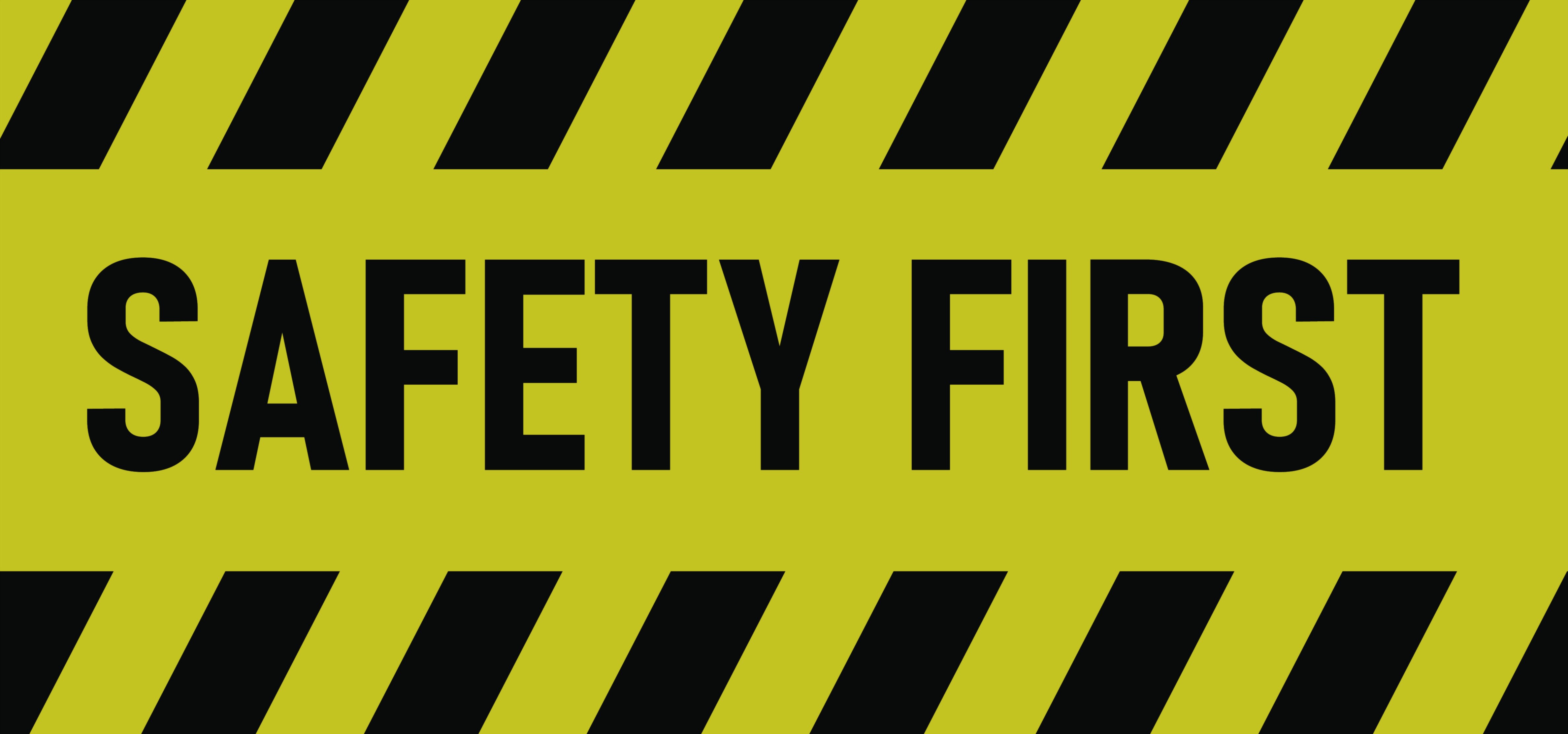
Safety First Awareness Yellow Black Sign Vector Illustration
A Safety First Awareness yellow and black sign, especially when expressed through a sharply rendered vector illustration that uses the high-contrast palette of yellow for alertness and black for authority and precision, stands as one of the most timeless and foundational tools of accident prevention, workplace discipline, and human-centered protection across every environment where risk exists. Although the phrase Safety First appears simple and encouraging, its function reaches far deeper than offering a suggestion or a reminder; it becomes a philosophical anchor that transforms behavior from reactive caution to proactive responsibility. The message tells every individual that no task, deadline, production goal, or moment of urgency outweighs the value of life and wellbeing. The sign communicates that safety is not a final checkpoint after work is complete, but the starting point of all work before anything else begins. When rendered as a vector graphic with crisp lines, bold typography, sharp geometric framing, and clear symbolic cues, it maintains perfect clarity whether displayed on large industrial walls, small equipment decals, digital dashboards, construction site barriers, transport facilities, manufacturing floors, public spaces, schools, warehouses, corporate offices, laboratories, or healthcare environments, ensuring that the message remains visually powerful and psychologically resonant at any scale or distance.
At the deepest level, the Safety First sign shifts human psychology from instinctive task-driven action to conscious awareness. In every setting — from factories and machine shops to hospitals, kitchens, construction sites, chemical storage rooms, transportation zones, and even office environments — accidents most often occur not because people intend harm, but because routine actions dull awareness over time. When tasks become familiar, the brain minimizes perceived risk in an effort to conserve cognitive energy, causing individuals to act on habit rather than attention. Someone may lift heavy loads without bending their knees correctly because they have done it hundreds of times, step near moving equipment because they “know the timing,” skip protective gear because nothing happened last week, or rush through a task because a deadline is approaching. The Safety First sign breaks that dangerous autopilot mode by interrupting routine thought patterns and re-activating awareness: it reminds the mind that familiarity does not erase danger and that every action requires presence of mind, no matter how repetitive the task has become. It encourages internal dialogue before action — “Am I safe?” instead of “I am used to this.”
The sign plays a crucial role in preventing near misses from escalating into real accidents. Most tragedies do not occur randomly; they begin with small deviations in attention that accumulate until the final step becomes catastrophic. A loose screw that is ignored because it “still holds,” a minor spill wiped casually instead of properly cleaned, a missing warning cone left unreplaced, an overloaded outlet used because it “will only be temporary,” or a protective cover removed for “just one moment” may not immediately cause harm, but they plant seeds of danger that grow when combined with circumstances no one planned for. The Safety First sign provides constant reinforcement that safety is not optional or conditional and that the small steps people choose to ignore today often become the causes of tomorrow’s emergencies. It teaches that thinking ahead prevents harm rather than reacting after harm begins, and this proactive mindset protects not only individuals but entire teams and organizations.
The yellow-and-black psychology of the sign is particularly important. Yellow activates the brain’s instinctive alert system, signaling “pay attention,” while black forms an intense visual boundary that communicates seriousness and non-negotiable importance. This pairing triggers attention even subconsciously — someone passing by may not fully read the text, yet their mind will register caution and awareness automatically. The sign therefore works not only at the level of conscious interpretation but also at the deeper neurological level where reflexes, instinct, and perception operate. The bold, direct phrase “Safety First” strengthens this effect by making the instruction unambiguous; it does not say “be careful when necessary,” but rather “before anything else — prioritize safety.” That clarity promotes accountability and responsibility without blame or confrontation.
The sign also carries tremendous emotional value and workplace culture impact, because it conveys care rather than control. When employees, students, visitors, or contractors see the Safety First sign, they receive an implicit affirmation: their wellbeing matters. They are not seen as disposable, replaceable, or secondary to productivity; they are valued human beings whose lives and health are protected. In organizations where pressure, deadlines, and responsibilities run high, this message is psychologically stabilizing because it counters the harmful belief that achieving results is more important than staying safe. When people feel that their safety is respected, morale rises, trust strengthens, and individuals are more likely to speak up when something feels potentially dangerous. In this way, the sign does not merely prevent accidents — it encourages communication, teamwork, and shared protection.
An important dimension of the Safety First sign lies in its ability to prevent interpersonal friction and disciplinary tension by offering a neutral and universal reference of expectation. Without signage, a supervisor stopping a worker to adjust behavior can feel personal or critical, even when the correction is legitimate. With signage in place, instructions are reinforced by an environmental standard rather than individual authority, reducing emotional resistance and ensuring that guidance feels organizational rather than confrontational. It reminds everyone that safety rules exist not because someone is watching, but because they protect every person in the environment, including those enforcing the rules.
Another critical strength of the Safety First sign is its versatility across all types of hazards, not just electrical, mechanical, chemical, biological, or environmental. Safety is relevant in seemingly “safe” environments as well. In offices, ergonomic injuries, eye strain, electrical overloads, and fire emergencies demand awareness. In schools, laboratory practices, sports areas, and traffic movement require precaution. In hospitality environments, wet floors, heat sources, and sharp tools present hazards. The Safety First sign therefore unifies diverse environments under a single principle: risk exists everywhere, and awareness is the first defense, regardless of whether the danger is visible, dramatic, or subtle.
There is also a legal and regulatory dimension embedded in the presence of the sign. Safety frameworks across industries require visible communication that alerts individuals to environmental risks and promotes safe conduct. While the Safety First sign alone does not fulfill every safety requirement, its presence demonstrates commitment to hazard prevention, compliance, and proactive risk mitigation. It communicates to auditors, clients, regulatory inspectors, employees, and the public that the organization recognizes its duty of care. Where incident investigations occur, posted signage provides evidence that individuals were informed and that safety expectations were clearly communicated.
The vector format multiplies the effectiveness of the sign by ensuring that it never loses clarity no matter how it is deployed. Scaling a raster image can cause pixelation or blur, weakening the authority and instant recognition that safety messaging demands. Vector artwork, however, maintains mathematically perfect edges, ensuring that triangle borders, hazard iconography, and bold typography remain crisp whether the sign is reproduced on a small instrument panel sticker or a giant warehouse banner. This crispness allows recognition even from partial glimpses, such as seeing only the border while turning a corner — a moment where milliseconds of awareness can prevent injury.
Beyond external impact, the Safety First sign reinforces an internal philosophy of prevention and accountability. It communicates that safety is not merely a workplace requirement but a personal responsibility shared by every individual present — whether employee, student, technician, contractor, or guest. It teaches that safety culture is built not through fear or enforcement but through awareness, mindfulness, and respect for oneself and others. It ensures that no individual feels alone in safety decisions; the environment itself reminds them that protecting their wellbeing is expected and supported.
In essence, the Safety First Awareness Yellow Black Sign Vector Illustration is much more than a label or a graphic — it is a silent instructor, a guardian of wellbeing, and a constant reminder that human life is irreplaceable. It prevents accidents before they begin, protects productivity without sacrifice, reinforces responsibility without shame, and builds environments where people care for one another not because they are forced to, but because they understand their shared humanity. Through its sharp visual clarity, its psychological influence, and its ethical message, the sign stands as one of the simplest and most powerful tools for creating safer, more mindful, and more respectful spaces everywhere it appears.