Aadhaar Card Demo — Identity Verification and Biometric Authentication in India
Understanding the Purpose and Foundation of the Aadhaar System
The Aadhaar system represents one of the largest and most complex identity verification frameworks ever developed, designed to provide every resident of India with a unique, secure, and universally accepted form of identification. Administered by the Unique Identification Authority of India (UIDAI), Aadhaar assigns a twelve-digit identification number to individuals after collecting their demographic and biometric information. This number does not express citizenship or legal status but instead serves as a foundational digital identity that can be verified anywhere in the country. A demo Aadhaar illustration usually visualizes the layout of the card, the security features, and the various elements that together form a robust identity reference for both government and private sector transactions. At its core, Aadhaar was created to streamline welfare delivery, reduce identity fraud, and simplify access to services by connecting residents to a centralized, reliable database. Its digital-first approach modernizes India’s identity ecosystem, giving millions of people—particularly those with limited documentation—an accessible tool for authentication and official recognition.
Structure of the Aadhaar Card and the Information It Contains
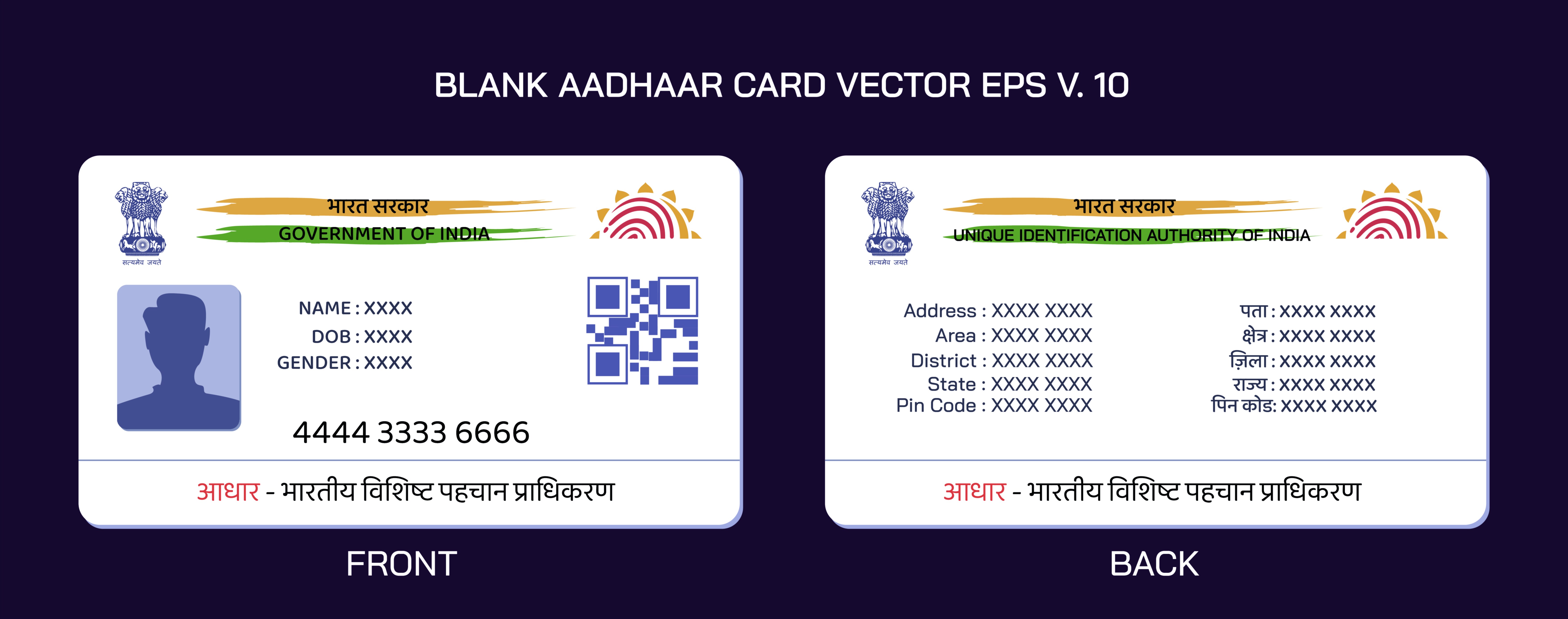
A typical Aadhaar card contains several key components that ensure both identity clarity and protection against misuse. The card features the individual’s name, photograph, twelve-digit Aadhaar number, and a QR code that encapsulates encoded demographic details for quick scanning and authentication. The reverse side includes additional information such as the registered address, gender, and year of birth. The QR code serves as a critical security element by allowing authorities or institutions to instantly verify the authenticity of the Aadhaar holder’s details without relying on a printed card alone. This layered design ensures that even if visual elements are altered, the cryptographically secure information embedded digitally remains reliable. A demo illustration of the Aadhaar card often highlights placement of these elements, showing how the layout is standardized nationwide for consistency. Importantly, the Aadhaar card itself is only a physical representation; the digital identity stored within UIDAI systems is what truly powers authentication processes across India.
Biometric and Demographic Data: The Core of Aadhaar Authentication
Aadhaar’s strength lies in its use of biometric data, which makes it extremely difficult to forge or duplicate. UIDAI collects fingerprints, iris scans, and facial photographs along with essential demographic details such as name, date of birth or year of birth, address, and gender. These biometrics create a unique physical identity signature for each individual, preventing duplication or multiple registrations. When authentication is performed—such as at a bank, welfare distribution center, or digital service portal—the system cross-checks the submitted biometric or OTP-based credentials with UIDAI’s database in real time. This ensures that the person presenting the Aadhaar number is genuinely the individual to whom it belongs. Biometric authentication also plays a critical role in welfare programs like public distribution systems, LPG subsidy verification, and benefit transfers, where accurate identification is necessary to prevent leakages or fraud. The resilience and precision of Aadhaar’s biometric system allow it to serve as a dependable digital backbone for countless identity-dependent services across India.
Digital Aadhaar, e-KYC, and the Evolution of Paperless Verification
The Aadhaar framework enables electronic identity verification through e-KYC (electronic Know Your Customer), a process that digitally validates an individual’s identity without the need for physical documents. When a person grants consent, institutions such as banks, telecom operators, or government departments can verify the individual’s demographic and biometric data directly with UIDAI’s secure servers. This drastically reduces paperwork, speeds up onboarding procedures, and ensures that identity-based fraud is minimized. The introduction of Aadhaar Virtual ID (VID) and masked Aadhaar further enhances user privacy by limiting the disclosure of the full Aadhaar number. Digital Aadhaar files—available as e-Aadhaar downloads—carry the same validity as the physical card and contain secure QR codes supported by advanced encryption. These innovations demonstrate how Aadhaar has shifted identity verification from a paper-heavy, slow process to a fast, secure, and digitally empowered ecosystem.
Role of Aadhaar in Governance, Public Services, and Financial Inclusion
Aadhaar has transformed the delivery of public services in India by linking residents directly to welfare schemes and essential programs. Through Aadhaar-seeded bank accounts, subsidies and benefits can be deposited directly into beneficiaries’ accounts via the Direct Benefit Transfer (DBT) system, ensuring transparency and preventing intermediaries from misusing funds. Aadhaar authentication streamlines processes in healthcare systems, insurance enrollment, pension verification, and educational admissions. In financial services, Aadhaar accelerates account opening, mobile wallet registration, and digital payment onboarding, helping millions of people gain access to formal banking structures. These developments play an essential role in promoting financial inclusion, particularly in rural and underserved regions. Because Aadhaar simplifies identity verification, it eliminates the need for residents to manage multiple documents, making interactions with both government and private services more accessible and efficient.
Privacy, Security, and Ethical Considerations in Aadhaar Usage
While Aadhaar offers expansive benefits, its deployment also raises important questions around data privacy, consent, and secure handling of personal information. UIDAI enforces stringent encryption protocols, audit trails, and access controls to ensure that Aadhaar data remains secure. Authentication transactions do not reveal stored biometric details; instead, they operate through encrypted matching processes that preserve user confidentiality. Legislation and guidelines regulate where Aadhaar can be requested, making it voluntary for many private services and mandatory only for specific government programs where identity verification is essential. Users are also encouraged to use Virtual IDs and masked Aadhaar formats to minimize exposure of their full identification number. Responsible use, transparency, and adequate technological safeguards ensure that Aadhaar remains a powerful but secure tool for identity management.
Illustrating Aadhaar Card Design and Authentication Workflow
A vector illustration of the Aadhaar system typically depicts the card layout, highlighting the unique number, photo, and QR code. Additional visuals often show biometric authentication steps—such as fingerprint scans, iris recognition, or OTP verification—to explain how identity is confirmed. Diagrams may represent digital Aadhaar, e-KYC workflows, secure servers, encrypted data transfers, and service authentication points across banks, telecom centers, or government offices. These illustrations help users understand how Aadhaar functions at both physical and digital levels, demonstrating the interconnected system that supports identity verification and service delivery throughout India.