Sugarcane, scientifically known as Saccharum officinarum, is one of the most important commercial crops cultivated across tropical and subtropical regions of the world. It belongs to the grass family and is grown primarily for its sweet, juice-filled stalks, which serve as the raw material for sugar, jaggery, ethanol, and several industrial byproducts. The global importance of sugarcane lies in its ability to support food systems, energy production, and rural economies on a massive scale.
Sugarcane farming begins with vegetative planting rather than seed sowing. Healthy stem cuttings, commonly called setts, are selected from mature canes with good juice quality and disease resistance. These setts are placed in prepared fields where soil is loosened and leveled to ensure proper root establishment and water distribution. Good land preparation allows uniform sprouting and strong early growth, which are essential for high yields.
Soil plays a critical role in sugarcane cultivation. The crop performs best in deep, fertile soils with good water-holding capacity. Loamy soils enriched with organic matter support vigorous root development and sustained nutrient uptake. While sugarcane can tolerate a range of soil types, poorly drained or excessively sandy soils limit growth and reduce juice content.
Climate requirements for sugarcane are specific and influential. The crop thrives in warm regions with long sunshine hours that promote photosynthesis and sugar accumulation. Moderate to high rainfall supports vegetative growth, while dry periods before harvest help concentrate sucrose in the stalks. Sugarcane is sensitive to frost, making tropical and subtropical zones ideal for cultivation.
Irrigation management is essential throughout the growing cycle. Sugarcane has high water requirements, particularly during early growth and stalk elongation stages. Traditional irrigation channels, along with modern drip systems, are used to maintain consistent moisture levels. Balanced irrigation prevents water stress while avoiding excessive saturation that could damage roots.
Sugarcane cultivation is a long-duration process, often extending over several months. After initial harvest, ratoon cropping allows regrowth from the remaining root system, reducing planting costs and saving time. This practice enhances farm efficiency and improves land utilization when managed properly.
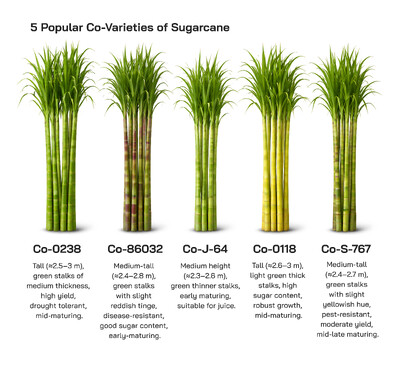
There are several sugarcane types cultivated globally, classified based on maturity duration, stalk thickness, juice quality, and resistance traits. Early-maturing types are harvested sooner, while mid-season and late varieties provide flexibility in supply. Varietal selection depends on climate, soil condition, and industrial requirements.
Harvesting is carried out when stalks reach peak sucrose concentration. Harvest methods range from manual cutting to mechanical harvesting depending on scale and region. Timely harvesting ensures maximum sugar recovery and quality. After harvest, canes are transported quickly to processing units to prevent sugar loss.
The primary use of sugarcane is sugar production. Cane juice is extracted and processed into refined sugar or traditional sweeteners like jaggery. Beyond food use, sugarcane plays a vital role in bioenergy production. Ethanol derived from sugarcane is widely used as a renewable fuel alternative.
Sugarcane byproducts add further value. Molasses is used in food processing and fermentation industries. Bagasse, the fibrous residue after juice extraction, is utilized for power generation, paper manufacturing, and biodegradable packaging. Sugarcane tops and residues are also used as animal fodder, supporting livestock systems.
Globally, sugarcane farming supports millions of livelihoods. It is a cornerstone of rural employment and contributes significantly to national economies in producing countries. Sugarcane is a major commodity in global trade, with high demand driven by food, fuel, and industrial sectors.
The popularity of sugarcane continues due to its versatility and efficiency. Few crops match its ability to produce multiple valuable products from a single harvest. As demand for renewable energy and sustainable resources grows, sugarcane’s role in global agriculture becomes even more important.
Sugarcane cultivation also involves careful management of crop spacing and row orientation, which significantly influence sunlight interception and air circulation within fields. Wider spacing allows robust tiller development and reduces competition for nutrients, while proper row alignment maximizes exposure to sunlight throughout the day. These structural decisions affect stalk thickness and internode length, both of which are closely linked to juice volume and processing efficiency. Farmers often adapt spacing practices to local soil fertility and rainfall patterns to balance yield and resource use.
An important yet less discussed aspect of sugarcane farming is root system dynamics. Sugarcane develops a dense fibrous root network that anchors plants firmly and supports high biomass production. As the crop matures, roots penetrate deeper soil layers, enhancing access to moisture and nutrients. This extensive root system improves soil structure over time by increasing porosity and organic matter content, especially when crop residues are incorporated back into the field after harvest.
Sugarcane responds strongly to nutrient timing rather than just nutrient quantity. The crop requires different nutrient balances at various growth stages, with early growth favoring vegetative development and later stages focusing on sucrose accumulation. Strategic nutrient application aligned with growth phases improves efficiency and reduces wastage. This stage-specific approach supports higher sugar recovery while minimizing environmental impact.
Crop longevity and productivity are also influenced by ratoon management techniques. Proper cutting height during harvest ensures healthy regrowth from underground buds. Well-managed ratoon crops often yield nearly as much as planted crops while significantly reducing input costs. However, careful field sanitation and soil care are required to prevent yield decline across successive ratoons.
Sugarcane cultivation adapts well to mechanization where terrain permits. Mechanized planting and harvesting reduce labor dependency and improve operational efficiency in large-scale farms. In contrast, smallholder systems often rely on manual practices that allow precise field management and selective harvesting. This adaptability across scales has contributed to sugarcane’s widespread adoption in diverse agricultural economies.
Climate resilience is another emerging dimension of sugarcane farming. While traditionally associated with stable tropical climates, sugarcane varieties are increasingly being developed to tolerate temperature fluctuations and irregular rainfall. These adaptive traits help maintain productivity in regions facing climate variability. Sugarcane’s ability to recover from short-term stress further enhances its reliability as a long-duration crop.
Beyond conventional uses, sugarcane is gaining prominence in sustainable materials research. Fibers derived from bagasse are being explored for biodegradable composites, construction panels, and eco-friendly packaging. These innovations extend sugarcane’s relevance into modern industries seeking renewable raw materials, reinforcing its role beyond traditional agriculture.
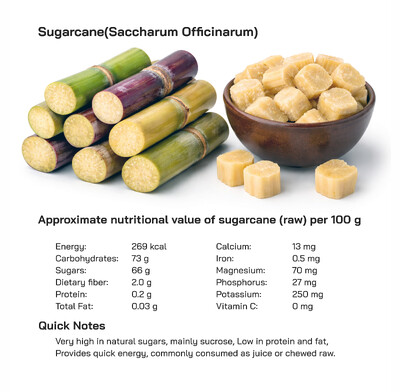
Sugarcane juice itself holds cultural and nutritional significance in many regions. Fresh juice consumption provides quick energy and hydration, especially in warm climates. Traditional beverages made from sugarcane juice reflect regional tastes and seasonal consumption patterns, highlighting the crop’s integration into daily life beyond industrial processing.
Globally, sugarcane farming systems often shape entire rural landscapes and economies. Infrastructure such as mills, transport networks, and irrigation systems develops around sugarcane zones, creating interconnected agricultural hubs. These systems generate employment not only in farming but also in processing, logistics, and allied industries, amplifying sugarcane’s socio-economic impact.
Environmental management within sugarcane fields has gained increasing attention. Practices such as residue mulching, reduced burning, and efficient water use help lower environmental footprints. When managed responsibly, sugarcane fields can support soil conservation and carbon sequestration, aligning production with sustainability goals.
Sugarcane’s global popularity is also driven by its unmatched productivity. Few crops produce as much usable biomass per unit area. This efficiency supports high output even where land availability is limited, making sugarcane a strategic crop for meeting growing global demand for food and energy.
In international markets, sugarcane products influence trade policies and energy strategies. Ethanol blending mandates, renewable energy targets, and sugar trade agreements all shape sugarcane cultivation trends. These global linkages ensure that sugarcane remains a central crop in discussions on food security and sustainable energy.
Sugarcane farming systems also involve careful management of crop maturity across large areas to ensure a continuous and efficient supply to processing units. Because sugarcane quality declines after harvest due to sucrose inversion, harvest scheduling is planned with precision. Fields are often divided into harvest blocks based on planting dates, growth rate, and expected maturity. This staggered harvesting strategy ensures that mills receive fresh cane consistently, maximizing sugar recovery and reducing post-harvest losses.
Another distinctive feature of sugarcane agriculture is its strong interaction with local water landscapes. In many regions, canal networks, reservoirs, and river-based irrigation systems have historically evolved around sugarcane cultivation. These systems influence cropping calendars, settlement patterns, and regional water governance. Sugarcane thus shapes not only farmland but also broader agricultural infrastructure, creating long-term dependencies between crop production and water management.
Sugarcane’s role in crop diversification is often underestimated. In rotation systems, sugarcane acts as a stabilizing crop due to its long growth cycle and soil-covering canopy. When integrated thoughtfully, it reduces erosion, suppresses weeds, and improves soil organic matter through root turnover and residue incorporation. After cane cycles, soils are often more structured and suitable for subsequent crops, provided nutrient balance is restored.
The crop’s physiology also supports high photosynthetic efficiency. Sugarcane uses a specialized photosynthetic pathway that allows it to convert sunlight into biomass more efficiently under high light and temperature conditions. This biological advantage explains its exceptional biomass productivity and its suitability for bioenergy applications. Few crops can match sugarcane’s ability to transform solar energy into usable plant material on such a large scale.
In terms of plant architecture, sugarcane stalks are composed of repeated nodes and internodes that act as storage compartments for sucrose. As the plant matures, sugar accumulation shifts from growth tissues toward storage within the internodes. This internal redistribution is influenced by environmental cues such as day length, temperature variation, and moisture availability. Understanding these physiological triggers helps farmers and researchers optimize harvest timing for maximum sugar concentration.
Sugarcane cultivation also supports significant technological innovation. Precision agriculture tools are increasingly used to monitor crop health, soil moisture, and nutrient status. Remote sensing and field sensors help identify stress zones early, allowing targeted intervention rather than uniform input application. These technologies improve efficiency, reduce costs, and minimize environmental impact, particularly in large-scale plantations.
Labor dynamics in sugarcane farming reflect regional socio-economic structures. In some regions, sugarcane remains a labor-intensive crop that supports seasonal employment for large populations. In others, mechanization has transformed labor needs, shifting demand toward skilled machine operators and technicians. This flexibility across labor models has helped sugarcane remain viable under diverse economic conditions.
Sugarcane also plays a role in integrated energy systems. Many sugar mills operate cogeneration plants that use bagasse to produce electricity, supplying both internal energy needs and surplus power to local grids. This closed-loop energy model reduces reliance on external fuels and lowers production costs. It also positions sugarcane as a contributor to renewable energy portfolios in producing countries.
The environmental footprint of sugarcane is increasingly shaped by management choices rather than the crop itself. Practices such as green harvesting, where cane is cut without burning leaves, reduce air pollution and retain organic matter on fields. Mulching with crop residues improves moisture retention and soil health. These practices demonstrate how sugarcane cultivation can evolve toward more environmentally responsible models.
Culturally, sugarcane holds symbolic value in many societies. It is often associated with prosperity, sweetness, and celebration. Sugarcane stalks and products are used in festivals, rituals, and traditional ceremonies, reflecting its deep integration into social life. This cultural importance reinforces its continued cultivation beyond purely economic considerations.
In global dietary patterns, sugarcane-derived products occupy a central yet evolving position. While refined sugar consumption is increasingly scrutinized, traditional sweeteners and minimally processed cane products continue to hold cultural and culinary relevance. At the same time, non-food uses such as biofuels and bioplastics are expanding sugarcane’s role beyond direct consumption.
Research into sugarcane genetics and breeding continues to expand its potential. Efforts focus on improving stress tolerance, water-use efficiency, and disease resistance while maintaining high sucrose content. These advancements aim to ensure stable yields under changing climate conditions and resource constraints. Improved varieties help farmers adapt without fundamentally altering established farming systems.
Sugarcane also contributes to regional identity in major producing countries. Entire regions are recognized globally for their sugarcane landscapes and industries. These identities influence trade, tourism, and local pride, reinforcing sugarcane’s status as more than just a crop. It becomes a defining feature of agricultural heritage.
From a sustainability perspective, sugarcane’s future lies in balance rather than expansion alone. Optimizing existing production through efficiency, waste utilization, and environmental care offers greater long-term benefits than unchecked area growth. Integrated approaches that link food, energy, and material production from sugarcane demonstrate how a single crop can support multiple societal needs.
In essence, sugarcane represents an agricultural system rather than merely a plant. Its cultivation integrates soil science, climate interaction, water management, industrial processing, and socio-economic networks. The crop’s ability to generate food, fuel, fiber, and energy from a single biological system makes it uniquely valuable in a resource-conscious world. As global challenges increasingly demand efficiency and resilience, sugarcane continues to evolve, maintaining its position as one of the most influential crops in tropical and subtropical agriculture worldwide.
Ultimately, sugarcane represents a crop where biological efficiency meets economic versatility. Its farming practices evolve continuously to match technological advancement and environmental needs. With its capacity to generate food, fuel, fiber, and income, sugarcane remains a cornerstone of tropical agriculture. As global priorities increasingly emphasize renewable resources and resilient farming systems, Saccharum officinarum continues to stand out as a crop of enduring importance and expanding potential.
In summary, sugarcane (Saccharum officinarum) is a high-value tropical crop cultivated through well-managed farming practices supported by suitable climate, fertile soil, and reliable irrigation. Its diverse types, wide-ranging uses, and global popularity make it one of the most significant crops in modern agriculture, linking food production, energy generation, and economic development worldwide.