The Common Kestrel is one of the most familiar and widely distributed falcons across Europe, Asia, and parts of Africa. Scientifically identified as Falco tinnunculus, this small bird of prey is renowned for its distinctive hovering behavior, adaptability to diverse environments, and important role in natural pest control. Its visibility in both rural and urban landscapes has made it one of the best-known raptors among the general public.
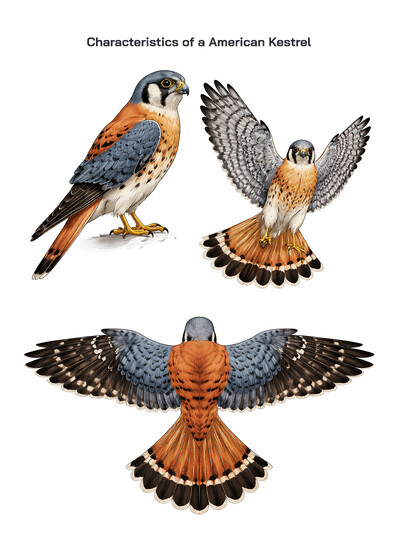
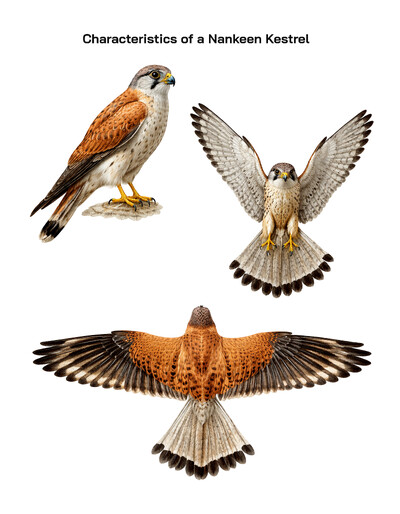
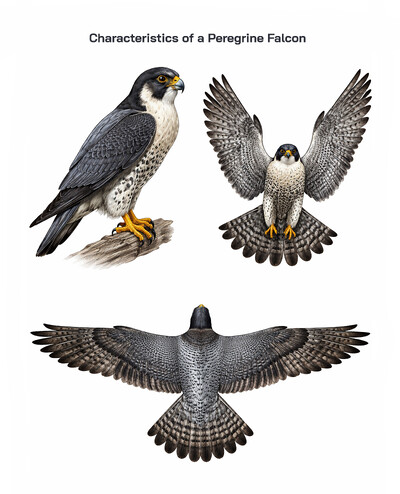
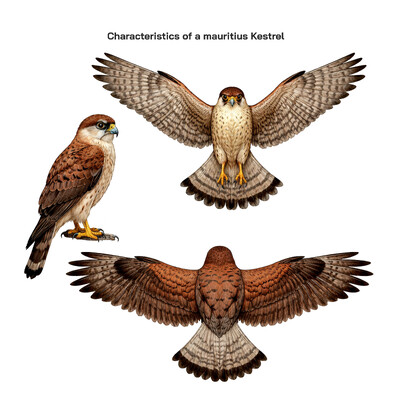
In physical characteristics, the Common Kestrel is a small and lightly built falcon with a streamlined body designed for agility rather than brute force. Its wings are long, narrow, and pointed, enabling precise control during flight. The tail is relatively long and often fanned during hovering, acting as a stabilizing surface that allows the bird to remain almost stationary in the air. This unique flight posture is one of the defining visual traits of the species.
Plumage in the Common Kestrel shows clear sexual dimorphism. Males typically have a gray head and tail with a contrasting rufous back marked by dark spotting. Females are more uniformly brown with heavier barring across the back and tail, providing effective camouflage. Both sexes display facial markings that enhance their alert and focused appearance. These coloration patterns help the kestrel blend into open landscapes while remaining highly visible during flight.
The head of the Common Kestrel is compact, equipped with a sharply hooked beak adapted for killing and tearing prey. Its talons are strong relative to its size, allowing it to grip small mammals and insects securely. One of the most remarkable characteristics of the Common Kestrel is its exceptional eyesight. In addition to sharp vision, it is capable of detecting ultraviolet light, which helps locate rodent trails and urine markings on the ground.
Behaviorally, the Common Kestrel is best known for its hovering hunting technique. By facing into the wind and rapidly beating its wings, the kestrel maintains a fixed position in the air while scanning the ground below. Once prey is detected, it drops swiftly in a controlled descent to capture it. This method is especially effective in open habitats where vegetation is low and prey movement is easily visible.
The diet of the Common Kestrel is varied and opportunistic, though small mammals such as mice and voles form a major portion of its food intake. Insects, including grasshoppers and beetles, are also consumed, particularly during warmer months. Occasionally, the kestrel may take small birds or reptiles depending on availability. This flexible diet allows the species to survive in changing environments and seasonal conditions.
Habitat preference is closely linked to open and semi-open landscapes. Common Kestrels are frequently found in grasslands, farmlands, agricultural fields, and open countryside. They have also adapted well to human-modified environments and are often seen along roadsides, perched on fence posts, poles, or wires. This adaptability has contributed significantly to their wide geographic range.
Unlike some social falcons, the Common Kestrel is generally a solitary hunter. It maintains individual hunting territories, particularly during the breeding season. Territorial behavior ensures adequate food availability and reduces competition with other raptors. Outside the breeding period, individuals may tolerate closer proximity but still prefer independent foraging.
Breeding behavior in the Common Kestrel is relatively simple. Rather than constructing elaborate nests, the species typically uses existing cavities such as cliff ledges, tree hollows, old nests of other birds, or crevices in buildings. This nesting flexibility allows kestrels to exploit a wide range of environments, including urban structures.
During the breeding season, the female is primarily responsible for incubating the eggs, while the male supplies food. After hatching, both parents participate in feeding and protecting the chicks. Juveniles grow rapidly and develop flight skills within a short period. Once fledged, young kestrels gradually learn to hunt independently before dispersing.
Migration patterns vary across the species’ range. Some Common Kestrel populations are migratory, especially those breeding in colder regions, while others remain resident year-round in milder climates. This partial migration strategy allows the species to respond flexibly to environmental conditions and food availability.
Ecologically, the Common Kestrel plays a vital role in maintaining ecosystem balance. By controlling populations of rodents and insects, it provides natural pest regulation that benefits agriculture and reduces the need for chemical control methods. Its presence is often considered an indicator of healthy open habitats.
From a conservation perspective, the Common Kestrel is currently widespread, but local population trends can vary. Habitat loss, agricultural intensification, and changes in prey availability can affect numbers in certain regions. Ongoing monitoring and habitat-friendly land management practices are important for maintaining stable populations.
Beyond its visible hunting behavior, the Common Kestrel exhibits a range of subtle physiological and ecological adaptations that contribute to its long-term success. One such adaptation is its efficient energy management. Hovering is an energetically demanding activity, yet the kestrel minimizes energy loss by exploiting wind currents and adjusting wingbeat frequency with remarkable precision. Studies have shown that kestrels alter their hovering strategy depending on wind strength, often reducing effort by gliding briefly when conditions allow. This fine-tuned balance between effort and efficiency enables sustained hunting even when prey density is low.
The skeletal and muscular structure of the Common Kestrel further supports its specialized flight style. Lightweight bones, combined with strong flight muscles, allow rapid wing movements without excessive fatigue. The shoulder joints and wing articulation provide flexibility that supports both hovering and fast directional changes during pursuit. This versatility in flight mechanics allows the kestrel to transition seamlessly between scanning, hovering, and diving within seconds, giving it a distinct advantage in open habitats.
Another important but less visible aspect of kestrel ecology is its relationship with agricultural landscapes. Traditional low-intensity farming practices tend to support higher kestrel densities by maintaining abundant prey populations and suitable hunting grounds. Field margins, hedgerows, and fallow land provide shelter for rodents and insects, indirectly sustaining kestrel populations. Conversely, large-scale monoculture farming and heavy pesticide use can reduce prey availability, demonstrating how closely kestrel success is tied to land-use patterns.
The Common Kestrel also shows notable behavioral flexibility in prey selection and hunting timing. In areas where rodents are scarce, kestrels may shift their activity patterns to focus more heavily on insects or adjust hunting times to coincide with peak prey movement. This temporal flexibility allows them to exploit different ecological niches without needing to relocate. Such behavioral plasticity is a key reason the species has remained widespread despite environmental change.
Communication in the Common Kestrel is another area of interest. While generally quiet compared to some raptors, kestrels use a variety of calls during courtship, territorial defense, and parent-offspring interaction. These vocalizations help maintain pair bonds and coordinate feeding during the breeding season. Juveniles also use vocal cues to solicit food, gradually reducing dependence as they develop hunting skills.
Genetic studies of Falco tinnunculus populations reveal a high degree of connectivity across large regions. Although some populations are migratory and others resident, gene flow between groups remains relatively strong. This genetic exchange enhances resilience by maintaining diversity, allowing populations to adapt to changing environmental pressures such as climate variation or shifting prey dynamics.
Parasites and diseases form another layer of ecological interaction. Like many birds of prey, kestrels host a variety of ectoparasites and internal parasites. Healthy individuals typically tolerate low parasite loads without significant impact, but stress factors such as food shortage or habitat disturbance can increase susceptibility. Monitoring parasite prevalence in kestrel populations provides valuable insight into overall ecosystem health and environmental stress levels.
Climate change is expected to influence the Common Kestrel in complex ways. Warmer temperatures may expand suitable habitats northward, potentially benefiting some populations. However, altered rainfall patterns and extreme weather events can disrupt prey cycles and breeding success. Early breeding triggered by warmer springs may lead to mismatches between chick-rearing periods and peak prey availability, creating new challenges even in regions where kestrels are currently stable.
Urban ecology has become an increasingly important aspect of kestrel research. In cities, kestrels often exploit artificial structures such as towers and high-rise buildings for nesting and perching. Urban prey, including small birds and insects attracted to lights, can supplement traditional food sources. While urban living exposes kestrels to risks such as collisions and pollution, it also demonstrates their remarkable ability to integrate into human-dominated environments.
Long-term monitoring programs have highlighted the value of the Common Kestrel as a bioindicator species. Changes in kestrel abundance, breeding success, or diet composition often reflect broader environmental trends affecting farmland and open ecosystems. Because kestrels occupy a relatively high position in the food chain, their health provides insight into the cumulative effects of environmental change across multiple trophic levels.
In educational and conservation outreach, the Common Kestrel plays an important role due to its visibility and approachable size. Nest box programs and citizen science initiatives have increased public engagement with raptor conservation, allowing people to observe breeding behavior responsibly and contribute valuable data. These initiatives not only support kestrel populations but also foster broader awareness of biodiversity and ecosystem balance.
From an evolutionary perspective, the Common Kestrel represents a successful generalist strategy within the falcon lineage. Rather than specializing narrowly, it combines moderate size, flexible diet, and adaptable behavior to exploit a wide range of environments. This balance between specialization and adaptability has allowed the species to persist through historical environmental shifts and continue thriving in the modern world.
Culturally, the Common Kestrel has long been associated with open landscapes and rural life. Its hovering silhouette against the sky is a familiar sight and has inspired both scientific interest and public appreciation. Its visibility makes it an effective ambassador species for raising awareness about raptor conservation.
Ultimately, the Common Kestrel’s significance extends beyond its striking flight and hunting behavior. It embodies the intricate connections between predator, prey, landscape, and human activity. By studying and conserving this species, researchers and conservationists gain insight into the health of open ecosystems and the subtle processes that sustain them. The kestrel’s continued presence across continents serves as a reminder that adaptability, efficiency, and ecological balance remain central to survival in a rapidly changing environment.
One of the lesser-discussed aspects of the Common Kestrel’s life history is its longevity and survival strategy. While many individuals live relatively short lives due to predation, accidents, or food shortages, some kestrels are capable of surviving well over a decade in favorable conditions. Longevity is closely linked to experience; older birds often become more efficient hunters and better at selecting safe roosting and nesting sites. This accumulated experience can significantly improve lifetime reproductive success, demonstrating that survival skills play as important a role as physical traits.
The molting process of the Common Kestrel is another critical but often overlooked component of its annual cycle. Molting involves the gradual replacement of worn feathers, which is essential for maintaining optimal flight performance. This process is energetically demanding and usually timed to avoid overlap with breeding or migration. A well-timed and complete molt ensures that wing and tail feathers remain structurally sound, preserving the aerodynamic precision required for hovering and controlled dives.
Seasonal behavior in kestrels also includes changes in daily activity patterns. During colder months or periods of low prey availability, kestrels may reduce hunting time and conserve energy by perching for extended periods. In warmer seasons with abundant prey, they become more active, hunting frequently and over wider areas. This ability to modulate effort based on environmental conditions highlights a refined balance between energy expenditure and survival.
The Common Kestrel’s interactions with other bird species add another layer of ecological complexity. It often shares habitats with larger raptors, corvids, and scavengers. While direct competition is usually limited due to differences in prey size and hunting methods, kestrels must remain vigilant to avoid kleptoparasitism or aggression. In some cases, kestrels benefit indirectly from the presence of other predators that flush prey into the open, creating opportunistic feeding moments.
Territory quality has a strong influence on breeding outcomes. Territories with a mix of open hunting grounds, suitable perches, and safe nesting sites tend to support higher chick survival rates. Kestrels occupying poorer territories may experience delayed breeding, smaller clutches, or reduced fledgling success. This sensitivity to territory quality makes them responsive to subtle landscape changes, even when habitats appear superficially intact.
Juvenile development in the Common Kestrel involves a critical learning phase that extends beyond initial independence. After fledging, young kestrels spend weeks refining flight control, prey detection, and strike accuracy. Early hunting attempts are often inefficient, with a high failure rate. Gradual improvement comes through repetition and observation, underscoring the importance of this post-fledging period for long-term survival.
Physiological stress responses also shape kestrel behavior. Environmental stressors such as prolonged bad weather, food scarcity, or human disturbance can elevate stress hormone levels, affecting reproduction and immune function. Chronic stress may reduce breeding success even when food appears sufficient. Researchers studying these stress responses gain insight into how environmental pressures translate into population-level effects.
The role of the Common Kestrel in traditional landscapes extends into historical human–wildlife relationships. In many regions, kestrels were tolerated or even encouraged due to their role in controlling rodent populations. Unlike larger raptors that were sometimes persecuted, kestrels often coexisted closely with farming communities. This historical tolerance has influenced their continued presence in human-dominated landscapes.
Technological advances have improved understanding of Falco tinnunculus movement and behavior. Lightweight tracking devices and GPS tags now allow researchers to study fine-scale movements, hunting ranges, and seasonal dispersal patterns. These data reveal that even resident kestrels may adjust their home ranges dynamically in response to prey availability, weather, and competition.
Noise and light pollution represent emerging challenges, particularly in urban and suburban environments. Artificial lighting can alter prey behavior and disrupt natural hunting rhythms, while constant noise may interfere with communication and stress regulation. Although kestrels show some tolerance to these disturbances, long-term exposure may influence breeding success and habitat selection in ways that are only beginning to be understood.
The Common Kestrel also serves as a valuable model species in behavioral and ecological research. Its accessibility, visibility, and adaptability make it suitable for long-term observation and experimental studies. Findings from kestrel research often inform broader theories about predator–prey dynamics, habitat use, and behavioral adaptation in raptors and other predatory birds.
In conservation planning, kestrels benefit indirectly from measures aimed at protecting wider biodiversity. Initiatives such as maintaining grassland mosaics, reducing pesticide use, and preserving traditional farming elements support not only kestrels but entire ecological communities. This umbrella effect means that conserving kestrel-friendly habitats often yields broader environmental benefits.
Finally, the enduring success of the Common Kestrel illustrates a key principle of evolution: flexibility often outweighs specialization. By combining efficient hunting, behavioral adaptability, and tolerance of human-altered landscapes, the species has secured a stable position across vast regions. Its continued presence offers insight into how wildlife can persist alongside human development when ecological balance is respected.
In conclusion, the Common Kestrel is characterized by its slender build, distinctive hovering flight, keen eyesight, and adaptability to a wide range of environments. Its efficient hunting strategies, flexible diet, and important ecological role make it one of the most successful and recognizable falcons in the world. Through its presence in both natural and human-altered landscapes, the Common Kestrel continues to demonstrate resilience, balance, and ecological value across its vast range.