The lesser kestrel is a small, elegant falcon that stands out for its social behavior, long-distance migration, and strong association with open landscapes. Scientifically identified as Falco naumanni, the lesser kestrel is closely related to other kestrel species but differs in several important physical, behavioral, and ecological characteristics. It is widely distributed across parts of southern Europe, North Africa, Central Asia, and Africa during different seasons, reflecting a highly mobile and adaptable lifestyle.
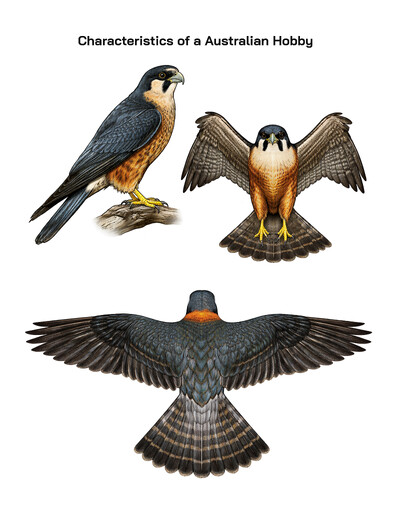
In terms of physical characteristics, the lesser kestrel has a slender and lightweight body designed for efficient flight rather than brute strength. Its build allows it to remain airborne for extended periods with minimal energy expenditure. The wings are long and narrow, supporting agile flight and effective hovering, while the tail is elongated and helps maintain balance during aerial maneuvers. Compared to larger falcons, the lesser kestrel appears more delicate, yet its flight control is exceptionally refined.
Plumage in the lesser kestrel is soft-toned and less boldly marked than that of some related species. Males typically display a gray crown and head, a chestnut-colored back, and pale underparts with minimal spotting. Females and juveniles show more muted brown tones with subtle streaking, providing camouflage in grassland and agricultural settings. This sexual dimorphism is noticeable and plays a role in field identification. The overall coloration blends well with dry landscapes and open terrain.
The head of the lesser kestrel is compact, fitted with a small but sharply curved beak suitable for handling insects and small prey. Its talons are relatively fine compared to those of bird-hunting falcons, reflecting its diet specialization. Vision is highly developed, allowing the bird to detect small insects from above while hovering or gliding slowly over fields.
One of the most distinctive behavioral characteristics of the lesser kestrel is its feeding strategy. Unlike many falcons that primarily hunt birds or mammals, the lesser kestrel is an insect specialist. Its diet consists largely of grasshoppers, locusts, beetles, and other large insects. This diet shifts slightly with seasonal availability, but insects remain the primary food source. The falcon often hunts by hovering into the wind, scanning the ground before dropping gently to capture prey.
This insect-based feeding behavior gives the lesser kestrel an important ecological role. By consuming large numbers of agricultural pests, it provides natural pest regulation in farmlands and grasslands. This service benefits crop production and helps maintain ecological balance without chemical intervention.
Habitat preference is closely tied to open environments. Lesser kestrels favor grasslands, steppes, semi-arid plains, and agricultural fields where insects are abundant and visibility is high. They avoid dense forests and mountainous terrain, instead selecting landscapes that support low vegetation and open ground. Warm climates are particularly important, as insect availability directly affects survival and breeding success.
Social behavior sets the lesser kestrel apart from many other falcons. It is a highly social species that often nests in colonies rather than as isolated pairs. These colonies may form in natural cavities, cliff holes, old buildings, roof spaces, or other man-made structures. Colonial nesting provides advantages such as shared vigilance against predators and improved breeding success in suitable habitats.
During the breeding season, pairs form within colonies, and nesting sites are reused year after year if conditions remain favorable. Both adults participate in incubation and chick rearing. Eggs are laid in simple cavities without elaborate nest construction. After hatching, chicks grow rapidly and are fed primarily on insects brought by both parents.
Juvenile lesser kestrels develop flight skills and hunting efficiency within a relatively short time. After fledging, young birds gradually disperse from breeding colonies and prepare for migration. Migration is one of the most remarkable aspects of the species’ life cycle. Each year, lesser kestrels undertake long journeys between breeding grounds in Europe or Asia and wintering areas in Africa.
This long-distance migration requires precise navigation, energy efficiency, and access to safe stopover sites. During migration and wintering, the birds often form large communal roosts, sometimes numbering in the thousands. These gatherings reflect the species’ strong social tendencies and play a role in energy conservation and predator avoidance.
From a conservation perspective, the lesser kestrel is considered a species of concern in several parts of its range. Population declines have been linked to habitat loss, changes in agricultural practices, pesticide use that reduces insect prey, and loss of traditional nesting sites. Conservation efforts focus on protecting breeding colonies, promoting insect-friendly farming, and installing artificial nesting structures.
The lesser kestrel has attracted increasing scientific interest because of its value as an indicator species for open-land ecosystem health. Researchers often use population trends of Falco naumanni to assess the condition of grassland and low-intensity agricultural landscapes. Because the species responds quickly to changes in insect abundance, land management, and climate conditions, shifts in its distribution and breeding success can reveal broader environmental changes long before they become obvious in other wildlife groups. This sensitivity makes the lesser kestrel particularly important in long-term ecological monitoring programs.
Vocal communication plays a subtle but important role in the social structure of the lesser kestrel. While its calls are not as loud or complex as those of some larger falcons, a variety of short, sharp vocalizations are used to maintain contact within colonies, coordinate mating behavior, and signal alarm. These sounds help reduce conflict between closely nesting pairs and allow individuals to recognize mates and neighbors. Acoustic studies have shown that colony density can influence call frequency and intensity, suggesting an adaptive adjustment to crowded nesting environments.
Physiologically, the lesser kestrel shows adaptations that support endurance rather than raw power. Its metabolism is finely tuned to sustain prolonged flight at low energy cost, which is essential during migration and daily foraging. The bird’s muscle composition favors efficiency and stamina, while its respiratory system allows effective oxygen uptake even during extended hovering. These traits are especially important when crossing ecological barriers such as deserts, where food availability may be limited and energy conservation becomes critical.
Thermoregulation is another lesser-known aspect of the species’ biology. Living in warm and often arid environments requires careful management of body temperature and water balance. The lesser kestrel minimizes heat stress by adjusting activity patterns, often foraging during cooler parts of the day and resting during peak heat. Feather structure and posture also help regulate heat exchange, allowing the bird to cope with high temperatures without excessive water loss.
Migration routes of the lesser kestrel are shaped by geography, wind patterns, and food availability rather than strict flyways. Satellite tracking has revealed that individuals may follow different paths between breeding and wintering areas, sometimes making wide detours to exploit favorable conditions. These flexible routes highlight the species’ ability to respond dynamically to environmental variables, but they also expose it to risks such as habitat degradation along lesser-known stopover regions.
During the non-breeding season, the lesser kestrel integrates into complex ecological communities in its wintering grounds. There, it often shares foraging areas with other insect-eating birds and competes subtly for resources. Rather than aggressive exclusion, coexistence is usually achieved through differences in hunting height, timing, or prey selection. This balance reduces direct competition and allows multiple species to benefit from the same insect-rich landscapes.
Human structures have unintentionally influenced the evolutionary trajectory of the lesser kestrel. Over generations, reliance on buildings and artificial cavities has shaped nesting behavior and site fidelity. In some regions, birds show strong preference for specific architectural features, suggesting learned behavior passed through generations. This close association with human environments creates opportunities for conservation partnerships but also increases vulnerability to urban renovation and building modernization.
Parasites and diseases are an additional factor affecting population dynamics. Like many colonial birds, lesser kestrels are exposed to ectoparasites and pathogens that can spread rapidly in dense nesting sites. While healthy adults usually tolerate moderate parasite loads, chicks may be more vulnerable, particularly in years of food scarcity. Ongoing research aims to understand how environmental stressors interact with disease pressure to influence survival and reproductive success.
Climate change poses emerging challenges for the lesser kestrel beyond immediate habitat loss. Altered rainfall patterns and rising temperatures can disrupt insect life cycles, leading to mismatches between peak prey availability and breeding periods. Such timing shifts may reduce chick survival even in otherwise suitable habitats. Understanding these long-term impacts is now a major focus of conservation science, as protecting the species increasingly depends on anticipating ecological change rather than reacting to population declines after they occur.
Genetic studies have added an important layer of understanding to the biology of the lesser kestrel by revealing how populations across different regions are connected. Analyses of DNA have shown that despite vast migratory distances, many breeding populations remain genetically similar, indicating regular intermixing during migration and wintering periods. This genetic connectivity helps maintain overall population resilience, but it also means that threats in one part of the migratory range can have consequences far beyond local boundaries. Conservation strategies therefore increasingly emphasize international cooperation rather than isolated regional actions.
Learning and experience play a significant role in shaping individual success within this species. Young lesser kestrels do not rely solely on instinct; instead, they gradually refine hunting techniques, migratory timing, and site selection through trial and error. Birds that survive their first migration often show improved efficiency in later years, arriving earlier at breeding grounds and securing better nesting positions. This gradual accumulation of experience contributes to higher reproductive success with age and explains why older individuals often dominate prime nesting locations within colonies.
The relationship between the lesser kestrel and traditional farming systems is deeper than simple habitat use. Low-intensity agriculture with mixed crops, fallow fields, and natural grass margins creates a mosaic of microhabitats that support diverse insect communities. In such landscapes, lesser kestrels can exploit a steady food supply throughout the breeding season. The decline of these traditional systems in favor of uniform, mechanized agriculture has altered prey diversity, forcing the species to adapt to more variable and sometimes less predictable feeding conditions.
Artificial nesting programs have provided valuable insight into behavioral flexibility. When nest boxes are installed in suitable environments, lesser kestrels readily adopt them, often increasing local breeding numbers within a few seasons. Interestingly, box placement height, orientation, and microclimate can influence occupancy rates, demonstrating that subtle environmental factors matter greatly in nesting decisions. These findings have helped refine conservation practices, ensuring that artificial structures mimic natural conditions as closely as possible.
Predation pressure shapes many aspects of the lesser kestrel’s life beyond simple vigilance. The presence of predators influences colony size, spacing between nests, and even daily activity patterns. In areas with higher predation risk, birds may adjust foraging distances or synchronize movements to reduce individual vulnerability. Such behavioral plasticity highlights the species’ ability to respond to ecological pressures without major changes in physical form.
Seasonal changes in hormonal cycles underpin many of the lesser kestrel’s behaviors. Hormones regulate migration readiness, breeding timing, and parental care intensity, ensuring that energy investment aligns with environmental conditions. Disruptions to these cycles, whether caused by climate shifts or food shortages, can have cascading effects on reproduction and survival. Understanding these internal mechanisms has become increasingly important as external conditions grow less predictable.
The lesser kestrel also plays a subtle role in shaping insect population dynamics beyond simple consumption. By preferentially targeting certain insect sizes or species, it can influence community structure at the local level. Over time, this selective pressure may affect insect behavior and distribution, contributing to a dynamic balance within open ecosystems. Such interactions underscore the species’ importance as more than just a predator, but as an active participant in ecological regulation.
Long-term observational studies have revealed that individual personalities may exist within lesser kestrel populations. Some birds consistently take greater risks, exploring new foraging areas or nesting sites, while others remain highly conservative. These behavioral differences can be advantageous under changing conditions, as bolder individuals may discover new resources while cautious ones ensure stability. The coexistence of multiple behavioral strategies increases the adaptive potential of the species as a whole.
Public awareness and cultural perception are emerging as indirect yet influential factors in the species’ future. In regions where the lesser kestrel is recognized as beneficial to agriculture, tolerance and protection tend to be higher. Educational programs that highlight its role in natural pest control have been shown to improve local support for conservation measures. This social dimension demonstrates that human attitudes can be as critical as ecological factors in determining long-term survival.
Looking ahead, future research on the lesser kestrel is expected to focus on fine-scale movement patterns, physiological responses to environmental stress, and interactions with rapidly changing land-use systems. As technology advances, tools such as miniaturized tracking devices and automated monitoring systems will provide deeper insight into daily life and long-distance movements. These efforts aim not only to understand the species more fully but also to anticipate challenges before they escalate into irreversible population declines.
In conclusion, the lesser kestrel is characterized by its small size, slender build, insect-based diet, and highly social lifestyle. Its ability to hover gracefully, migrate across continents, and live in close association with human-modified landscapes makes it a unique and ecologically valuable falcon. Protecting the lesser kestrel not only preserves a distinctive bird of prey but also supports healthier agricultural ecosystems and biodiversity across its wide range.