Anchovy fish are small, slender marine fish that play a vital role in ocean ecosystems, global fisheries, and human nutrition. Although modest in size, anchovies are among the most abundant and ecologically important fish in the world’s oceans. Their characteristics reflect a life adapted to open waters, fast movement, group survival, and efficient feeding. Understanding anchovy fish characteristics provides insight into marine food chains, coastal economies, and sustainable seafood resources.
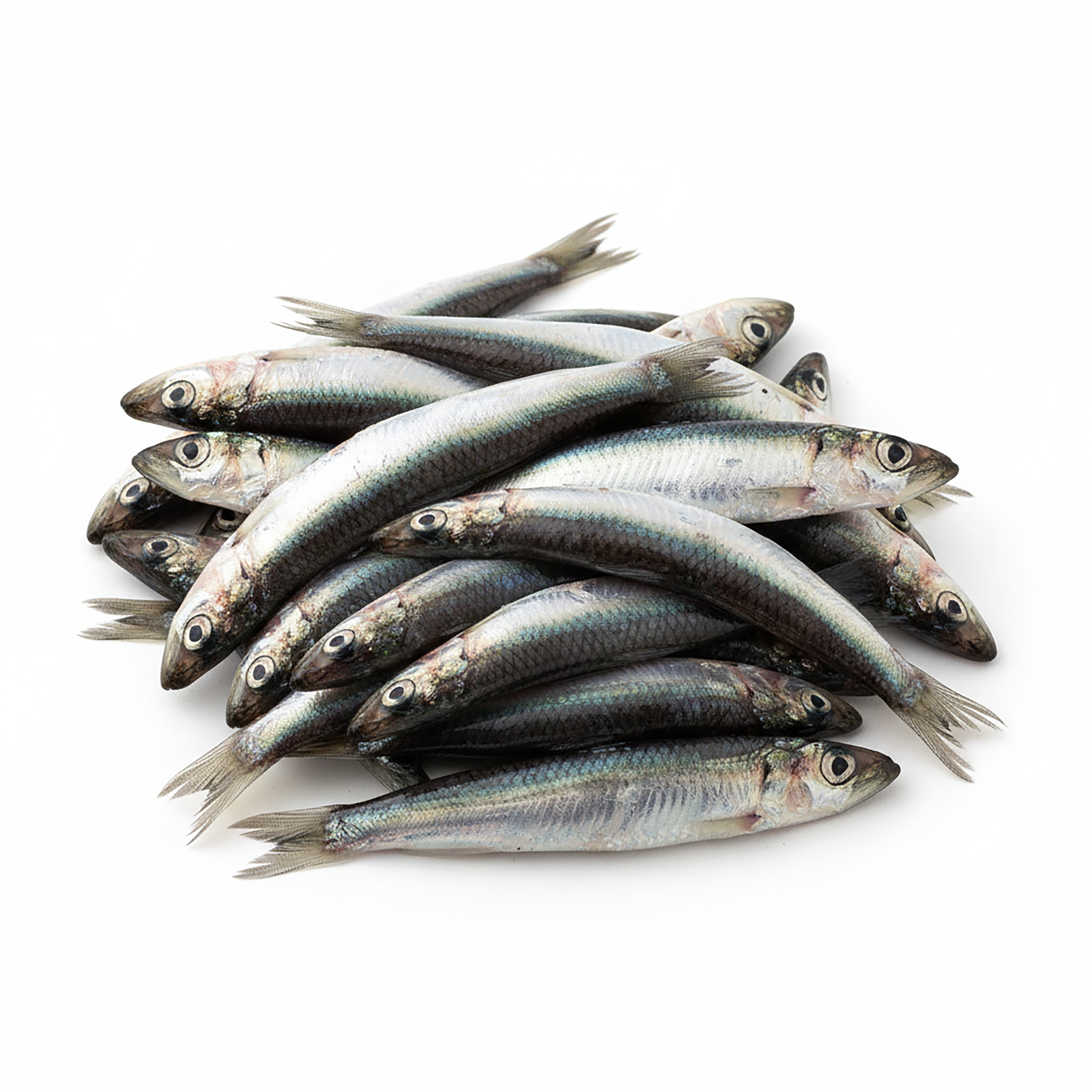
One of the most defining characteristics of anchovy fish is their small and streamlined body structure. Anchovies typically have elongated, narrow bodies that reduce water resistance and allow swift movement through the sea. Their silvery sides reflect light, helping them blend into the surrounding water and avoid predators. This reflective coloration is a natural defense mechanism that makes it difficult for predators to isolate individual fish within a moving school.
Anchovies possess a forked tail that supports quick acceleration and agile swimming. This tail design allows sudden changes in direction, which is essential for survival in open waters. Combined with flexible bodies and strong swimming muscles, anchovies can respond rapidly to threats. Their speed and coordination make them difficult prey despite their small size.
Schooling behavior is one of the most important survival traits of anchovy fish. Anchovies live in large, tightly packed groups that move in synchronized patterns. This collective movement confuses predators and reduces the likelihood of individual fish being targeted. Schooling also improves feeding efficiency, allowing anchovies to locate plankton-rich areas more effectively. This behavior reflects strong social coordination and environmental awareness.
Anchovy fish are classified as pelagic species, meaning they inhabit open water rather than staying close to the sea floor. They are commonly found in coastal regions, continental shelf areas, and open seas. Anchovies prefer temperate and tropical waters where plankton is abundant. Their distribution often follows seasonal changes in water temperature and food availability.
Dietary habits are central to anchovy characteristics. Anchovies are filter feeders that primarily consume plankton. They feed on microscopic organisms suspended in the water, including both plant-based and animal-based plankton. Anchovies swim with their mouths open, filtering food particles from the water. This feeding strategy allows them to efficiently gather nutrients while swimming continuously.
Because anchovies feed on plankton, they occupy a critical position in the marine food chain. They transfer energy from microscopic organisms to larger predators. Many marine animals depend on anchovies as a primary food source. Larger fish, seabirds, and marine mammals rely on anchovy populations for survival. This makes anchovies a keystone species in many ocean ecosystems.
Reproduction in anchovy fish is adapted for rapid population renewal. Anchovies typically reproduce through broadcast spawning, releasing eggs into the water column. This strategy allows eggs to disperse widely, increasing survival chances. Anchovies grow quickly and reach maturity at a young age, which helps maintain population numbers despite heavy predation.
The lifespan of anchovy fish is relatively short compared to larger marine species. Their life strategy focuses on fast growth, early reproduction, and high population turnover. This biological pattern supports their role as a reliable food source within marine ecosystems and contributes to their abundance.
From a nutritional perspective, anchovy fish are highly valuable. Despite their small size, they are rich in protein and beneficial fatty components. Anchovies provide essential nutrients that support human health, including compounds that contribute to heart and metabolic wellness. Their edible bones also contribute to mineral intake when consumed whole.
Anchovies are widely used in global cuisines. They are consumed fresh, dried, salted, fermented, or preserved in oil. These preservation methods enhance flavor and extend shelf life. Anchovies are known for their strong taste, which adds depth to many traditional dishes. Their use spans coastal cultures and culinary traditions across multiple regions.
Commercially, anchovy fish support major fishing industries. They are harvested in large quantities for direct consumption and for processing into fish products. Anchovies are also used in fish meal production, which supports aquaculture and agriculture. Their economic importance extends beyond food, contributing to livelihoods in coastal communities.
Sustainability is an important consideration in anchovy fisheries. Because anchovies reproduce quickly, they can support large-scale harvesting when managed responsibly. However, overfishing and environmental changes can impact populations. Monitoring and sustainable management are essential to preserve anchovy stocks and protect marine ecosystems.
Anchovy fish are also indicators of ocean health. Changes in anchovy populations often reflect shifts in water temperature, plankton availability, and environmental conditions. Scientists study anchovies to understand climate patterns and ecosystem dynamics. Their sensitivity to environmental change makes them valuable for marine research.
In terms of anatomy, anchovies have relatively simple internal structures optimized for efficient swimming and feeding. Their gills are well adapted for oxygen exchange in active swimming conditions. Sensory systems help them detect movement and changes in water pressure, supporting coordinated schooling behavior.
Anchovies contribute to biodiversity by supporting complex food webs. Their presence ensures energy transfer across trophic levels. Without anchovies and similar forage fish, many marine predators would struggle to survive. This highlights their ecological importance far beyond their physical size.
In human diets, anchovies are valued not only for flavor but also for nutritional density. When consumed in moderation, they support balanced nutrition and contribute essential nutrients. Their long history of use reflects adaptability to preservation techniques and cultural preferences.
Anchovy fish represent one of the most strategically important life forms in marine ecosystems, not because of size or strength, but because of efficiency, adaptability, and sheer abundance. Their biological design reflects millions of years of evolution shaped by open-water survival, constant predation pressure, and the need to convert microscopic ocean life into energy that sustains entire food webs. To fully understand anchovy characteristics, it is necessary to look beyond basic appearance and explore how anatomy, behavior, ecology, and life strategy function together as a single survival system.
At a structural level, anchovy fish are built for endurance rather than power. Their elongated, compressed bodies minimize drag and allow sustained swimming over long distances with minimal energy loss. This streamlined form is especially important for pelagic life, where anchovies must remain in near-constant motion to feed and avoid predators. Their thin scales and smooth skin further reduce resistance, enabling fluid movement through varying water conditions. The silvery coloration along their sides is not merely aesthetic; it reflects surrounding light, creating a visual camouflage known as countershading that disrupts the outline of the fish when viewed from different angles.
Anchovy sensory systems are finely tuned for group coordination. Their lateral line system detects subtle vibrations and pressure changes in the water, allowing individuals to respond instantly to the movements of nearby fish. This sensitivity enables thousands of anchovies to swim as a single coordinated unit without collisions. Schooling behavior is not random; it is a highly organized survival mechanism that reduces individual risk, improves hydrodynamic efficiency, and enhances collective awareness of predators and food sources.
The feeding strategy of anchovies is one of their most defining traits. Unlike predatory fish that rely on chasing prey, anchovies feed continuously by filtering plankton from the water column. Their mouths and gill structures are adapted to trap microscopic organisms while expelling excess water. This method allows anchovies to harvest vast quantities of energy-rich plankton with remarkable efficiency. Because plankton populations can grow rapidly, anchovies can exploit this renewable resource without exhausting it, provided environmental conditions remain stable.
Ecologically, anchovies occupy a central position known as a forage fish role. They act as a biological bridge between the lowest and highest levels of the marine food chain. Energy captured from plankton is concentrated in anchovy biomass and then transferred upward to larger fish, seabirds, and marine mammals. This transfer is critical for maintaining ecosystem balance. In regions where anchovy populations decline, predators often suffer immediate population stress, demonstrating how tightly marine systems depend on them.
Anchovy reproduction reflects a strategy focused on numbers rather than individual survival. By releasing large quantities of eggs into open water, anchovies increase the probability that at least some offspring will survive despite heavy predation. Eggs and larvae drift with currents, spreading populations across wide areas. Rapid growth rates allow juveniles to reach reproductive age quickly, ensuring continuous population renewal. This fast life cycle is one reason anchovy populations can rebound quickly when conditions are favorable.
Environmental adaptability is another defining characteristic. Anchovies are highly responsive to changes in water temperature, salinity, and plankton density. Rather than remaining fixed to one location, they migrate seasonally to follow optimal feeding and breeding conditions. These movements influence regional fisheries and serve as natural indicators of ocean productivity. When anchovy schools shift location, it often signals broader environmental changes occurring beneath the surface.
From a nutritional standpoint, anchovies are exceptional among small fish. Their tissues are dense with high-quality protein, beneficial fats, and naturally occurring minerals. Because anchovies are often consumed whole, including bones and organs, they provide nutrients that larger fish may not deliver as efficiently. This whole-food profile explains their long-standing role in traditional diets, particularly in coastal cultures where preservation techniques such as salting and fermentation were developed to store seasonal abundance.
Culturally, anchovies have influenced food traditions in ways disproportionate to their size. Their intense flavor profile develops through natural enzymatic processes during preservation, creating complex taste compounds valued in culinary practices worldwide. This concentration of flavor allowed anchovies to be used sparingly yet effectively, making them economically and gastronomically significant even in times of limited resources.
Economically, anchovies support one of the largest volume fisheries on the planet. Beyond direct human consumption, they are a cornerstone of fishmeal and fish oil production, which in turn supports aquaculture and livestock industries. This indirect contribution makes anchovies foundational to global food systems, even for people who never consume them directly. Their availability influences feed prices, farming output, and food security across multiple sectors.
Anchovies also play an important role in scientific research. Because their populations respond quickly to environmental shifts, scientists monitor anchovy abundance to study climate variability, ocean currents, and ecosystem resilience. Fluctuations in anchovy numbers often precede visible changes in larger marine species, making them an early-warning signal for ecological imbalance.
Despite their resilience, anchovies are not invulnerable. Their dependence on plankton makes them sensitive to changes in ocean chemistry and temperature. Sustainable management is therefore essential to prevent population collapse. When managed responsibly, anchovy fisheries demonstrate how high-yield harvesting can coexist with ecological stability.
Anchovy fish illustrate one of the most refined survival strategies in the marine world, where success is measured not by individual dominance but by collective efficiency, speed, and ecological integration. Their characteristics reflect a life shaped by constant motion, high predation pressure, and dependence on microscopic food sources. Although anchovies may appear simple at first glance, their biological design and behavioral patterns reveal a highly optimized organism essential to ocean stability and productivity.
The physical structure of anchovies is a prime example of energy-efficient design. Their narrow, laterally compressed bodies allow them to cut through water with minimal resistance, conserving energy during long periods of swimming. This is crucial because anchovies rarely remain stationary; they must continuously move to feed and maintain position within plankton-rich waters. Their musculature is adapted for endurance rather than brute force, enabling sustained movement rather than short bursts of power. This endurance-based anatomy allows anchovies to survive in vast open waters where shelter is scarce.
Their external appearance plays a critical defensive role. The silvery sheen along their flanks reflects ambient light, making it difficult for predators to distinguish individual fish within a school. This optical effect changes constantly as the school moves, creating a shimmering visual disturbance that confuses attackers. The darker dorsal side and lighter underside further enhance camouflage by blending with deeper waters when viewed from above and brighter surfaces when seen from below. This natural coloration is a highly effective passive defense mechanism.
Anchovy behavior is deeply rooted in collective survival. Schooling is not merely a response to danger but a permanent lifestyle. Within a school, anchovies benefit from reduced energy expenditure due to hydrodynamic advantages, as individuals experience less water resistance when swimming closely together. This formation also enhances feeding efficiency, as schools can locate and exploit plankton blooms more effectively than solitary fish. The ability to maintain tight formation relies on rapid sensory feedback and instinctive responses rather than conscious coordination.
The anchovy feeding mechanism is another defining characteristic. As continuous filter feeders, anchovies rely on dense plankton concentrations to meet their nutritional needs. Their gill structures are adapted to trap microscopic organisms while allowing water to pass freely. This feeding style allows anchovies to extract energy from the lowest trophic level, making them one of the most efficient converters of plankton biomass into fish biomass. This efficiency explains their enormous population sizes and ecological dominance in many marine regions.
Anchovies occupy a central position in marine food webs, functioning as a biological conduit through which energy flows upward. By consuming plankton and being consumed by larger predators, anchovies enable the transfer of energy across trophic levels. This role makes them indispensable to the survival of many commercially important fish species, seabirds, and marine mammals. In ecosystems where anchovy populations decline, predator species often experience immediate food shortages, underscoring the anchovy’s foundational ecological role.
Reproductive strategy further defines anchovy success. Rather than investing heavily in individual offspring, anchovies produce large numbers of eggs that drift freely in the water column. This dispersal increases the likelihood that some larvae will encounter favorable conditions. Rapid growth and early maturity allow populations to recover quickly from losses, whether due to predation or fishing. This high turnover rate is a key reason anchovies can sustain heavy natural and human exploitation when environmental conditions remain favorable.
Anchovy populations are closely tied to oceanographic processes. Changes in water temperature, nutrient upwelling, and plankton productivity directly influence their distribution and abundance. As a result, anchovies are highly mobile, following seasonal shifts in food availability. These migrations can alter regional fisheries dramatically, as anchovy presence often determines the productivity of entire fishing seasons. Their movements serve as biological indicators of changing marine conditions.
From a physiological perspective, anchovies are adapted to handle fluctuating oxygen levels associated with active swimming and dense schooling. Their gills are efficient at extracting oxygen, supporting continuous activity even in crowded conditions. Their metabolism is tuned for rapid energy use rather than long-term storage, aligning with their fast-paced lifestyle and short lifespan.
Anchovies also hold exceptional nutritional value for humans. Because they are small and often consumed whole, they provide a concentrated source of nutrients in a highly bioavailable form. Their tissues reflect the quality of their plankton-based diet, resulting in a nutrient-dense profile that has supported human populations for centuries. Preservation methods such as drying, salting, and fermentation developed specifically to make use of seasonal anchovy abundance, transforming them into long-lasting food resources.
Culturally, anchovies represent adaptability and resourcefulness. Coastal societies learned to harness their abundance, creating culinary traditions that maximize flavor while minimizing waste. These practices demonstrate how anchovy characteristics align with sustainable food use, where small organisms support large populations when managed wisely.
Economically, anchovies underpin global fisheries far beyond their direct consumption. Their role in producing fishmeal and fish oil makes them essential to aquaculture, poultry, and livestock industries. This indirect contribution magnifies their importance within global food systems, linking anchovy populations to food security on a planetary scale.
Despite their resilience, anchovies are sensitive to environmental disruption. Ocean warming, pollution, and altered plankton cycles can destabilize their populations. Sustainable management is therefore critical, not only to protect anchovy stocks but also to safeguard the countless species and industries that depend on them.
In essence, anchovy fish are a model of ecological efficiency. Their characteristics—streamlined bodies, collective intelligence, plankton-based feeding, rapid reproduction, and environmental responsiveness—allow them to thrive in challenging marine environments. Though small in size, anchovies are immense in influence, forming the backbone of marine ecosystems and demonstrating how balance, adaptability, and cooperation define true biological success in the ocean.
In summary, anchovy fish are small yet immensely significant marine organisms. Their characteristics include a streamlined body, silvery coloration, fast swimming ability, schooling behavior, and plankton-based diet. These traits support survival, ecological balance, and economic value. Anchovies play a crucial role in marine food chains, support commercial fisheries, and contribute to global nutrition. Understanding anchovy fish characteristics highlights the importance of protecting small pelagic species that sustain both ocean ecosystems and human societies. Anchovy fish are a masterclass in evolutionary efficiency. Their small size conceals a complex set of adaptations that allow them to dominate marine biomass, sustain food webs, and support human economies. Their characteristics—streamlined bodies, collective behavior, plankton-based feeding, rapid reproduction, and ecological centrality—make them indispensable to ocean health. Understanding anchovies in depth reveals that they are not minor players in the sea, but foundational organisms upon which entire marine systems depend.