Oil extraction from seeds is a crucial step in transforming agricultural produce into products used for cooking, cosmetics, medicine, and industry. Two of the most widely recognized approaches are cold pressing and hot pressing. Although both techniques aim to separate oil from solid material, the journey from seed to finished liquid differs in temperature, processing intensity, and resulting characteristics. Understanding these differences helps producers choose appropriate methods and enables consumers to appreciate the qualities of the oils they use.
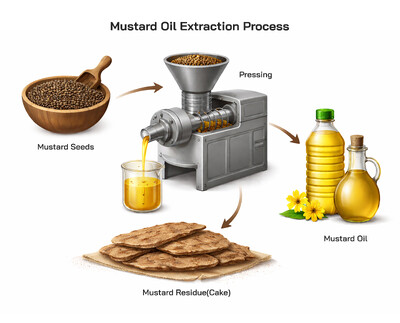
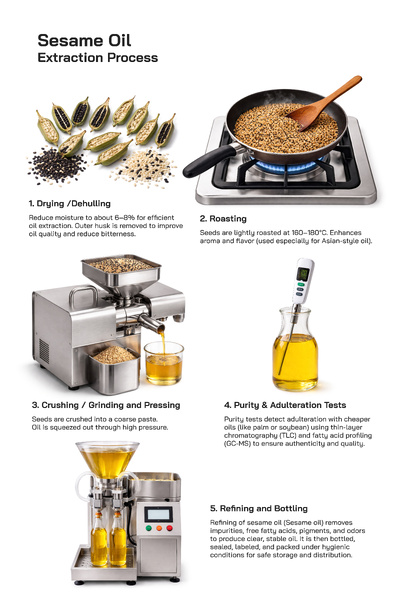
The process begins with preparation of raw seeds. Cleaning removes dust, stones, and plant debris, ensuring purity and protecting machinery. Seeds may then be dried to achieve optimal moisture levels. From this common starting point, the two approaches diverge. In cold pressing, the emphasis remains on minimal heat exposure. The seeds are mechanically crushed or squeezed, often in a screw press, where pressure releases oil while temperatures are kept relatively low. Because heat is limited, natural flavors, aromas, and certain delicate compounds are more likely to remain intact.
Hot pressing introduces an additional stage before mechanical extraction. Seeds are heated or roasted, softening their structure and making oil release easier. The elevated temperature increases fluidity, allowing a larger proportion to be recovered. During pressing, warmth continues to influence the material, accelerating separation. This method is often favored when maximizing yield is a priority.
The contrast between temperature regimes shapes many outcomes. Cold-pressed oils are typically associated with richer natural scent and closer resemblance to the original seed. Supporters often highlight the preservation of sensitive nutrients that might be altered by heat. The trade-off can be slightly lower extraction efficiency, meaning more oil may remain in the residual cake.
Hot-pressed oils, in contrast, generally provide higher yield and can be more economical for large-scale production. The roasting phase may also produce deeper or nuttier flavors, which some consumers prefer. However, exposure to heat can modify certain components, influencing aroma and color. For industries focused on refining, these changes may be acceptable or even desirable, as further processing can standardize the final product.
Machinery used in both systems shares similarities, particularly in the use of mechanical pressure. Yet temperature control mechanisms differ, with cold pressing designed to prevent excessive rise and hot pressing built to manage deliberate heating. Advances in engineering have improved consistency, allowing producers to tailor processes according to market demands.
Efficiency considerations extend beyond yield. Cold pressing often appeals to niche markets that value minimal intervention and perceived naturalness. Hot pressing supports mass supply chains where volume and uniformity are critical. Each approach therefore aligns with distinct economic strategies.
Environmental and sustainability discussions sometimes influence method selection as well. Cold pressing may consume less energy in heating, while hot pressing can reduce waste by extracting a greater portion of oil. Producers weigh these aspects in light of local conditions and goals.
Beyond the familiar distinction of temperature, the divergence between cold press and hot press extraction extends into the architecture of entire value chains. Each method encourages different decisions in equipment investment, workforce skills, storage design, and downstream marketing. Producers who choose one route are not simply selecting a mechanical technique; they are committing to a philosophy of how oil should be positioned in relation to consumers, regulators, and industrial users. Appreciating this broader framework reveals why the debate continues to evolve even as technologies become more advanced.
One important consideration involves the behavior of oil immediately after it leaves the press. Freshly extracted liquid contains suspended particles, natural gums, and trace moisture. The manner in which these elements are handled can vary depending on the extraction philosophy. Operations that favor minimal intervention may rely on settling tanks and gentle filtration, allowing gravity and time to clarify the product. Systems geared toward high throughput might incorporate centrifuges and rapid purification equipment that stabilize oil quickly for transport. These contrasting post-press pathways influence shelf life, visual appearance, and logistics planning.
Storage requirements also shift according to method. Oils associated with limited processing are often handled in smaller batches and protected carefully from light and oxygen to maintain their distinctive characteristics. Temperature control during warehousing becomes a priority, and packaging materials are selected to minimize interaction with the environment. High-volume production, by comparison, tends to emphasize durability during long-distance shipment. Tanks, pipelines, and containers must support large movements while preserving uniform quality, prompting investment in industrial-scale infrastructure.
Another layer of difference lies in regulatory alignment. Markets that promote minimally altered foods frequently require detailed documentation about processing history. Producers may need to demonstrate that heat thresholds were respected or that additives were avoided. Certification bodies audit these claims, creating administrative responsibilities that accompany the technical process. Large-scale extraction aimed at industrial uses may encounter a different regulatory landscape, where consistency, traceability, and chemical specifications outweigh the narrative of gentle handling. Compliance strategies therefore diverge alongside processing choices.
Research into oxidation and stability further shapes perception. Scientists examine how fatty structures respond over time, particularly under exposure to air or fluctuating temperature. Findings guide recommendations about antioxidants, packaging innovations, and distribution speed. Oils that retain more of their native composition can exhibit unique aging patterns, which marketers sometimes frame as indicators of authenticity. Meanwhile, oils destined for transformation into other materials must maintain predictable behavior during manufacturing, encouraging tighter standardization.
Economic modeling provides yet another perspective. Small facilities oriented toward specialty markets often prioritize margin per unit rather than sheer output. They may cultivate direct relationships with retailers or consumers, investing in storytelling and brand identity. Larger enterprises depend on scale efficiencies, integrating extraction with refining, blending, and bulk export. Financial risk is distributed differently in each scenario, influencing how companies respond to fluctuations in crop supply or international demand.
Waste streams and by-product utilization reveal additional contrasts. Residual material from pressing can serve as feedstock for agriculture, energy generation, or further industrial processing. The composition of this material varies depending on the intensity of extraction, which in turn affects its potential applications. Companies design recovery systems accordingly, seeking opportunities to convert what was once discarded into supplementary revenue. Circular thinking thus becomes an integral component of modern oil production.
Consumer education has grown in parallel with these developments. Shoppers encounter labels, certifications, and marketing messages that communicate subtle distinctions in origin and treatment. Understanding these cues requires outreach, tastings, and transparent communication. Producers who articulate their methods effectively can build loyalty, but they must remain accurate to maintain trust. As awareness spreads, expectations regarding authenticity and sustainability continue to rise.
Technological innovation promises further change. Sensors embedded in machinery now allow real-time monitoring of pressure, temperature, and flow. Data analytics help operators fine-tune performance, reducing variability between batches. Automation may narrow the practical gap between approaches by enabling precise control, yet philosophical differences about intervention and yield are likely to persist. The future may therefore involve hybrid strategies that blend aspects of both traditions.
Global trade dynamics add complexity as well. Importing countries often specify parameters that shape how oil must be produced and handled. Meeting these requirements can necessitate adaptation in extraction facilities far from the final market. Collaboration between exporters and buyers becomes essential to ensure compatibility, reinforcing the interconnected nature of agricultural and industrial systems.
The divergence between cold and hot pressing continues long after oil leaves the production facility, shaping how it behaves in kitchens, laboratories, and factories. End users often discover that performance attributes such as blending capacity, reaction to additives, and compatibility with other ingredients depend partly on the extraction pathway. Manufacturers that formulate cosmetics or technical products conduct detailed trials to understand how subtle variations in composition influence stability or texture. These evaluations guide procurement strategies, sometimes leading buyers to specify a preferred method in their contracts.
Transportation networks adapt in response to these expectations. Oils that are marketed with emphasis on distinctive sensory character may travel in smaller consignments, moving rapidly to maintain freshness. Supply chains become shorter and more transparent, favoring distributors who can preserve identity from origin to retail shelf. In contrast, bulk industrial flows are optimized for efficiency, employing standardized containers and multimodal routes. The logistical footprint therefore mirrors the strategic intention behind the extraction technique.
Insurance and risk management offer another revealing angle. Specialty oils often command higher prices, making them sensitive to spoilage or contamination. Producers invest in monitoring systems and coverage policies that protect against loss. Industrial shipments, while larger, rely on uniformity and predictable turnover, spreading risk across volumes. Financial institutions design different products for each scenario, illustrating how extraction choices influence economic architecture.
Innovation in packaging design has accelerated as brands attempt to communicate quality while safeguarding contents. Dark glass, protective linings, and tamper-evident closures reflect an understanding that light and oxygen can alter characteristics valued by discerning customers. Bulk handlers may instead prioritize stackability, durability, and ease of transfer between tanks. These practical decisions translate technical differences into visible form, reinforcing identity in the marketplace.
Training and workforce development evolve accordingly. Facilities operating under minimal-processing philosophies may emphasize careful handling, small-batch oversight, and sensory evaluation skills. Employees learn to recognize subtle shifts in aroma or appearance that signal change. Larger plants demand expertise in automation, maintenance, and throughput optimization. Engineers, chemists, and logistics specialists collaborate to keep complex systems running smoothly. Both environments require competence, yet the nature of that competence diverges.
Academic research increasingly bridges these worlds. Universities analyze how pretreatment, mechanical stress, and temperature histories influence microstructure. Collaborative projects with industry partners aim to improve efficiency while retaining desirable attributes. Findings may lead to redesigned equipment or new filtration methods that reduce trade-offs once considered inevitable. Over time, such progress blurs boundaries, yet the conceptual distinction between preservation and maximization remains influential.
Marketing narratives also adapt to regional preferences. In some societies, consumers associate careful extraction with heritage and craftsmanship. In others, reliability and affordability dominate purchasing decisions. Exporters tailor communication to resonate with these cultural contexts, demonstrating how technology and storytelling intertwine. Successful brands navigate this complexity by aligning production realities with audience expectations.
Sustainability metrics introduce fresh dimensions. Analysts examine water consumption, energy sources, and carbon implications associated with each pathway. Companies publish reports detailing improvements, seeking to balance efficiency with responsibility. Investors and regulators increasingly scrutinize these disclosures, adding pressure for continual refinement. Extraction method thus becomes part of a broader dialogue about environmental performance.
Entrepreneurial ventures are exploring value-added opportunities that arise from differentiation. Boutique producers create limited editions, emphasize origin, and cultivate direct relationships with chefs or wellness communities. Meanwhile, industrial suppliers expand into specialty chemicals, leveraging consistent raw material for innovation. Both trajectories demonstrate how flexibility in processing underpins diversification.
As global demand for plant-based resources grows, dialogue between producers and users will likely intensify. Feedback loops allow rapid adjustment, whether to enhance flavor retention or improve compatibility with manufacturing processes. Digital platforms facilitate this exchange, shrinking the distance between field and final application. Continuous communication helps align expectations and maintain competitiveness.
In the broader picture, cold press and hot press methods symbolize alternative ways of thinking about value creation. One highlights individuality and minimal transformation, the other emphasizes scale and adaptability. Neither is inherently superior; each responds to distinct needs within a complex marketplace. Recognizing their complementary roles encourages cooperation rather than rivalry.
The future of oil extraction will probably involve a mosaic of approaches, enriched by technological breakthroughs and evolving consumer awareness. By situating processing decisions within economic, cultural, and environmental frameworks, stakeholders gain deeper insight into how simple seeds become diverse products. This expanded understanding fosters informed choice, ensuring that the path from harvest to final oil continues to adapt in harmony with global priorities.
Culturally, preferences for one method or the other can reflect culinary tradition. Some cuisines prize the fresh, delicate taste associated with cold pressing, while others value the robustness that roasting imparts. These choices demonstrate how technology and taste evolve together.
Ultimately, the journey from seed to oil encompasses far more than the moment of pressing. It is a continuum of decisions touching technology, economics, regulation, and culture. Cold press and hot press pathways illustrate how varied objectives can be pursued using the same raw material, each generating products suited to particular audiences. By examining these extended implications, observers gain a richer appreciation for the sophistication embedded within what might otherwise appear to be a simple act of extraction.
In summary, the difference between cold and hot pressing begins with temperature but extends into flavor, efficiency, and market orientation. Cold pressing emphasizes preservation and authenticity, while hot pressing prioritizes output and sometimes intensified character. Both transform humble seeds into valuable oils that travel from farms to kitchens and factories worldwide. Understanding their pathways enriches appreciation of the complex journey from plant to product.