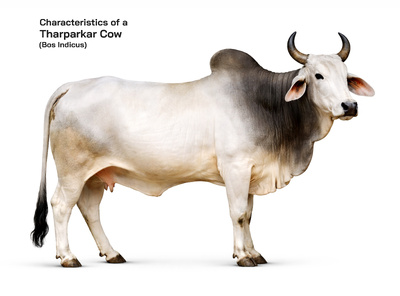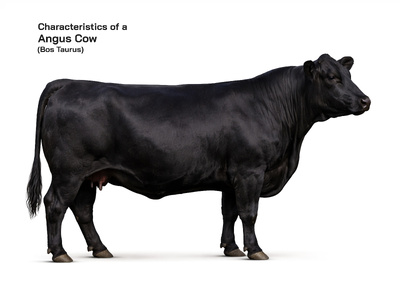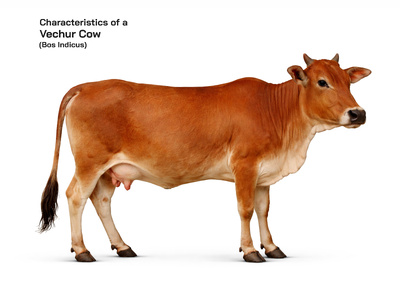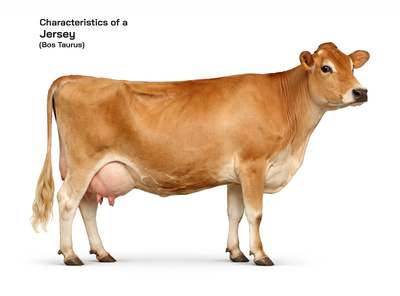
The Kankrej cow, scientifically classified as Bos indicus, is one of the most prominent and respected zebu breeds to originate from western India. Developed in regions characterized by high temperatures, dry seasons, and periodic scarcity of forage, the breed evolved through natural selection and careful human management to become exceptionally hardy and dependable. For generations, pastoral and farming communities relied on the Kankrej for its endurance, adaptability, and steady performance, making it a cornerstone of local livestock culture. Today, its influence extends beyond its homeland, contributing to cattle development programs in various parts of the world.
Physically, the Kankrej is a large and powerful animal with a commanding presence. Its most recognizable feature is the impressive pair of lyre-shaped horns that sweep outward and upward in elegant curves. These horns, along with a broad forehead and expressive eyes, create a striking profile. The coat is usually silver-grey, iron-grey, or occasionally darker around the neck and shoulders, often lightening toward the hindquarters. Calves may be born with deeper shades that gradually change as they grow. Like other zebu cattle, the Kankrej has a prominent hump, loose skin, and a well-developed dewlap, all of which assist in heat regulation and stamina.
Body conformation in the Kankrej emphasizes strength and functionality. The breed possesses strong legs, firm hooves, and a deep chest, allowing it to travel long distances in search of feed and water. This mobility is essential in areas where grazing conditions vary seasonally. The structural soundness of the animal supports long working life and consistent participation in farm activities, contributing to overall agricultural sustainability.
Temperamentally, Kankrej cattle are generally alert yet manageable. They are known for intelligence and responsiveness, qualities that can be shaped positively through regular interaction and calm handling. Their steady nature under familiar routines supports efficient husbandry and helps maintain herd harmony. Farmers value the breed’s willingness to adapt to different management systems, whether traditional or modern.
Cattle husbandry practices for the Kankrej often emphasize grazing efficiency and resource management. Because the breed is naturally suited to semi-arid environments, it performs well on pasture with moderate supplementation. Access to clean water, mineral balance, and preventive health care enhances productivity while preserving resilience. The breed’s natural resistance to many regional diseases reduces the burden of intensive medical inputs, which is particularly beneficial in low-resource systems.
Reproductive reliability is another advantage. Kankrej cows tend to maintain stable fertility and demonstrate strong maternal instincts. Attentive care of calves supports healthy growth and continuity within the herd. Consistent reproduction allows farmers to plan herd expansion and replacement strategies effectively, reinforcing economic security.
The global importance of the Kankrej has grown as agricultural systems seek cattle capable of thriving in hot climates. The breed has been exported and used in crossbreeding initiatives to enhance endurance, adaptability, and structural strength in other populations. Through these programs, Kankrej genetics have influenced livestock improvement far beyond their region of origin, demonstrating the universal value of resilience.
Breed organizations and research groups continue to promote conservation and responsible development. By maintaining genetic diversity while encouraging refinement of desirable traits, they help ensure that the Kankrej remains relevant in modern agriculture. These efforts honor the breed’s heritage while preparing it for future challenges.
Culturally, the Kankrej holds a place of pride in rural communities. It represents a long tradition of partnership between humans and animals, built on mutual reliance in demanding environments. Its impressive horns and dignified bearing have made it a symbol of strength and endurance.
The Kankrej occupies a distinctive position in the study of tropical dairying because it demonstrates how long-term coexistence between livestock and environment can generate animals that remain dependable even when management resources are modest. Observers frequently note that herds built around this breed tend to exhibit stable daily rhythms. Grazing, resting, and milking patterns become predictable, allowing farmers to organize labor with confidence. Such regularity strengthens the operational backbone of rural enterprises where uncertainty in weather or markets might otherwise disrupt planning.
Another additional characteristic often highlighted by specialists is the breed’s contribution to walking efficiency and energy conservation. Kankrej cattle are known to distribute their effort evenly over the course of the day, avoiding sudden bursts of activity that waste reserves. This measured pace helps maintain body condition and supports continuous milk flow, especially in systems where animals must travel considerable distances. The relationship between movement style and productivity has become a point of interest for researchers exploring sustainable herd management.
In practical husbandry, the Kankrej encourages farmers to invest in pasture mapping and seasonal rotation. Because the animals utilize varied vegetation effectively, managers often design grazing sequences that match growth cycles of local plants. This strategy improves land regeneration and ensures a more reliable fodder base. By linking animal behavior with ecological planning, the breed helps create mutually reinforcing systems.
Milk production from Kankrej cows is frequently valued for its steadiness across time. Even if output levels shift with climate, many herds maintain a continuity that supports household nutrition and local trade. Regular supply allows processors and cooperatives to establish dependable relationships with buyers, strengthening rural economies. Stability, rather than extreme variation, becomes the defining economic advantage.
The breed also shapes perspectives on preventive observation. Experienced caretakers often rely on subtle changes in posture, appetite, or social interaction to identify early signs of imbalance. Because Kankrej cattle usually present calm and consistent behavior, deviations are easier to notice. This attentiveness reduces the need for emergency response and promotes long-term health.
Educational programs frequently feature the Kankrej when discussing how traditional expertise integrates with contemporary science. Genetic evaluation, reproductive management, and digital record keeping now complement methods refined through generations of pastoral experience. Together they form a hybrid knowledge system that respects heritage while encouraging progress.
Internationally, the Kankrej contributes to breeding strategies in areas facing intensifying heat stress. Countries seeking cattle that can maintain milk production without heavy infrastructural demands often turn to populations proven in semi-arid climates. Through exchange of breeding material and training, networks of cooperation expand, strengthening global resilience.
The breed’s influence extends into conversations about youth participation in agriculture. Reliable animals provide encouragement for new entrants who may otherwise perceive dairying as risky. When milk flow is predictable, investment in education, equipment, and cooperative membership becomes more attractive. In this way, the Kankrej indirectly supports generational renewal.
Technological adoption is also enhanced. Monitoring systems reveal patterns that are relatively uniform, allowing farmers to interpret data with clarity. Stable baselines make anomalies stand out, improving decision-making and reinforcing the value of digital tools.
Culturally, the Kankrej continues to inspire pride. Community gatherings, training initiatives, and livestock exhibitions often present the breed as evidence that adaptation rooted in local knowledge can achieve international recognition. This symbolism motivates conservation and responsible breeding.
Looking toward the future, the Kankrej is poised to gain importance as agriculture seeks methods to maintain milk production while minimizing environmental strain. Its compatibility with extensive grazing and moderate supplementation offers a template for systems aiming to balance productivity with stewardship.
The Kankrej continues to influence modern dairy thinking because it demonstrates how predictability in animal performance can translate into predictability in rural life. When herds show regular feeding habits, consistent movement, and dependable response to handlers, farmers can align household schedules, labor sharing, and marketing activities with greater assurance. Over time, this alignment reduces stress not only for animals but also for the people who depend on them.
An additional aspect often discussed by extension specialists is the breed’s role in climate-responsive planning. Because Kankrej cattle are accustomed to seasonal shifts, managers frequently design annual strategies that anticipate variations rather than reacting to them. Fodder conservation, water storage, and breeding timetables are arranged in advance, building resilience into the structure of the enterprise. The animals’ natural steadiness makes such forward planning effective.
In milk-centered operations, the breed supports the development of localized value chains. Producers can coordinate collection routes, chilling schedules, and small-scale processing with confidence that supply will remain relatively even. This reliability encourages investment in rural infrastructure and strengthens links between villages and markets. The result is a dairy economy grounded in continuity.
Another emerging dimension concerns the breed’s contribution to low-stress stockmanship. Because Kankrej cattle typically react best to calm, consistent cues, handlers often refine quiet movement techniques and patient communication. These practices improve welfare and reduce accidents, creating safer environments for both livestock and workers. Over time, the culture of careful handling becomes embedded in the farm’s identity.
Researchers also explore how the breed supports nutrient cycling within agro-ecosystems. Animals that graze widely distribute manure across fields, enriching soils and supporting crop productivity. This integration between livestock and land reduces reliance on external inputs and reinforces sustainability. Kankrej herds thus become active participants in maintaining ecological balance.
Community development programs highlight the breed when encouraging collective management approaches. Shared grazing lands, breeding bulls, and cooperative veterinary services become feasible when animals are known to perform reliably. Trust grows within groups because outcomes are more predictable, strengthening social cohesion.
The Kankrej’s history further contributes to dialogue about genetic heritage as a strategic resource. Rather than viewing indigenous breeds as remnants of the past, planners increasingly recognize them as foundations for future adaptation. Maintaining diversity within Kankrej populations ensures that valuable traits remain available for generations to come.
In education and outreach, the breed often symbolizes the power of observation. Farmers who have worked with Kankrej cattle for decades possess intimate knowledge of seasonal behavior, preferred forage, and recovery patterns after stress. Integrating this wisdom with scientific monitoring enriches understanding and leads to more nuanced decision-making.
The international dimension continues to expand. Partnerships that involve exchange of expertise, training visits, and collaborative research place the Kankrej within a global conversation about resilience. Countries facing similar environmental pressures learn from one another, building networks that transcend borders.
Culturally, admiration for the breed reinforces pride in pastoral traditions. Its dignified presence and long association with survival in demanding landscapes remind communities of their capacity to adapt creatively. Celebrations and educational events help transmit these values to younger generations.
As agriculture confronts increasing uncertainty, the lessons embodied by the Kankrej become ever more relevant. Systems that rely on harmony between animal capability and environmental reality tend to endure. By sustaining milk production, supporting cooperative structures, and encouraging ecological stewardship, the breed remains a guide for shaping dairying that is both practical and forward-looking.
In this broader perspective, the Kankrej stands not simply as livestock but as a partner in human resilience. Its continuing contribution demonstrates that strength, patience, and thoughtful management can together secure a stable foundation for rural livelihoods even in a rapidly changing world.
Ultimately, the Kankrej illustrates how resilience becomes most powerful when it supports cooperation between farmers, landscapes, and markets. By enabling stable dairying, encouraging ecological planning, and fostering global exchange, the breed remains a vital guide for livestock development in a warming and uncertain world.
In summary, the Kankrej cow stands as a remarkable example of adaptation within Bos indicus cattle. Its powerful frame, distinctive horns, calm yet alert temperament, and capacity to thrive under challenging conditions define its enduring appeal. Through effective cattle husbandry and international recognition, the Kankrej continues to contribute to livestock systems that value reliability, sustainability, and heritage.