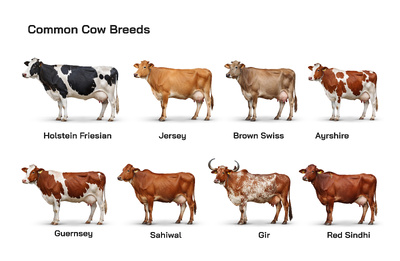
Cattle breeds across the world have evolved through a combination of natural selection and selective breeding to suit specific climates, farming objectives, and cultural practices. Some breeds are optimized for beef production, others for milk, draft power, or extreme adaptability. Angus, Hereford, Limousin, Rathi, Kangayam, and Vechur represent a diverse group of cattle ranging from globally dominant commercial beef breeds to highly resilient indigenous breeds valued for sustainability and low-input farming. Together, they illustrate how cattle genetics respond to both intensive agriculture and traditional rural systems.
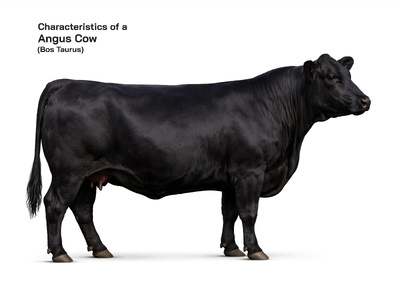
Angus cattle are one of the most popular and widely distributed beef breeds in the world. They are typically black in color, though red varieties also exist, and are naturally polled, meaning they lack horns. Angus cattle are renowned for producing high-quality beef with excellent marbling, tenderness, and flavor. Their calm temperament, efficient feed conversion, and adaptability to different climates have made them a cornerstone of commercial beef industries in many countries. Angus cattle mature relatively early, which supports efficient meat production and consistent market demand.
Hereford cattle are another globally recognized beef breed, easily identified by their reddish-brown bodies and distinctive white faces. They are hardy animals known for their ability to thrive in a wide range of environments, including grass-based systems. Herefords are efficient grazers and are valued for their docile nature, fertility, and long productive life. Their beef is known for consistency and good quality, and the breed has been widely used in crossbreeding programs to improve hardiness and temperament in other cattle populations.
Limousin cattle originate from rugged regions and are best known for their lean, high-yield beef. They typically have a light golden-red coat and a strong, muscular body structure. Limousins are prized for their excellent carcass quality, high dressing percentage, and efficient muscle development. Compared to some other beef breeds, Limousin cattle produce meat with lower fat content, which has increased their popularity in health-conscious markets. Their strength, adaptability, and growth efficiency make them well suited to both intensive and pasture-based beef production systems.
Rathi cattle are an important indigenous breed valued primarily for dairy production under arid and semi-arid conditions. They usually have a brown coat with white patches and a medium-sized, sturdy body. Rathi cows are known for their ability to produce consistent quantities of milk even under harsh climates, limited water availability, and modest feeding conditions. Their resilience, disease resistance, and calm temperament make them highly suitable for smallholder and traditional farming systems where sustainability and reliability are more important than maximum yield.
Kangayam cattle are a strong indigenous breed traditionally used for draft power and agricultural work. They are medium to large animals with a compact, muscular body and a grey or white coat. Kangayam cattle are especially valued for their endurance, strength, and ability to work long hours in hot climates. Although their milk yield is relatively low, their contribution to farming lies in traction, transport, and overall farm utility. Their hardiness and low maintenance requirements make them an integral part of sustainable rural agriculture.
Vechur cattle are one of the smallest and rarest cattle breeds in the world, yet they hold immense significance in sustainable and indigenous farming practices. They are compact animals with a short stature and modest feed requirements. Despite their small size, Vechur cows produce milk that is often valued for its richness and suitability for household consumption. They are extremely hardy, resistant to diseases, and well adapted to humid tropical environments. Their low feed and space requirements make them ideal for small farms, backyard dairying, and conservation-focused agriculture.
Beyond their commonly known production roles, these cow breeds differ greatly in genetic specialization, management adaptability, and long-term agricultural value, which explains their continued relevance in both modern and traditional livestock systems. Their importance today is increasingly measured not only by output, but also by sustainability, resilience, and contribution to future food security under changing environmental and economic conditions.
Angus cattle have become a benchmark breed in global beef grading and meat quality standards. Many international beef markets use Angus genetics as a reference point for marbling and eating quality, influencing pricing structures and consumer preference. Their predictable carcass traits allow processors and retailers to maintain uniformity in meat supply, which is essential for large-scale commercial operations. Angus cattle have also contributed significantly to genetic research focused on feed efficiency and methane reduction, making them increasingly relevant in environmentally conscious beef production systems.
Hereford cattle play an important role in low-cost, grass-fed beef systems. Their ability to maintain body condition and reproductive performance on pasture-based diets reduces reliance on grain feeding and intensive housing. This makes Herefords particularly valuable in regions emphasizing natural or organic beef production. Their stable performance under extensive grazing conditions also supports biodiversity-friendly farming practices, as they integrate well with rotational grazing and land conservation strategies.
Limousin cattle are widely recognized for their impact on crossbreeding strategies aimed at lean meat production. When crossed with other breeds, Limousin genetics consistently improve muscle yield and carcass efficiency without significantly increasing maintenance requirements. This has made them especially important in regions where producers seek to maximize output per animal while controlling feed costs. Their influence extends into global beef improvement programs focused on balancing productivity with reduced fat deposition.
Rathi cattle contribute significantly to climate-resilient dairy development in arid and semi-arid regions. Their physiological efficiency in managing heat stress, water scarcity, and seasonal feed variability makes them an important genetic resource for future dairy systems facing climate uncertainty. Rathi genetics are increasingly studied for traits related to immune response and metabolic stability, offering potential benefits beyond traditional dairy performance.
Kangayam cattle represent an important link between livestock and sustainable crop production. Their role extends beyond draft power to maintaining soil health through organic manure input and supporting mixed farming systems. These integrated systems reduce dependency on external inputs such as chemical fertilizers and fossil fuels. Kangayam cattle therefore contribute indirectly to environmental sustainability, energy efficiency, and long-term farm resilience.
Vechur cattle hold exceptional value in genetic conservation and low-input livestock systems. Their ability to thrive on minimal feed resources highlights the potential of small-bodied cattle in reducing environmental footprint. Vechur cows are increasingly recognized in discussions on sustainable agriculture due to their low greenhouse gas emissions per unit of maintenance and their suitability for densely populated rural areas. Their preservation has become a symbol of protecting indigenous livestock diversity in the face of industrial agriculture.
Across all these breeds, differences in reproductive efficiency and lifespan also shape their agricultural importance. Breeds with stable fertility and long productive lives reduce replacement rates, lowering overall herd costs and improving economic sustainability. This characteristic is particularly valuable for smallholder farmers, where livestock loss can have severe economic consequences.
These cow breeds also influence rural livelihoods and social stability. In many regions, cattle ownership represents financial security, cultural identity, and risk management against crop failure. Indigenous breeds such as Rathi, Kangayam, and Vechur support household nutrition and income with minimal external inputs, while commercial breeds like Angus, Hereford, and Limousin drive employment and value creation across meat supply chains.
In a global context, these breeds collectively support a balanced livestock ecosystem. High-performance beef breeds meet growing protein demand, while resilient indigenous cattle ensure continuity of production in marginal environments. Their coexistence strengthens agricultural systems against economic volatility, climate stress, and resource constraints.
An additional perspective on these breeds lies in their role in adaptive breeding under future agricultural constraints. As land availability decreases and competition for water and feed intensifies, cattle that can maintain productivity with lower inputs become increasingly valuable. Indigenous breeds such as Rathi, Kangayam, and Vechur demonstrate how efficient metabolism and behavioral adaptation can offset lower absolute production. These traits are now being reassessed not as limitations, but as strategic advantages in resource-constrained farming systems.
These breeds also differ significantly in their interaction with local ecosystems. Grazing behavior, hoof structure, and movement patterns influence pasture regeneration and soil compaction. Breeds adapted to extensive systems tend to graze more selectively and travel longer distances without stress, supporting balanced pasture utilization. This ecological compatibility reduces land degradation and supports long-term productivity, especially in semi-arid and marginal landscapes.
Another important aspect is their contribution to risk diversification in livestock farming. Relying on a single breed or production model increases vulnerability to disease outbreaks, market volatility, and climate extremes. Maintaining a mix of commercial and indigenous breeds allows farmers and regions to spread risk across different performance traits. While commercial beef breeds drive income through market demand, indigenous breeds provide stability and continuity during adverse conditions.
From a nutritional standpoint, these breeds also influence local food systems and dietary diversity. Milk and meat produced by indigenous cattle often remain within local markets, supporting regional nutrition and food sovereignty. In contrast, beef from breeds like Angus, Hereford, and Limousin feeds into national and international supply chains. This dual structure strengthens both global trade and local self-sufficiency, reducing dependence on a single food distribution pathway.
The role of these breeds in education, research, and traditional knowledge systems is another important dimension. Indigenous cattle are closely linked to region-specific husbandry practices passed down through generations. These practices often emphasize animal welfare, natural disease management, and efficient use of local resources. Preserving these breeds helps retain valuable agricultural knowledge that complements modern scientific approaches.
These cattle breeds also differ in their carbon footprint profiles when evaluated across entire production systems. While high-output breeds may appear efficient per unit of product, indigenous breeds often demonstrate lower emissions associated with feed production, transport, and housing. When assessed holistically, low-input systems supported by breeds such as Kangayam and Vechur can offer competitive environmental performance, particularly in small-scale and decentralized farming models.
In terms of policy and development planning, these breeds influence livestock development strategies at national and regional levels. Governments and agricultural institutions increasingly recognize the importance of breed diversity in achieving sustainable development goals. Conservation programs, incentive schemes, and community-based breeding initiatives often focus on protecting indigenous cattle while improving their productivity through selective improvement rather than replacement.
Ultimately, the broader significance of Angus, Hereford, Limousin, Rathi, Kangayam, and Vechur extends beyond individual performance metrics. Together, they illustrate how cattle breeding can align with economic efficiency, environmental responsibility, cultural continuity, and social resilience. Their continued coexistence within global agriculture ensures that livestock systems remain flexible, inclusive, and capable of adapting to future challenges, reinforcing the essential role of cattle in sustaining human societies. The continued relevance of Angus, Hereford, Limousin, Rathi, Kangayam, and Vechur lies in their complementary strengths rather than direct competition. Each breed represents a unique solution shaped by environment, human need, and historical selection. Preserving and wisely utilizing this diversity ensures that cattle farming remains productive, adaptable, and sustainable as global agricultural challenges continue to evolve.
In summary, these common cow breeds highlight the diversity of cattle developed to meet different agricultural needs. Angus, Hereford, and Limousin dominate commercial beef production with their growth efficiency and meat quality, while Rathi, Kangayam, and Vechur emphasize adaptability, resilience, and sustainability in traditional farming systems. Together, they demonstrate how cattle breeding supports both large-scale global food production and localized, low-input agricultural practices, playing a vital role in food security and rural livelihoods around the world.