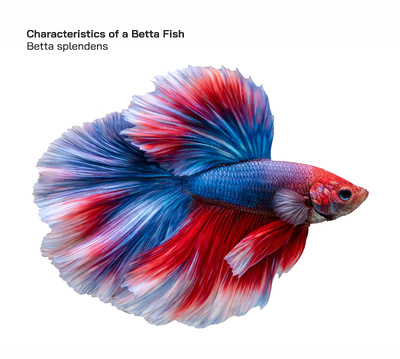
Betta fish, scientifically known as Betta splendens, are among the most diverse ornamental fish in the aquarium world, with an extraordinary range of tail shapes, fin structures, and color patterns developed through selective breeding. Although all Betta varieties share the same species origin and core behavioral traits, each type has distinct physical characteristics and subtle differences in care sensitivity and swimming ability. These variations strongly influence their popularity, visual appeal, and suitability for beginners or experienced hobbyists.
The Veil Tail Betta is the most widely recognized and commonly available variety. It is defined by its long, flowing tail that droops downward like a soft veil, creating a graceful and elegant swimming motion. This form became popular early in Betta breeding history and remains a favorite due to its affordability, resilience, and ease of care. Veil Tail Bettas display the typical aggressive and territorial behavior seen in most male Bettas, but their hardiness makes them especially suitable for beginners entering the hobby.
Crown Tail Bettas are immediately identifiable by the dramatic extensions of their fin rays, which give the tail a spiked or crown-like appearance. The reduced webbing between the rays creates a sharp, ornamental look that is highly attractive in display aquariums. Crown Tails are popular among enthusiasts who value visual impact, and their behavior closely matches that of other Bettas, showing strong territorial instincts and defensive displays when confronted by rivals.
Halfmoon Bettas are considered one of the most visually impressive Betta varieties. Their defining feature is a tail that spreads into a perfect semicircle, reaching a full one-hundred-eighty-degree arc when flared. This symmetry and fullness make Halfmoons highly prized in competitions and exhibitions. However, their long and heavy fins require careful handling and optimal water conditions, as fin damage and fatigue are more common. Behaviorally, they are similar to other Bettas but are more physically delicate due to their exaggerated finnage.
Delta Tail Bettas display a triangular tail shape that spreads less than a full half-circle. Their fins are shorter and more structured than those of Halfmoons, which contributes to better swimming efficiency and reduced strain. This variety is popular among breeders and hobbyists who want an attractive Betta without the fragility associated with longer fins. Delta Tails are generally hardy and adapt well to home aquariums, making them a good choice for beginners.
Super Delta Bettas occupy a middle ground between Delta and Halfmoon types, with tail spreads ranging between wide triangular shapes and near-halfmoon arcs. This balance of beauty and structural strength has made them increasingly popular among aquarists. Their fins are impressive without being overly heavy, allowing for smoother swimming. Like most Bettas, they exhibit aggressive and territorial behavior, particularly toward males of the same species.
Double Tail Bettas are one of the most visually striking and genetically unique varieties. They possess two distinct and symmetrical tail lobes instead of one continuous tail fin. This trait also affects the dorsal fin, which is usually broader and more developed. Double Tail Bettas are rarer and highly valued by breeders, but their body structure can reduce swimming efficiency, making them slightly less agile. Their behavior is similar to other Bettas, though their movement is often slower due to fin structure.
Plakat Bettas represent a form closer to the wild Betta splendens. They have short fins, muscular bodies, and a more streamlined appearance. This structure allows for faster swimming, greater stamina, and reduced fin damage. Plakats are highly popular among breeders and serious enthusiasts because of their robustness and strong genetic traits. Behaviorally, they are often more aggressive than long-finned varieties, reflecting their closer resemblance to wild territorial Bettas.
Half-Sun or Half-Sunburst Bettas are a refined variant of the Halfmoon type, featuring a wide tail spread combined with slightly shorter or more rounded fin edges. This creates a balanced and decorative appearance while improving fin durability. These Bettas are admired for their display quality and are often kept for visual enjoyment rather than active community interaction. Their behavior remains consistent with other ornamental Bettas, showing strong territorial instincts.
Rosetail Bettas are an extreme development of the Halfmoon line, characterized by heavily ruffled and layered tail edges that resemble rose petals. While visually stunning and highly prized in shows, this exaggerated finnage makes them sensitive swimmers. Their fins can be prone to damage and fatigue, requiring stable water conditions and gentle care. Despite their delicate structure, their temperament remains typical of Bettas, with assertive and territorial tendencies.
Elephant Ear Bettas, also known as Dumbo Bettas, are distinguished by their enlarged pectoral fins that resemble the ears of an elephant. These fins give the fish a unique and expressive appearance, setting them apart from tail-focused varieties. While their tail fins are often shorter, the large pectoral fins enhance their visual presence. Their behavior is similar to other Bettas, though their reduced tail mass may result in fewer fin-related injuries compared to long-tailed forms.
Marble Bettas are known primarily for their unpredictable and dynamic color patterns. Their coloration can change dramatically over time, sometimes shifting multiple times throughout their life. This ever-changing appearance makes them highly collectible and fascinating to observe. Physically and behaviorally, Marble Bettas are no different from standard Bettas, maintaining the same territorial and aggressive nature.
Koi Bettas are a specialized color variant inspired by the patterns of ornamental koi fish. They typically display striking combinations of white, orange, red, and black in irregular patches. This coloration has made them extremely popular in the ornamental fish trade. While visually distinct, their care requirements and behavior are identical to other Betta types, making them suitable for hobbyists familiar with Betta husbandry.
Galaxy and Butterfly Bettas represent advanced color pattern breeding rather than tail structure differences. These Bettas feature multiple contrasting shades, iridescent speckles, or sharply divided color bands across fins and body. They are often considered show-quality fish due to their dramatic appearance. Behaviorally, they remain aggressive and territorial, requiring proper tank management to prevent stress and injury.
Beyond tail shapes and visible coloration, Betta fish varieties differ in deeper structural, genetic, and functional ways that strongly influence long-term care, breeding outcomes, and behavioral expression. One important distinction lies in skeletal balance and body proportion. Long-finned varieties such as Halfmoon, Rosetail, and Half-Sun have bodies that evolved under selective pressure favoring finnage over hydrodynamics. This alters center of gravity and muscle workload, often resulting in slower cruising speed and increased resting behavior. Short-finned forms, including Plakat and wild-type Bettas, retain a body structure closer to the ancestral form, allowing sustained movement, rapid turns, and higher endurance.
Genetic layering plays a major role in defining Betta diversity. Many modern varieties are the result of stacking multiple genetic traits, such as combining tail shape genes with marble or koi color genes. This layering increases visual complexity but can introduce instability, particularly in color expression. Some Bettas may change dramatically over months or years due to dominant and recessive pigment genes activating at different life stages. This explains why certain Bettas appear visually inconsistent across their lifespan, a phenomenon especially noticeable in marble-based lines.
The wild-type Betta represents a critical reference point for understanding all ornamental varieties. Wild Betta splendens exhibit shorter fins, subdued coloration with iridescent highlights, and heightened situational awareness. Their behavior is often more reactive and alert, with quicker threat assessment and escape responses. Unlike ornamental lines bred primarily for display, wild types demonstrate stronger survival instincts and environmental sensitivity. These traits make them invaluable in breeding programs aimed at restoring vitality, immune strength, and structural balance.
Swimming mechanics vary significantly across varieties. Rosetail and heavily feathered forms experience increased drag, which can limit oxygen efficiency during movement and contribute to fatigue. This makes calm environments essential for their well-being. In contrast, Plakat and wild-type Bettas demonstrate burst swimming and controlled hovering, behaviors that reflect efficient muscle coordination. These differences influence how Bettas interact with tank flow, décor, and feeding strategies.
Color form diversity introduces another layer of complexity. Solid-color Bettas often show more stable pigmentation over time, while patterned forms such as Galaxy, Butterfly, and Koi rely on contrast genes that can shift unpredictably. Metallic and iridescent Bettas possess reflective pigment layers that interact with light rather than producing color directly. This structural coloration can intensify under optimal health conditions, making these varieties sensitive indicators of environmental quality.
Popularity trends among Betta varieties are influenced not only by appearance but also by survivability and maintenance demands. Beginner-friendly forms tend to be those with stronger swimming ability and reduced fin fragility. More specialized varieties attract experienced hobbyists who are willing to provide stable conditions and attentive care. This division has shaped the aquarium trade, with certain types dominating mass markets while others remain niche or breeder-exclusive.
Behavioral intensity also correlates with fin type and lineage. Short-finned Bettas, especially Plakats and wild types, often exhibit more assertive movement and faster response to perceived threats. Long-finned varieties rely more heavily on visual displays rather than pursuit, using fin expansion to deter rivals. This difference alters how conflicts unfold and affects compatibility planning in controlled environments.
Breeding complexity increases as varieties become more specialized. Traits such as double tails or extreme rosetails can be genetically linked to reduced vigor or developmental challenges. Responsible breeding practices aim to balance visual appeal with structural health, avoiding excessive exaggeration that compromises quality of life. Crossbreeding with robust lines is often used to stabilize finnage and reinforce body strength.
Environmental responsiveness varies across varieties as well. Bettas with heavy finnage often prefer quieter surroundings and stable visual environments, while short-finned and wild types tolerate environmental change more readily. This affects how they respond to tank rearrangement, lighting changes, or new stimuli. Understanding these sensitivities allows caretakers to reduce stress and encourage natural behavior.
Culturally, Betta varieties reflect shifting human priorities in ornamental animal keeping. Early focus on aggression and spectacle evolved into appreciation for color artistry, and more recently toward ethical breeding and functional health. Wild-type Bettas are gaining renewed interest as symbols of genetic integrity and natural beauty, while ornamental forms continue to represent aesthetic creativity.
From a conservation perspective, maintaining genetic diversity across Betta lines is increasingly important. Over-specialization can narrow gene pools, making populations vulnerable to disease and reduced fertility. Inclusion of wild-type traits helps preserve adaptability and resilience, ensuring the long-term sustainability of the species in captivity.
In a broader biological sense, Betta fish varieties demonstrate how selective breeding can dramatically reshape form without altering fundamental species behavior. Despite extreme differences in appearance, core territorial instincts, intelligence, and survival mechanisms remain intact. This consistency highlights the robustness of Betta splendens as a species.
Another important dimension that further separates Betta varieties is lifespan stability in relation to physical exaggeration. While all Betta splendens share a similar biological lifespan potential, varieties with extreme finnage or layered genetic traits often experience shorter functional lifespans due to cumulative stress on swimming muscles, immune response, and fin tissue. Wild-type and Plakat Bettas, with their compact and efficient form, frequently maintain mobility and vitality for a longer proportion of their lives. This difference does not imply fragility in ornamental forms, but it does highlight how physical design influences long-term endurance and aging patterns.
Stress tolerance also varies subtly across Betta types. Bettas with heavy fins tend to respond more visibly to environmental stress, showing fin clamping, reduced movement, or color dulling more quickly than short-finned varieties. This heightened sensitivity is not weakness but a result of increased physiological demand. Short-finned and wild-type Bettas distribute energy more evenly across body systems, allowing them to tolerate minor fluctuations in temperature, light, or routine with fewer outward signs. These differences influence which varieties adapt best to dynamic households versus highly controlled environments.
Another layer of variation lies in feeding behavior and energy utilization. Long-finned Bettas often prefer slower feeding sessions and surface-oriented feeding, conserving energy between movements. Plakat and wild-type Bettas display more assertive feeding behavior, including rapid strikes and exploratory foraging. This difference affects feeding schedules and food presentation, especially in tanks with current or surface disturbance. Matching feeding style to body type helps maintain optimal condition across varieties.
Territorial expression also changes with morphology. Bettas with exaggerated fins rely heavily on visual dominance, holding territory through flaring and stationary displays. Physical confrontation is often avoided because prolonged chases are energetically costly. In contrast, Plakat and wild-type Bettas may patrol space more actively, reinforcing territory through movement rather than static display. These behavioral distinctions shape how each variety uses space and responds to perceived intrusions.
Color expression over time introduces another fascinating layer. Some varieties stabilize into a final color pattern early in adulthood, while others continue to shift throughout life. This ongoing transformation is especially pronounced in marble-based lines and galaxy-patterned Bettas, where pigment cells remain genetically unstable. For many keepers, this unpredictability is part of the appeal, turning the fish into a living, evolving display rather than a fixed visual object.
The relationship between fin type and injury recovery is also significant. Short-finned Bettas heal fin damage more rapidly due to reduced tissue mass and better circulation. Long-finned forms require longer recovery periods and benefit greatly from pristine water quality and reduced stress. This difference affects not only care routines but also suitability for shared spaces or temporary environmental changes.
From a behavioral enrichment standpoint, different Betta types respond uniquely to stimulation. Plakat and wild-type Bettas often benefit from dynamic environments with visual movement and varied textures, while long-finned Bettas prefer calm, structured layouts that allow slow exploration. Tailoring enrichment to fin type improves mental engagement and reduces stress-related behaviors across all varieties.
In breeding contexts, wild-type and Plakat Bettas play a critical role in maintaining genetic health. They are frequently used to reintroduce vigor, fertility, and structural balance into ornamental lines. Without these foundational forms, many highly decorative varieties would struggle to sustain long-term viability. This highlights the importance of preserving less ornamental forms alongside show-quality Bettas.
Market demand has also shaped Betta diversity in complex ways. Visually dramatic varieties dominate online and retail spaces, while structurally efficient forms are favored by breeders and experienced keepers. This dual demand has created parallel breeding paths—one focused on aesthetics and another on functional integrity. The coexistence of these paths reflects the versatility of Betta splendens as a species capable of meeting diverse human interests.
Educationally, Betta varieties serve as powerful examples of selective breeding outcomes. They demonstrate how targeted selection can dramatically alter form, color, and movement without changing fundamental species identity. This makes Bettas a living model for understanding genetics, adaptation, and the trade-offs inherent in artificial selection.
At a philosophical level, the diversity of Betta fish varieties raises important questions about balance between beauty and welfare. Increasing awareness among hobbyists has shifted appreciation toward well-proportioned fish that combine visual appeal with functional health. This shift is gradually influencing breeding standards and consumer preferences toward sustainability rather than extremity.
In the broader narrative of ornamental fishkeeping, Betta splendens stands apart not because of a single trait, but because of its extraordinary range within one species. From wild-type efficiency to ornamental extravagance, Betta varieties represent an entire spectrum of biological expression shaped by both nature and human intent. This spectrum allows aquarists to choose companions that align with their values, experience, and environment.
Ultimately, understanding Betta fish varieties at this deeper level transforms them from decorative objects into complex living organisms shaped by evolution, genetics, and care. Each tail type, color form, and behavioral nuance reflects a balance of strength, vulnerability, and adaptability. This understanding not only enhances appreciation but also encourages responsible stewardship, ensuring that the beauty of Betta splendens continues to thrive without compromising the well-being that makes the species truly remarkable. Betta fish diversity extends far beyond visual classification. It encompasses genetics, biomechanics, behavior, adaptability, and human influence. Each variety represents a different balance between natural function and ornamental design. Understanding these deeper distinctions allows aquarists to make informed choices, appreciate Betta fish beyond surface beauty, and support practices that respect both the species’ heritage and its future.
In conclusion, Betta fish varieties differ primarily in tail structure, fin development, and color expression, while sharing common behavioral traits rooted in their species biology. From the beginner-friendly Veil Tail to the highly specialized Rosetail and Plakat forms, each type offers a unique balance of beauty, resilience, and personality. Understanding these differences allows aquarists to choose Betta varieties that best match their experience level, aesthetic preference, and care capability.