The Sphynx cat is one of the most distinctive and intriguing cat breeds in the world, instantly recognizable for its hairless appearance, wrinkled skin, and expressive personality. Despite its unusual look, the Sphynx is not completely hairless but covered with a fine layer of downy fuzz that gives the skin a warm, suede-like texture. The characteristics of the Sphynx cat extend far beyond appearance, encompassing a highly affectionate temperament, strong social attachment to humans, high intelligence, and specific care requirements that set it apart from other domestic cats.
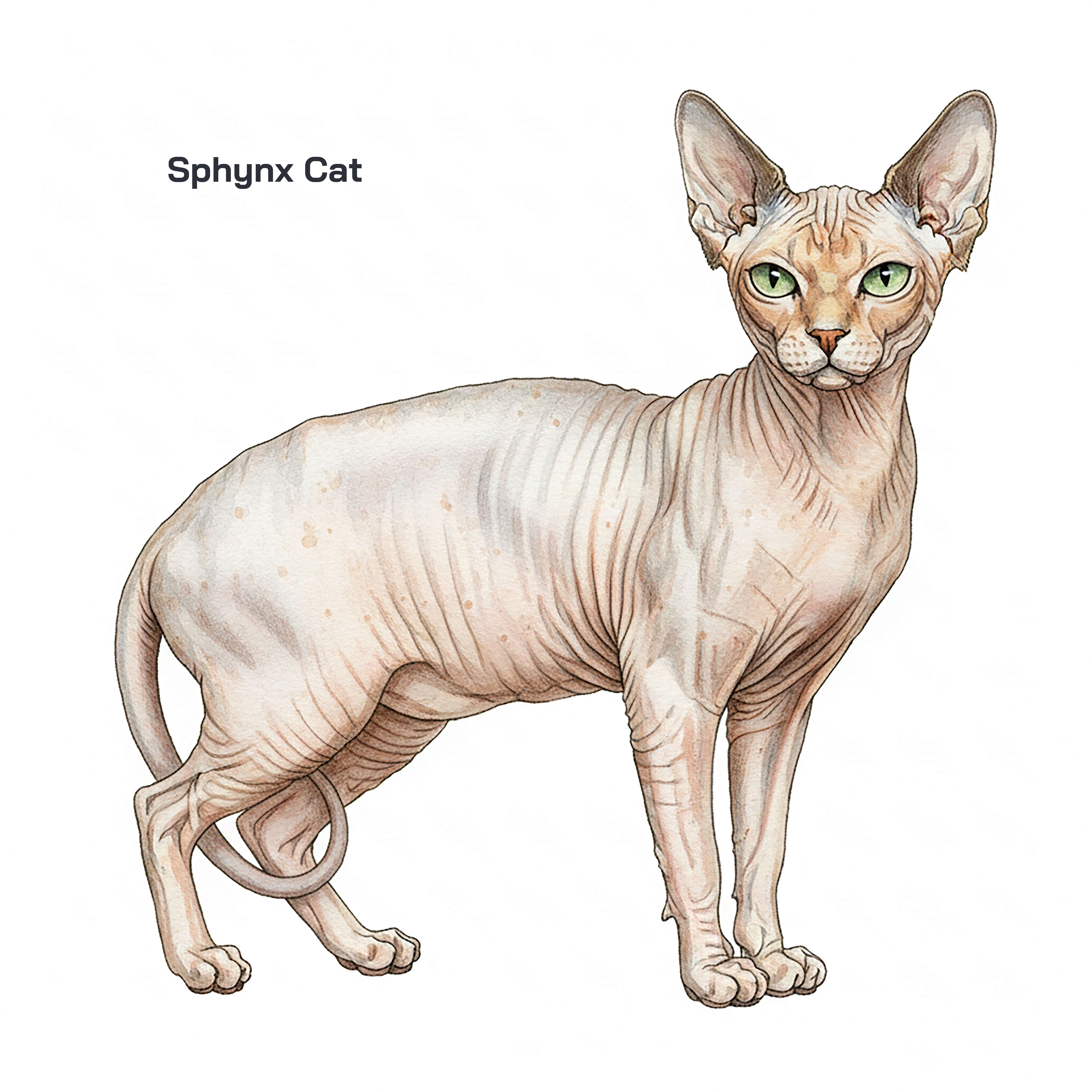
Physically, the Sphynx cat has a medium-sized, muscular body with a surprising amount of strength and density. Without fur to conceal its structure, the breed’s well-developed muscles and strong bone framework are clearly visible. The chest is broad, the abdomen is rounded, and the legs are long and slender yet powerful. The paws are oval-shaped with long toes, giving the cat a distinctive stance. The tail is long and tapering, often compared to a whip in shape, and may have a small tuft of hair at the tip in some individuals.
The head of the Sphynx cat is one of its most striking features. It has a wedge-shaped skull with prominent cheekbones and a short, defined muzzle. The skin around the face forms natural wrinkles, especially around the forehead, eyes, and neck. These wrinkles are a hallmark of the breed and add to its unique expression. The ears are exceptionally large, wide at the base, and set upright, giving the Sphynx an alert and inquisitive appearance. The eyes are lemon-shaped and large, contributing to the breed’s intense and expressive gaze.
Although commonly described as hairless, the Sphynx cat typically has very fine, nearly invisible hair on the body. This lack of a traditional coat means that the skin is directly exposed to the environment. As a result, the Sphynx feels warmer to the touch than most cats because body heat is not trapped by fur. This characteristic also makes the breed sensitive to temperature changes. Sphynx cats seek warmth and are often found sunbathing, cuddling with humans, or resting near heat sources.
Temperament is one of the most defining characteristics of the Sphynx cat. These cats are exceptionally affectionate and thrive on human interaction. They are often described as “people-oriented” and prefer to be involved in every aspect of household activity. Sphynx cats are known to follow their owners from room to room, sit on laps, sleep under blankets, and actively seek physical contact. Their strong desire for companionship makes them unsuitable for homes where they are left alone for long periods.
Sphynx cats are highly social animals and typically get along well with children, other cats, and even dogs. Their friendly and curious nature allows them to adapt easily to multi-pet households. They are rarely aggressive and usually greet visitors with interest rather than fear. This social confidence contributes to their reputation as excellent companion animals rather than independent or aloof pets.
Intelligence is another prominent trait of the Sphynx cat. They are quick learners and highly observant, capable of understanding routines and responding to human cues. Sphynx cats enjoy interactive play, puzzle toys, and activities that stimulate their minds. Their playful behavior often continues well into adulthood, and they are known for performing amusing antics to gain attention. This intelligence, combined with their need for interaction, means mental stimulation is essential for their well-being.
Unlike many other breeds, Sphynx cats have specific grooming and care needs despite their lack of fur. Because there is no coat to absorb natural skin oils, these oils accumulate on the skin surface. Regular bathing is necessary to prevent oil buildup and maintain skin health. Gentle cleaning also helps reduce odors and prevents staining of furniture or bedding. In addition to bathing, regular ear cleaning is required, as wax can build up more quickly in their large ears.
The absence of fur also means the Sphynx cat is sensitive to sunlight. Prolonged exposure can lead to sunburn, making it important to manage their time in direct sunlight. Conversely, they are sensitive to cold temperatures and often require warm indoor environments. Some owners provide soft clothing or blankets to help maintain body warmth, especially in cooler climates.
From a health perspective, Sphynx cats are generally robust but require attentive care. Their high metabolism helps them maintain body temperature, which often means they have a strong appetite. A balanced diet is essential to support energy needs without leading to excessive weight gain. Regular veterinary check-ups are important to monitor overall health, including heart function, as certain heart conditions may occur in the breed.
Emotionally, the Sphynx cat forms deep bonds with its owners. They are known for their loyalty and emotional sensitivity, often responding to changes in human mood. This emotional connection makes them comforting companions but also means they can experience stress if neglected. Their need for affection and reassurance is higher than many other breeds, making them best suited for households where companionship is readily available.
The lifestyle suitability of the Sphynx cat is primarily indoors. Due to their lack of protective fur, they are not well adapted to outdoor living. Indoor environments provide safety from temperature extremes, sun exposure, and injuries. Within the home, they are active, curious, and playful, often seeking elevated resting spots or warm surfaces.
The Sphynx cat represents a fascinating intersection of genetics, behavior, and human companionship, making it one of the most studied and emotionally engaging cat breeds in the modern world. Beyond its immediately recognizable appearance, the Sphynx embodies a lifestyle-oriented breed whose needs, behaviors, and adaptations differ significantly from those of furred cats. Understanding the Sphynx in greater depth requires examining how its hairless trait influences physiology, behavior, care routines, and long-term well-being.
Genetically, the Sphynx cat’s lack of fur is the result of a natural mutation rather than human-engineered hair removal. This mutation affects hair follicle development, producing cats with little to no coat while still retaining whiskers and sparse hair on certain body parts. Responsible breeding programs focus on maintaining genetic diversity and health, as the mutation itself does not cause illness but can expose underlying genetic vulnerabilities if breeding is careless. Ethical breeding practices are particularly important in Sphynx cats to reduce the risk of inherited conditions and ensure structural soundness.
From a physiological standpoint, the absence of fur significantly alters how the Sphynx cat regulates body temperature. Without insulation, the breed relies heavily on a faster metabolism to generate warmth. This higher metabolic rate explains why Sphynx cats often eat more frequently than other breeds and why they feel warm to the touch. It also means they burn calories quickly, making consistent nutrition essential. Irregular feeding or poor-quality diets can lead to energy imbalances, weight loss, or digestive sensitivity.
Skin health is one of the most critical aspects of Sphynx care. The skin acts as the primary barrier between the cat and its environment, and without fur, any irritation, dryness, or buildup becomes immediately visible. The natural oils produced by the skin, which would normally coat fur, remain on the surface and can attract dust or bacteria if not managed properly. Regular bathing, usually on a weekly or biweekly schedule, helps maintain healthy skin while preventing clogged pores and infections. However, overbathing can strip natural oils, so balance and gentle products are essential.
The Sphynx cat’s large ears and open ear canals require special attention. Because there is no fur to block debris, ear wax can accumulate quickly. Regular inspection and cleaning help prevent infections and discomfort. Similarly, nail beds may collect residue more easily, making routine nail care an important part of grooming. These maintenance needs often surprise new owners, as hairless does not mean maintenance-free.
Behaviorally, the Sphynx cat is known for its dog-like tendencies. Many Sphynx cats seek constant companionship, respond to their names, follow their owners closely, and enjoy being held or carried. This behavior stems from their strong social orientation and reliance on warmth and interaction. Unlike more independent breeds, Sphynx cats often struggle when left alone for extended periods. Emotional neglect can manifest as stress-related behaviors, including vocalization, appetite changes, or withdrawal.
The breed’s intelligence and curiosity are closely tied to its need for stimulation. Sphynx cats enjoy learning routines, opening doors, climbing furniture, and exploring new environments within the safety of the home. They benefit greatly from interactive toys, climbing structures, and human-led play sessions. Without adequate mental engagement, boredom can set in quickly, leading to restlessness or attention-seeking behavior. This makes the Sphynx particularly well-suited for owners who enjoy frequent interaction with their pets.
Social adaptability is another defining strength of the Sphynx cat. Their confident and outgoing nature allows them to integrate well into households with children or other animals. Unlike breeds that require slow introductions, many Sphynx cats show immediate interest in new companions. Their tolerance for handling and affection makes them ideal for families, but supervision is still necessary to ensure gentle interaction, especially due to their sensitive skin.
Health management in Sphynx cats extends beyond grooming. While generally healthy, the breed can be predisposed to certain conditions that require monitoring. Regular veterinary care is essential, not only for routine vaccinations but also for early detection of breed-associated concerns. Maintaining a stable indoor environment, minimizing stress, and providing consistent nutrition all contribute to long-term health.
The emotional bond between a Sphynx cat and its owner is often described as unusually intense. These cats tend to form strong attachments to specific people and may display signs of loyalty similar to those seen in dogs. They often seek physical closeness during sleep, burrowing under blankets or curling against warm bodies. This constant contact strengthens the human–animal bond but also reinforces their dependence on companionship.
Lifestyle compatibility is a key factor when considering a Sphynx cat. This breed thrives in households where someone is frequently present and willing to engage. Remote workers, families, or multi-pet homes often provide ideal environments. In contrast, homes with long daily absences may not meet the emotional needs of a Sphynx unless another companion animal is present.
Aging in Sphynx cats brings gradual changes rather than abrupt declines. Senior Sphynx cats often remain affectionate and socially engaged, though they may prefer warmer resting areas and gentler play. Adjustments in diet, temperature control, and veterinary care help maintain comfort and vitality in later years. Their expressive faces and interactive behavior often remain strong throughout their lifespan.
Culturally, the Sphynx cat challenges traditional ideas of beauty and pet ownership. What initially appears unusual often becomes endearing as owners experience the breed’s warmth, intelligence, and affection. Many Sphynx owners describe their cats not merely as pets but as companions with distinct personalities and emotional depth.
The Sphynx cat can be understood most fully by examining how its hairless condition reshapes nearly every aspect of feline biology, daily behavior, and human interaction. Unlike coated breeds, where fur acts as insulation, camouflage, and protection, the Sphynx has evolved a lifestyle centered on warmth-seeking, social bonding, and environmental awareness. This makes the breed less autonomous and more relationship-dependent than many other cats, creating a unique dynamic between the animal and its human companions.
One of the most overlooked aspects of the Sphynx cat is thermoregulation. Fur normally acts as a buffer between body and environment, but in the Sphynx, the skin is the primary interface with the outside world. As a result, these cats actively manage their body temperature through behavior. They instinctively seek warm surfaces, sunlight, human contact, and enclosed spaces. This constant need for warmth shapes their habits, sleep patterns, and attachment to people. Many Sphynx cats sleep longer hours than furred cats, conserving energy and maintaining body heat, often choosing to sleep pressed against humans or other animals.
This warmth dependency contributes directly to their emotional behavior. Physical closeness is not only comforting but biologically reinforcing. The Sphynx cat associates human presence with safety, warmth, and stability, which strengthens emotional bonds. Over time, this creates a cat that is unusually attentive to its owner’s movements, routines, and moods. Owners often notice that Sphynx cats anticipate daily schedules, wait for specific people, and respond strongly to emotional changes in the household. This emotional attunement is a defining psychological trait of the breed.
The skin itself is a living indicator of health in the Sphynx cat. Changes in color, texture, or oil production can reflect diet, stress, hydration, or underlying health conditions. Because the skin is exposed, subtle health shifts become visible earlier than in furred cats. This makes attentive observation an essential part of ownership. Responsible care includes monitoring skin hydration, avoiding harsh chemicals, and maintaining a stable indoor climate to prevent dryness or irritation.
Another unique consideration is tactile sensitivity. Without fur acting as a sensory buffer, the Sphynx cat experiences touch more directly. This heightened tactile awareness explains why many Sphynx cats enjoy gentle handling and massage-like contact but may react negatively to rough or abrupt touch. Their nervous system processes physical contact more intensely, reinforcing their preference for calm, affectionate interactions. This sensitivity contributes to their suitability for experienced owners who understand feline body language.
The Sphynx cat’s relationship with cleanliness also differs from other breeds. Fur naturally disperses oils and absorbs minor debris, but the Sphynx relies on regular human assistance to maintain hygiene. This dependence fosters routine-based bonding, as grooming sessions become moments of trust and interaction. When introduced gently and consistently from a young age, most Sphynx cats tolerate bathing well and may even associate it with positive attention. This adaptability highlights the breed’s strong learning capacity and emotional resilience.
Social hierarchy within multi-pet households reveals another interesting trait. Sphynx cats often assume central social roles due to their confidence and curiosity. They are typically initiators of interaction rather than passive participants. Their openness to other animals stems from a lack of territorial defensiveness compared to more solitary breeds. However, their need for warmth and attention means they may compete for preferred resting spots or human contact, making structured interaction important in shared environments.
The breed’s vocal behavior is also distinctive, though less intense than some oriental breeds. Sphynx cats communicate frequently through soft vocalizations, body positioning, and eye contact. Their communication style is expressive but not aggressive, reinforcing their role as interactive companions. Owners often describe their Sphynx cats as “conversational,” using varied sounds to express needs or emotions, particularly when seeking attention or warmth.
Dietary needs further reflect the breed’s unique physiology. Because Sphynx cats burn energy rapidly to maintain body heat, they often require higher-calorie diets compared to similarly sized breeds. However, this must be carefully balanced to avoid digestive stress. Frequent, smaller meals are often better tolerated than large feedings. Nutrition plays a direct role in skin health, muscle tone, and immune resilience, making dietary quality especially important.
As Sphynx cats mature, their personalities tend to remain stable rather than becoming distant with age. Many senior Sphynx cats retain kitten-like curiosity and affection, though they may prefer quieter environments and consistent routines. Age-related changes often manifest as increased need for warmth and comfort rather than reduced social interest. This makes them emotionally rewarding companions even in later life stages.
From a human perspective, living with a Sphynx cat often reshapes expectations of feline independence. Owners frequently report that their Sphynx behaves more like a companion animal than a traditional cat, actively seeking inclusion in daily life. This can be deeply fulfilling for individuals who desire close interaction but may feel overwhelming for those expecting a low-maintenance pet. Understanding this distinction is crucial for long-term satisfaction.
The Sphynx cat also challenges cultural assumptions about beauty and normalcy in animals. What initially appears unconventional often becomes a source of fascination and emotional attachment. The visible expressions, wrinkles, and warmth of the Sphynx create a sense of vulnerability that invites care and empathy. Over time, owners often find that the absence of fur highlights personality rather than detracts from it.
In conclusion, the Sphynx cat is not defined solely by hairlessness but by a complete lifestyle adaptation built around warmth, social connection, and sensitivity. Its physiology encourages close human bonds, its behavior rewards attentive care, and its emotional intelligence deepens companionship. Owning a Sphynx cat is less about managing a pet and more about participating in a shared daily rhythm. For those willing to embrace its unique needs, the Sphynx offers an unusually deep, interactive, and emotionally rich relationship that sets it apart from almost every other cat breed.
In summary, the Sphynx cat is a breed defined not just by its hairless appearance but by a complex combination of physiological adaptation, emotional sensitivity, and social intelligence. Its care requires commitment, consistency, and understanding, but the reward is a deeply interactive, affectionate, and loyal companion. For those willing to meet its unique needs, the Sphynx offers a rare and enriching bond that goes far beyond aesthetics, making it one of the most emotionally engaging cat breeds in the world. The Sphynx cat is characterized by its hairless appearance, wrinkled skin, muscular body, and striking facial features. Beyond appearance, it is defined by its affectionate temperament, high intelligence, strong social attachment, and unique care requirements. While owning a Sphynx cat demands commitment in terms of grooming, warmth, and companionship, the reward is an exceptionally loving, interactive, and devoted feline companion. These characteristics make the Sphynx cat a truly unique and emotionally engaging breed in the world of domestic cats.