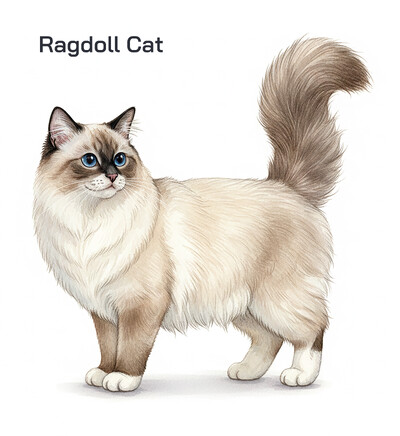
The Himalayan cat is a striking and elegant domestic cat breed known for its luxurious long coat, vivid blue eyes, and calm, affectionate personality. This breed combines the refined appearance of long-haired cats with the distinctive color-point pattern more commonly associated with certain short-haired breeds. The Himalayan cat is admired not only for its beauty but also for its gentle nature, making it a popular choice among households seeking a quiet, loving indoor companion. The characteristics of the Himalayan cat reflect careful selective breeding focused on appearance, temperament, and adaptability to home environments.
Physically, the Himalayan cat is medium to large in size with a sturdy, well-balanced body. Its bone structure is solid, giving the cat a rounded and compact appearance. The body is supported by short, strong legs with large, rounded paws that help balance its dense frame. Despite its full and fluffy look, the Himalayan cat is not overly heavy but has a graceful presence enhanced by its flowing coat. The tail is thick, bushy, and proportionate to the body, adding to the breed’s overall elegance.
One of the most defining characteristics of the Himalayan cat is its head and facial structure. The breed typically has a rounded head with a short, flat nose, a feature known as a brachycephalic facial structure. This gives the cat a distinctive sweet expression but also requires attentive care. The cheeks are full, and the chin is well developed, contributing to the rounded facial profile. The ears are small, rounded at the tips, and set wide apart, blending smoothly into the head shape.
The eyes of the Himalayan cat are among its most captivating features. They are large, round, and always a deep shade of blue. Eye color intensity is considered a key breed trait and adds to the cat’s expressive and gentle appearance. Because of the facial structure, Himalayans may experience tear overflow, making regular eye cleaning an important part of daily care to maintain hygiene and comfort.
The coat of the Himalayan cat is long, dense, and silky in texture. It consists of a thick undercoat and a long outer coat that flows smoothly over the body. This luxurious fur is one of the breed’s most admired traits, but it also requires consistent grooming. Daily brushing helps prevent tangles and matting, especially around the neck, chest, belly, and hind legs. Without proper grooming, the coat can quickly become knotted, leading to discomfort and skin issues.
Coloration in Himalayan cats follows a color-point pattern, meaning the body is lighter in color while the ears, face, legs, and tail display darker shades. These points develop due to temperature-sensitive pigmentation, where cooler areas of the body produce darker color. Common point colors include seal, blue, chocolate, lilac, red, and cream. The contrast between the pale body and darker points enhances the breed’s visual appeal and distinguishes it from other long-haired cats.
Temperament is one of the most appealing characteristics of the Himalayan cat. These cats are known for their calm, gentle, and affectionate nature. They enjoy human companionship and often form strong emotional bonds with their owners. Himalayan cats are typically content to relax on laps, sleep beside their owners, or quietly observe household activity. They are not overly demanding and tend to express affection in a soft, unobtrusive manner.
Unlike highly energetic breeds, the Himalayan cat has a relatively low activity level. It enjoys short periods of play but prefers a relaxed lifestyle. This makes the breed well suited for apartment living and quieter households. While they do appreciate interactive play sessions, they are equally happy lounging in comfortable spots. Their calm demeanor makes them suitable companions for individuals, families, and elderly owners seeking a peaceful pet.
Himalayan cats are intelligent and observant but not overly mischievous. They can learn routines quickly and often respond well to gentle training and positive interaction. Their curiosity is moderate, and they tend to explore their environment calmly rather than engaging in high-energy antics. They are generally sociable and can coexist well with other pets when introduced properly.
From a health and care perspective, the Himalayan cat requires attentive maintenance due to its facial structure and coat. Regular grooming is essential to prevent matting and maintain skin health. Facial cleaning helps manage tear staining and keeps the eyes comfortable. Because of their short nasal passages, Himalayans may be sensitive to heat and humidity, making a cool indoor environment important for their well-being.
Diet plays an important role in maintaining the health of the Himalayan cat. Due to their relaxed nature, they can be prone to weight gain if overfed. A balanced diet with controlled portions helps maintain a healthy body condition. Dental care is also important, as the breed’s facial structure may contribute to dental crowding. Routine veterinary checkups support long-term health and early detection of potential issues.
Emotionally, Himalayan cats thrive on companionship and routine. They enjoy predictable environments and may become stressed by sudden changes. Their gentle and trusting nature makes them emotionally responsive to their owner’s mood, often providing quiet comfort and companionship. They prefer stable households where they receive consistent attention and care.
In terms of lifestyle suitability, the Himalayan cat is best suited for indoor living. Its long coat and calm temperament make it less adapted to outdoor environments, where it could be exposed to temperature extremes, parasites, or injuries. Indoor living allows better control over grooming, health, and safety.
Beyond appearance and temperament, the Himalayan cat represents a fascinating example of selective breeding where aesthetics, behavior, and physiology intersect. Genetically, the Himalayan is the result of combining long-haired traits with temperature-sensitive color-point genes. This genetic pairing influences not only coat appearance but also how the cat adapts to environmental conditions. Cooler household temperatures may intensify point coloration over time, while warmer environments can cause lighter shading, making coat color a dynamic trait rather than a fixed one.
The breed’s brachycephalic facial structure has significant physiological implications. Shortened nasal passages affect airflow efficiency, which can influence breathing, thermoregulation, and scent detection. Himalayan cats often rely more heavily on visual and tactile cues than scent-based exploration. This subtle sensory shift contributes to their calm, deliberate movement patterns and preference for predictable environments. Owners often notice that Himalayans favor slow exploration rather than sudden bursts of curiosity.
Coat biology in Himalayan cats is particularly complex. The long fur is not simply decorative; it plays a role in insulation and tactile perception. Each hair follicle is connected to sensitive nerve endings, meaning the coat functions as a sensory extension of the body. This sensitivity explains why Himalayans may react strongly to mats, debris, or irregular grooming. Proper coat care is not just cosmetic but essential for comfort and neurological well-being.
The grooming process itself can become a bonding ritual. Himalayans often learn to associate grooming with security and affection when introduced gently from kittenhood. Consistent grooming routines reduce stress hormones and support emotional stability. Cats that experience irregular or forceful grooming may become withdrawn or anxious, highlighting the importance of calm handling.
Behaviorally, Himalayan cats display a unique balance between attachment and independence. Unlike highly vocal or attention-seeking breeds, Himalayans communicate affection through proximity rather than sound. They may choose to sit quietly nearby rather than demand interaction. This subtle social style reflects a breed that values emotional presence over constant engagement, making them particularly compatible with owners who appreciate quiet companionship.
Himalayan cats are also highly responsive to environmental tone. Household noise levels, lighting, and daily rhythm strongly influence their comfort. Soft lighting, consistent routines, and designated resting areas help regulate their stress levels. Sudden disruptions such as rearranged furniture or frequent guests may cause temporary withdrawal, though most Himalayans adapt with reassurance and time.
From a developmental perspective, Himalayan kittens mature more slowly compared to short-haired breeds. Their motor coordination, social confidence, and coat development continue evolving well into adolescence. Early-life experiences play a critical role in shaping temperament. Kittens raised in calm environments with gentle handling tend to develop into exceptionally trusting adults.
Aging Himalayans require thoughtful adjustments to care routines. As mobility decreases, grooming assistance becomes more important, particularly around joints and pressure points. Older cats may also experience changes in vision or tear production, making daily facial care essential. Maintaining familiar routines and sleeping locations helps senior Himalayans feel secure and reduces cognitive stress.
Ethical breeding is a particularly important consideration for this breed. Responsible breeders prioritize respiratory health, eye alignment, and genetic diversity rather than extreme facial flattening. Ethical breeding practices help reduce risks associated with breathing difficulties, dental crowding, and tear duct obstruction. Prospective owners benefit from selecting cats bred with health-focused standards rather than exaggerated features.
Himalayan cats also demonstrate a strong capacity for emotional memory. They remember gentle interactions and consistent caregivers, forming lasting attachments. Changes in primary caregivers can affect behavior temporarily, but trust is usually re-established through routine and calm reassurance. This emotional sensitivity makes Himalayans excellent therapy or emotional support companions in appropriate settings.
Nutritionally, Himalayan cats benefit from diets that support skin, coat, and eye health. Adequate hydration is particularly important due to tear production and coat density. Many Himalayans prefer shallow bowls to accommodate their facial structure, which reduces discomfort during eating and encourages proper food intake.
In modern households, Himalayan cats exemplify a breed shaped for indoor companionship rather than independence. Their needs align closely with stable, attentive lifestyles where emotional consistency is valued. When their physical care, environmental comfort, and emotional needs are met, Himalayans display remarkable serenity and affection.
The Himalayan cat exhibits a behavioral profile that is best described as emotionally attuned rather than overtly expressive. Unlike breeds that communicate frequently through vocalization or demanding gestures, Himalayans rely on subtle behavioral cues such as eye contact, body positioning, and quiet proximity. This understated communication style reflects a breed that has evolved to coexist harmoniously with humans in calm domestic environments rather than compete for attention. Owners often report that Himalayan cats seem to “read the room,” choosing when to engage and when to remain quietly present.
One unique aspect of the Himalayan cat’s psychology is its strong preference for emotional predictability. This breed responds best to consistent daily rhythms, including regular feeding times, grooming sessions, and sleep routines. Sudden changes in schedule or environment can temporarily disrupt behavior, leading to withdrawal or reduced appetite. However, this sensitivity also allows Himalayans to develop deep trust when routines are respected, resulting in a calm and emotionally secure companion.
Himalayan cats display a refined sensory awareness that differs from more active or exploratory breeds. Because of their facial structure and eye prominence, visual perception plays a central role in how they interact with their surroundings. They often prefer observing movement from a distance rather than engaging directly. This makes them particularly fond of window perches, quiet observation spots, and elevated resting areas where they can survey their environment without feeling overstimulated.
Touch sensitivity is another defining feature. The dense coat and exposed skin areas increase tactile feedback, meaning Himalayans may be more selective about how and where they enjoy physical contact. Many prefer gentle stroking along the head, neck, and shoulders rather than full-body handling. Understanding these preferences strengthens trust and prevents stress-related reactions. When physical boundaries are respected, Himalayans become deeply affectionate and relaxed.
Environmental enrichment for Himalayan cats should focus on comfort, security, and low-impact stimulation rather than constant activity. Soft bedding, warm resting zones, and quiet interactive toys support mental well-being. Puzzle feeders, scent-based enrichment, and slow-paced play sessions provide mental engagement without overstimulation. These cats benefit more from thoughtful enrichment than from high-energy exercise.
Social dynamics within multi-pet households reveal another dimension of the Himalayan temperament. Himalayans are generally tolerant but not dominant. They prefer peaceful coexistence and may withdraw rather than confront more assertive animals. Gradual introductions and safe retreat spaces are essential to maintain harmony. When paired with calm companions, Himalayans often form gentle bonds based on mutual presence rather than play intensity.
Human–cat bonding in Himalayans tends to deepen over time rather than form instantly. This gradual attachment process reflects a breed that values emotional reliability. Once bonded, Himalayans often display loyalty through consistent companionship, choosing familiar individuals over novelty. They may follow favored humans quietly from room to room or settle nearby during periods of rest, reinforcing emotional closeness without intrusion.
As therapy or emotional support animals, Himalayan cats possess qualities that make them particularly effective in quiet therapeutic settings. Their calm demeanor, gentle presence, and tolerance for stillness allow them to provide comfort without overwhelming individuals who may be sensitive to noise or activity. Their predictable behavior and affectionate but non-demanding nature can have a stabilizing effect on emotional states.
From a life-cycle perspective, Himalayan cats age gracefully when provided with appropriate care. Senior Himalayans often retain emotional awareness and affection even as physical activity decreases. Maintaining consistent routines, familiar surroundings, and gentle interaction helps preserve confidence and reduces stress-related behaviors in later life. Cognitive engagement through scent games or gentle play supports mental clarity without physical strain.
In the broader context of modern pet ownership, Himalayan cats represent a shift toward companionship based on emotional harmony rather than entertainment. Their appeal lies not in constant activity but in the quality of shared quiet moments. This aligns well with contemporary lifestyles where companionship, mental wellness, and emotional connection are increasingly valued.
Culturally, the Himalayan cat symbolizes refinement and serenity. Its presence in homes often reflects an appreciation for calm aesthetics and gentle interaction. Unlike trend-driven breeds, the Himalayan maintains relevance through timeless qualities of beauty, affection, and emotional balance rather than novelty.
In essence, the Himalayan cat is not simply a visually striking breed but a carefully balanced combination of genetics, physiology, and temperament. Its beauty is matched by emotional depth and sensitivity, requiring thoughtful care rather than minimal maintenance. When understood holistically, the Himalayan cat offers a uniquely calm, affectionate, and deeply rewarding companionship experience that extends well beyond appearance alone.
In summary, the Himalayan cat is characterized by its luxurious long coat, striking blue eyes, color-point pattern, and calm, affectionate temperament. Its physical features reflect elegance and refinement, while its personality emphasizes companionship and gentleness. Although the breed requires regular grooming and attentive care, it rewards owners with loyalty, tranquility, and deep emotional connection. The characteristics of the Himalayan cat make it an ideal choice for those seeking a beautiful, relaxed, and devoted feline companion. The Himalayan cat offers a deeply nuanced companionship experience shaped by sensitivity, emotional intelligence, and quiet loyalty. Its needs extend beyond grooming and feeding to include emotional stability, environmental comfort, and respectful interaction. When these elements are provided, the Himalayan cat becomes not merely a pet, but a serene and emotionally resonant presence within the household.