The Boxer dog is a powerful, energetic, and highly intelligent breed known for its muscular build, playful personality, and deep emotional bond with humans. Originally developed as a working and guarding dog, the Boxer has evolved into one of the most popular family companions worldwide. Its unique combination of strength, loyalty, alertness, and affection makes it a versatile breed suitable for active households, protective roles, and close human companionship. Understanding Boxer dog characteristics helps owners provide proper care, training, and lifestyle support for this remarkable breed.
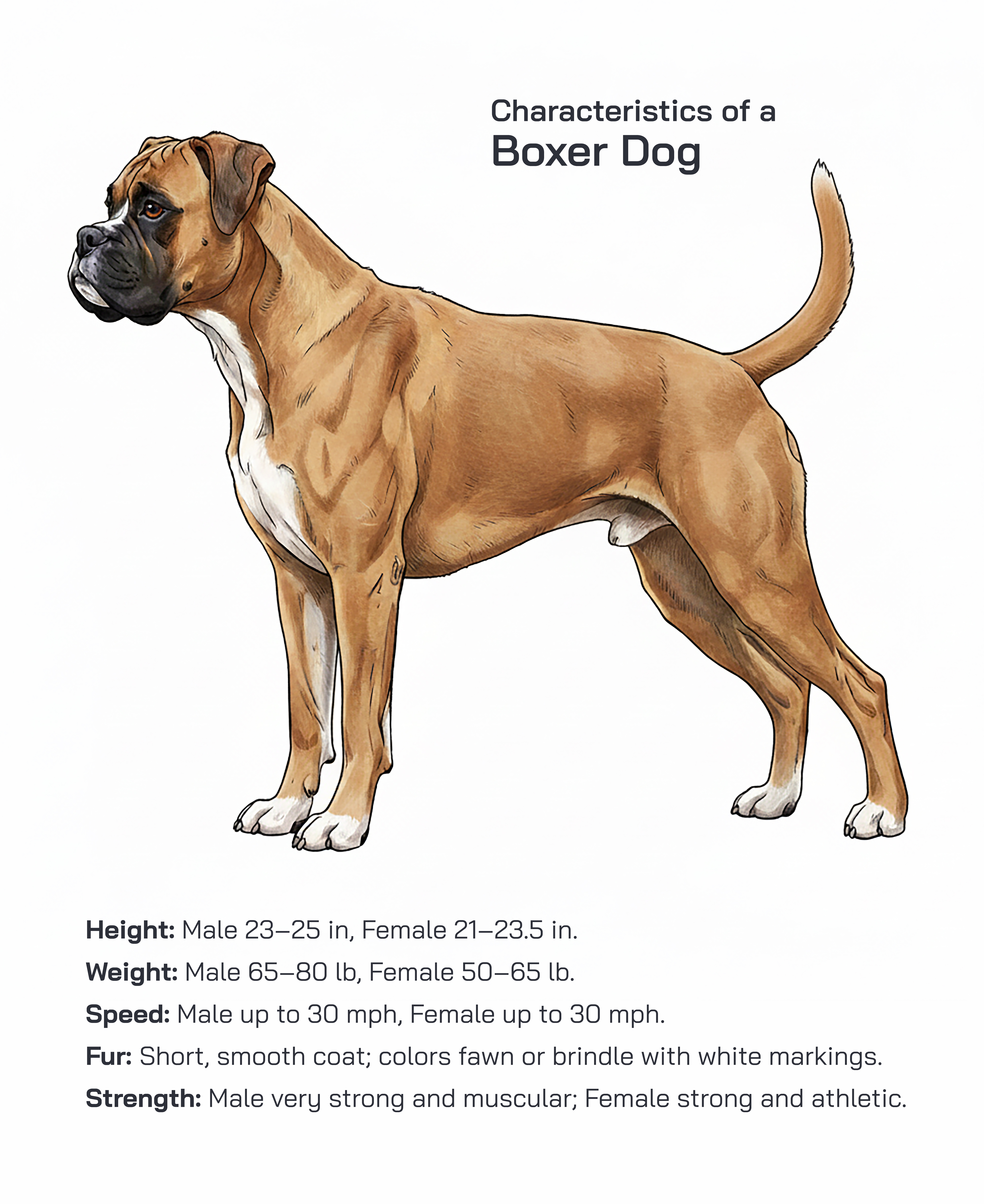
One of the most noticeable characteristics of the Boxer dog is its physical appearance. Boxers have a strong, square-shaped body with well-developed muscles across the chest, shoulders, and hindquarters. Their stance reflects power and balance rather than bulk, allowing them to move with speed and agility. The chest is broad and deep, supporting strong lung capacity, while the back is firm and straight, contributing to overall stability. This athletic body structure allows Boxers to perform tasks that require endurance, quick movement, and strength.
The head structure of the Boxer is distinctive and expressive. It is broad with a short muzzle and a powerful jaw. The bite force of a Boxer is considered strong for a medium to large dog breed, allowing it to grip firmly when required. Historically, this strength made the breed effective for guarding and working roles. Despite this jaw power, well-trained Boxers are gentle and controlled, rarely using force unless they perceive a real threat.
Boxer coat color is another defining trait. The breed typically appears in shades of fawn and brindle, often accompanied by white markings on the chest, face, and legs. The coat is short, smooth, and tight against the body, giving the Boxer a clean and athletic look. This short coat requires minimal grooming and sheds moderately. However, it offers limited protection against extreme temperatures, making Boxers sensitive to both cold and excessive heat.
Behaviorally, Boxers are known for their playful and energetic nature. Even as adults, they often retain puppy-like enthusiasm and curiosity. They enjoy physical activity, interactive play, and close involvement with family members. This playful behavior makes them excellent companions for active individuals and families who enjoy outdoor activities. Without sufficient exercise and mental stimulation, Boxers may become restless or develop undesirable behaviors.
Boxers form strong emotional bonds with people. They are deeply loyal and thrive on human interaction. This breed is known for being affectionate, often seeking physical closeness and attention from family members. Boxers are especially known for their positive interaction with children when properly trained and supervised. Their protective instinct combined with patience makes them reliable family dogs.
In terms of strength, Boxers possess impressive muscular power relative to their size. Their strength is most evident in their jumping ability, sprinting speed, and endurance during play or work. They are capable of short bursts of intense activity as well as sustained physical effort. This strength requires responsible handling, structured training, and consistent exercise to ensure controlled behavior.
Training plays a vital role in shaping Boxer behavior. Boxers are intelligent and capable of learning quickly, but they can also be stubborn at times. Positive reinforcement, consistency, and patience are key to successful training. Early socialization helps Boxers develop confidence and appropriate responses to people, animals, and new environments. Proper training channels their strength and energy into obedience and cooperation.
Diet and nutrition are critical for maintaining Boxer health and performance. Boxers require a balanced diet rich in high-quality protein to support muscle development and repair. Carbohydrates provide energy for their active lifestyle, while healthy fats support skin, coat, and overall metabolism. Portion control is important, as overfeeding can lead to weight gain that stresses joints and the heart. Clean water should always be available, especially due to their activity level.
Health care is an important aspect of Boxer ownership. Boxers are generally strong dogs, but they can be prone to certain breed-specific health issues. Regular veterinary checkups, proper vaccination, and preventive care are essential. Due to their short muzzle, Boxers can be sensitive to heat and may experience breathing difficulty in hot or humid conditions. Owners should avoid excessive exercise during high temperatures and ensure proper ventilation.
Heart health is particularly important for Boxers. Maintaining a healthy weight, providing regular exercise, and following veterinary guidance help support cardiovascular well-being. Joint health should also be monitored, especially in active dogs, to prevent strain or injury. Providing appropriate rest, nutrition, and exercise balance contributes to long-term mobility.
Grooming requirements for Boxers are relatively low. Their short coat only requires occasional brushing to remove loose hair and maintain skin health. Regular nail trimming, ear cleaning, and dental care are important parts of routine maintenance. Despite minimal grooming needs, Boxers benefit greatly from daily interaction and attention.
Boxers are known for their alertness and protective awareness. While they are friendly with family and known individuals, they remain cautious around unfamiliar situations. This makes them effective watchdogs, as they are quick to alert owners to unusual activity. However, they are not aggressive by nature and rely more on presence and confidence than unnecessary force.
Mental stimulation is just as important as physical exercise for Boxers. Puzzle toys, training sessions, and interactive play help keep their minds engaged. A bored Boxer may become destructive, not out of aggression, but due to unused energy and intelligence.
The Boxer dog stands out not only for its athletic build and lively personality, but also for the depth of balance it maintains between physical power and emotional sensitivity. This breed is a product of purposeful development, shaped to be alert and capable while remaining deeply connected to human companionship. What makes the Boxer especially unique is that its strength is paired with an unusually expressive temperament, giving it a personality that feels both protective and playful at the same time.
A lesser-discussed but important characteristic of the Boxer is its movement style. Boxers move with a springy, elastic gait that reflects their muscular coordination and flexible joints. Their movements are efficient rather than heavy, allowing them to change direction quickly and maintain balance during rapid activity. This agility is one reason Boxers excel in tasks that require responsiveness, such as obedience work, agility training, and interactive play. Their body is built not just for power, but for controlled motion.
Boxers are also known for their strong sensory awareness. Their hearing is sharp, and they are highly responsive to subtle sounds in their environment. This sensitivity contributes to their reputation as alert watchdogs. While they may not bark excessively, they are quick to notice changes around the home and communicate through posture, eye contact, and controlled vocalization. Their expressive face plays a major role in how they interact, making their emotions easy for humans to read.
Emotionally, Boxers are exceptionally people-oriented. They are not a breed that thrives in isolation. Their emotional well-being is closely tied to consistent human interaction, routine, and inclusion in daily activities. Boxers often follow family members from room to room, not out of anxiety, but due to their strong social attachment. This closeness makes them highly responsive to their owner’s mood, often mirroring emotional energy within the household.
The intelligence of the Boxer is practical rather than purely task-driven. They are quick to understand routines, recognize patterns, and anticipate actions. This makes them excellent at learning household rules and responding to consistent training. However, their intelligence is closely linked to engagement. Boxers learn best when training feels like interaction rather than repetition. When training lacks variety or enthusiasm, they may appear distracted, even though they understand what is being asked.
Boxers have a naturally confident temperament. When properly socialized, they approach new environments with curiosity rather than fear. This confidence helps them adapt well to different living situations, including homes with children, other pets, and moderate noise levels. Their stable temperament means they are less likely to react unpredictably when exposed to unfamiliar sights or sounds, provided they have been gradually introduced to such experiences.
Another unique aspect of the Boxer is its delayed maturity. Compared to some breeds, Boxers retain youthful behavior for a longer period. This extended puppy-like phase contributes to their playful reputation but also requires patience from owners. While physically strong, they may still display impulsive energy well into adulthood. Structured routines, regular exercise, and mental challenges help guide this energy into positive behavior.
From a physical health perspective, muscle maintenance is a defining need for Boxers. Their muscular frame requires consistent activity to remain balanced and healthy. Long periods of inactivity can lead not only to weight gain but also to restlessness and frustration. At the same time, their enthusiasm can sometimes push them to overexert, so owners must strike a balance between activity and rest. Controlled exercise is far more beneficial than sporadic bursts of intense effort.
Boxers also have a unique relationship with temperature due to their short coat and facial structure. They are more comfortable in moderate climates and require extra care during seasonal extremes. In warm conditions, their activity should be adjusted to prevent overheating, while in colder weather, additional protection may be needed during outdoor time. This sensitivity reinforces the importance of attentive ownership and environment awareness.
Socially, Boxers are natural communicators. They use body language extensively, often leaning against people, placing paws gently, or maintaining direct eye contact to express affection or request interaction. This physical closeness is a hallmark of the breed and strengthens the emotional bond between dog and owner. Their communication style makes them especially rewarding companions for people who enjoy interactive relationships with pets.
In working roles, Boxers demonstrate versatility rather than specialization. Historically used for guarding and assistance tasks, they excel when given a sense of purpose. Modern Boxers often thrive in roles that involve companionship combined with activity, such as therapy work, obedience sports, and family protection. Their willingness to engage and their emotional sensitivity make them particularly effective in environments where trust and consistency are valued.
Lifespan quality for a Boxer is closely tied to lifestyle management. Regular exercise, mental stimulation, balanced nutrition, and preventive healthcare all contribute to maintaining their vitality. Because Boxers are enthusiastic and energetic, early attention to joint health, cardiovascular fitness, and weight control plays a major role in long-term well-being.
The Boxer dog is a breed defined by harmony between strength and affection. Its muscular body supports an active lifestyle, while its emotional intelligence supports deep human connection. Boxers are not simply powerful dogs; they are responsive, expressive, and deeply loyal companions who thrive when included as full members of the family. Understanding their unique characteristics allows owners to meet their needs effectively, creating a relationship built on trust, activity, and mutual enjoyment.
The Boxer dog represents a rare blend of physical capability, emotional depth, and social intelligence, making it far more complex than its muscular appearance might suggest. Beyond the commonly known traits of strength and playfulness, the Boxer possesses a finely balanced temperament that has been shaped by both its working heritage and its long history of close association with humans. This balance is what allows the breed to function equally well as a family companion, a guardian, and an active partner in daily life.
One of the most distinctive yet often overlooked characteristics of the Boxer is its body–mind coordination. Boxers do not simply rely on raw strength; they exhibit a high degree of motor control and spatial awareness. This is evident in how they navigate tight spaces, adjust their speed during play, and interact gently with smaller individuals such as children. Even during energetic activity, a well-socialized Boxer demonstrates an ability to regulate force, showing restraint that reflects both intelligence and emotional awareness.
The Boxer’s facial structure contributes significantly to its communication style. Their expressive eyes, mobile eyebrows, and unique muzzle shape allow them to convey emotions clearly. Owners often report that Boxers seem to “communicate” through facial expressions alone, displaying curiosity, concern, excitement, or affection without vocalization. This expressiveness strengthens the human–dog bond and makes Boxers particularly responsive to emotional cues from their owners.
Cognitively, Boxers are problem solvers rather than passive learners. They tend to analyze situations before acting, especially when trained in a positive and engaging environment. This can sometimes be misinterpreted as stubbornness, but in reality it reflects independent thinking. Boxers benefit most from training methods that involve choice, reward-based learning, and variation. When mentally engaged, they show impressive retention and adaptability.
Another unique trait of the Boxer is its social sensitivity. Boxers are highly attuned to group dynamics within the household. They often position themselves strategically, choosing locations where they can observe family activity or stay close to multiple people at once. This behavior reflects their strong pack-oriented instincts and desire to remain socially connected. Prolonged isolation or lack of interaction can negatively affect their emotional well-being, making companionship a core requirement rather than a preference.
Physiologically, the Boxer’s muscular system is designed for explosive movement combined with endurance. Their muscles contain a balance of fibers that support both sprinting and sustained activity. This makes them excellent candidates for sports and structured physical challenges. However, this same athleticism requires proper conditioning. Sudden intense exercise without warm-up can strain muscles or joints, highlighting the importance of gradual activity buildup and consistent routines.
The Boxer’s cardiovascular system is another important consideration. As an active breed, Boxers rely heavily on heart efficiency to sustain their energy levels. Regular moderate exercise supports heart health, while inactivity can lead to rapid decline in fitness. Maintaining an ideal body condition is especially critical, as excess weight places additional strain on the heart and joints. Owners who manage activity and nutrition carefully often see Boxers remain energetic and mobile well into later life.
Thermoregulation is a significant aspect of Boxer care. Their short coat and facial structure limit their ability to cool efficiently in hot environments. Unlike breeds with longer muzzles, Boxers cannot dissipate heat as effectively through panting alone. This makes environmental awareness crucial, particularly during warmer months. Adjusting exercise times, providing shaded rest areas, and ensuring hydration are essential for preventing heat-related stress.
Boxers also display a strong sense of territorial awareness without excessive aggression. They are naturally alert and confident, often positioning themselves between their family and perceived unfamiliar stimuli. This behavior stems from protective instinct rather than hostility. With proper socialization, Boxers learn to distinguish between normal activity and genuine threats, making them reliable guardians without being unnecessarily reactive.
Emotionally, Boxers are resilient yet sensitive. They respond best to consistent routines and calm leadership. Harsh correction or unpredictable environments can lead to confusion or anxiety, whereas structured guidance builds confidence and trust. Their emotional intelligence allows them to thrive in environments where communication is clear and expectations are consistent.
Another lesser-known aspect of Boxer behavior is their strong play-drive throughout life. Unlike many breeds that become sedentary with age, Boxers often retain enthusiasm for play well into adulthood. This sustained playfulness supports mental health and physical fitness but also requires owners to adapt play styles as the dog ages, shifting from high-impact activity to controlled movement that protects joints.
Socially, Boxers tend to form especially strong bonds with primary caregivers while remaining friendly with others. This selective attachment does not indicate exclusivity but rather a deep sense of loyalty. They often look to their chosen person for cues, reassurance, and direction, reinforcing the importance of leadership and engagement in the human–dog relationship.
In multi-pet households, Boxers usually integrate well when introduced properly. Their play style is energetic but generally non-aggressive. Clear boundaries and early socialization help prevent misunderstandings, especially with smaller animals. Their natural confidence allows them to coexist without constant dominance behavior, provided their energy is appropriately managed.
From a long-term perspective, quality of life for a Boxer is closely linked to purposeful living. Boxers thrive when they feel useful, involved, and mentally stimulated. Simple activities such as structured walks, training games, and shared routines contribute significantly to their happiness. They are not a breed that thrives on minimal interaction; they flourish when included as active participants in daily life.
The Boxer dog is defined by balance—between power and gentleness, independence and attachment, alertness and playfulness. Its strength is matched by emotional depth, and its intelligence is expressed through interaction rather than obedience alone. For owners willing to invest time, structure, and companionship, the Boxer offers not just loyalty, but a deeply engaging and rewarding relationship that evolves over the dog’s lifetime.
In summary, the Boxer dog is a powerful yet affectionate breed defined by strength, loyalty, playfulness, and intelligence. Its muscular body, distinctive coat colors, strong bite force, and energetic nature reflect its working heritage. At the same time, its deep emotional connection with people makes it a devoted family companion. With proper training, balanced nutrition, regular exercise, and attentive health care, the Boxer thrives as a confident, healthy, and loving dog. Understanding Boxer dog characteristics allows owners to meet the breed’s physical and emotional needs, ensuring a fulfilling and harmonious relationship.