Rice is one of the most important cereal crops in the world and serves as a primary source of nourishment for a large portion of the global population. The anatomy of rice reflects its role as a seed designed to protect and nourish a developing plant, while also providing essential nutrients for human consumption. Understanding the structure of a rice grain helps explain its nutritional value, health benefits, and the differences between whole rice and refined forms. Each layer of the rice grain contributes uniquely to its biological function and dietary importance.
A rice grain is botanically classified as a caryopsis, meaning the seed coat is fused with the fruit wall. This compact structure allows the grain to store energy efficiently and remain viable for extended periods. From the outer protective layers to the inner nutrient-rich core, rice anatomy represents a balance between protection, nourishment, and survival.
External Structure of the Rice Grain
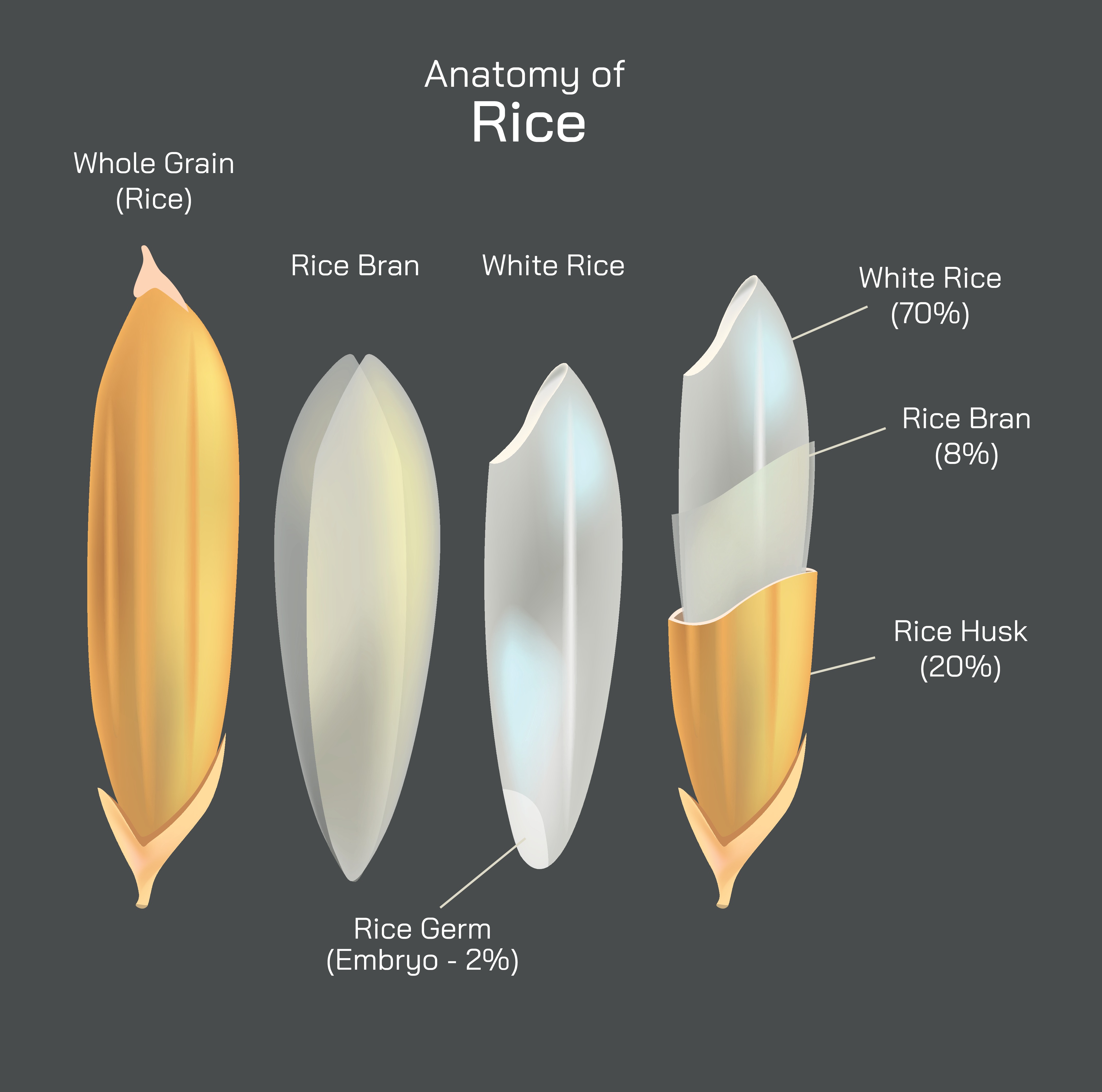
The outermost layer of a rice grain is known as the husk. This tough, fibrous covering protects the grain from environmental damage, pests, and moisture loss while the rice plant grows in the field. The husk is removed during the initial stage of processing to produce unhusked or brown rice. Although the husk is not consumed directly, it plays an important role in agriculture and industry, where it is used as fuel, compost, and raw material for various products.
Beneath the husk lies the bran layer, which is one of the most nutritionally valuable parts of the rice grain. The bran contains dietary fiber, essential fatty components, vitamins, minerals, and bioactive compounds. This layer gives brown rice its characteristic color and contributes significantly to its health-promoting properties. When rice is polished to produce white rice, most of the bran is removed, leading to a reduction in nutritional content.
The germ, also known as the embryo, is located at one end of the grain. It is the living part of the seed that has the potential to grow into a new rice plant under suitable conditions. The germ is rich in natural oils, proteins, vitamins, and antioxidants. Although it constitutes a small percentage of the grain, it plays a crucial role in both plant development and human nutrition. The removal of the germ during milling further reduces the nutritional density of refined rice.
The largest portion of the rice grain is the endosperm, commonly referred to as white rice after milling. The endosperm serves as an energy reservoir for the developing plant and is composed mainly of carbohydrates in the form of starch. This part of the grain provides quick and sustained energy when consumed, making rice an essential staple food in many cultures.
Nutritional Benefits of Rice
Rice is primarily valued as an energy-giving food due to its high carbohydrate content. The starch present in the endosperm supplies readily available energy, supporting daily physical activity and metabolic processes. Whole rice varieties retain bran and germ layers, offering additional nutritional benefits beyond energy alone.
Brown rice, which includes the bran and germ, provides dietary fiber that supports digestive health and promotes a feeling of fullness. Fiber contributes to smoother digestion and helps maintain stable energy levels. The bran layer contains important micronutrients that support overall well-being, making whole rice a preferred option for balanced nutrition.
Rice also contributes essential proteins in modest amounts. While it is not a complete protein source on its own, rice complements other plant foods well, especially when combined with legumes. This combination enhances the overall protein quality of meals in traditional diets around the world.
The germ and bran components of rice supply natural compounds that support cellular health. These include substances known for their antioxidant properties, which help protect the body from oxidative stress. Rice is naturally free from gluten, making it suitable for individuals who require gluten-free dietary options.
Health Importance of Rice Consumption
Rice plays a central role in maintaining food security and nutritional stability for billions of people. Its easy digestibility makes it suitable for individuals of all ages, including children, elders, and those recovering from illness. In many traditional food systems, rice is considered gentle on the digestive system and is often recommended during periods of dietary sensitivity.
Whole rice varieties contribute to long-term health by providing sustained energy and supporting digestive balance. The presence of fiber and natural compounds supports metabolic health and overall vitality. Even refined rice continues to serve as a reliable energy source, particularly in regions where calorie intake is a primary concern.
Rice also supports hydration balance when prepared appropriately, as it absorbs and retains water during cooking. This property makes it suitable for various culinary preparations, from soft porridges to firm grain dishes.
Traditional Uses of Rice
Rice has been cultivated and consumed for thousands of years and holds deep cultural significance across many civilizations. Traditionally, rice has been used as a daily staple food, forming the foundation of meals in numerous regions. It is prepared in a wide range of forms, including boiled grains, fermented foods, and flour-based products.
In traditional practices, rice bran and rice water have been used for skin care and hair nourishment. Rice-based preparations have also played a role in ceremonial and cultural events, symbolizing abundance, fertility, and prosperity.
Rice husk and bran have long been utilized in agriculture as organic matter to improve soil quality. These by-products contribute to sustainable farming practices and efficient resource use.
Modern Uses of Rice and Its Components
In modern times, rice continues to be a versatile and essential crop. Refined and whole rice varieties are widely used in global cuisine, food processing, and packaged foods. Rice flour serves as a base for gluten-free products, while rice bran oil is valued for its stability and nutritional properties.
Rice bran is increasingly recognized as a functional food ingredient due to its natural compounds. It is incorporated into health foods, supplements, and animal feed. Rice husk is used in energy production, construction materials, and environmental applications, highlighting the complete utilization of the rice grain.
Rice is far more than a simple staple food; it is a biologically sophisticated seed and a cornerstone of human civilization. Its anatomy reflects millions of years of plant evolution aimed at protecting genetic material, storing energy efficiently, and ensuring successful germination under suitable conditions. At the same time, this same structure makes rice one of the most reliable, versatile, and nourishing foods for humans. Understanding rice anatomy in greater depth reveals why it has remained indispensable across cultures, climates, and historical eras.
At the biological level, the rice grain is a survival unit. As a caryopsis, it integrates the fruit wall and seed coat into a single compact structure, reducing vulnerability to damage and decay. This fusion minimizes exposure to pathogens and moisture loss while maximizing storage efficiency. Such a design allows rice grains to remain viable for long periods, enabling storage, transport, and long-term food security. This durability is one of the key reasons rice became central to early agricultural societies and continues to support modern populations.
The husk, though removed before consumption, plays a critical protective role during the grain’s development. It shields the seed from physical injury, insects, fungal infections, and environmental stress such as excessive moisture or sunlight. In agricultural ecosystems, the husk also contributes to sustainability. Once removed, it does not become waste but instead serves as fuel, insulation material, soil conditioner, and raw material in construction and energy production. This reflects how rice anatomy supports not only nutrition but also broader agricultural and environmental systems.
The bran layer represents a vital interface between protection and nourishment. Biologically, it safeguards the inner seed while storing compounds essential for early plant growth. Nutritionally, it is one of the richest parts of the grain. The fiber content of bran supports digestive health by promoting regular movement of food through the digestive tract and nourishing beneficial gut microorganisms. The presence of natural lipids in the bran contributes to satiety and sustained energy release, while vitamins and minerals support cellular processes throughout the body. The removal of bran during polishing transforms rice into a more shelf-stable product but at the cost of nutritional diversity.
The germ is the most biologically active component of the rice grain. It contains the genetic blueprint for the next generation of plants and the biochemical tools needed to initiate growth. This explains its high concentration of oils, proteins, and micronutrients. These compounds fuel early root and shoot development when the seed begins to sprout. From a dietary perspective, the germ adds nutritional density, supplying substances that support cellular repair and metabolic function. However, because the oils in the germ can become rancid over time, its removal during milling increases storage life, illustrating a trade-off between nutrition and practicality.
The endosperm dominates the grain in size and function. It is primarily composed of starch granules arranged to provide a steady energy supply during germination. For humans, this translates into a dependable source of calories that can sustain physical labor and daily activity. The digestibility of endosperm starch makes rice suitable for a wide range of dietary needs, including those with sensitive digestion. This quality has made rice a foundational food in medical diets, infant nutrition, and recovery meals across cultures.
The balance between these layers explains the nutritional differences between whole rice and refined rice. Whole rice retains the bran and germ, offering a broader spectrum of nutrients and slower energy release. Refined rice, while lower in fiber and micronutrients, remains valuable as a concentrated energy source that is easy to digest and prepare. Historically, different societies have chosen between these forms based on availability, climate, storage needs, and health priorities.
Rice also plays a significant role in metabolic health when consumed appropriately. The complex carbohydrates in rice provide glucose, the body’s primary fuel, supporting brain function and muscular activity. When paired with fiber-rich vegetables, legumes, or proteins, rice forms balanced meals that sustain energy levels without excessive strain on digestion. This pairing has been a hallmark of traditional diets, demonstrating intuitive nutritional wisdom long before modern science.
Culturally, rice anatomy has shaped how it is used and valued. The ease with which rice can be stored and transported due to its protective layers allowed civilizations to grow and stabilize. Rice became not only food but currency, ritual offering, and symbol of life and prosperity. The grain’s structure enabled milling, fermentation, puffing, and grinding, giving rise to diverse culinary traditions that span continents.
In traditional health practices, different parts of the rice grain were valued for specific purposes. Rice water, derived from the starch-rich endosperm, was used to soothe digestion and nourish skin. Rice bran was applied to improve soil fertility and enhance livestock feed, indirectly supporting human nutrition. These uses demonstrate a holistic understanding of rice as more than a single food item.
Modern science continues to explore rice anatomy for innovation. Breeding programs focus on enhancing nutrient content in the bran and endosperm to address deficiencies in vulnerable populations. Rice-derived products are used in pharmaceuticals, cosmetics, and biodegradable materials, reflecting the grain’s structural versatility. Even the microscopic arrangement of starch in the endosperm is studied to develop foods with tailored digestion rates.
From an ecological perspective, rice anatomy supports sustainable food systems. Its efficient energy storage allows high yields per unit area, feeding large populations with relatively limited land. By-products such as husk and bran reduce waste and contribute to circular agricultural practices. This efficiency is increasingly important as global populations grow and environmental pressures increase.
In essence, the anatomy of rice is a perfect example of how biological design aligns with human needs. Each layer of the grain serves a specific function that benefits both the plant and those who consume it. Rice nourishes bodies, sustains cultures, supports economies, and promotes ecological balance. Its continued importance in human life is not accidental but deeply rooted in its structure, adaptability, and capacity to meet fundamental nutritional and societal needs.
Rice can be understood not only as a food grain but as a complete biological system that connects plant survival, human nutrition, agriculture, culture, and sustainability. Its importance becomes even clearer when we look beyond basic anatomy and examine how each structural feature supports long-term resilience, adaptability, and widespread human dependence. The simplicity of a rice grain hides an extraordinary level of functional refinement that has allowed it to remain relevant across thousands of years and countless civilizations.
From a plant survival perspective, rice anatomy is optimized for uncertainty. In natural conditions, seeds face unpredictable environments, including flooding, drought, pests, and temperature fluctuations. The layered structure of the rice grain provides multiple lines of defense. The husk acts as the first barrier, protecting the grain during growth and harvest. Even after removal, the internal layers continue to safeguard the seed’s viability. This resilience allows rice to be stored for extended periods without losing its ability to germinate, a feature that has been essential for seed saving and agricultural continuity.
The bran layer also plays a critical role in regulating how the seed interacts with its environment. It contains compounds that protect the inner seed from oxidation and microbial damage. These same protective compounds benefit human health by supporting cellular stability and metabolic balance when whole rice is consumed. The fact that these substances evolved for plant protection but also serve human nutrition illustrates a deep alignment between natural design and dietary needs.
The germ’s role extends beyond reproduction. It acts as a biochemical command center that activates when conditions are favorable for growth. Enzymes stored in the germ initiate the conversion of stored starch into usable energy for the sprouting plant. This controlled energy release mirrors how whole rice behaves in the human body, providing a more gradual supply of energy compared to highly refined carbohydrates. This is why traditional diets that rely on less processed rice often support steady energy levels and long-lasting satiety.
The endosperm, while often viewed simply as a carbohydrate source, has a highly organized internal structure. Starch granules are arranged in a way that balances firmness, digestibility, and cooking behavior. This structural arrangement determines how rice absorbs water, swells during cooking, and releases energy during digestion. Different rice varieties exhibit variations in endosperm composition, which explains differences in texture, stickiness, and culinary use across cultures. These variations are not accidental but the result of selective breeding guided by both environmental conditions and cultural preferences.
Rice anatomy also plays a key role in its adaptability to diverse climates. Certain varieties have grains structured to withstand prolonged flooding, while others are adapted to dry or upland conditions. The protective layers of the grain ensure survival during transport through water or storage in humid environments. This adaptability has allowed rice cultivation to spread across Asia, Africa, Europe, and the Americas, becoming one of the most geographically widespread cereal crops in history.
In terms of human health, rice serves as a foundation food that supports dietary diversity. While rice itself is relatively simple, its anatomical composition makes it an ideal carrier for complementary foods. The neutral flavor and digestibility of rice allow it to be combined with vegetables, legumes, meats, and spices, creating nutritionally complete meals. This adaptability has made rice central to food traditions that emphasize balance rather than reliance on a single nutrient source.
Rice anatomy also influences how the grain is processed and preserved. Milling techniques evolved to selectively remove or retain certain layers based on storage needs and dietary priorities. In regions where long-term storage and transport were critical, polished rice became common due to its extended shelf life. In regions where fresh consumption and traditional processing dominated, whole rice retained its importance. These choices reflect a deep understanding of how grain structure affects stability and nutrition.
Beyond food, the physical components of the rice grain contribute to economic and environmental systems. Rice bran oil, extracted from the bran layer, has properties that make it suitable for high-temperature cooking and long storage. Rice husk, once seen as waste, is now recognized as a valuable resource for renewable energy, insulation, and eco-friendly construction materials. This full utilization of the grain reflects the inherent efficiency of rice anatomy, where each layer has potential value beyond consumption.
Rice also plays a role in soil health and agricultural cycles. By-products such as bran and husk return nutrients to the soil when used as compost or mulch. This closes the loop between harvest and cultivation, supporting sustainable farming practices. The grain’s anatomy thus contributes not only to human nourishment but also to the regeneration of the ecosystems that produce it.
Culturally, rice anatomy has shaped rituals, traditions, and symbolic meanings. The grain’s completeness and ability to multiply through planting made it a symbol of life, fertility, and continuity. In many societies, rice is offered during ceremonies marking birth, marriage, and harvest, reflecting its role as a life-sustaining substance. These cultural associations are deeply tied to the grain’s physical properties, particularly its ability to nourish both body and land.
Modern research continues to explore rice anatomy to address global challenges. Scientists study the distribution of nutrients within the grain to develop varieties that retain more beneficial compounds even after milling. This work aims to combat nutrient deficiencies in populations that rely heavily on rice as a staple. Advances in understanding grain structure also support the development of rice-based foods with controlled digestion rates, improved texture, and enhanced nutritional profiles.
In a world facing population growth, climate change, and food insecurity, the anatomy of rice offers valuable lessons. Its efficient energy storage, protective design, and adaptability demonstrate how natural systems can meet large-scale nutritional needs with minimal waste. Rice shows that true sustainability lies not in excess complexity but in thoughtful structure and balance.
Ultimately, rice is not merely a grain but a convergence point of biology, nutrition, culture, and sustainability. Its anatomy embodies efficiency, resilience, and versatility. Each layer of the rice grain tells a story of survival, nourishment, and human ingenuity. The continued study and appreciation of rice anatomy deepen our understanding of why this humble grain remains one of the most important foods on Earth, capable of sustaining both individuals and civilizations across generations.
Conclusion
The anatomy of rice reveals a carefully structured grain designed for protection, nourishment, and growth. Each layer, from husk to endosperm, contributes to both the biological purpose of the seed and its value as a human food. Rice provides essential energy, supports balanced nutrition, and plays a critical role in global food systems. Understanding the structure, nutritional benefits, and uses of rice encourages informed dietary choices and greater appreciation for this ancient and indispensable crop.