Kangal Dog
The Kangal dog, also known as the Kangal Shepherd Dog, is one of the most powerful and respected livestock guardian breeds in the world. Originating from Turkey, this breed has been shaped over centuries to protect flocks from large predators such as wolves, bears, and jackals. The Kangal is not just a strong dog; it is a highly intelligent, loyal, and independent guardian with a calm temperament and a deep sense of responsibility toward its territory and family.
Origin and History
The Kangal dog comes from the Sivas region of central Turkey, particularly around the town of Kangal, from which it takes its name. Turkish shepherds selectively bred these dogs for endurance, strength, and courage rather than appearance. Their role was simple but demanding: stay with livestock day and night and confront any threat without hesitation. Because of this working background, the Kangal developed exceptional instincts and decision-making abilities, often acting without direct human commands.
In Turkey, the Kangal is considered a national treasure, and there are strict regulations on exporting purebred Kangals. The breed’s reputation spread internationally when studies showed its effectiveness in reducing livestock losses to predators, especially in Africa, Australia, and parts of the United States.
Physical Characteristics
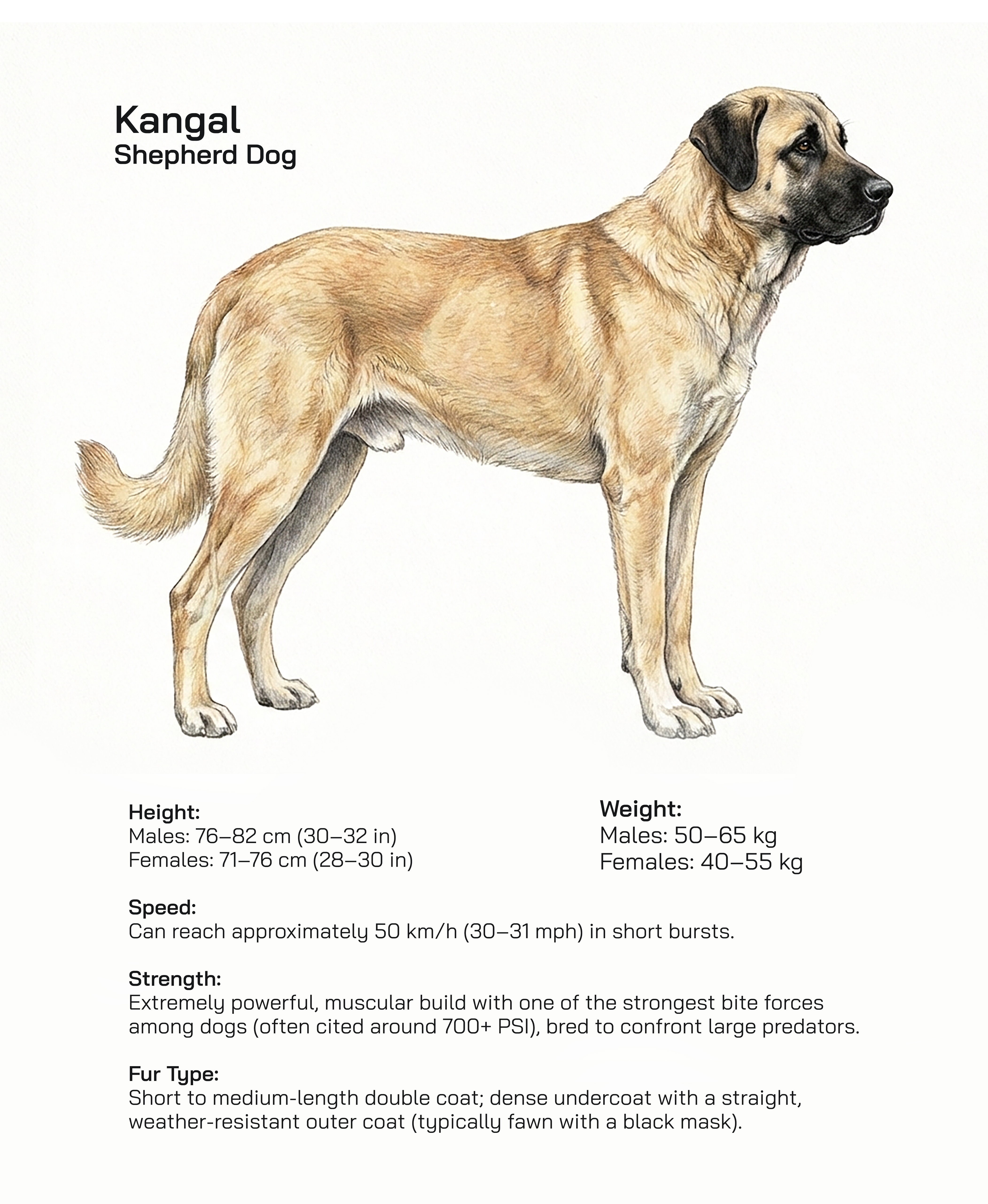
The Kangal is a large, muscular, and well-balanced dog built for strength and stamina rather than speed alone. Adult males are generally larger and heavier than females. The body is solid with a deep chest, strong legs, and a powerful neck. One of the most recognizable features of the Kangal is its black facial mask, which contrasts with its pale coat.
The coat is short to medium in length, dense, and weather-resistant, allowing the dog to survive harsh winters and hot summers. Coat colors are usually light fawn, pale tan, or grayish cream. The tail is long and typically carried curled over the back when the dog is alert. Kangals also possess one of the strongest bite forces ever recorded in domestic dogs, an adaptation directly linked to their guardian role.
Temperament and Behavior
Despite their intimidating appearance, Kangals are known for being calm, stable, and confident rather than aggressive. They are naturally protective but do not attack without reason. A Kangal carefully assesses situations and reacts only when it perceives a real threat. This controlled behavior makes them reliable guardians rather than unpredictable fighters.
Kangals are extremely loyal to their family and livestock. They form strong bonds and often position themselves strategically to watch over their territory. With children and familiar people, they are gentle and tolerant. However, they are naturally reserved with strangers, which makes early socialization essential if the dog is kept in a non-working, domestic environment.
Intelligence and Independence
The Kangal dog is highly intelligent but also independent-minded. Unlike breeds developed for obedience trials, Kangals were bred to think for themselves in open fields without constant human supervision. This independence means they may not respond well to harsh or repetitive training methods. Training should be firm, consistent, and respectful, focusing on trust rather than dominance.
Because of their intelligence, Kangals quickly learn routines, recognize threats, and remember territory boundaries. They are excellent problem solvers, which is one reason they excel in predator-control roles.
Uses and Working Purpose
Traditionally, the Kangal’s primary role is livestock protection. They live among sheep or goats and treat the herd as their family. Unlike herding dogs, Kangals do not move livestock; instead, they guard it. Their presence alone is often enough to deter predators.
In modern times, Kangals are also used on farms, large rural properties, and wildlife conservation projects. In some regions, they are employed to reduce human-wildlife conflict by protecting livestock without harming predators. While they can be kept as companion dogs, they are not ideal for apartment living due to their size, energy, and guarding instincts.
Health and Lifespan
Kangals are generally a healthy and robust breed thanks to natural selection rather than excessive show breeding. Their average lifespan ranges from ten to thirteen years, which is relatively good for a dog of their size. Common health concerns may include hip dysplasia and joint issues, especially if the dog grows too quickly or lacks proper exercise during development.
A balanced diet, controlled growth in puppyhood, and regular physical activity are essential for maintaining long-term health. Because of their working background, Kangals thrive when they have space to move and a clear purpose.
Exercise and Living Needs
Kangals require ample space and daily activity. They are best suited to rural or semi-rural environments with open land. While they are not hyperactive, they need room to patrol and exercise their natural guarding behaviors. A bored or confined Kangal may become frustrated or destructive.
Mental stimulation is just as important as physical exercise. Giving the dog responsibilities, such as guarding property or engaging in structured outdoor activities, helps maintain balanced behavior.
Suitability as a Pet
The Kangal dog is best suited for experienced owners who understand guardian breeds. First-time dog owners may find the breed challenging due to its size, strength, and independent nature. With proper training, socialization, and environment, Kangals can be deeply affectionate, loyal, and dependable companions.
The Kangal dog is a legendary livestock guardian breed renowned for its unmatched strength, composure, intelligence, and instinctive protective abilities. More than just a powerful dog, the Kangal represents a centuries-old partnership between humans, animals, and nature. Its behavior, physical structure, and temperament are the result of natural selection shaped by harsh landscapes, predator pressure, and the practical needs of shepherd communities. To truly understand the Kangal, it is important to explore not only how it looks or works, but also how it thinks, lives, communicates, and adapts.
The Kangal developed in the high plateaus of central Turkey, where winters are cold, summers are dry, and predators are a constant threat. Shepherds needed a dog that could survive independently, make decisions without human instruction, and confront danger without hesitation. Over generations, only dogs with strong nerves, stable temperament, and unwavering loyalty were allowed to reproduce. This selective pressure created a breed that is mentally mature, emotionally balanced, and deeply bonded to its role as a guardian.
Physically, the Kangal is built for endurance and power rather than speed alone. Its skeletal structure is dense and strong, supporting a muscular frame that allows it to stand its ground against large predators. The chest is broad, giving space for strong lungs and heart capacity, essential for long hours of vigilance. The neck is thick and muscular, protecting vital areas during confrontations. The head is large but well-proportioned, with a strong jaw and wide skull that contributes to its formidable bite strength. The black mask on the face is not merely a visual trait; it is a defining hallmark of breed purity.
The coat of the Kangal is another evolutionary adaptation. It is dense enough to insulate against cold winters, yet short enough to prevent overheating in summer. This balance allows the dog to remain active year-round. The skin is slightly loose, especially around the neck, offering protection against bites during fights. The tail, carried high and curled when alert, serves as a visual signal of confidence and territorial awareness.
Temperament is where the Kangal truly stands apart from many other large breeds. Kangals are not impulsive or unnecessarily aggressive. They are calm observers, constantly assessing their surroundings. When guarding livestock, a Kangal often positions itself on elevated ground to monitor the area. It reacts based on threat level, using posture, eye contact, and vocal warnings before resorting to physical force. This graduated response shows a high level of emotional control and intelligence.
The bond between a Kangal and its livestock is profound. From a young age, puppies raised among sheep or goats begin to identify them as their social group. This bond is not taught through commands but formed naturally. Once bonded, the Kangal treats the herd as family, often placing itself between the animals and perceived danger. This instinctual attachment is one of the reasons Kangals are so effective in reducing livestock losses without constant human supervision.
In human families, Kangals display a different but equally deep loyalty. They are affectionate with those they trust and often show a quiet, dignified attachment rather than overt clinginess. With children, they are typically gentle and tolerant, instinctively adjusting their strength and behavior. However, their protective instincts mean they are always alert to unfamiliar people or unusual situations, making them excellent natural guardians of property and family.
Training a Kangal requires understanding its psychology. This breed does not respond well to force-based or dominance-heavy methods. Kangals respect calm authority and consistency rather than punishment. Training should focus on clear boundaries, early socialization, and trust-building. Because they mature mentally at a slower pace than smaller breeds, patience is essential during training. Once trained, a Kangal remembers lessons well and applies them intelligently rather than mechanically.
The independence of the Kangal is often misunderstood as stubbornness. In reality, it reflects the breed’s original purpose. Kangals were bred to act without human input, often miles away from shepherds. This independence allows them to assess danger accurately, but it also means they are not suited to environments where constant obedience is expected. They thrive when given responsibility and space rather than confinement and repetition.
Health-wise, the Kangal is considered a robust and resilient breed. Because it has not been excessively altered by show breeding, many genetic issues common in large dogs are less frequent. Proper nutrition during growth is critical, as rapid weight gain can stress developing joints. Controlled exercise during puppyhood helps ensure strong bones and long-term mobility. Regular veterinary care, parasite prevention, and balanced feeding contribute to a healthy lifespan that often extends beyond a decade.
The Kangal’s role in modern conservation efforts highlights its continued relevance. In regions where predators threaten livestock, Kangals are used as a non-lethal solution to reduce conflict. Their presence alone often deters predators, helping protect both farm animals and wildlife. This makes the breed an important tool in sustainable agriculture and conservation-based farming.
Despite its many strengths, the Kangal is not a breed for everyone. It requires space, purpose, and experienced handling. Urban living, restricted movement, and lack of mental stimulation can lead to frustration and behavioral problems. The ideal environment for a Kangal is one where it can patrol, observe, and fulfill its natural guarding instincts.
In essence, the Kangal dog is not just a pet or working animal but a living example of harmony between strength and restraint, independence and loyalty, instinct and intelligence. It embodies the idea that true power lies not in aggression, but in confidence, awareness, and control. For those who understand and respect its nature, the Kangal offers unwavering protection, deep companionship, and a remarkable connection rooted in centuries of shared history between humans and dogs.
Summary
The Kangal dog represents a perfect blend of strength, intelligence, loyalty, and calm authority. Bred over centuries to protect livestock under harsh conditions, it remains one of the most effective guardian dogs in the world. While not suitable for every household, in the right environment the Kangal is a devoted protector and a symbol of trust, courage, and balance between power and restraint.