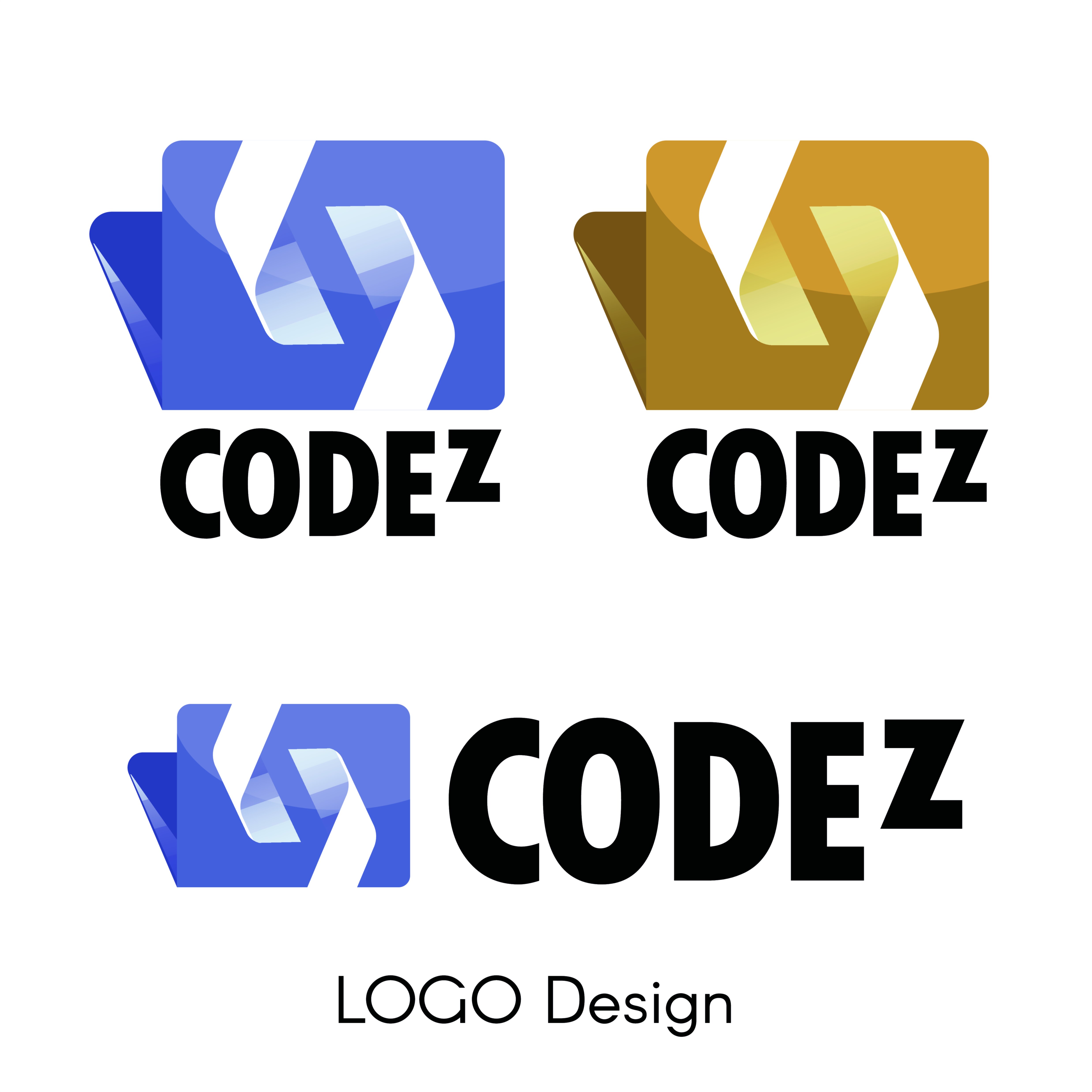
Stylish Unique Coding Logo Vector Illustration for Modern Tech and Programming Design
A stylish and unique coding logo as a vector illustration for modern tech and programming design embodies far more than an attractive graphic for branding. It represents the entire personality, philosophy, and direction of a technology brand, a software house, a coding platform, a developer community, or a digital product. When a logo is connected to the world of programming, it must speak two languages at once: the visual language that resonates with a global audience and the technical language that communicates precision, intelligence, logic, and digital creation. A programming logo is not simply a mark or an icon to be placed on a website or a business card; it is the symbolic doorway through which the public understands the spirit of the brand. A well-designed coding logo attracts developers not because of marketing alone, but because it reflects the creativity and problem-solving nature of programming itself.
The foundation of a modern, stylish tech logo lies in the combination of simplicity and intellectual expression. Developers and engineers gravitate toward clarity rather than unnecessary decoration; therefore, coding logos often carry a minimalistic geometry that reflects structure, logic, and efficiency. Curved lines and sharp angles blend to represent both creativity and precision. A sleek vector illustration can incorporate symbols such as brackets, forward slashes, curly braces, arrows, or hexagonal formations which are familiar to anyone in the coding world. These shapes carry meaning beneath their surface appearance; they suggest syntax, direction, and the organized language of machines. When these symbolic patterns are embedded into a premium vector mark, the logo gains an instant connection to modern programming culture.
Color theory plays a vital role in expressing identity within the tech world. Traditional corporate blue communicates reliability and intelligence, while neon cyan or electric purple suggests futuristic innovation. Deep black combined with metallic accents gives a sense of elite professionalism suitable for cybersecurity, fintech, and enterprise-grade platforms. Greens and monochrome hues evoke the early aesthetics of terminals and open-source communities, reminding viewers of hacker culture and raw computational power. In contrast, softer pastel gradients or high-contrast luminous palettes can represent open-minded collaboration, user-friendly development, and accessible tech learning. What makes the logo stylish and unique is the way these colors interact rather than the colors themselves. A thoughtful blend expresses mood rather than noise, and the vector surface becomes a visual signature that users can identify instantly.
Typography within a coding-related logo must walk the line between technological personality and clean readability. The lettering frequently adopts futuristic geometric curves, smooth mono-spaced characters reminiscent of coding fonts, or variable stroke depth that conveys motion and algorithmic dynamism. If a wordmark accompanies the graphic symbol, the spacing and proportions must feel mathematically balanced to align with the expectations of a tech audience. Developers and digital builders look for coherence rather than ornamental styling; therefore, the font should feel engineered rather than decorated, modern rather than trendy. When the typography visually aligns with the vector symbol, the logo becomes inseparable from its mission: to represent a brand that builds digital systems with knowledge, skill, and elegance.
The emotional identity of a stylish tech logo also depends on shape language. A circular formation communicates community, inclusiveness, and open-source philosophy; triangular edges speak to speed, precision, and forward movement; squares and grids represent stability, infrastructure, and systematic logic. Lines that interconnect hint at networks, data frameworks, and collaborative ecosystems. Abstract layers suggest artificial intelligence, neural networks, cloud structures, or blockchain matrices without explicitly naming them. Through these small decisions, the logo communicates meaning instantly even to someone who does not consciously analyze visual symbolism. It becomes a silent message that the brand is both modern and purpose-driven.
Because the logo exists in vector format, scalability becomes a core attribute. Tech logos must display perfectly on both microscopic and large scales — from favicons, mobile app icons, code repository thumbnails, and developer badge patches to billboards, event banners, and conference screens. The vector structure ensures sharpness, clarity, and identity stability across all surfaces. A properly designed coding logo should feel unshaken by size change; it should preserve its symbolism and aesthetics whether printed, etched, laser-engraved on hardware, stitched on apparel, or projected digitally. The logo becomes part of the developer lifestyle itself — a mark capable of being worn with pride, displayed on laptops, and used as identity in professional spaces.
The deeper emotional purpose of a stylish programming logo is to turn the brand into something people believe in. Tech audiences are not persuaded by marketing slogans; they are persuaded by authenticity, innovation, and mastery. A logo that visually speaks the language of programming, logic, and creation builds connection. Developers who see themselves represented in the identity of the brand feel a sense of belonging. Coding communities embrace symbols that become rally points. Open-source groups adopt logos that act as emblems of collaboration and empowerment. Startups use logos to represent disruption, revolution, and boundary-breaking technology. Each variation expresses a distinct emotional territory, and the logo becomes the flag of that territory.
In the modern era, where artificial intelligence, machine learning, cybersecurity, blockchain, cloud architecture, embedded systems, robotics, and quantum computing shape the future, the logo becomes a timeless mark. It should be strong enough to survive the evolution of technology and adaptable enough to scale across digital and physical contexts. It should feel relevant today and iconic tomorrow. A stylish coding logo does not follow trends — it defines its own identity and remains recognizable long after the trends fade.
The relationship between developers and branding is uniquely intellectual. Engineers are sensitive to authenticity; a poorly designed logo feels like a superficial understanding of tech culture, while a meticulously crafted one communicates deep respect for the craft. When a developer sees a stylish unique coding logo that references symbols, patterns, minimalism, and precision, they understand immediately that the brand was created by people who understand them. It becomes a silent handshake between creators — a moment of recognition where a designer’s artistic intelligence meets a programmer’s logical intelligence.
That is why a stylish unique coding logo vector illustration for modern tech and programming design is much more than a graphic. It is an emblem of identity, a signal of belonging, and a visual representation of the mindset shared by problem-solvers, innovators, and digital creators. Beneath the smooth gradients, sharp curves, and precise angles lies a message understood by every programmer:
Code is not just instruction.
Code is creation.
And creation deserves a symbol.